
A Realistic Guide to the Cost of Renewing a Dental Implant Per Tooth
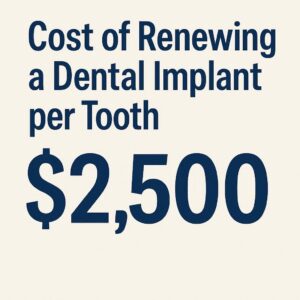
For anyone with a dental implant, the idea of it failing can be unsettling. While modern implants are designed to last decades, sometimes components wear out or unforeseen complications arise. If you’re facing this situation, your first question is likely, “How much will it cost to renew my dental implant per tooth?”
The answer isn’t simple, as “renewal” can mean many things. This guide will break down the realistic costs, the reasons behind them, and what you can expect throughout the process. Our goal is to provide you with clear, honest information so you can make a confident decision about your oral health.
What Does “Renewing” a Dental Implant Actually Mean?
First, let’s clarify terminology. A dental implant is a three-part system:
-
The Implant Fixture: The titanium screw fused to your jawbone.
-
The Abutment: The connector that attaches to the fixture.
-
The Crown: The visible artificial tooth.
“Renewal” rarely means replacing the entire system. Most often, it involves one specific part. Understanding which component failed is the first step to understanding your cost.
Scenario 1: The Crown Needs Replacement (Most Common)
The ceramic or porcelain crown can chip, crack, or simply wear down after 10-15 years. If the underlying implant and abutment are healthy, only the crown is renewed.
Scenario 2: The Abutment and Crown Need Replacement
The abutment can become loose or damaged. In this case, both the abutment and the crown attached to it must be replaced.
Scenario 3: Complete Implant Failure & Replacement (Least Common)
This is a true “renewal” of the entire implant. It occurs if the implant fixture itself fails to integrate with the bone (osseointegration) or later becomes infected (peri-implantitis) or mechanically fails. This is a complex procedure similar to getting a new implant, often requiring bone grafting and a lengthy healing period.
Breaking Down the Cost Per Tooth for Each Renewal Scenario
Costs vary dramatically based on your location, the dentist’s expertise, and the complexity of your case. The following table provides a realistic national (U.S.) average cost range per tooth.
Cost Comparison Table: Renewal Scenarios
| Renewal Scenario | Description & Common Causes | Average Cost Range (Per Tooth) | Typical Timeline |
|---|---|---|---|
| Crown Replacement | New crown due to wear, damage, or aesthetic update. Abutment/implant healthy. | $1,500 – $3,500 | 2-3 weeks |
| Abutment & Crown Replacement | Replacing both the connector and crown due to damage, loosening, or fit issues. | $2,000 – $5,000+ | 3-5 weeks |
| Complete Implant Replacement | Surgical removal of failed fixture, possible bone graft, new implant, abutment, and crown. | $3,000 – $7,000+ | 4-12 months |
Important Note: These figures are for the procedural costs only. They do not include diagnostic imaging (3D CBCT scans can be $250-$500), consultations, or any preparatory treatments like treatment for gum disease.
The Hidden Factors That Shape Your Final Quote
Why such a wide range in prices? Several key factors influence the final number on your treatment plan.
1. The Underlying Cause: Why Does the Implant Need Renewal?
The reason for renewal dictates the complexity and cost.
-
Simple Wear & Tear: A 15-year-old crown that needs updating is straightforward.
-
Peri-Implantitis: This gum disease around an implant is a serious infection. Treating it before renewal adds significant cost ($500-$2,500+) for laser therapy, antibiotics, or gum surgery.
-
Bone Loss: If an implant failed due to bone loss, a graft ($500-$1,200 per site) will likely be necessary before a new implant can be placed.
2. The Expertise of Your Dental Professional
A general dentist may charge less for a crown replacement than a prosthodontist (a specialist in restoring teeth) or a periodontist (a gum and implant surgery specialist). For complex cases, the specialist’s higher fee is often justified by their advanced training and experience, which can greatly improve your long-term outcome.
3. Geographical Location
Dental fees are tied to the local cost of living and overhead. Procedures in major metropolitan areas are consistently higher than in suburban or rural towns.
4. Materials and Technology Used
-
Crown Material: A standard porcelain-fused-to-metal (PFM) crown is less expensive than a high-strength, highly aesthetic zirconia or lithium disilicate (e.max) crown.
-
Abutment: A stock abutment is cheaper than a custom-milled abutment, which offers a superior fit and aesthetic result, especially for front teeth.
-
Guided Surgery: For a full replacement, computer-guided implant surgery uses 3D imaging and surgical guides for precision. This technology adds to the cost but improves safety and results.
5. Diagnostic and Preparatory Work
You can’t fix what you haven’t properly diagnosed. A thorough exam is non-negotiable.
-
Comprehensive Exam & X-rays: $100-$300
-
3D Cone Beam CT Scan: Essential for assessing bone quality. $250-$500
-
Study Models & Digital Impressions: $100-$400
Quotation from a Dental Implant Specialist: “When a patient comes to me with a failing implant, our first and most critical investment is in diagnosis. A 3D scan tells us the full story of the bone and the implant’s position. Skipping this step to save money often leads to more expensive problems down the road.” – Dr. Alisha Vance, DDS, MS, Prosthodontist.
Financing Your Implant Renewal: Options and Strategies
Facing a large, unexpected dental bill is stressful. Here are practical ways to manage the cost.
-
Dental Insurance: Review your policy carefully. Some plans may cover a portion of a new crown on an implant (often similar to a crown on a natural tooth) after 5-10 years. Coverage for a full implant replacement is less common but possible if deemed medically necessary. Always get a pre-treatment estimate.
-
Dental Savings Plans: These are annual membership plans that offer discounted fees at participating dentists. They are not insurance but can provide immediate savings of 10-30%.
-
Payment Plans: Most dental offices offer in-house monthly payment plans or work with third-party medical financiers like CareCredit or Alphaeon Credit. These often feature promotional periods with low or no interest.
-
Flexible Spending Accounts (FSA) or Health Savings Accounts (HSA): If you have these accounts, you can use pre-tax dollars to pay for your treatment, providing significant savings.
-
Medical Travel: Some patients consider traveling for dental care. While costs can be lower, it’s crucial to research the credentials of the clinic and surgeon thoroughly and consider the logistics of follow-up care and potential complications.
How to Avoid Future Renewals: Protecting Your Investment
The best way to manage the cost of implant renewal is to prevent the need for it altogether. Long-term success is in your hands.
Your Essential Daily Maintenance Routine:
-
Brushing: Use a soft-bristled brush and low-abrasive toothpaste twice daily. Consider an electric toothbrush.
-
Flossing: Use implant-specific floss or water flossers daily to clean around the abutment, where plaque loves to hide.
-
Antimicrobial Rinse: A daily non-alcoholic chlorhexidine or essential oil rinse can help control bacteria.
Your Long-Term Commitment:
-
Professional Cleanings: See your dentist or dental hygienist every 3-6 months. They use special plastic-tipped instruments to clean implants without scratching them.
-
Night Guards: If you grind or clench your teeth (bruxism), a custom night guard is essential to protect your implant crown from excessive force.
-
Lifestyle Choices: Avoid smoking, as it drastically increases the risk of implant failure. Manage systemic conditions like diabetes.
Conclusion
Renewing a dental implant is a significant decision, both for your health and your finances. The cost per tooth can range from a manageable crown replacement to a substantial investment in a full new implant. By understanding the specific cause, seeking a detailed diagnosis, exploring all financing options, and committing to impeccable care, you can navigate this process with confidence and secure a healthy, functional smile for years to come.
Frequently Asked Questions (FAQ)
Q: Does dental insurance cover the cost of renewing an implant?
A: It depends heavily on your specific plan and the reason for renewal. Crown replacement may be partially covered after your plan’s waiting period (e.g., 5-10 years). Coverage for a full implant replacement due to failure is less common but possible. Always obtain a pre-authorization from your insurer.
Q: How long should a dental implant last before needing renewal?
A: With proper care and maintenance, the implant fixture itself can last a lifetime. The crown, however, has a typical lifespan of 10 to 15 years before wear or aesthetic changes may necessitate replacement. Abutments generally last longer but can occasionally need renewal.
Q: Is renewing an implant as painful as getting the first one?
A: For a simple crown or abutment replacement, there is typically little to no discomfort, similar to a standard crown procedure. A complete implant replacement is a surgical procedure comparable to the initial placement, with similar post-operative discomfort managed effectively with medication.
Q: Can I just leave a failed implant in place?
A: No. A failing implant due to infection (peri-implantitis) can lead to progressive bone loss and jeopardize surrounding teeth and implants. A mechanically broken implant should also be addressed to prevent further complications. Consultation with a specialist is essential.
Additional Resource
For a deeper understanding of the procedures and to visualize the process, we recommend visiting the American Academy of Implant Dentistry (AAID)’s public education website at https://www.aaid-implant.org/. They offer a “Find an Implant Dentist” tool and verified patient information.


