A Realistic Guide to Dental Deprogrammer Cost: Investing in Jaw Health and Relief
If you’re suffering from chronic jaw pain, headaches, or the telltale signs of teeth grinding, you may have heard about a dental deprogrammer. Often recommended for conditions like temporomandibular joint disorder (TMJ/TMD) and bruxism, this appliance can be a game-changer. But immediately, a practical question arises: what is the dental deprogrammer cost?
Unlike a simple Google search that returns a flat number, the reality is nuanced. The price isn’t just for a piece of plastic; it’s for a customized medical device, precise diagnostics, professional expertise, and a pathway to lasting relief. This guide will walk you through every factor that influences the final price, from the type of device to the complexity of your case, ensuring you can make an informed investment in your health.
What is a Dental Deprogrammer, and How Does It Work?
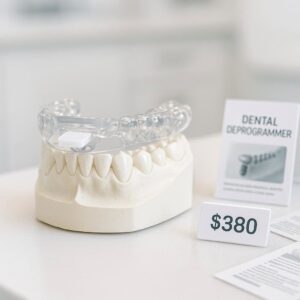
Before we discuss numbers, let’s understand the “what” and “why.” A dental deprogrammer, often called an anterior deprogrammer or bite deprogrammer, is a removable oral appliance. It’s typically worn on the upper teeth. Its primary function is not to permanently change your bite but to temporarily “deprogram” your jaw muscles and nervous system from their habitual, often strained, resting position.
Think of it like this: if you’ve been clenching your jaw for years, your muscles have memorized that tense posture. A deprogrammer creates a precise, gentle point of contact (usually just on the front teeth) that inhibits your back teeth from touching. This allows your overworked jaw muscles to relax, your temporomandibular joint to decompress, and your entire system to find a more natural, neutral position. It’s often a diagnostic tool and a therapeutic one, used to identify your true jaw position before moving to more permanent treatments.
Common Conditions a Deprogrammer Addresses
-
Temporomandibular Joint Disorders (TMJ/TMD): Pain in the jaw joint and muscles.
-
Bruxism: Unconscious clenching or grinding of teeth, often during sleep.
-
Chronic Headaches & Migraines: Especially those originating from temple or jaw tension.
-
Muscle Hyperactivity: Over-developed jaw muscles (masseters).
-
Diagnostic Use: To determine a patient’s optimal jaw position for orthotics, orthodontics, or restorative work.
Breaking Down the Factors That Influence Dental Deprogrammer Cost
You wouldn’t expect the cost of a suit to be the same as a custom-tailored tuxedo. Similarly, the cost of a dental deprogrammer varies significantly based on several key factors. Here’s what determines your investment.
1. Type of Appliance and Material Quality
Not all deprogrammers are created equal. The design and materials are the biggest cost drivers.
-
Basic Soft Acrylic Appliances: These are less common for true deprogramming but may be offered as simple night guards. They provide a barrier but less precise therapy. Cost Range: Lower end.
-
Hard Acrylic Custom Appliances: The standard for therapeutic deprogrammers. Lab-fabricated from models of your teeth for a perfect fit. Durable and allows for precise adjustments. Cost Range: Mid to High.
-
Specialized Design (e.g., NTI-tss, Anterior Midline Deprogrammer): Devices like the NTI (Nociceptive Trigeminal Inhibition) are FDA-approved for migraine prevention and have a specific, patented design. These often command a premium due to the technology and research behind them. Cost Range: High.
-
Multi-Phase or Adjustable Appliances: Some deprogrammers are part of a larger system (like a MAGO or DTR appliance) that can be gradually adjusted to guide the jaw. These involve more complex engineering. Cost Range: Highest.
2. Professional Expertise and Diagnostic Process
The appliance itself is just one piece. The value lies in the professional overseeing your care.
-
Comprehensive Examination: A qualified dentist or prosthodontist won’t just take an impression. They will conduct a thorough exam including a health history, palpation of jaw muscles, measurement of jaw range of motion, and analysis of your bite. This time and expertise are factored into the cost.
-
Advanced Diagnostics: Often, additional records are needed:
-
Digital or Physical Impressions & Models: The foundation for a custom fit.
-
Cone Beam CT Scan (CBCT): A 3D image to visualize the jaw joint’s structure, ruling out bone issues. This adds several hundred dollars.
-
T-Scan or Electromyography (EMG): High-tech tools to analyze bite force and muscle activity with precision.
-
-
Provider’s Training and Specialty: A general dentist with a focus on TMJ therapy, a prosthodontist, or a neuromuscular dentist will have different fee structures based on their advanced training and experience in this complex field.
3. Geographic Location
Dental fees vary by region and the local cost of living and operating a practice.
-
Major Metropolitan Areas (e.g., NYC, San Francisco): Typically higher.
-
Suburban or Rural Areas: Often more moderate.
4. Dental Insurance Coverage
This is a critical and often frustrating variable. Most dental insurance plans have limited coverage for TMJ appliances, often categorizing them under “occlusal guards” or “bruxism appliances.” Coverage may be 50% of a “usual and customary” fee, up to a yearly maximum (e.g., $1,000). Crucially, many plans have a clause excluding coverage for “TMJ treatment,” so you must verify your benefits explicitly. Medical insurance may sometimes cover part of the cost if a related medical condition (like migraines) is documented, but this often requires pre-authorization and can be challenging.
Dental Deprogrammer Cost: A Realistic Price Range Table
The following table provides a realistic breakdown. Remember, these are national averages; your specific quote may fall outside these ranges.
| Cost Component | Low-End Range | Mid-Range (Most Common) | High-End / Complex Range | What’s Included |
|---|---|---|---|---|
| Basic Exam & Impressions | $100 – $250 | $250 – $450 | $450+ | Initial consultation, basic exam, physical impressions. |
| Standard Hard Acrylic Deprogrammer | $300 – $600 | $600 – $1,200 | $1,200 – $1,800 | Custom lab-fabricated appliance, basic fitting. |
| Specialized Device (e.g., NTI) | N/A | $1,000 – $1,800 | $1,800 – $2,500+ | Patented device design, specific fitting protocols. |
| Advanced Diagnostics (CBCT Scan) | N/A | $250 – $500 | $500+ | 3D imaging of jaw joints and sinuses. |
| Follow-Up Adjustments & Appointments | Often bundled | $75 – $150 per visit | $150+ per visit | Critical for success; typically 1-3 visits needed. |
| TOTAL ESTIMATED INVESTMENT | $400 – $850 | $1,200 – $2,500 | $2,500 – $5,000+ | From diagnosis to delivery and initial adjustments. |
Important Note from a Dental Professional: “The true cost of a deprogrammer isn’t just the acrylic. It’s the diagnostic acumen to know if you need one, the skill to adjust it so it works effectively, and the clinical time to monitor your progress. A poorly made or unadjusted device can, in rare cases, make problems worse. Investing in the right professional is as important as the device itself.”
Is It Worth the Investment? Weighing Cost Against Value
Facing a potential bill of $1,500-$2,500 can give anyone pause. To frame it as an investment, consider the alternative costs of not treating the problem:
-
Chronic Pain Management: Ongoing costs for pain medications, muscle relaxants, or physical therapy.
-
Dental Damage: The cost of repairing worn, cracked, or broken teeth from unchecked grinding can run into thousands per tooth (crowns, root canals).
-
Quality of Life: The value of uninterrupted sleep, pain-free meals, and days without headaches is immense.
-
Preventative Value: A deprogrammer can prevent the need for more extensive and expensive dental rehab or orthodontics down the line.
As one patient shared: “After years of morning headaches, I finally got a deprogrammer. The cost felt high initially, but within two weeks, the constant tension in my temples was gone. When I think about the money I spent on massages, chiropractors, and painkillers before, the appliance has already paid for itself in a year.”
Helpful Lists: Questions to Ask Your Dentist About Cost
During Your Consultation, Be Sure To Ask:
-
What is the all-inclusive fee for the deprogrammer therapy? Does it cover the initial exam, records, appliance, fitting, and a certain number of adjustment visits?
-
Based on my diagnosis, why is this specific type of appliance the best choice for me?
-
What is your experience and training in treating TMJ/bruxism with these devices?
-
Can you provide a detailed pre-treatment estimate that I can submit to my insurance?
-
What are my financing or payment plan options if I proceed?
Red Flags to Watch Out For:
-
A dentist who offers a suspiciously low price without a thorough examination.
-
No discussion of follow-up appointments (adjustments are mandatory for success).
-
Pressure to pay for an entire, costly treatment plan (e.g., extensive orthodontics) before even trying a diagnostic deprogrammer phase.
Navigating Insurance and Financing Options
Don’t let cost be the sole barrier to treatment. Be proactive in exploring ways to manage it.
1. Dental Insurance:
-
Call your insurer. Ask: “Does my plan cover an occlusal guard or bruxism appliance (Code S9632) for the diagnosis of bruxism? What is the co-pay and my annual maximum?”
-
Ask about medical insurance crossover if your primary symptoms are migraines or facial pain. Your dentist may need to provide specific diagnostic codes (ICD-10) and a letter of medical necessity.
2. Financing Plans:
-
In-Office Payment Plans: Some practices offer interest-free monthly payments.
-
Third-Party Medical Financing: Companies like CareCredit or Alphaeon Credit offer lines of credit specifically for healthcare, often with promotional no-interest periods if paid in full within a set time (e.g., 6, 12, or 18 months).
3. Flexible Spending Accounts (FSA) or Health Savings Accounts (HSA):
-
These use pre-tax dollars and are an excellent way to pay for deprogrammers and related diagnostics, effectively reducing your out-of-pocket cost by your tax rate.
Conclusion
Understanding dental deprogrammer cost requires looking beyond a simple price tag to the value of personalized diagnosis, a custom-crafted medical device, and expert ongoing care. While the investment typically ranges from $1,200 to $2,500, it is an investment in halting dental damage, alleviating chronic pain, and restoring quality of life. By asking the right questions, verifying insurance benefits, and exploring financing, you can make this effective treatment a accessible part of your journey to better health.
Frequently Asked Questions (FAQ)
Q: How long does a dental deprogrammer last?
A: With proper care (gentle brushing, storage in its case), a well-made hard acrylic deprogrammer can last 3 to 5 years or longer. It may need occasional professional adjustments or refinishing over time.
Q: Is a deprogrammer the same as a night guard I can buy online?
A: No. Over-the-counter boil-and-bite guards offer only a crude barrier against tooth wear. They are not designed to properly reposition the jaw or deprogram muscles and can sometimes worsen bite issues. A custom deprogrammer is a precise therapeutic device.
Q: How soon will I feel relief after getting a deprogrammer?
A: Many patients notice a reduction in muscle tension and morning headaches within the first few days to two weeks. Full adaptation and more significant relief often occur over the first month, especially with necessary adjustments.
Q: Will a deprogrammer change my bite permanently?
A: When used as a standalone therapeutic or diagnostic device, its goal is not to permanently change your bite. However, by relaxing muscles, it can allow your jaw to settle into its natural position. Any permanent bite changes would be part of a separate, subsequent treatment plan (e.g., orthodontics) that you would discuss with your dentist.
Q: Can I use my dental deprogrammer if I only clench during the day?
A: Absolutely. While often worn at night, you can wear it during periods of high stress or concentration to break the clenching habit and give your muscles a rest.
Additional Resources
For further reading and to deepen your understanding of temporomandibular disorders and treatment options, consider visiting the resource pages of reputable professional organizations:
-
The American Academy of Orofacial Pain (AAOP): https://www.aaop.org/ – A leading source for patient education on TMD and orofacial pain.
-
The American College of Prosthodontists (ACP): https://www.gotoapro.org/ – Prosthodontists are specialists in complex restorative dentistry and often treat TMJ disorders.
Disclaimer: This article is for informational purposes only and does not constitute medical advice. The cost estimates provided are national averages and can vary widely. Always consult with a qualified dental healthcare professional for an accurate diagnosis and treatment plan tailored to your individual needs. Date: January 23, 2026. Author: The Editorial Team at Oral Health Insights.