Decoding the D2332 Dental Code: A Complete Guide to Anterior Three-Surface Fillings
- On
- InDENTAL CODE
Navigating the world of dental insurance and treatment plans can sometimes feel like learning a new language. You sit in the dentist’s chair, nodding along as the dentist explains you need a filling, but then you receive the treatment plan, and suddenly you’re staring at a strange alphanumeric code: D2332.
If you’ve ever found yourself scratching your head, wondering what this code means, why it’s different from a “regular” filling, or how it will impact your bill, you’re in the right place.
This guide is designed to be your friendly, comprehensive resource for everything you need to know about the D2332 dental code. We’ll break down the clinical procedure, the insurance implications, the costs, and what you can expect during your appointment. Let’s demystify this code together so you can walk into your next dental visit feeling informed and confident.
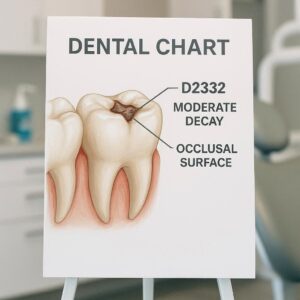
Table of Contents
ToggleWhat Exactly is the D2332 Dental Code?
At its core, the D2332 dental code is a standardized alphanumeric identifier used in dentistry, specifically under the American Dental Association (ADA) Current Dental Terminology (CDT). Think of it as a universal shorthand that allows dentists, insurance companies, and patients to communicate clearly about a very specific procedure.
The Official Definition: D2332 refers to a “resin-based composite – three surfaces, anterior.”
Let’s break that down into plain English:
-
Resin-Based Composite: This is the material. It’s a tooth-colored, plastic-like material (a mixture of acrylic resin and powdered glass-like filler) that bonds to the tooth. It’s what most people think of when they hear “white filling.”
-
Three Surfaces: This indicates the extent of the filling. A tooth has multiple surfaces (the chewing surface, the sides, etc.). This code specifies that the decay or damage involves three distinct surfaces of a single tooth.
-
Anterior: This specifies the location. Anterior teeth are the ones at the front of your mouth—your incisors and canines. These are the teeth responsible for cutting food and, most importantly, for your smile.
So, in simple terms, the D2332 dental code is used when a dentist places a tooth-colored filling on three surfaces of a front tooth.
Why Specificity Matters in Dental Coding
You might wonder why there isn’t just one code for “filling.” The reason is precision. The complexity, time, skill, and materials required to fill a single surface on a tiny front tooth are vastly different from those needed to restore a large, multi-surface cavity on a back molar.
Insurance companies use these codes to determine coverage and reimbursement rates. Your dentist uses them to accurately document the work performed. By being specific, the D2332 code ensures that the procedure is correctly identified for all parties involved.
The “Anterior” Difference: Why Location Matters
The “anterior” classification in the D2332 code is crucial. Teeth are broadly categorized into two groups for restorative codes: anterior (front) and posterior (back).
-
Posterior Teeth (Premolars and Molars): These teeth endure the immense forces of chewing and grinding. Fillings here often require materials that are extremely durable and wear-resistant. Historically, this is where silver amalgam (metal) fillings were common, though tooth-colored composites are used here too.
-
Anterior Teeth (Incisors and Canines): While they do some cutting and tearing, anterior teeth experience less direct chewing force than molars. However, they are under constant aesthetic scrutiny. A metal filling on a front tooth would be highly visible and cosmetically undesirable.
Therefore, procedures coded with D2332 and other anterior codes prioritize aesthetics alongside function. The goal is not just to restore the tooth but to make it look completely natural, blending seamlessly with the surrounding teeth in color, translucency, and texture.
The Aesthetic Challenge of a Three-Surface Front Filling
Restoring a front tooth with a three-surface filling is an art form. It requires the dentist to meticulously match the composite resin’s shade, opacity, and contour to the patient’s natural tooth structure. They are not just filling a hole; they are sculpting a replacement for part of your tooth that must withstand daily use and pass the closest of inspections—your own smile in the mirror.
The Clinical Procedure: What Happens During a D2332 Treatment?
Knowing what to expect can significantly reduce dental anxiety. Here is a step-by-step walkthrough of a typical D2332 procedure, from a patient’s perspective.
1. Numbing the Area (Local Anesthetic)
Even though anterior teeth are generally less sensitive than deep molars, the procedure involves drilling, which can cause discomfort. Your dentist will apply a topical numbing gel to your gum tissue before gently injecting a local anesthetic. You’ll feel a small pinch or burn, but it subsides quickly, leaving the tooth and surrounding area completely numb for the duration of the appointment.
2. Isolation of the Tooth
To ensure the filling bonds properly, the tooth must be kept perfectly dry and free from saliva. Your dentist or hygienist will likely place a small rubber dam or use cotton rolls and a suction device. The rubber dam can feel a bit odd, but it creates a clean, dry environment, which is essential for a long-lasting restoration.
3. Removal of Decay and Old Filling Material
Using a high-speed handpiece (dental drill) and sometimes a laser or air abrasion tool, the dentist will carefully remove all decayed tooth structure. If the filling is a replacement, the old material is also taken out. They will then shape the cavity to create the best possible surface for the new resin to bond to. You might hear whirring sounds and feel some vibration, but you shouldn’t feel any pain.
4. Tooth Preparation and Bonding
Once the decay is removed, the dentist will apply a series of gels and adhesives.
-
Etching: A mild phosphoric acid gel is applied to the tooth for a few seconds. This creates a microscopically rough surface, which helps the bonding agent stick.
-
Bonding Agent: A liquid resin (the “glue”) is painted onto the etched surface. It is then gently air-thinned and cured (hardened) using a special blue light.
5. Layering the Composite Resin
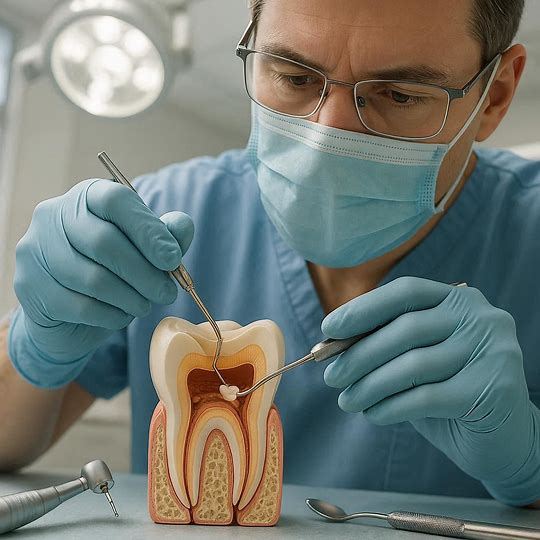
This is the most artistic part of the procedure. The dentist will take the tooth-colored composite resin, which often comes in a syringe, and carefully apply it to the prepared tooth in thin layers. Because the code specifies three surfaces, the dentist must meticulously rebuild the anatomy of each affected side of the tooth (e.g., the side facing the lip, the side facing the tongue, and the biting edge). Each layer is shaped and then hardened with the curing light before the next is added. This layering technique is what allows the dentist to mimic the natural depth and translucency of a real tooth.
6. Shaping and Finishing
Once the final layer is hardened, the tooth looks a bit rough and oversized. Now the real sculpting begins. The dentist uses fine-grit diamonds, carbide burs, and flexible discs to trim, shape, and smooth the filling. They will refine the contours, create natural-looking grooves, and ensure the filling doesn’t interfere with your bite.
7. Polishing
The final step is polishing. Using rubber cups, points, and polishing pastes, the dentist brings the restoration to a high shine. This not only makes the filling feel smooth against your tongue and lip but also creates a surface that is more resistant to staining and plaque buildup. When you look in the mirror, the filling should be virtually indistinguishable from your natural tooth enamel.
Important Note for Patients: The total time for a D2332 procedure can vary from 30 to 60 minutes, depending on the size of the cavity, the tooth’s location, and the complexity of the color matching required.
D2332 vs. Other Anterior Filling Codes
It’s easy to get confused by the different codes for front teeth. They all start with “D233” but the last number changes based on how many tooth surfaces are involved. Here’s a quick comparison:
| Dental Code | Description | What it Means | Typical Complexity |
|---|---|---|---|
| D2330 | Resin-based composite – one surface, anterior | A small filling on just one side of a front tooth. | Low |
| D2331 | Resin-based composite – two surfaces, anterior | A filling that covers two sides of a front tooth. | Moderate |
| D2332 | Resin-based composite – three surfaces, anterior | A larger filling covering three sides. | High |
| D2335 | Resin-based composite – four surfaces, anterior | An extensive filling covering four sides, often involving an incisal angle (the biting edge). | Very High |
Think of it like this: D2330 is a small patch on a shirt, while D2332 is replacing a significant portion of the fabric. The D2335 code is often used for a tooth that needs a near-total rebuild.
Dental Insurance and the D2332 Code
This is often the most confusing part for patients. Dental insurance plans have their own rules, and understanding how they apply to D2332 can save you from surprises.
Classification: Basic or Major?
Most dental insurance plans categorize procedures into three tiers: Preventive, Basic, and Major.
-
Preventive: Cleanings, exams, x-rays (usually covered at 80-100%).
-
Basic: Fillings, simple extractions (usually covered at 60-80%).
-
Major: Crowns, bridges, dentures, root canals (usually covered at 50% or less).
The D2332 code is almost universally classified as a Basic restorative procedure. This is good news, as it typically means a higher coverage percentage than a major procedure.
Understanding Your Coverage
Insurance coverage isn’t a simple “they pay, you don’t.” It’s based on several factors:
-
Your Annual Maximum: This is the total dollar amount your insurance plan will pay for your care in a calendar year. It’s often between $1,000 and $2,000. The cost of a D2332 filling will be applied toward this limit.
-
Your Deductible: This is the amount you must pay out-of-pocket before your insurance starts to pay. If you have a $50 deductible, you’ll need to cover that cost first.
-
Your Coinsurance: This is your share of the cost after the deductible is met. If your plan covers basic services at 80%, your coinsurance is 20%. For a D2332 filling that costs $250, your insurance would pay $200 (80% of the allowed amount), and you would pay $50 (plus any remaining deductible).
The “Usual, Customary, and Reasonable” (UCR) Fee
This is a critical concept. Every insurance company has a database of what they consider to be the “customary” fee for a D2332 procedure in a specific geographic area. Your dentist has their own fee, which is based on their expertise, overhead, and practice location.
-
If your dentist’s fee is at or below the UCR fee: The insurance calculates your coverage based on the dentist’s fee.
-
If your dentist’s fee is above the UCR fee: The insurance will only cover their portion based on the (lower) UCR amount. You will be responsible for paying the difference between the dentist’s actual fee and what the insurance paid, in addition to your coinsurance and deductible.
A Helpful Tip: Always ask your dentist’s office for a “predetermination of benefits” (also called a pre-authorization) before the work is done. They will send the D2332 code and x-rays to your insurance, and the insurance will send you a letter detailing exactly how much they will pay and what your estimated out-of-pocket cost will be. This is the best way to avoid financial surprises.
The Cost of a D2332 Filling (Without Insurance)
If you don’t have dental insurance, or if you’re considering a dental discount plan, you’re probably wondering about the cash price. The cost of a D2332 filling can vary widely based on your location (urban vs. rural), the dentist’s experience, and the practice’s overhead.
On average, you can expect to pay between $200 and $450 for a three-surface composite filling on a front tooth.
Factors influencing the cost:
-
Geographic Location: A filling in a major metropolitan area like New York City or San Francisco will typically cost more than one in a small Midwestern town.
-
Dentist’s Expertise: A highly sought-after cosmetic dentist may charge a premium for their artistic skill in matching the filling to your natural teeth.
-
Complexity: If the three surfaces are particularly difficult to access or if the decay extends close to the tooth’s nerve, the procedure becomes more complex and may cost more.
Advantages of Composite Resin (Material Used in D2332)
Why do dentists use composite resin for anterior teeth? The benefits are clear:
-
Superior Aesthetics: This is the number one reason. The material can be precisely color-matched to your existing teeth, providing a completely natural look. No unsightly metal margins.
-
Bonding to Tooth Structure: Composite resin bonds directly to the tooth enamel. This chemical bond actually helps strengthen the remaining tooth structure, which can prevent future fractures. Amalgam fillings, by contrast, just sit in the cavity.
-
Versatility: The dentist can sculpt the material to recreate complex tooth anatomy, making it ideal for front teeth that have unique shapes.
-
Less Tooth Removal: In many cases, bonding with composite resin allows the dentist to be more conservative and remove less healthy tooth structure compared to the preparation required for an amalgam filling.
Potential Disadvantages and Considerations
While composite resin is an excellent material, it’s important to have realistic expectations.
-
Staining: Over time, composite resin can be more prone to staining from coffee, tea, red wine, and tobacco than natural enamel or ceramic restorations (like veneers). Good oral hygiene and regular professional polishing help mitigate this.
-
Shorter Lifespan: Composite fillings don’t last as long as some other materials. While an amalgam filling might last 10-15 years or more, a composite filling’s average lifespan is 5-10 years. This is due to wear and tear, and the material’s tendency to degrade over time.
-
Chipping: Although durable, composite resin can chip, especially if you have a habit of biting your nails, chewing on ice, or using your teeth as tools.
-
Cost: Composite fillings are generally more expensive than amalgam fillings due to the material cost and the additional technique and time required for placement.
How to Care for a Tooth with a D2332 Filling
You’ve had the work done, and your smile looks great. Now, how do you keep it that way? Caring for a composite filling isn’t difficult, but it does require consistency.
-
Maintain Excellent Oral Hygiene: Brush twice a day for two minutes with a soft-bristled toothbrush and fluoride toothpaste. Floss daily. The junction between the filling and the tooth (the margin) is a prime spot for new decay to start if plaque is allowed to build up.
-
Be Mindful of Your Diet: Limit your intake of staining foods and beverages. When you do indulge, try to rinse your mouth with water afterward. Avoid hard, brittle foods that could chip the filling.
-
Kick Bad Habits: If you bite your nails, chew on pens, or grind your teeth (bruxism), you are putting your new filling at risk. Talk to your dentist about a nightguard if you grind your teeth in your sleep.
-
Keep Up with Regular Dental Visits: Professional cleanings and check-ups every six months are essential. Your dentist will check the condition of the filling, polish it to remove surface stains, and check for any signs of decay or wear.
Alternatives to a D2332 Three-Surface Filling
In some cases, a three-surface composite filling may not be the best or only option. Your dentist might discuss these alternatives with you, especially if the tooth is heavily damaged or decayed.
-
Dental Veneer: A thin shell of porcelain or composite resin that covers the entire front surface of the tooth. This is often a cosmetic choice for improving the appearance of a tooth, but it can also be a restorative option for a tooth with significant structural damage on its front surface. It is a more expensive and irreversible option (as some enamel must be removed).
-
Dental Crown: A “cap” that covers the entire tooth. This is the strongest and most durable option. It is typically recommended when the tooth is too weak or broken down to support a large filling. A crown on a front tooth requires more tooth reduction than a filling and is a major procedure.
-
Inlay/Onlay: An indirect restoration, meaning it’s fabricated in a dental lab and then cemented onto the tooth. It’s made from composite resin, porcelain, or gold. It can be a good option for large cavities when a filling is too big but a crown is too aggressive. It is less common for anterior teeth but may be used.
Frequently Asked Questions (FAQ)
Q: Is the D2332 procedure painful?
A: Your dentist will use a local anesthetic to numb the area. You should not feel any sharp pain during the procedure, though you may feel some pressure or vibration. Any post-treatment sensitivity is usually mild and temporary.
Q: How long does a D2332 filling last?
A: With excellent care, you can expect a composite filling to last between 5 and 10 years. Its longevity depends on the size of the filling, your oral hygiene, and your habits.
Q: Can I eat after getting a D2332 filling?
A: It’s best to wait until the numbness from the anesthetic has completely worn off (usually 1-2 hours) to avoid accidentally biting your cheek or lip. The filling itself is fully hardened by the curing light at the end of the appointment, so you don’t need to wait for the material to “set.”
Q: My dentist says I need a D2332, but my insurance says they cover D2331. What’s the difference?
A: This likely means your insurance company’s review of the x-rays suggests the cavity only involves two surfaces, while your dentist, through clinical and radiographic examination, believes it involves three. Your dentist may need to send additional information or clinical images to justify the need for the three-surface code (D2332) to your insurance company.
Q: Will the filling match my tooth color perfectly?
A: Your dentist will do their best to match the shade. Most dental offices have a shade guide with a wide variety of colors. However, no man-made material can perfectly replicate the complexity and translucency of natural enamel, but modern composites achieve remarkably natural results.
Q: Does insurance cover D2332 for baby teeth?
A: Yes, but the codes are different. For primary (baby) teeth, the codes are D2391 (one surface), D2392 (two surfaces), D2393 (three surfaces), and D2394 (four surfaces). Coverage policies will still apply.
Conclusion
The D2332 dental code represents more than just a line item on a treatment plan. It signifies a precise and artistic procedure designed to restore both the health and the beauty of a front tooth affected by decay on three of its surfaces. From the careful layering of tooth-colored resin to the meticulous shaping and polishing, this treatment is a blend of science and artistry.
Understanding this code empowers you to have more informed conversations with your dentist and your insurance company. You now know what the procedure entails, how it’s priced, and how to care for your smile afterward. While navigating dental terminology can sometimes feel overwhelming, breaking it down step-by-step makes it manageable. If you have any lingering questions about your specific situation, never hesitate to ask your dental team—they are your best resource for personalized care and guidance.
Additional Resource
For the most authoritative and up-to-date information on dental codes and terminology, you can visit the American Dental Association’s (ADA) website. They are the governing body for the CDT codes.
Visit the American Dental Association

dentalecostsmile
Newsletter Updates
Enter your email address below and subscribe to our newsletter