The Complete Patient’s Guide to the D5221 Dental Code (Interim Partial Denture)
Walking out of the dentist’s office with a treatment plan can sometimes feel like reading a foreign language. You see the procedure descriptions, but then you spot it: a jumble of letters and numbers like “D5221.” It looks clinical, cold, and confusing.
But here is the truth: that code is simply a shortcut. It is the dental industry’s way of saying, “Here is exactly what you need, and here is why your insurance might help pay for it.”
If you have recently been told you need a replacement for a missing tooth or two—but you aren’t ready for a bridge or an implant—you have likely encountered the D5221 dental code. This article is designed to pull back the curtain on that code. We will talk about what it really means, what the process feels like, how much it might cost you, and how to care for your new appliance.
Let’s turn that confusing code into something you understand completely.
What is the D5221 Dental Code? A Friendly Breakdown
In the simplest terms, the D5221 dental code refers to a specific type of false tooth (or teeth) that is designed to be temporary and, most importantly, removable.
The formal name used by dentists and insurance companies is: “Interim Partial Denture (maxillary).”
Let’s break that down so it sticks:
-
Interim: This means “temporary” or “provisional.” It isn’t meant to last forever, but it serves a vital purpose right now.
-
Partial Denture: This is a plate (usually made of acrylic) that holds one or more artificial teeth. It replaces missing teeth but leaves your natural teeth in place. It “clips” or rests on your existing teeth to stay put.
-
Maxillary: This simply means “upper jaw.” If the denture were for your bottom jaw, it would be coded D5222 (Interim Partial Denture, mandibular).
So, when you see D5221 on your paperwork, you are looking at a temporary, removable plate for your upper teeth.
Why “Interim”? Understanding the Temporary Nature
You might be wondering, “Why would I want something temporary? Why not just get the permanent fix?”
Great question. Think of an interim partial denture like a “bridge” solution—literally and figuratively. There are several reasons a dentist might recommend this temporary route before committing to a permanent restoration.
-
Healing Time: If you just had a tooth extracted, your gums and bone need time to heal. They will change shape as they heal. A permanent bridge or implant needs a stable foundation. Placing a permanent fixture too early could lead to failure later. The interim denture acts as a placeholder while your mouth heals.
-
Waiting for Implants: Dental implants are often considered the gold standard for tooth replacement, but they aren’t instant. The process of placing the implant and waiting for the bone to grow around it (osseointegration) takes months. You don’t want to walk around with a gaping hole for six months, right? The D5221 denture fills that gap while you wait.
-
Financial Breathing Room: Let’s be honest—dentistry can be expensive. An interim partial denture is significantly more affordable than a fixed bridge or implants. It allows you to restore function and appearance now, giving you time to save up for the permanent solution later.
-
Treatment Planning: Sometimes, a dentist isn’t 100% sure how a new bite alignment will feel. An interim denture acts as a “test drive.” You can wear it, see how it feels to eat and speak, and make adjustments before committing to a costly permanent appliance.
D5221 vs. Other Partial Dentures: A Quick Comparison
It is easy to get codes mixed up. To make things crystal clear, here is how D5221 stacks up against other common tooth-replacement options.
| Feature | D5221 (Interim Partial) | Cast Metal Partial (e.g., D5211) | Fixed Dental Bridge (e.g., D6240) | Dental Implant |
|---|---|---|---|---|
| Permanence | Temporary (6 months – 2 years) | Long-term (5-10+ years) | Permanent (10-15+ years) | Permanent (20+ years / lifetime) |
| Material | All Acrylic (Plastic) | Metal framework with acrylic teeth and gums | Ceramic/Porcelain fused to metal or zirconia | Titanium post with ceramic crown |
| Removability | Removable (take out to clean) | Removable (take out to clean) | Fixed (cemented in place) | Fixed (screwed or cemented) |
| Cost | $ (Most Affordable) | $$ | $$$ | $$$$ |
| Main Purpose | Esthetics & function during healing | Durable, long-term replacement for multiple missing teeth | Permanent replacement for one or two missing teeth | Permanent, standalone replacement |
As you can see, the D5221 code occupies a very specific niche. It is the flexible, affordable, and temporary player in the game of tooth replacement.
The Complete Procedure: What to Expect Step-by-Step
Knowledge is comfort. If you know what is coming, the anxiety of a dental procedure often melts away. Here is a realistic walkthrough of the journey with a D5221 interim partial denture.
H3: The Consultation and Examination
It all starts with a conversation. Your dentist will examine the area where the tooth (or teeth) are missing or need to be extracted. They need to check the health of the neighboring teeth, as these will act as the “anchors” for your partial.
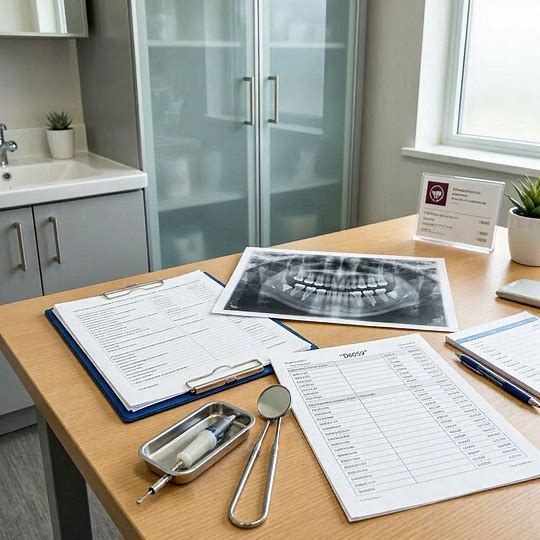
X-rays are almost always taken. The dentist needs to see the bone level and root structures of the adjacent teeth to ensure they are strong enough to support the clasps of the denture.
Important Note: Be honest with your dentist during this stage. Tell them about your lifestyle, your expectations for eating, and your budget. A good treatment plan is a partnership between you and your dental team.
The Diagnostic Impressions
Once you and your dentist decide to move forward with a D5221, the next step is taking a mold (impression) of your teeth.
This involves sitting in the chair while the dentist fills a tray with a soft, flavored (often bubblegum or mint) material. They press this tray over your teeth and ask you to hold still for a couple of minutes while it sets. It feels a bit goopy and strange, but it isn’t painful.
This impression creates a perfect, negative model of your mouth. The dental lab will use this model to pour up a stone replica of your teeth, which they use to craft your denture.
H3: Shade Selection and Design
Here is where you get to be creative! This is often called the “cosmetic appointment” or the “try-in” stage (though for a simple interim denture, the try-in might be combined with the final placement).
Your dentist will use a shade guide to match the color of the new false tooth (or teeth) to your existing natural teeth. They will hold different colored fake teeth up to your real ones in natural light to find the perfect match.
You will also discuss the shape of the tooth and, if the denture replaces a front tooth, the subtle nuances of its appearance. The goal is to make it look as natural as possible so you can smile with confidence.
Fabrication at the Lab
Now, the magic happens away from your mouth. The impressions and specifications are sent to a dental laboratory. A skilled dental technician pours the model, sculpts the wax try-in, sets the acrylic tooth, and processes the acrylic base.
This process usually takes about one to two weeks. Depending on the lab’s schedule and the complexity of your case, it could be a little longer. Your dentist will let you know the timeline.
The Final Insertion and Adjustment
This is the big day. You come back to the office, and your new D5221 interim partial denture is ready.
The dentist will place it in your mouth and check the fit.
-
Fit: Does it sit snugly against your gums without rocking?
-
Clasps: Do the little acrylic or wire clasps grip your anchor teeth securely without damaging them?
-
Bite: Do your teeth come together properly when you bite down? If the denture is too high, it will cause pain and prevent you from chewing.
The dentist will make small adjustments with special burs to smooth any rough spots or relieve pressure points. They will also show you exactly how to insert and remove the denture. It will feel very awkward at first, but practice makes perfect.
Friendly Reminder: It is normal for the denture to feel “bulky” or “weird” for the first few days. Your mouth has sensory nerves that are very sensitive to new objects. Give yourself time to adjust. Most people adapt within a week or two.
Realistic Costs and Insurance Coverage for D5221
Let’s talk money. It is one of the most important factors in any dental decision. The cost of a D5221 procedure is not a fixed number; it varies based on where you live, the complexity of the case, and the dentist’s specific fees.
The Price Range
Generally speaking, for a single-tooth interim partial denture on the upper arch (D5221), you can expect to pay somewhere between $400 and $800.
If the denture needs to replace multiple teeth on the same plate, the price will increase, usually moving toward the upper end of that range or slightly beyond. This fee typically covers:
-
All exams and treatment planning.
-
The initial impressions.
-
The laboratory fabrication.
-
The insertion appointment and any necessary adjustments within the first few weeks.
It is always a good idea to ask your dentist’s front office for a detailed, written treatment plan that breaks down every cost. Transparency is key.
How Dental Insurance Views D5221
This is where things can get a little tricky, but we’ll simplify it.
Dental insurance plans are built around a “100-80-50” structure, though many modern plans vary.
-
Preventive care (cleanings, exams) is often covered at 100%.
-
Basic restorative care (fillings, extractions) is often covered at 70-80%.
-
Major restorative care (crowns, bridges, dentures) is often covered at 50%.
So, where does D5221 fit?
Because it is a type of denture, most insurance companies classify D5221 as “Major Restorative Care.” This means your insurance will likely cover 50% of the cost, after you have met your annual deductible.
Example Time:
Let’s say your D5221 denture costs $600.
-
You have a $50 annual deductible. You pay the first $50.
-
The remaining balance is $550.
-
Your insurance covers 50% of that ($275).
-
You are responsible for the other 50% ($275) plus the initial $50 deductible.
-
Your out-of-pocket total: $325.
However, there is a catch: the annual maximum. Most dental insurance plans have a cap on how much they will pay out in a single year, usually around $1,000 to $1,500. If you have already had other major work done this year, you might have less benefit left to put toward your denture.
Always check your “Summary of Benefits” or call your insurance company to verify your coverage for “D5221 – Interim Partial Denture.”
Living With Your D5221 Interim Partial Denture
You have it. It fits. Now, how do you live with it? The goal is to keep your mouth healthy and your denture in good shape until you are ready for the next step.
The Adjustment Period: Eating and Speaking
The first few days are a learning curve.
-
Eating: Start with a soft food diet. Think yogurt, scrambled eggs, soup, and mashed potatoes. As you get more comfortable, gradually introduce more solid foods. Try to chew on both sides of your mouth to keep the denture balanced. Avoid sticky or very hard foods (like caramels or nuts) as they can dislodge or damage the acrylic.
-
Speaking: You might notice a slight lisp or an increase in saliva production. This is totally normal. The best “cure” is practice. Read a book out loud for 10-15 minutes a day. Talk to your family. Your tongue and cheek muscles will quickly learn to work around the new appliance.
The Daily Cleaning Routine
Because the denture is removable, your hygiene routine has two parts: cleaning the denture and cleaning your mouth.
Cleaning the Denture:
-
Handle with Care: Hold it over a sink filled with water or a folded towel. If you drop it, the water/towel will cushion the fall. Acrylic can break!
-
Rinse: After eating, rinse the denture under lukewarm (not hot!) water to remove food particles.
-
Brush: Use a soft-bristled toothbrush specifically designed for dentures, or a very soft regular toothbrush. Avoid hard-bristled brushes, as they can scratch the acrylic. Scratches harbor bacteria and stains.
-
Cleaner: Use a mild hand soap or a non-abrasive denture paste. Do not use regular toothpaste. Toothpaste is too abrasive for the soft acrylic of an interim denture and will create microscopic scratches. Soak it in a denture-cleaning solution (like Efferdent or Polident) according to the package directions, usually once a day, to help kill bacteria and remove stains. Rinse it thoroughly before putting it back in your mouth.
Cleaning Your Mouth:
-
Brush and Floss: Continue brushing your natural teeth twice a day. Floss daily, paying special attention to the teeth that the denture clasps onto. Food can easily get trapped there.
-
Gum Care: When you remove your denture at night, gently brush your gums, the roof of your mouth, and your tongue with a soft toothbrush. This stimulates blood flow and removes plaque.
H3: To Sleep or Not to Sleep?
This is a golden rule for removable partial dentures.
Do not wear your D5221 denture while you sleep. (Unless your dentist specifically instructs you to for a very short period after extractions).
Your gums and the bone underneath need a chance to rest and recover from the pressure of the denture. Wearing it 24/7 can lead to accelerated bone loss, fungal infections (like thrush), and gum irritation. Give your mouth a break. Place the denture in water or a mild soaking solution overnight to keep it from drying out and warping.
Frequently Asked Questions (FAQ)
We have compiled some of the most common questions patients have about the D5221 dental code.
Q1: Is the D5221 code the same as a “flipper”?
A: Yes! In dental slang, a “flipper” is the common nickname for an interim partial denture. If your dentist says, “We’ll make you a flipper while you heal,” they are talking about the D5221 code.
Q2: How long will a D5221 denture last?
A: As an “interim” appliance, it is designed to last for a limited time. With excellent care, you might get 1 to 2 years out of it. However, because your mouth changes shape over time (gums shrink, bone resorbs), it will eventually become loose and uncomfortable. That is when you know it’s time to discuss the permanent solution you originally planned for.
Q3: Will people be able to tell I have a fake tooth?
A: Modern dental acrylics and tooth shades are very good. Most people will not notice, especially if it is a single tooth. The most noticeable part can be the small clasps that hook onto your adjacent teeth. If esthetics is a major concern for you (especially for front teeth), ask your dentist about “esthetic clasps” or precision attachments, though these may not always be possible on an interim appliance.
Q4: Can I eat steak with my D5221 denture?
A: You might be able to, but it will require practice. The denture is not fixed in place, so tough or chewy foods can unseat it. Cut your food into small pieces and chew slowly. Many patients prefer to save very tough foods for when they have their permanent restoration.
Q5: What if it breaks?
A: Don’t panic. Acrylic can break. Do not try to glue it yourself with superglue. Superglue contains toxic chemicals that are not safe for your mouth. Call your dentist immediately. They can often repair a simple fracture in the office or send it back to the lab. Keep any broken pieces and bring them with you.
Conclusion
Navigating dental codes doesn’t have to be a headache. The D5221 code is simply your roadmap to a temporary, removable solution for missing upper teeth. Whether you are healing from an extraction, waiting for implants, or need a more affordable option right now, this “interim partial denture” serves a crucial role in your dental health and your confidence.
It buys you time. It protects your smile. It allows you to eat and speak normally while your mouth prepares for its long-term future. By understanding the procedure, the costs, and how to care for it, you are now equipped to make the best decision for your unique situation.
Additional Resource
For further reading on tooth replacement options and maintaining oral health, the American Dental Association (ADA) provides excellent, patient-friendly resources. You can visit their website at ADA.org and search for “dentures” or “tooth replacement.”