Dental Code D2975: The Definitive Guide to Copings
If you have ever sat in the dental chair and watched your dentist pull out a printed treatment plan filled with strange numbers and codes, you know it can feel a bit like reading a foreign language. Dental codes—technically known as CDT codes (Current Dental Terminology)—are the standardized language that dentists, insurance companies, and dental labs use to communicate exactly what work needs to be done.
One code that often raises eyebrows (and questions) is Dental Code D2975.
You might see it on an estimate for a crown and wonder, “Wait, am I paying for two different things?” It’s a fair question. The world of restorative dentistry is complex, and codes like D2975 exist to ensure that every step of your treatment is documented correctly.
This guide is designed to pull back the curtain on D2975. We are going to explore what it is, why it is necessary, how it impacts your insurance coverage, and what you, as a patient, should expect when you see this on your bill. Whether you are preparing for a major dental restoration or just trying to understand an explanation of benefits (EOB) from your insurer, you are in the right place.
Let’s get started.
What is Dental Code D2975? A Clear Definition
Let’s start with the basics. In the world of dental billing, D2975 is the specific code used for a procedure known as a coping.
To put it simply, a coping is an internal component of a dental restoration. The official CDT description for D2975 is: “Coping”.
But a definition that short doesn’t tell the whole story. Think of a coping as the foundation or the framework upon which a dental crown is built.
The “Foundation” Analogy
Imagine you are building a house. You cannot just paint the walls directly on the dirt. You need a solid foundation and a frame. In dentistry, when a tooth is severely damaged or has had root canal treatment, it needs a strong foundation to support a crown.
-
The Post and Core: This is like the rebar and concrete poured into the ground.
-
The Coping (D2975): This is the concrete foundation slab. It’s a thin, thimble-shaped cap that fits directly over the prepared tooth or implant abutment.
-
The Crown: This is the actual house—the visible structure that looks like a natural tooth.
The coping provides a rigid, stable base. It ensures that the final crown has a perfect fit and can withstand the massive forces of chewing without fracturing.
Why Would You Need a Coping? (The Clinical Scenarios)
You won’t see D2975 on every crown procedure. It is a specific code used for specific situations. Your dentist will recommend a coping for one of three main reasons:
1. Creating a Custom Foundation for a Crown
This is the most common use of D2975 in traditional dentistry. Sometimes, a tooth is so broken down that there isn’t enough healthy tooth structure left to properly support a crown. The dentist might build up the tooth with a core material, but for added strength, a coping is fabricated.
This coping fits snugly over the remaining tooth structure, acting as a unified stress breaker. It distributes the force of chewing evenly, protecting the weak tooth underneath from fracturing.
2. The Implant Connection
If you have a dental implant, you are very likely to encounter D2975. Implants consist of a titanium post (the artificial root) and a restoration on top (the crown). But the crown doesn’t usually attach directly to the implant.
-
An abutment is a connector piece that screws onto the implant.
-
In many cases, a coping (D2975) is used as part of a custom abutment or as the framework for a screw-retained crown.
On an implant, the coping provides the precise connection between the implant hardware and the aesthetic porcelain crown. It ensures that the crown is stable and doesn’t loosen over time.
3. Repairing Existing Bridgework
In some cases, a patient might have a malfunctioning or broken bridge. If the underlying framework is still good, a dentist might use a coping to repair a specific part of the bridge rather than scrapping the entire expensive appliance. This is less common but a valid use of the code.
D2975 vs. Other Common Dental Codes
One of the biggest sources of confusion for patients is how D2975 differs from other, more familiar codes. It is often bundled in the same conversation as posts, cores, and crowns. Let’s break down the differences in a way that is easy to understand.
D2975 vs. D2950 (Core Build-Up)
This is the most common point of confusion. They often happen during the same appointment, but they are distinct steps.
| Feature | D2950 (Core Build-Up) | D2975 (Coping) |
|---|---|---|
| What it is | A large filling material (composite or amalgam) used to replace missing tooth structure. | A thin, precisely fabricated metal or ceramic “cap” or framework. |
| Function | To build the tooth up to a minimal size so a crown can hold onto it. | To provide a super-strong, rigid foundation and ideal shape for the final crown. |
| Material | Filling materials placed by the dentist in the chair. | Fabricated in a lab or milled in-office from metal or ceramic. |
| Analogy | Using spackle to fill a large hole in a wall so you can hang a picture. | Placing a metal mounting plate on the wall to ensure the picture hangs straight and secure. |
The Bottom Line: The core build-up (D2950) replaces the bulk of the missing tooth. The coping (D2975) is the precision casing over that build-up that optimizes the fit of the crown.
D2975 vs. D2750 (Crown – Porcelain Fused to High Noble Metal)
This is much easier to distinguish. The crown is the final, visible tooth.
| Feature | D2975 (Coping) | D2750 (Crown) |
|---|---|---|
| What it is | The internal framework. | The final, external restoration. |
| Visibility | Not visible once the crown is cemented. | Completely visible; it looks like your tooth. |
| Role | Structural integrity and fit. | Aesthetics and function. |
If the coping is the steel frame of a building, the crown is the glass windows and decorative stone cladding that everyone sees.
The Procedure: What to Expect When You Have D2975 on Your Plan
Seeing a separate procedure on your treatment plan can make you nervous about time and discomfort. Here is a realistic step-by-step walkthrough of what happens when your treatment includes a coping.
Step 1: Tooth Preparation and Impression
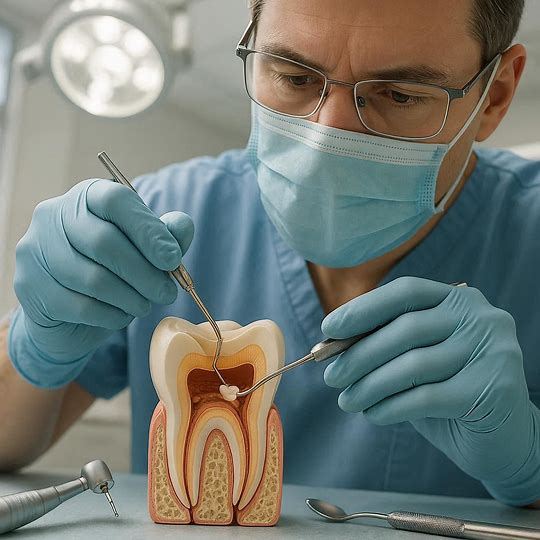
Your dentist will numb the area and prepare your tooth (or implant site). This involves shaping the tooth so a crown can fit over it. If a core build-up is needed, that will happen now. Once the tooth is ready, the dentist takes a highly detailed impression of the area. This impression captures the exact shape of the prepared tooth and the surrounding teeth.
Step 2: The Laboratory Phase (Where the Coping is Made)
The impression is sent to a dental laboratory. This is where the magic happens.
-
Model Creation: The lab pours stone into the impression to create an exact model of your teeth.
-
Coping Fabrication: A skilled dental technician fabricates the coping on this model.
-
For metal copings: A thin layer of wax is applied to the die (the model of your tooth) and carved to the perfect shape. It is then invested in a heat-resistant material and burned out. Molten metal is cast into the resulting mold to create the coping.
-
For ceramic copings: Modern technology often uses CAD/CAM (Computer-Aided Design and Manufacturing). The technician designs the coping digitally on a 3D model of your tooth, and a milling machine carves it out of a solid block of high-strength ceramic.
-
Step 3: The Try-In Appointment (The “Biscuit Bake”)
This is the key appointment where D2975 is billed. The dentist will temporarily remove your temporary crown and place the coping on your tooth. They will check:
-
Fit: Does it seat all the way down? Are the margins snug against the tooth?
-
Contact: Does it touch the neighboring teeth correctly?
-
Occlusion: How does it affect your bite?
If the coping fits perfectly, the dentist will then proceed with the next step. In the case of a traditional porcelain-fused-to-metal crown, the dentist will apply layers of porcelain powder directly onto the coping in your mouth, shaping the tooth. This is called a “bisque bake” or “trial glaze” appointment. You get to see the tooth in its pre-final state, and the dentist can make adjustments to the shape and color.
Step 4: Final Glazing and Cementation
The coping, now with the porcelain built up, is sent back to the lab for the final glazing (which gives it a natural shine). At your final appointment, the dentist will cement or bond the completed crown (coping + porcelain) onto your tooth.
The Cost Factor: Why Does D2975 Add to My Bill?
This is the million-dollar question. When you see D2975 on an invoice, it represents an additional fee. Understanding why there is an extra cost helps make the treatment plan feel more transparent.
1. Laboratory Fees
The largest component of the cost for D2975 is the laboratory fee. Dental laboratories are specialized businesses. A technician spends significant time and uses expensive materials (precious metals like gold, palladium, or high-tech ceramics) to fabricate the coping. The dentist pays the lab for this service and passes that cost on to you, along with a fee for their expertise in managing the case.
2. Increased Clinical Time
An appointment where a coping is tried in and porcelain is built up is longer and more complex than a simple crown seat. It requires a high level of skill from the dentist to ensure the aesthetics are perfect before the final glaze. You are paying for that advanced chair time and expertise.
3. Material Science
Not all copings are created equal.
-
Metal Copings: Often made with high-noble alloys (gold, platinum) which are expensive.
-
Zirconia Copings: Zirconia is a “white metal” that is incredibly strong and durable. Milling solid blocks of zirconia requires expensive machinery and the material itself is costly.
The type of coping material used will directly influence the final cost associated with D2975.
A Note on Dental Insurance and D2975
Navigating insurance with a code like D2975 can be tricky. Here is what you need to know to avoid surprises.
Is it Bundled or Separate?
This depends entirely on your specific insurance plan. There are two common scenarios:
-
Scenario A: The “Global” Fee: Some insurance companies consider the coping to be an integral part of fabricating the crown. They will not allow the dentist to bill for D2975 separately. They bundle the cost of the coping into the allowance for the crown code (e.g., D2750). If this is the case, you will not see a separate line item for D2975 on your Explanation of Benefits (EOB).
-
Scenario B: The “Separate” Procedure: Many other insurance plans recognize the coping as a distinct, billable service, especially in complex cases or when a high-strength material is used. In this case, you will see D2975 listed separately, and it will likely be subject to its own deductible and coinsurance.
How to Check Your Coverage
Before you agree to treatment, ask the dental office to perform a “predetermination of benefits” (also called a pre-authorization). They will send your treatment plan to your insurance company, who will reply in writing with exactly what they will pay for. This is the only way to know for sure how your plan treats D2975.
Important Note: Even if your insurance doesn’t cover the coping separately, the dentist may still need to perform the procedure to ensure a successful, long-lasting crown. You are responsible for the cost of the treatment you receive, regardless of what your insurance chooses to cover.
Advantages of a Restoration with a Coping
Why go through the extra step and expense? Because the benefits are significant.
-
Superior Strength: The coping acts as a bulk of rigid material that prevents the porcelain from flexing and cracking under pressure.
-
Improved Fit: A coping fabricated on a precise model of your tooth guarantees a more accurate fit than a crown built without this internal reinforcement.
-
Aesthetic Versatility: With a coping as a foundation, the dental ceramist can layer porcelain in a way that mimics natural tooth translucency and color, without the dark shadow of metal (especially with white zirconia copings).
-
Longevity: Because the structure is stronger and fits better, the final crown is much less likely to fail. This means your investment lasts longer.
FAQ: Your Questions About D2975 Answered
Q: Is a coping the same thing as a temporary crown?
A: No, absolutely not. A temporary crown is a short-term placeholder made of plastic. It is meant to last a few weeks. A coping (D2975) is a permanent, strong foundation that becomes a permanent part of your final crown.
Q: Will I be able to see or feel the coping in my mouth?
A: No. The coping is completely covered by the tooth-colored porcelain of the final crown. You will never see it, and you won’t feel it any differently than you would a normal tooth.
Q: My dentist said I need a coping because my tooth is “short.” What does that mean?
A: Crowns need a certain height (or “vertical dimension”) to stay on. If your tooth is short, either naturally or because it broke off at the gum line, a coping can help create a stronger “grip” for the crown. It acts as an extension of the preparation, providing more surface area for the crown to hold onto.
Q: Does D2975 hurt?
A: The procedure itself is painless because you are numbed with local anesthetic. You might feel some pressure during the try-in, but it is generally a very comfortable appointment. The only discomfort would be the initial tooth preparation for the crown, which is already numbed.
Q: Can a coping come loose?
A: A coping is designed to be permanently cemented or bonded. In a well-done restoration, it should never come loose. If the underlying cement fails, the entire crown (coping + porcelain) will come off as one unit.
Conclusion
Understanding Dental Code D2975 takes the mystery out of your dental treatment plan. It is not an extra, unnecessary procedure, but rather a key component in building a strong and reliable dental crown. Whether it is providing a foundation for a broken-down tooth or ensuring a perfect fit on an implant, the coping plays a critical, behind-the-scenes role in restoring your smile. By knowing what it is, why it’s used, and how it affects your costs, you can move forward with your treatment with confidence, knowing you are investing in a restoration built to last.
In short: D2975 is the hidden framework that gives your dental crown its strength and stability. It is a separate procedure from the crown itself, designed to ensure a precise fit and long-term success. Understanding this code helps you navigate your treatment plan and insurance coverage with clarity.
Additional Resource
For the most accurate and up-to-date information on dental coding straight from the source, you can visit the American Dental Association’s (ADA) catalog for the Current Dental Terminology (CDT). This is the manual that dentists and insurance companies use.