Dental Code D3240: A Complete Guide to Posterior Pulpectomy
If you have been told by your dentist that you need a root canal on a back tooth, you might have seen a confusing code on your treatment plan: D3240. Dental billing codes can look like a foreign language, but understanding them is the key to understanding your own healthcare.
The goal of this guide is to demystify Dental Code D3240. We will walk through exactly what this procedure entails, why it is necessary, how it differs from other common treatments, and—most importantly—what it means for your wallet and your health.
Whether you are a patient trying to decipher an insurance explanation of benefits (EOB) or simply someone who likes to be informed before sitting in the dentist’s chair, you are in the right place.

What is Dental Code D3240?
In the world of dentistry, the Current Dental Terminology (CDT) code set is the standard language for communicating about procedures. These codes are used by dentists to bill insurance companies and by patients to understand what work is being done.
D3240 is the specific code for a Pulpectomy (primary tooth) – posterior tooth.
Let’s break that down into plain English:
-
Pulpectomy: This refers to the complete removal of the dental pulp. The pulp is the soft tissue inside the tooth that contains nerves, blood vessels, and connective tissue. When this pulp becomes infected or irreversibly damaged, it must be removed to save the tooth structure.
-
Primary Tooth: This means the procedure is performed on a “baby tooth.” These are the first set of teeth in children and adolescents.
-
Posterior Tooth: This specifies the location. Posterior teeth are the ones in the back of the mouth—the premolars and molars. These teeth have more complex root structures than the front teeth (anterior).
So, in short, D3240 is the code for a complete root canal on a baby molar.
Why Would a Child Need This Procedure?
It is a common misconception that baby teeth are not important because they eventually fall out. However, primary teeth serve critical functions:
-
Space Maintenance: They hold the space in the jaws for the permanent teeth that are developing underneath. If a baby tooth is lost too early, neighboring teeth can tilt into the empty space, causing crowding and alignment issues when the permanent teeth try to come in.
-
Chewing and Nutrition: Children need healthy teeth to chew food properly for good digestion and nutrition.
-
Speech Development: Teeth are essential for the proper formation of sounds and clear speech.
-
Self-Esteem: A healthy smile contributes to a child’s confidence.
A pulpectomy (D3240) is performed to save a baby tooth that is severely infected or damaged. Common reasons include:
-
Deep Decay (Cavities): Tooth decay that has penetrated through the enamel and dentin and into the pulp chamber.
-
Trauma: A fall or accident that damages the tooth, even if there is no visible crack, can kill the nerve inside.
-
Infection: An abscess at the root tip, which can cause pain, swelling, and even harm the developing permanent tooth below.
Important Note for Parents: Leaving an infected baby tooth in the mouth without treatment is not an option. The infection can spread, cause significant pain for your child, and potentially damage the permanent tooth bud lying beneath it.
D3240 vs. Other Common Codes: Understanding the Difference
One of the biggest sources of confusion for patients is the difference between a pulpectomy and other related procedures. Here is a comparison table to help clarify.
| Code | Procedure Name | What It Is | Tooth Type | Key Difference |
|---|---|---|---|---|
| D3240 | Pulpectomy (Primary Tooth) – Posterior | Complete removal of all pulp tissue from the crown and roots. | Primary (baby) molars | Full root canal on a baby back tooth. |
| D3230 | Pulpectomy (Primary Tooth) – Anterior | Complete removal of all pulp tissue from the crown and roots. | Primary (baby) front teeth | Same procedure, but on front teeth. |
| D3220 | Therapeutic Pulpotomy | Partial removal of the pulp, usually only from the crown. The healthy pulp in the roots is left intact and treated. | Primary or Permanent | Only the “roof” of the pulp is removed. Often done on baby teeth with less severe decay. |
| D3310 | Root Canal – Anterior | Complete removal of pulp tissue. | Permanent front teeth | Root canal on an adult front tooth. |
| D3320 | Root Canal – Bicuspid | Complete removal of pulp tissue. | Permanent premolars | Root canal on an adult bicuspid. |
| D3330 | Root Canal – Molar | Complete removal of pulp tissue. | Permanent molars | Root canal on an adult molar. |
Pulpotomy (D3220) vs. Pulpectomy (D3240)
This is the most common point of confusion. Think of it this way:
-
A pulpotomy is like cleaning out only the top floor of a house (the crown) because the basement (the roots) is still clean and dry. A medicated filling is placed to keep the basement healthy.
-
A pulpectomy is like cleaning out the entire house, from the attic to the basement, because the infection has spread everywhere. The “basement” (the roots) must be cleaned, disinfected, and filled.
Your child’s dentist will determine which procedure is necessary based on the extent of the infection, which is often visualized on a dental x-ray.
The Procedure: What Happens During a D3240 Treatment?
Knowing what to expect can help both you and your child feel calmer about the appointment. The procedure is very similar to an adult root canal but tailored for a child’s anatomy and needs.
Step 1: Diagnosis and Preparation
The dentist will review the x-rays to see the shape of the roots and confirm that the infection has spread to the pulp. They will discuss anesthesia options with you. Usually, local anesthesia (novocaine) is used to numb the area completely.
Step 2: Isolation
To keep the tooth clean and dry during the procedure, the dentist will place a small rubber dam over the tooth. This looks like a small rubber sheet. It prevents saliva (which contains bacteria) from entering the tooth and also protects the child from swallowing any small instruments or rinsing solutions.
Step 3: Access and Removal (The Pulpectomy)
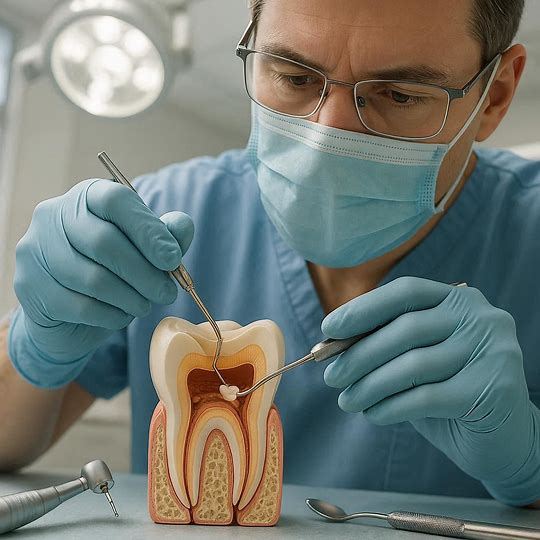
The dentist will create a tiny opening in the chewing surface of the tooth to access the pulp chamber. Using small, specialized instruments called files, they will gently and thoroughly remove all of the infected or dead pulp tissue from the crown and the root canals.
Step 4: Cleaning and Shaping
The empty canals are then cleaned, disinfected, and slightly widened to receive the filling material. An irrigating solution is used to wash away any remaining debris.
Step 5: Filling the Canals
Because baby teeth are destined to fall out, they are not filled with the same material as permanent teeth. Instead, a resorbable material is used. This material is often medicated (like zinc oxide eugenol) and is designed to be absorbed by the body as the root of the baby tooth naturally dissolves to make way for the permanent tooth.
Step 6: The Final Restoration
A tooth that has undergone a pulpectomy is structurally weaker and more brittle. To protect it and restore its function, a crown is almost always necessary. This is often a stainless steel crown (code D2930) . It is a pre-formed metal cap that covers the entire tooth, providing a strong and durable chewing surface until the tooth is ready to exfoliate (fall out).
The Importance of the Final Crown
It is crucial to understand that code D3240 covers the nerve treatment only. The final restoration—the crown—is a separate procedure with its own code and cost.
Skipping the crown is one of the biggest mistakes a parent can make. Here is why the crown is non-negotiable:
-
Protection from Fracture: After a pulpectomy, the tooth is hollow and significantly weakened. Chewing on a hard piece of candy or an unexpected popcorn kernel can easily split the tooth in half, causing the treatment to fail and the tooth to be lost.
-
Prevents Recontamination: The filling material inside the canals is not as strong as a crown. A crown creates a perfect seal, preventing bacteria from leaking back down into the roots and causing a new infection.
-
Maintains Function: Molars are designed to grind food. A stainless steel crown can withstand the forces of chewing much better than a large white filling.
Think of it like this: the pulpectomy fixes the foundation of the house, but the crown is the new roof that protects it from the elements.
Cost and Insurance Considerations for D3240
The cost of dental work is often the biggest concern for families. The price for a D3240 procedure can vary widely depending on your location, the dentist’s experience, and the complexity of the case.
Average Cost Breakdown
Without insurance, you can generally expect the costs to fall within these ranges:
-
Procedure D3240 (Pulpectomy): $300 – $600+
-
Stainless Steel Crown (D2930): $250 – $500+
This means the total investment to save a single baby molar can range from $550 to over $1,100.
How Dental Insurance Helps
Most dental insurance plans (especially those for children, as required by the Affordable Care Act) cover a significant portion of restorative work.
-
Coverage Percentage: Many plans cover pulpectomies at 40% to 80%, depending on whether the dentist is in-network or out-of-network. This usually falls under “Basic Restorative Services.”
-
Annual Maximums: Remember that dental plans have an annual maximum benefit (often $1,000 to $2,000). If other work has been done that year, this procedure could eat up a large portion of that maximum.
-
Deductibles: You will likely need to meet your annual deductible before the insurance company starts paying.
A Helpful Tip: Always ask your dentist’s office for a “predetermination of benefits” or “pre-authorization.” They will send the treatment plan to your insurance company, who will then send you a written estimate of what they will pay and what your out-of-pocket cost will be. This prevents surprises.
Aftercare and What to Expect
Recovery from a pulpectomy is usually quite quick, especially compared to the toothache that preceded it.
-
Immediate Aftercare: The numbing agent will last for a few hours after the appointment. Supervise your child to ensure they do not bite their cheek, lip, or tongue while they are still numb. Offer soft foods and avoid hot liquids until the numbness wears off.
-
Mild Discomfort: It is normal for the gums to feel a little sore for a day or two. You can give over-the-counter children’s pain relief (like ibuprofen or acetaminophen) as directed by your dentist or pediatrician.
-
Oral Hygiene: Continue brushing and flossing as normal, but be gentle around the treated area. Keeping the area clean is vital for healing.
-
Long-Term Care: The tooth with the stainless steel crown requires no special care. It will function like a normal tooth. However, it is not “immune” to decay. Your child must still practice excellent oral hygiene, especially at the gum line where the crown meets the tooth.
Frequently Asked Questions (FAQ)
Is a pulpectomy painful for my child?
With modern anesthetics, the procedure itself should not be painful. The injection to numb the area might cause a pinch or a sting, but dentists use techniques (like topical numbing gel) to minimize this. The procedure removes the source of the pain, so your child will feel much better afterward.
When will the baby tooth fall out?
The tooth should fall out naturally when its permanent successor is ready to erupt. The resorbable filling material dissolves along with the roots, so it does not interfere with this process.
Can the pulpectomy fail?
While the success rate is very high, no medical procedure is 100% guaranteed. Failure can occur if there is an unusual canal anatomy that couldn’t be fully cleaned, if the crown leaks, or if the tooth fractures. Regular check-ups are important to monitor the tooth.
My child has no pain. Why does the dentist say they need this?
Tooth decay can sometimes destroy the nerve without causing a sharp toothache. The nerve dies quietly, becoming a breeding ground for bacteria. An x-ray will often show an infection (an abscess) at the root tip even if the child feels fine. Treating it now prevents a painful and dangerous infection later.
Can we just pull the tooth instead?
In some cases, extraction is an option. However, dentists always try to save the tooth first because of the “space maintenance” issue. If a baby molar is extracted prematurely, your dentist may recommend a “space maintainer” (a small metal appliance) to hold the gap open. This is an additional procedure and cost.
Conclusion
Dental Code D3240 represents a common but critical procedure in pediatric dentistry: the posterior pulpectomy. It is a scientific and effective way to save an infected baby molar, alleviating pain and preventing future orthodontic problems caused by premature tooth loss. While the procedure requires a significant investment of time and money, especially when paired with the necessary stainless steel crown, it is an investment in your child’s long-term oral health and proper dental development.
Additional Resource
For a visual guide on what to expect during a children’s root canal procedure, the American Academy of Pediatric Dentistry (AAPD) offers excellent parent-friendly resources.
[Visit the AAPD Website for Parent Resources] (https://www.aapd.org/resources/parent/)