Do Clear Braces Really Work?
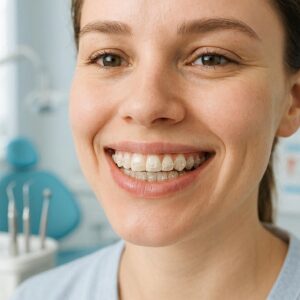
You have probably seen them on social media, on your favorite influencer, or maybe on a coworker who suddenly smiled wider than before. Clear braces look like a modern miracle. They are subtle. They are sleek. They promise to fix crooked teeth without the “metal mouth” look.
But you are asking a fair question. Do clear braces really work, or are they just a pretty face?
The short answer is yes. Clear braces absolutely work. But that answer comes with a few important conditions. They do not work for everyone. They do not work overnight. And they are not magic. In this guide, we will walk through exactly how clear braces function, who they help, where they struggle, and what you should know before spending your money.
By the end, you will have a realistic, honest view. No hype. No hidden agendas. Just the facts you need to decide.
What Exactly Are Clear Braces?
Let us start with a simple definition. When most people say “clear braces,” they actually mean one of two different things.
The first is ceramic braces. These work just like traditional metal braces, but the brackets are made of a clear or tooth-colored ceramic material. They are glued to your teeth. A wire runs through them. Your orthodontist tightens that wire over time to move your teeth.
The second is clear aligners. These are removable, transparent plastic trays. Brands like Invisalign, ClearCorrect, and many others fall into this category. You wear each set of trays for about one to two weeks, then switch to the next set in the series. Each new tray moves your teeth a little further toward the final goal.
For this article, we will focus mainly on clear aligners, because that is what most people mean when they ask, “Do clear braces really work?” But we will also touch on ceramic braces where helpful.
Why People Love the Idea of Clear Braces
The appeal is obvious. Clear braces are hard to see. You can eat whatever you want (with aligners, at least). You can brush and floss normally. There is no metal poking your cheeks. They fit into a busy, professional, or social lifestyle without embarrassment.
But looking good and feeling good are not the same as working well. So let us get into the real question.
 Do Clear Braces Really Work for Straightening Teeth?
Yes, but with limits.
Clear aligners work best for mild to moderate orthodontic issues. Think of them as excellent for the middle 80% of common problems. They struggle with the most severe 10% and the most complex 10%.
Here is a simple breakdown.
| Type of Issue | How Well Clear Aligners Work |
|---|---|
| Mild crowding | Very well |
| Moderate crowding | Well, with attachments |
| Spacing between teeth | Very well |
| Slight overbite | Well |
| Slight underbite | Fair to good |
| Crossbite (single tooth) | Good |
| Severe overbite | Poor |
| Severe underbite | Poor |
| Rotated teeth (over 20 degrees) | Poor |
| Teeth that need vertical movement | Poor |
| Large jaw discrepancies | Not at all |
What the Research Says
Multiple clinical studies have looked at this question. One study published in the American Journal of Orthodontics and Dentofacial Orthopedics found that clear aligners achieved predictable results for mild crowding and spacing. The same study noted that complex tooth rotations and large vertical movements were far less reliable.
Another research review concluded that aligners work best when patients wear them at least 20 to 22 hours per day. That is not a suggestion. That is a requirement.
So, do clear braces really work? They work exactly as designed for the right candidate. For the wrong candidate, they fail.
How Clear Braces Actually Move Teeth (The Simple Version)
You do not need an engineering degree to understand this.
Traditional braces use constant pressure from a metal wire. That wire wants to return to its original shape. When your teeth are crooked, the wire bends. It then constantly pushes against your teeth until they move into alignment.
Clear aligners work differently. Each plastic tray is slightly different from the previous one. The difference is measured in fractions of a millimeter. When you put in a new tray, it feels tight in specific spots. Those tight spots are applying pressure to specific teeth. Over about one to two weeks, your teeth shift into that new position. Then you move to the next tray.
Think of it like climbing stairs. Each tray is one step. You cannot jump from step one to step ten. You need every step in between.
The Role of Attachments
Many people do not know about attachments. Attachments are small, tooth-colored bumps made of dental composite. Your orthodontist glues them onto certain teeth before you start aligner treatment.
These attachments look like tiny buttons. They give the aligner something to grab onto. Without attachments, clear aligners can struggle to rotate teeth or close gaps completely. With attachments, they become much more powerful.
So if your orthodontist recommends attachments, do not worry. They are not visible from a normal conversation distance. And they make the difference between “maybe works” and “definitely works.”
Who Is a Good Candidate for Clear Braces?
Not everyone. And a good orthodontist will tell you that honestly.
You are probably a good candidate if:
-
You have mild to moderate crowding (think one or two slightly overlapping teeth)
-
You have small to medium gaps between your teeth
-
Your bite is mostly correct, with only minor adjustments needed
-
You are an adult or older teen with all permanent teeth fully erupted
-
You can commit to wearing aligners 20–22 hours per day
-
You do not grind your teeth severely at night (unless you use a separate night guard)
You are likely a poor candidate if:
-
You have severe crowding (teeth are piled on top of each other)
-
You have a deep overbite that covers most of your lower front teeth
-
You have a severe underbite or crossbite involving multiple teeth
-
You have rotated teeth more than 20 degrees from their normal position
-
You have missing teeth that require bridges or implants
-
You have large jaw alignment issues that need jaw surgery
A Note from an Orthodontist (Imagined, But Realistic)
“I tell my patients the truth. Clear aligners are fantastic tools. But they are not magic wands. If someone comes to me with severe crowding, I explain that traditional braces or a hybrid approach will give them a better result in less time. A good orthodontist will never sell you aligners just because they are popular. They will sell you what actually works for your mouth.”
Clear Braces vs. Traditional Braces: An Honest Comparison
Let us put these two options side by side.
| Feature | Clear Aligners | Traditional Metal Braces |
|---|---|---|
| Visibility | Nearly invisible | Very noticeable |
| Comfort | Mild initial pressure | Can cause sore spots and poking wires |
| Removable | Yes (for eating, brushing) | No (fixed to teeth) |
| Eating restrictions | None (remove before eating) | Avoid hard, sticky, crunchy foods |
| Oral hygiene | Easy (brush and floss normally) | Difficult (need special tools) |
| Treatment time for mild cases | 6–12 months | 12–18 months |
| Treatment time for moderate cases | 12–18 months | 18–24 months |
| Effectiveness for severe cases | Poor | Excellent |
| Follow-up appointments | Every 6–8 weeks (or remote monitoring) | Every 4–6 weeks |
| Cost (before insurance) | $3,000–$8,000 | $3,000–$7,500 |
Do clear braces really work compared to metal braces? For mild to moderate cases, they work just as well, with the bonus of being removable. For complex cases, metal braces still win.
The Hidden Factors That Determine Success
Many people focus only on the braces themselves. But success depends on several factors that have nothing to do with the plastic or ceramic.
Your Discipline
This is the biggest one. Clear aligners only work when you wear them. If you forget to put them back in after lunch, you lose hours of progress. If you leave them out during a long dinner, you lose more. Do that repeatedly, and your teeth will not track with the trays.
You will then need refinements (new sets of trays), which add time and sometimes extra cost.
Your Orthodontist’s Skill
Not all clear aligner treatments are created equal. Some dentists take a few weekend courses and start offering aligners. Others are experienced orthodontists with years of training in tooth movement.
The difference matters. A skilled orthodontist knows how to plan the entire sequence of trays. They know where to place attachments. They know when to switch to a different approach. They also know when to say no to a patient who is not a good candidate.
Your Specific Tooth Anatomy
Some teeth move easily with aligners. Others do not. Lower incisors (your bottom front teeth) can be stubborn. Upper canines (the pointy teeth) often resist rotation. Molars (your back teeth) sometimes tip instead of moving bodily through the bone.
A good treatment plan accounts for these challenges. But no plan can overcome biology completely.
The Brand You Choose
Not all clear aligners are equal. High-end brands like Invisalign use patented SmartTrack material, which applies gentler, more consistent force. They also have decades of research behind them.
Lower-cost brands (often called “mail-order aligners” or “DIY aligners”) cut corners. They might not require attachments. They might not have you see a doctor in person. They might send you all the trays at once with no monitoring.
Important note: Do not use mail-order aligners without professional supervision. Multiple studies have reported cases of permanent tooth damage, bone loss, and gum recession from unsupervised aligner treatment. Your teeth are not just decoration. They are connected to nerves, bone, and blood vessels. Moving them incorrectly can cause real harm.
Realistic Timeline: From First Day to Final Retainer
Let us walk through a typical clear aligner journey. This will help you see if the process fits your life.
Month 0: Consultation and Scans
You meet with an orthodontist. They examine your teeth, take X-rays, and likely use a digital scanner (no goopy impressions needed). They discuss your goals and tell you honestly if aligners are right for you.
Month 1: First Trays Arrive
Your custom trays arrive about four weeks later. You receive your first several sets. You put in the first tray. It feels tight. You might have a slight lisp for a day or two. This is normal.
Months 1–6: Active Treatment
You change trays every one to two weeks. Each new tray feels tight for the first day or two, then normal. You visit your orthodontist every six to eight weeks to check progress and receive more trays.
Month 6–12: Midcourse Correction (If Needed)
Sometimes teeth do not move exactly as planned. Your orthodontist may rescan your teeth and order refinements. This is common. It does not mean treatment failed. It means your body responded slightly differently than the software predicted.
Month 12–18: End of Active Treatment
You finish your last tray. Your teeth are straight. But you are not done.
Month 18–Forever: Retention Phase
This is where many people make a mistake. Your teeth want to move back to their original positions. They have memory. To stop them, you must wear retainers.
Most orthodontists recommend full-time retainer wear (20–22 hours per day) for three to six months after active treatment. Then you switch to nightly wear for life.
Do clear braces really work long-term? Yes, but only if you wear your retainers. Without retention, relapse is almost guaranteed.
Common Problems People Face With Clear Braces
Let us be honest about the challenges. No treatment is perfect.
The Lisp
Almost everyone gets a slight lisp when they first start aligners. Your tongue touches the trays instead of your teeth. This usually goes away within one to two weeks. If it persists, practice speaking out loud or reading a book aloud for ten minutes each day.
Staining and Hygiene
Clear aligners are clear. They show everything. If you drink coffee, tea, red wine, or turmeric-filled foods with your aligners in, the trays will stain. They will look dirty. Then your teeth will look dirty.
The solution is simple. Remove aligners before drinking anything except water. Brush your teeth before putting them back in. If you cannot brush, at least rinse your mouth and the trays thoroughly.
Saliva Changes
Some people produce more saliva when they first start aligners. Others produce less, leading to dry mouth. Both issues usually resolve within a few weeks. Drinking more water helps.
Lost or Damaged Trays
Dogs love aligners. They smell like you, and they are chewy. Keep your trays in their case, not on a napkin or table.
If you lose a tray, do not skip ahead. Go back to your previous tray if it still fits. Call your orthodontist immediately. They may order a replacement.
Gum Irritation
The edges of aligners can sometimes rub against your gums. Your orthodontist can trim or file the edge. You can also use orthodontic wax (yes, the same wax used for braces) to cover a sharp spot.
The Cost Question: Are Clear Braces Worth It?
This depends entirely on your situation.
Clear aligners typically cost between $3,000 and $8,000 in the United States. The average is around $5,000. That usually includes:
-
Initial consultation and scans
-
All sets of aligners (including one round of refinements)
-
Attachments and any IPR (interproximal reduction, where they slightly slim between teeth to create space)
-
Retainers after treatment
-
All follow-up appointments
Some insurance plans cover a portion of orthodontic treatment for adults, but many do not. Dental insurance often has a lifetime orthodontic maximum of $1,500–$2,000. Check your plan carefully.
Is There a Cheaper Option?
Mail-order aligners cost less—often $1,500 to $2,500. But you get less.
You do not get in-person exams. You do not get X-rays to check bone health. You do not get attachments for difficult movements. You do not get professional monitoring.
Do clear braces really work from mail-order companies? For very simple cases, sometimes. But you take all the risk. If something goes wrong, you pay for the damage yourself. Most orthodontists strongly advise against unsupervised treatment.
Think of it this way. You would not hire a carpenter who never measures your walls. Do not move your teeth without a doctor measuring your bones.
Who Should Absolutely Avoid Clear Braces?
Let us be very clear about this. Some people should not use clear aligners at all.
Children and Young Teens
Children still have growing jaws and mixed dentition (baby teeth and permanent teeth together). Aligners are not designed for this. Traditional braces or growth modification appliances work much better for kids.
People With Active Gum Disease
Moving teeth through inflamed, infected gums is dangerous. You can lose bone support around your teeth. Any orthodontic treatment requires healthy gums first.
People With Large Restorations
If you have many crowns, bridges, or large fillings, aligners may not grip your teeth properly. Attachments also do not bond as well to crowns. Traditional braces may be a better option.
People Who Cannot Commit to Wear Time
If you travel constantly, forget things easily, or simply do not want to wear aligners 22 hours per day, do not waste your money. You will not get good results. Traditional braces remove the compliance variable because you cannot take them out.
People With Severe Teeth Grinding
Bruxism (teeth grinding) can crack aligners. It can also cause your jaw muscles to overpower the gentle forces from the trays. Your orthodontist may still approve you if you wear a separate night guard over your aligners, but this becomes complicated.
Success Stories and When They Happen
Let us look at three realistic scenarios.
Scenario A: The Ideal Candidate
Anna is 28 years old. She wore braces as a teenager but did not wear her retainers. Her front teeth have shifted slightly. One lower tooth overlaps its neighbor. Otherwise, her bite is fine.
Anna gets clear aligners. She wears them 22 hours per day. She changes trays every week. After 12 weeks, her teeth are straight. She moves to retainers. She is thrilled.
Do clear braces really work for Anna? Yes. Perfectly.
Scenario B: The Moderate Candidate
Marcus is 34. He has moderate crowding on his lower teeth. His upper front teeth are slightly rotated. He has a mild overbite.
Marcus wears aligners with attachments. His treatment takes 14 months. He needs one round of refinements (eight additional weeks). His final result is excellent, but it took longer than expected.
Do clear braces really work for Marcus? Yes, but he needed patience.
Scenario C: The Poor Candidate
Linda is 42. She has severe crowding. Her lower canine is rotated nearly 45 degrees. She also has a deep overbite that covers 80% of her lower teeth.
A mail-order aligner company approves her anyway. She pays $1,800. Six months later, her teeth have not moved as planned. Her bite feels worse. She develops gum recession on the rotated tooth.
Linda sees an orthodontist. The orthodontist tells her she needs traditional braces for 24 months and possibly gum grafting first.
Do clear braces really work for Linda? No. And they caused new problems.
The lesson is clear. The answer to “do clear braces really work” depends entirely on who is asking.
How to Maximize Your Chances of Success
If you decide to move forward with clear aligners, follow these rules.
Rule 1: Wear Your Trays 22 Hours Per Day
That means you have two hours total for all meals, snacks, and brushing. Set a timer if you need to. Use the TrayMinder app or similar. Do not cheat. Every hour without trays is backwards progress.
Rule 2: Chew Your Chewies
Chewies are small, cylinder-shaped cushions of foam or rubber. You bite down on them for a few minutes each day. This seats your aligners fully onto your teeth. Better seating means better movement.
Rule 3: Keep Your Trays Clean
Clean your trays every time you take them out. Use a soft toothbrush and clear, unscented soap or a specialized aligner cleaner. Do not use toothpaste. Toothpaste is abrasive and will scratch your trays, making them cloudy and more visible.
Rule 4: Do Not Skip Appointments
Even if your trays feel fine, your orthodontist needs to check your progress. They can spot problems you cannot see. They can also give you your next sets of trays.
Rule 5: Wear Your Retainers Forever
This is not optional. Your teeth will relapse without retainers. Budget for replacement retainers every few years. They wear out. They crack. They get lost. Have backups.
Clear Braces and Pain: What to Expect
Let us address discomfort honestly. Clear braces are not painful in the way a broken bone is painful. But they are uncomfortable at specific times.
When you put in a new tray, you will feel pressure. That pressure can be moderate to intense for the first 12 to 24 hours. Some people describe it as a dull ache. Others say it feels like their teeth are being squeezed.
This is normal. This is the feeling of your teeth moving.
Over-the-counter pain relievers like ibuprofen or acetaminophen help. Some orthodontists recommend taking one dose 30 minutes before inserting a particularly tight tray.
The good news is that the discomfort fades quickly. By day two or three of each new tray, most people feel nothing at all.
Do clear braces really work without pain? No. Some discomfort is necessary. That discomfort means the trays are working.
Environmental and Lifestyle Considerations
Clear braces fit into most lifestyles, but not all.
If You Are a Teacher, Speaker, or Performer
The lisp phase can be embarrassing if you talk for a living. Consider starting treatment when you have a break (summer vacation, between work projects). Practice speaking at home before returning to public settings.
If You Travel Frequently
Travel is manageable but requires planning. Bring extra trays, a travel toothbrush, floss, a small bottle of soap, and your case. Never leave trays in a hot car. Heat warps plastic. Warped trays do not fit. Non-fitting trays do not work.
If You Have Acid Reflux or Eat Frequently
Aligners trap acid against your teeth if you put them in immediately after vomiting or reflux. Rinse your mouth thoroughly with water and wait 20 minutes before inserting trays. If you snack frequently throughout the day, aligners become inconvenient because you must remove and reinsert each time.
If You Play Contact Sports
Remove your aligners before putting in a sports mouthguard. Do not wear aligners during high-impact sports. A blow to the face can drive the aligner into your gums or crack the plastic against your teeth.
Comparing Clear Braces Brands: A Quick Overview
There are many brands. Here is a simple comparison of the most common ones.
| Brand | Best For | Average Cost | Doctor Required? |
|---|---|---|---|
| Invisalign | Complex cases, rotations, attachments | $4,000–$8,000 | Yes |
| ClearCorrect | Moderate cases, good value | $3,500–$7,000 | Yes |
| 3M Clarity | Mild to moderate cases | $3,500–$6,500 | Yes |
| Spark | Moderate cases, thinner material | $4,000–$7,500 | Yes |
| Byte (at-home) | Very mild cases only | $1,900–$2,300 | Remote doctor review |
| SmileDirectClub (defunct) | Avoid (company closed, no follow-up) | N/A | N/A |
Important note: Even with lower-cost brands, the most important factor is your doctor’s skill. A great orthodontist using a mid-tier brand will give you better results than a poor orthodontist using Invisalign.
The Environmental Impact of Clear Braces
This is rarely discussed, but it matters to some readers. Clear aligners generate plastic waste. Each patient goes through 20 to 50 sets of trays, plus refinement trays. Each set comes in a plastic bag or foil pouch.
Traditional braces also generate waste (metal brackets, wires, elastic bands), but less plastic overall.
Some aligner brands have recycling programs. Invisalign offers a recycling partnership with TerraCycle. You send back your used trays, and they turn them into plastic pellets for other products.
If environmental impact concerns you, ask your orthodontist about recycling options before starting treatment.
Frequently Asked Questions (FAQ)
1. Do clear braces really work for severe crowding?
No. For severe crowding, traditional braces or a combination of braces and aligners work much better.
2. How long do clear braces take to work?
Mild cases: 3–6 months. Moderate cases: 12–18 months. Severe cases: not recommended.
3. Can I eat with clear braces on?
No. Remove aligners before eating anything except water. Food gets trapped under the trays, causing cavities and staining.
4. Do clear braces hurt?
They cause pressure and mild discomfort for 1–2 days after each new tray. This is normal and temporary.
5. Will clear braces fix my overbite?
They fix mild to moderate overbites well. Severe overbites require traditional braces or jaw surgery.
6. How much do clear braces cost?
Typically $3,000–$8,000. Insurance may cover $1,000–$2,000 if you have orthodontic benefits.
7. Can a general dentist do clear braces?
Yes, but an orthodontist has two to three years of extra training in tooth movement. For anything beyond the simplest case, choose an orthodontist.
8. Do clear braces work faster than metal braces?
Sometimes for mild cases, yes. For moderate to complex cases, metal braces are often faster because they apply more constant force.
9. What happens if I stop wearing my retainers?
Your teeth will slowly shift back toward their original positions. This is called relapse. It can happen within months or over several years.
10. Do clear braces really work for teenagers?
For older teens with all permanent teeth erupted, yes. For younger teens with growing jaws, traditional braces are usually better.
Additional Resource
For a deeper dive into orthodontic treatment options, including before-and-after photos of real cases, visit the American Association of Orthodontists (AAO) website:
https://www.aaoinfo.org
The AAO provides a “Find an Orthodontist” tool, patient education videos, and a clear breakdown of treatment types. All information is reviewed by certified orthodontic specialists. No advertising bias. Just reliable guidance.
Conclusion
Clear braces do work, but only for mild to moderate orthodontic issues and only when you wear them as directed. They are not a substitute for traditional braces in complex cases, and they require lifelong retainer use to maintain results. Choose a qualified orthodontist, follow the rules, and clear braces can give you a straight, healthy smile without the metal look.