Free Dental Implants in Oklahoma
Let’s be honest for a moment.
If you are reading this, you are probably dealing with missing teeth. Maybe it’s one tooth. Maybe it’s several. And maybe you have already heard that dental implants are the closest thing to natural teeth you can get.
But then you saw the price.
And now you are searching for “free dental implants in Oklahoma.”
That makes complete sense. Dental care is expensive. And implants? They are a serious investment. But here is the truth you need to hear right away:
Completely free dental implants for the general public are extremely rare.
That is not what you wanted to read. I know. But a good guide does not sell you false hope. A good guide tells you the truth and then shows you the real doors you can knock on.
So here is what this article will do for you. We will explore every realistic pathway to low-cost or no-cost dental implants in Oklahoma. We will talk about clinical trials, dental schools, charitable programs, and creative financing. We will also explain why “free” is complicated and how you can protect yourself from scams.
By the time you finish reading, you will have a clear, honest roadmap. No fluff. No fake promises. Just real help.
Let’s get started.
Why Are Dental Implants So Expensive in the First Place?
Before we look for free options, it helps to understand what you are actually paying for. A dental implant is not like a filling or a simple extraction.
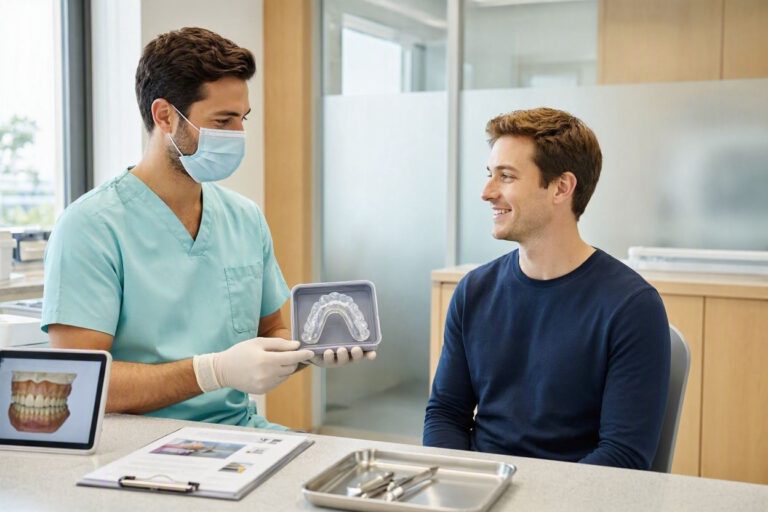
An implant is a surgical procedure. A small titanium post is placed into your jawbone. Over time, that post fuses with the bone. Then an abutment and a crown are attached on top.
That process involves:
-
A surgeon (often a periodontist or oral surgeon)
-
A restorative dentist
-
Imaging (CBCT scans)
-
The implant hardware itself
-
The custom-made crown
-
Multiple appointments over several months
In Oklahoma, a single dental implant can cost between $3,000 and $6,000. If you need a full mouth of implants (like All-on-4), you could be looking at $20,000 to $40,000 per arch.
That is real money. And that is why “free” sounds so attractive.
But here is the good news: “free” does exist in specific situations. You just need to know where to look and how to qualify.
What “Free Dental Implants” Actually Means (Read This First)
When people search for free dental implants, they often imagine a clinic that will place implants at no charge for anyone who walks in.
That clinic does not exist in Oklahoma. Or anywhere in the United States.
However, free implants do happen in these specific scenarios:
-
Clinical research trials – Companies need to test new implant technologies or techniques. Participants often receive free treatment.
-
Charitable foundations – Some non-profits sponsor implant procedures for specific patient profiles (often veterans, abuse survivors, or medical needs cases).
-
Dental schools – Not free, but dramatically reduced. Sometimes close to free for qualifying patients.
-
One-time mission events – Rarely, a clinic will offer free implant services for a single day.
Notice something? All of these have eligibility requirements. None are guaranteed. But they are real.
So let’s stop using “free” as a magic word and start using “affordable” and “accessible.” That is where the real help lives.
Real Pathway #1: Clinical Trials for Dental Implants in Oklahoma
This is the closest thing to completely free dental implants you will find.
Clinical trials are research studies. A company or university wants to test a new implant design, a new surgical technique, or a new material. They need human volunteers. In exchange for your participation, you receive the implant procedure at no cost.
Sometimes they even cover travel expenses.
How to Find Active Dental Implant Trials in Oklahoma
Start here:
-
ClinicalTrials.gov – This is a database run by the U.S. National Library of Medicine. Search for “dental implant” and filter by location: Oklahoma.
-
University of Oklahoma College of Dentistry – They occasionally run implant-related studies. Call their research office directly.
-
Oklahoma City VA Medical Center – If you are a veteran, the VA sometimes participates in implant research.
What You Need to Know Before Joining a Trial
You are not a regular patient in a trial. You are a research participant. That means:
-
You may be randomly assigned to a control group (different treatment)
-
You will need to attend many follow-up visits
-
You may not know which implant system you are receiving
-
There are always risks with experimental procedures
But for many people, the trade-off is worth it. Free implants. Expert care. Close monitoring.
*“I received two free implants through a clinical trial at a university dental school. It took longer than a normal procedure because of all the follow-ups, but I saved over $8,000.”* — Anonymous trial participant
Current Reality Check
At the time of writing, Oklahoma does not have a high number of active implant trials. But that changes. Studies open and close. Your best move is to check every 30 days.
Real Pathway #2: Dental Schools in Oklahoma
Dental schools are the single best option for affordable implants in Oklahoma.
Are they free? Usually no. But they are often 50% to 70% less expensive than private practices. And in some cases, if you qualify for financial hardship, they may offer pro bono (free) care.
University of Oklahoma College of Dentistry
This is the main teaching dental school in the state. Located in Oklahoma City, they offer implant services through their graduate programs.
Here is how it works:
-
Treatment is performed by residents (dentists who have already graduated and are now specializing)
-
Every step is supervised by experienced faculty
-
Appointments take longer than a private office
-
But the quality is excellent
Estimated costs at OU College of Dentistry (much lower than private):
| Service | Private Practice Cost | OU College of Dentistry |
|---|---|---|
| Single implant + crown | $4,000 – $6,000 | $2,000 – $3,500 |
| Implant consultation | $150 – $300 | $50 – $100 |
| CBCT scan | $300 – $500 | $100 – $200 |
How to Apply for Reduced or Free Care
Call their patient intake line at (405) 271-7744. Ask specifically about:
-
The implant clinic
-
Financial assistance programs
-
Pro bono slots for patients in extreme need
Not everyone gets free care. But if you have no insurance, low income, and a genuine medical need, it is worth asking.
Other Schools to Consider
Oklahoma has only one dental school. However, you can look at neighboring states:
-
Texas A&M College of Dentistry (Dallas – about 3 hours from OK border)
-
University of Texas School of Dentistry at Houston
-
University of Missouri-Kansas City School of Dentistry
These are not in Oklahoma, but if you live near the border, they may be a realistic option.
Real Pathway #3: Non-Profit and Charitable Organizations
Several national and local organizations sometimes help with dental implants. Again, “sometimes” is the key word. Implants are expensive for charities too. But it is worth exploring.
Dental Lifeline Network
This organization runs the Donated Dental Services (DDS) program. Volunteer dentists provide free treatment to people with permanent disabilities, the elderly, or those with serious medical conditions.
Implants are not always covered. But for some patients with severe needs, they are.
Eligibility: You must have a permanent disability, be medically fragile, or be 65+ with no ability to pay.
How to apply: Visit dentallifeline.org and complete the Oklahoma application.
Mission of Mercy (MOM) Events
These are large-scale dental clinics that happen once or twice a year in Oklahoma. They provide free dental care for two days. However, implants are almost never done at MOM events. Implants require multiple visits and healing time.
But what they can do is:
-
Extractions (free)
-
Temporary partial dentures (free)
-
X-rays and exams (free)
That does not give you an implant. But it can stabilize your mouth while you save for implants.
Give Back a Smile
This program, run by the American Academy of Cosmetic Dentistry, helps survivors of domestic violence restore their smiles. They sometimes cover implants.
Eligibility: You must be a survivor of domestic violence with dental injuries related to the abuse.
How to apply: aacd.com/give-back-a-smile
Local Oklahoma Charities to Watch
-
Regional Food Bank of Oklahoma (they do not do dental work, but they sometimes know of local resources)
-
United Way of Central Oklahoma – call 211 for dental assistance referrals
-
Catholic Charities of Oklahoma City – limited dental vouchers for emergencies
None of these guarantee implants. But they are real organizations that genuinely want to help. Call them. Be polite. Ask if they know any implant assistance programs.
Real Pathway #4: The Oklahoma Medicaid Exception
Here is something many people do not know.
Oklahoma Medicaid (Soonercare) does not cover dental implants for adults. That is the hard truth.
However, there is one exception.
If your missing teeth are the result of:
-
Oral cancer surgery
-
A congenital deformity
-
A severe accident that also caused other medical trauma
…then a medical doctor can sometimes request implant coverage under the medical (not dental) portion of Medicaid. This is rare. It requires extensive documentation. But it has happened.
What to do: Ask your oral surgeon or primary care doctor to submit a prior authorization request for implants as a medical necessity.
Do not expect this to work for routine tooth loss. But if your situation is severe and medically complex, it is worth the effort.
Pathway #5: Sliding Scale and Low-Cost Dental Clinics (Implants Are Rare, But Ask)
Many community health centers in Oklahoma offer dental care on a sliding scale based on your income. Most do not place implants. But some can place implant-supported dentures for qualifying patients.
Call these clinics and ask directly: “Do you offer any implant services at a reduced cost?”
-
Good Shepherd Community Clinic (Pauls Valley) – (405) 238-7342
-
Variety Care (Oklahoma City, multiple locations) – (405) 632-6688
-
Community Health Center of Southeast Kansas (Miami, OK location) – (620) 231-9873
When you call, be clear about what you need. Say: “I am missing teeth. I cannot afford private implants. Do you have any program for low-cost implants or implant-supported dentures?”
Most will say no. One might say, “We don’t, but try this other place.” That other place might be your answer.
Pathway #6: Crowdfunding and Community Fundraising
This is not “free” in the traditional sense. But thousands of people have funded their dental implants through crowdfunding.
Platforms to use:
-
GoFundMe (medical section)
-
GiveSendGo
-
YouCaring (now part of GoFundMe)
How to Succeed with Crowdfunding for Implants
Do not just say “I need money for teeth.” That does not work.
Instead, tell a story. Include:
-
Photos (if you are comfortable)
-
How missing teeth affect your daily life (eating, speaking, smiling, working)
-
A specific dollar amount for a specific treatment plan
-
Updates after each donation
“I raised $4,200 in three weeks for my front tooth implant. I shared my story on Facebook and my local church’s group. People want to help, but they need to see the real person behind the request.” — Oklahoma resident
Combine Crowdfunding with Other Help
Use the reduced prices from a dental school. Then crowdfund the reduced amount. That is a winning strategy.
Pathway #7: Dental Discount Plans (Not Free, But Lower Cost)
A dental discount plan is not insurance. You pay an annual fee (usually $100–$150) and get access to a network of dentists who agree to reduced rates.
Some discount plans include implants at 20% to 40% off.
Examples:
-
Careington 500 Series
-
Aetna Dental Access
-
Cigna Dental Discount
Before you buy: Call the plan and ask for the fee schedule for implants in Oklahoma. Get the name of three participating dentists in your area. Then call those dentists and confirm the discounted price.
This will not make implants free. But a $5,000 implant for $3,000 is real savings.
Pathway #8: Employer Benefit Hacks (Flexible Spending and Health Savings Accounts)
If you are employed, check your benefits.
Flexible Spending Account (FSA) and Health Savings Account (HSA) dollars can be used for dental implants. These are pre-tax dollars. That means you effectively get a 20% to 30% discount depending on your tax bracket.
It is not free. But it is less expensive.
Also ask your employer about adding a dental implant rider to your group dental plan. Some large Oklahoma employers (like Tinker Air Force Base civilian jobs, OU Health, and major energy companies) offer enhanced dental benefits.
How to Avoid Dental Implant Scams in Oklahoma
When people search for “free dental implants,” scammers listen.
Here are real scams that have appeared in Oklahoma and surrounding states:
The “Free Implant” Upfront Fee Scam
You receive a call or see a Facebook ad: “Free dental implants in Oklahoma – limited time.” They ask for a $500 “surgical deposit” or “reservation fee.” You pay. They disappear.
Rule: Never pay an upfront fee for free treatment. Legitimate free care never asks for a deposit.
The “Implant Membership” Scam
A website claims you can pay a monthly membership ($199/month) and receive free implants after 12 months. This is a subscription trap. You pay for a year, then they claim you do not qualify.
The Overseas Referral Scam
Someone tells you implants are free in Mexico or Costa Rica if you use their travel service. That is not a scam if you go to a real clinic. But the “free” part is a lie. You still pay for travel, lodging, and the implants.
Safe approach: Only work with licensed Oklahoma dentists, accredited dental schools, or verified non-profits. Check the Oklahoma Board of Dentistry’s license verification tool before any procedure.
A Realistic Timeline for Getting Help With Implants in Oklahoma
You will not get free implants next week. But you can get help in 6 to 12 months if you follow a smart plan.
Month 1:
-
Get a free or low-cost exam at a community health clinic
-
Ask for a written treatment plan
Month 2:
-
Apply to Dental Lifeline Network
-
Call OU College of Dentistry and get on their waitlist
-
Search ClinicalTrials.gov every Friday
Month 3–6:
-
Start a GoFundMe campaign
-
Enroll in a dental discount plan
-
Save aggressively in an HSA or separate savings account
Month 6–12:
-
If accepted into a trial or charity program, begin treatment
-
If not, use discounted school rates and crowdfunding to proceed
This is not instant. But it is honest. And it works for people who persist.
Frequently Asked Questions (FAQ)
1. Can I get free dental implants in Oklahoma if I have no money at all?
It is very difficult, but not impossible. Your best chances are clinical trials or the Dental Lifeline Network. Neither is guaranteed, but they are your most realistic paths to truly free care.
2. Does Soonercare (Oklahoma Medicaid) cover dental implants?
No, not for adults in almost all cases. The only exception is for severe medical necessity (like after jaw cancer surgery) and even then, it requires special approval.
3. How much do implants cost at the OU College of Dentistry?
Between $2,000 and $3,500 per implant including the crown. That is roughly half the price of private dentists in Oklahoma.
4. Are there any free implant events in Oklahoma?
Very rarely. Some non-profits have offered single-day implant services for veterans on Veterans Day. Follow the Oklahoma Dental Association’s news page for announcements.
5. Can a dental school really do implants safely?
Yes. In fact, dental schools often provide more thorough care because every step is checked by multiple experts. The only downsides are longer appointment times and a longer overall treatment timeline.
6. What is the cheapest way to replace a missing tooth if I cannot get an implant?
A removable partial denture or a dental bridge. These are not implants, but they are much more affordable. A partial denture can cost $500–$1,500. A bridge costs $2,000–$3,000.
7. Can I get just one free implant through a charity?
Some charities have placed single implants for domestic violence survivors (Give Back a Smile) or accident victims. But these programs are small and have long waiting lists.
8. How do I verify if an Oklahoma dentist is licensed?
Go to the Oklahoma Board of Dentistry website and use their license lookup tool. Never let an unlicensed person place an implant.
9. What is the success rate of dental implants?
Over 95% for healthy patients with good bone density. Smoking, diabetes, and poor oral hygiene lower the success rate.
10. Should I travel out of state for cheaper implants?
Sometimes. Texas has several dental schools. But remember to add travel costs, time off work, and follow-up visits. Sometimes staying local with a payment plan is cheaper overall.
Additional Resource (Highly Recommended)
For the most current list of low-cost dental clinics, implant trials, and charity programs in Oklahoma, visit the Oklahoma Dental Association’s “Get Help” page:
👉 https://www.okdental.org/public-resources/find-a-dentist-or-get-help (Note: This link is provided as a helpful starting point. Always verify current information directly with the organization.)
Also bookmark 211 Oklahoma – dial 211 from any phone for live referrals to dental assistance programs.
Final Thoughts (What This Article Has Shown You)
We started with an honest confession: completely free dental implants for everyone do not exist in Oklahoma. But we ended with something more valuable – a map of real, working pathways. From clinical trials and dental schools to non-profits and smart crowdfunding, you now have a clear plan to get affordable implant care. Your smile matters, and with patience and the right resources, you can restore it without drowning in debt.
Disclaimer: This article is for informational purposes only. It does not constitute medical or financial advice. Always consult a licensed dentist for personal treatment recommendations. Programs, costs, and eligibility requirements change. Contact organizations directly for current information.