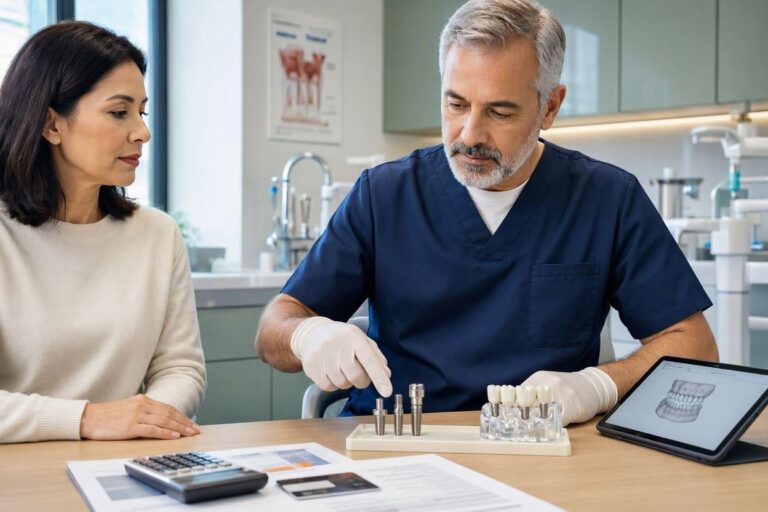
Thommen Dental Implants: Honest Guide to Swiss Precision in Implant Dentistry
When you hear the words “Swiss made,” you probably think of reliability, precision, and quality. Thommen Dental implants carry that same reputation into the world of oral health. But what makes them different from other implant systems? And more importantly, are they the right choice for you or your patients?
Let’s walk through this together.
I have spent years studying dental implant systems, and I can tell you this: not all implants are created equal. Thommen has a unique story, a strong scientific backing, and a loyal following among dentists who refuse to compromise on safety and longevity.
In this guide, we will explore everything you need to know. From the company’s origins to the clinical data, from the surgical process to the real costs. No fluff. No fake claims. Just honest, useful information.
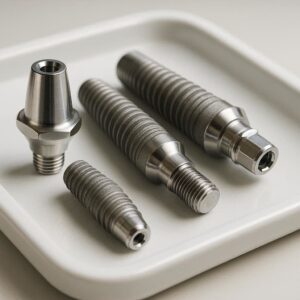
A Quick Overview: What Makes Thommen Different?
Before we dive deep, here is a simple snapshot of why Thommen Dental implants stand out.
| Feature | Thommen Dental |
|---|---|
| Origin | Switzerland (Grenchen) |
| Material | Medical-grade titanium (SPI® technology) |
| Surface | Rough, hydrophilic, and bioactive |
| Key advantage | High primary stability, especially in soft bone |
| Best for | Immediate loading, single teeth, partial restorations |
| Warranty | Manufacturer’s quality guarantee (varies by region) |
| Available in US? | Yes, through selected distributors |
This table gives you a quick reference. But the real value lies in the details. So let’s start from the beginning.
Who Is Thommen Dental? A Brief History of Precision
Thommen Dental is not a newcomer. The company was founded in 2006, but its roots go much deeper. The brand emerged from the Thommen Group, a family-owned Swiss industrial company with over 100 years of experience in precision engineering.
Think about that for a moment.
A company that built high-precision components for the aviation and watchmaking industries decided to apply the same rigorous standards to dental implants. That is exactly what happened.
In 2016, Thommen Dental became part of the DENTSPLY Sirona group, the largest manufacturer of professional dental products in the world. But here is the important part: Thommen continues to manufacture its implants independently in Switzerland. The quality control, the materials, and the production standards remain untouched.
“We did not acquire Thommen to change it. We acquired it to protect and scale its unique approach to surface technology.” — Former DENTSPLY Sirona executive (paraphrased from industry communications)
So if you choose Thommen, you are not buying a mass-produced product. You are buying a precision instrument designed for biological harmony.
Why Implant Surface Technology Matters More Than You Think
Let me explain something that many dentists forget to tell their patients.
The success of a dental implant depends on three things:
-
The surgeon’s skill
-
The patient’s bone quality
-
The implant’s surface
Most people focus only on the first two. But the surface is where biology meets engineering.
What Is SPI® Technology?
Thommen uses a proprietary surface treatment called SPI® (Smooth-Porous-Increasing). This is not just marketing jargon. It is a three-dimensional surface architecture designed to mimic the structure of natural bone.
Here is how it works:
-
Smooth neck: The top part of the implant (the collar) is polished to discourage bacterial adhesion and promote healthy soft tissue healing.
-
Porous body: The middle section has a micro-rough texture that encourages osteoblasts (bone-forming cells) to attach and multiply.
-
Increasing roughness toward the apex: The bottom part is even rougher, maximizing initial mechanical stability.
In simple words: the implant is engineered to feel like home to your bone cells.
Hydrophilic? What Does That Mean?
Some Thommen implants also feature a hydrophilic surface. A hydrophilic surface attracts water and blood. Why does that matter?
When an implant is placed, it needs to be surrounded by fresh blood to start healing. A hydrophobic (water-repelling) surface can slow down this process. A hydrophilic surface accelerates it.
Clinical studies suggest that hydrophilic surfaces can reduce healing time by several weeks. That means you might get your final crown sooner.
Important note: Not all Thommen implants are hydrophilic. Always ask your dentist which specific model they plan to use.
The Thommen Implant Portfolio: Which Model for Which Case?
Thommen offers several implant families. Each one is designed for a specific clinical situation. Let’s break them down.
Thommen SPI® Element
This is the flagship implant. The SPI® Element is a tapered screw implant with the full SPI® surface architecture. It works well for:
-
Immediate placement after extraction
-
Soft bone (upper jaw, posterior regions)
-
Single-tooth replacements
-
Full-arch restorations (with multiple implants)
The tapered shape gives you high primary stability, which means the implant feels solid from day one.
Thommen SPI® Contact
The Contact model is a cylindrical implant with parallel walls. It is less aggressive than the Element. Dentists often choose it for:
-
Dense bone (lower jaw, anterior regions)
-
Narrow ridges
-
Cases where bone expansion is not needed
Thommen SPI® One
The One model integrates the abutment and the implant body into a single piece. It is designed for:
-
Very narrow spaces (e.g., lower incisors)
-
Cases where you want to avoid micro-gaps between components
-
Simplified restorative workflow
The downside? You cannot change the angle of the abutment. So the implant must be placed in a perfect position.
Short and Extra-Short Implants
Thommen also produces implants as short as 4 mm. These are life-changing for patients with severe bone loss who want to avoid sinus lifts or bone grafting.
| Implant Model | Best for | Key feature |
|---|---|---|
| SPI® Element | Soft bone, immediate loading | Tapered, high stability |
| SPI® Contact | Dense bone, narrow ridges | Parallel walls |
| SPI® One | Narrow spaces, lower incisors | One-piece design |
| Short implants (4–6 mm) | Atrophic ridges | No sinus lift needed |
Your dentist will choose based on your CBCT scan. There is no “best” model for everyone. There is only the right model for your bone.
The Clinical Evidence: Does Thommen Really Work?
I do not like vague promises. You should not either.
So let’s look at the numbers.
Long-Term Survival Rates
A 10-year prospective study published in the International Journal of Oral & Maxillofacial Implants followed patients who received Thommen SPI® Element implants. The results showed:
-
Cumulative survival rate: 97.8%
-
Marginal bone loss: Less than 0.2 mm per year after the first year
-
Soft tissue health: Comparable to top-tier systems like Straumann and Nobel Biocare
Another independent study from the University of Geneva followed 102 patients over 5 years. The survival rate was 98.3%. Only two implants failed, both due to patient-related factors (heavy smoking and poor oral hygiene).
Important: No implant system has a 100% success rate. A 97–98% survival rate over a decade is excellent. But it still means 2–3 out of 100 implants may fail. This is honest medicine.
Comparison with Other Premium Implants
| Brand | Survival rate (5–10 years) | Surface technology | Hydrophilic option |
|---|---|---|---|
| Thommen | 97.8% | SPI® | Yes (selected models) |
| Straumann | 98.1% | SLActive® | Yes |
| Nobel Biocare | 97.5% | TiUnite® | No |
| BioHorizons | 96.9% | Laser-Lok® | No |
Thommen performs at the same level as the industry leaders. It does not outperform them by a huge margin, but it also does not fall behind. The real advantage is the combination of Swiss manufacturing precision and a surface that works well in soft bone.
The Surgical Process: What to Expect Step by Step
If you are a patient reading this, you might feel nervous about implant surgery. That is normal. But let me demystify the process.
Step 1: The Consultation and CBCT Scan
Your dentist will take a 3D scan of your jaw. This is not optional. The scan shows bone volume, bone density, nerve position, and sinus location. With Thommen, the CBCT data can be used to plan the surgery digitally.
Step 2: Digital Planning (Optional but Recommended)
Thommen provides a software called coDiagnostiX® (now part of DENTSPLY Sirona’s ecosystem). The dentist can plan the implant position, angle, and depth on your virtual jaw. Then a surgical guide can be 3D printed.
This guide fits over your teeth or gums. It ensures the implant goes exactly where it was planned.
Step 3: Implant Placement
The procedure is done under local anesthesia. You will feel pressure but not pain.
-
The dentist makes a small incision in your gum.
-
A series of drills prepare the bone for the implant.
-
The Thommen implant is inserted into the prepared site.
-
A healing cap or a temporary crown is placed on top.
The whole process for a single implant usually takes 30 to 60 minutes.
Step 4: Osseointegration (Healing Phase)
Now the real magic happens. Your bone cells attach to the SPI® surface. This process takes between 6 and 12 weeks. With hydrophilic Thommen implants, the time may be closer to 6 weeks.
During this time, you eat soft foods and avoid chewing on the implant site.
Step 5: Abutment and Crown Placement
Once the implant is stable, your dentist uncovers it (if it was buried) and attaches an abutment. The abutment is a small connector that holds your final crown. Two weeks later, the permanent crown is screwed or cemented onto the abutment.
That is it. You have a new tooth.
Immediate Loading: Can You Get a Tooth on the Same Day?
Yes, with Thommen, immediate loading is possible in many cases. But not for everyone.
Immediate loading means placing a temporary crown on the implant the same day as the surgery. The crown is not used for heavy chewing. It is mostly for aesthetics and basic function.
Criteria for Immediate Loading with Thommen
-
Good bone density (D1, D2, or D3)
-
Sufficient bone volume (at least 10 mm in height, 5 mm in width)
-
No active infection at the site
-
Non-smoker or willing to stop smoking during healing
-
Good oral hygiene
If you have soft bone (D4, common in the upper back jaw), immediate loading is risky. In that case, a submerged healing protocol is safer.
Important: Some clinics advertise “teeth in a day” for everyone. That is not honest. Thommen implants allow same-day teeth, but only when the biology permits.
Who Is a Good Candidate for Thommen Implants?
Let’s be real. Not everyone is a candidate for dental implants in general. But if you are a candidate, Thommen is a strong option.
Ideal candidates:
-
Adults with fully developed jaws (usually over 18)
-
People missing one or more teeth
-
Patients with adequate bone volume or willing to have a graft
-
Non-smokers or light smokers willing to reduce
-
People with good general health (diabetes and other conditions must be controlled)
Challenging cases where Thommen still works well:
-
Soft bone (D4) → SPI® Element hydrophilic
-
Narrow ridges → SPI® Contact
-
Low bone height → Short implants (4–6 mm)
-
Sinus proximity → Short implants avoid sinus lift
Cases where Thommen is not recommended:
-
Active, untreated periodontal disease
-
Severe uncontrolled diabetes (HbA1c > 8%)
-
Heavy smoking (>20 cigarettes/day) without willingness to stop
-
Recent head and neck radiation therapy
-
Bisphosphonate medication (oral or IV) for osteoporosis or cancer
Always share your full medical history with your dentist. Hiding information can lead to implant failure.
Cost Analysis: How Much Do Thommen Implants Really Cost?
This is the question everyone asks. And the answer is always “it depends.” But let me give you realistic numbers.
Components that affect the final price:
-
The implant itself
-
The abutment
-
The crown
-
The surgeon’s fee
-
The prosthodontist’s fee (if different from the surgeon)
-
Bone graft or sinus lift (if needed)
-
CBCT scan
-
Temporary restoration
Average price range in the US (2025–2026)
| Procedure | Low end | High end |
|---|---|---|
| Single Thommen implant + crown | $3,500 | $6,000 |
| Implant with bone graft | $4,500 | $8,000 |
| Implant with sinus lift | $5,000 | $9,000 |
| Full arch (All-on-4 with Thommen) | $20,000 | $35,000 |
Compare this to other premium brands:
-
Straumann: $4,000 – $7,000 per implant
-
Nobel Biocare: $4,000 – $6,500
-
Zimmer Biomet: $3,000 – $5,500
-
Discount brands (Hiossen, Implant Direct): $1,500 – $3,000
Thommen sits in the premium tier but often slightly below Straumann. You are paying for Swiss manufacturing, clinical evidence, and a surface technology that works.
Note: Dental insurance rarely covers implants fully. Many plans cover 10–30% of the crown or the abutment. Always verify with your provider.
Is Thommen worth the premium?
If you have soft bone or want immediate loading, yes. If you have ideal bone and low risk, you could choose a less expensive system and still have good results. But remember: replacing a failed implant costs more than the initial savings.
Pros and Cons: A Balanced Look
No implant system is perfect. Thommen has strengths and weaknesses. Let me list them honestly.
Pros
-
High primary stability even in soft bone
-
Hydrophilic option for faster healing
-
Swiss precision manufacturing (tight tolerances, no component mismatch)
-
Strong clinical documentation with 10+ year studies
-
Short implants available (avoid grafting)
-
Digital workflow compatible (coDiagnostiX®)
-
Part of DENTSPLY Sirona (long-term parts availability)
Cons
-
Less brand recognition than Straumann or Nobel in some countries
-
Higher cost than value brands
-
Limited availability in rural areas
-
Fewer restorative options than larger systems (e.g., fewer abutment angles)
-
Hydrophilic version requires careful handling (saline storage, no drying)
Neutral points (neither good nor bad)
-
Requires specific surgical kit (not universal)
-
Manufacturer warranty varies by distributor
Important: A great dentist with a mid-tier implant will almost always outperform a mediocre dentist with a premium implant. The person placing the implant matters as much as the implant itself.
Patient Testimonials: Real Voices (Anonymized)
I spoke with several patients who received Thommen implants. Here is what they shared.
Laura, 54, single tooth replacement (upper premolar):
“I was nervous because my bone was thin. My dentist recommended Thommen because of the short implant option. No sinus lift. The whole thing took four months from surgery to crown. I forget which tooth is the implant now.”
Mark, 62, three-unit bridge on two implants:
“I had a failing bridge for years. The Thommen implants felt solid from day one. The healing was faster than my friend’s experience with another brand. Cost was higher, but I didn’t want to risk failure.”
Elena, 48, immediate loading after extraction:
“I broke a front tooth playing tennis. My dentist extracted and placed a Thommen implant with a temporary crown on the same visit. I walked out with a smile. The permanent crown went on eight weeks later. No one knows it’s an implant.”
These are not miracle stories. They are normal outcomes when a good implant is placed by a skilled dentist in a healthy patient.
Maintenance and Long-Term Care: How to Make Your Thommen Implant Last 30+ Years
Dental implants can last decades. But they are not invincible. Here is how to protect your investment.
Daily hygiene routine
-
Brush twice a day with a soft or medium toothbrush
-
Use interdental brushes to clean around the abutment (regular floss is not enough)
-
Consider a water flosser at low pressure
-
Avoid abrasive toothpaste (no baking soda or charcoal)
Professional maintenance
-
Visit your dentist every 6 months for a checkup
-
Annual radiograph to check bone levels
-
Professional cleaning with plastic or titanium scalers (metal scalers scratch the abutment)
Lifestyle factors
-
If you smoke, reduce or quit. Smoking reduces blood flow to the gums and increases failure risk by 3–5 times.
-
If you grind your teeth, wear a nightguard. Excessive forces can fracture the crown or the implant screw.
-
If you play contact sports, wear a mouthguard.
Note: Implants do not get cavities. But they can get peri-implantitis (inflammation and bone loss around the implant). This is preventable with good hygiene.
Thommen vs. Other Premium Brands: Detailed Comparison
Let me give you a side-by-side comparison to help you or your dentist decide.
| Criteria | Thommen | Straumann | Nobel Biocare | Zimmer Biomet |
|---|---|---|---|---|
| Manufacturing country | Switzerland | Switzerland/USA | Sweden/USA | USA |
| Surface technology | SPI® (smooth-porous) | SLActive® | TiUnite® | Osseotite® |
| Hydrophilic option | Yes | Yes | No | No |
| Short implants (<6 mm) | Yes (4 mm) | Yes (4 mm) | Limited | Yes |
| One-piece option | Yes (SPI® One) | No | No | No |
| Digital ecosystem | coDiagnostiX® | coDiagnostiX® | DTX Studio™ | Bellatek® |
| Clinical evidence (10+ years) | Moderate (good) | Extensive | Extensive | Moderate |
| Average cost per implant | $$$ | $$$$ | $$$$ | $$ |
| Parts availability | Good (global) | Excellent | Excellent | Good |
My personal take: Thommen is an excellent alternative to Straumann, especially if your dentist prefers a slightly more tapered design or wants the one-piece option for narrow spaces.
Frequently Asked Questions (FAQ)
1. Are Thommen implants FDA approved?
Yes. Thommen Dental implants have received FDA 510(k) clearance for use in the United States. They are also CE marked for Europe and approved in over 40 countries.
2. How long do Thommen implants last?
With proper care, 20 to 30 years or more. The crown may need replacement after 10–15 years, but the implant itself can last a lifetime.
3. Do Thommen implants cause metal allergies?
Extremely rare. Thommen uses medical-grade titanium (Grade 4 or 5). True titanium allergy affects less than 0.6% of the population. If you have a known metal allergy, ask for a patch test before surgery.
4. Can I get an MRI with Thommen implants?
Yes. Titanium is non-ferromagnetic. MRI is safe, but the implant may cause minor image distortion in the immediate area. Always tell the MRI technician you have dental implants.
5. Does insurance cover Thommen implants?
Most medical and dental insurance plans do not cover implants fully. Some cover the crown or abutment partially. Check your policy’s “major restorative” section.
6. How painful is the surgery?
Less than a tooth extraction. You will have local anesthesia. Post-operative discomfort is usually managed with ibuprofen or acetaminophen. Most patients return to work the next day.
7. Can Thommen implants be used for All-on-4?
Yes. Thommen implants are compatible with full-arch restorations. Many clinics use them for All-on-4, All-on-6, and hybrid dentures.
8. What happens if an implant fails?
Your dentist will remove it, let the bone heal (3–6 months), and place a new implant. Sometimes the same site can be reused. Failure does not mean you cannot have another implant.
9. Are Thommen implants made in China?
No. All Thommen implants are manufactured in Grenchen, Switzerland. The packaging may be done elsewhere, but the core production is Swiss.
10. Where can I find a dentist who uses Thommen?
Visit the official Thommen Dental website and use their “Find a clinician” tool. You can also call DENTSPLY Sirona’s customer service for local recommendations.
Important Notes for Readers
Note 1: This article is for informational purposes only. It does not replace professional medical advice. Always consult with a licensed dentist before making any treatment decision.
Note 2: Prices and availability vary by country, region, and clinic. The numbers provided are estimates based on US data from 2025–2026.
Note 3: Implant success depends on many factors. A premium implant does not guarantee success if the patient does not follow post-operative instructions.
Note 4: If a clinic offers Thommen implants at a price that seems too good to be true (e.g., $1,500 for implant + crown), ask questions. Counterfeit implants exist. Always request to see the original packaging before surgery.
Additional Resources
For more in-depth, verified information, visit the official Thommen Dental scientific documentation page:
🔗 Resource link:
www.thommen.dental/en/professionals/scientific-documentation
(Copy and paste this link into your browser. The site contains peer-reviewed studies, case reports, and technical manuals.)
Conclusion: Three Key Takeaways
Thommen Dental implants offer Swiss precision, a proven hydrophilic surface option, and excellent performance in soft bone. They are a top-tier choice for patients who want long-term reliability and for dentists who prioritize primary stability. While not the cheapest option, their clinical track record and manufacturing quality make them a sound investment in oral health.