
How Long Does It Take to Get Dental Implants?
If you are missing one or more teeth, you have probably heard that dental implants are the closest thing to natural teeth. They look great, feel secure, and can last a lifetime. But there is one question that stops many people from moving forward: how long does the entire process actually take?
You might have heard stories from friends or read conflicting information online. Some say a few months. Others say almost a year. The truth is, there is no single answer for everyone. The timeline depends on your unique dental health, the type of implant you need, and how your body heals.
In this guide, we will walk you through every stage of the implant process. We will give you honest, realistic timelines. You will learn what can speed things up and what might cause delays. By the end, you will have a clear picture of what to expect on your own journey toward a complete smile.
Let us start with the most important fact you need to know.
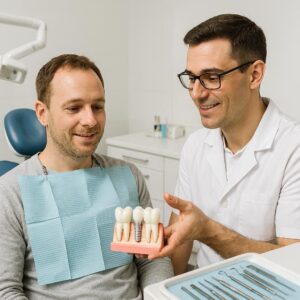
The Short Answer: Between 3 and 12 Months
For most people, getting a dental implant takes three to twelve months from the day you start treatment to the day you walk out with your final tooth.
Why such a big range? Because dental implants are not a single procedure. They are a process with several steps. Each step has its own healing time. And your body sets the pace.
Here is a very general breakdown:
-
Simple case (good bone, healthy gums, non-smoker): 3 to 4 months
-
Average case (minor bone loss, routine extraction): 5 to 7 months
-
Complex case (bone grafting, sinus lift, multiple implants): 9 to 12 months or more
But do not let the longer timelines scare you. Most of that time is quiet healing. You are not in the dental chair for hours every week. In fact, the active procedure time is usually only a few hours spread over several months.
Now, let us break down exactly what happens during each stage.
Stage 1: Initial Consultation and Treatment Planning (1 to 2 Weeks)
Before any work begins, your dentist needs to understand your unique situation. This first stage is critical. Skipping proper planning is the number one reason for complications later.
During your first visit, your dentist will:
-
Examine your teeth and gums
-
Take x-rays or a 3D cone beam CT scan
-
Review your medical history
-
Discuss your goals and budget
-
Check for signs of gum disease or decay
Important note for readers: If you have active gum disease or untreated cavities, you cannot move forward with implants. Your dentist must treat these problems first. Adding this step can add 1 to 3 months to your total timeline, but it is essential for success.
The CT scan is especially important. It shows your dentist exactly how much bone you have and where your nerves and sinuses are. This information guides the entire procedure.
How long does this stage take?
Usually 1 to 2 weeks from your first call to having a complete treatment plan. If you need periodontal treatment first, add 4 to 12 weeks.
Stage 2: Tooth Extraction (If Needed) and Bone Healing (1 to 6 Months)
If your missing tooth is already gone, you can skip this stage. But if you have a damaged or decayed tooth that needs removal, extraction comes first.
The extraction itself takes less than an hour. But the healing that follows takes time. After pulling a tooth, the empty socket naturally fills with new bone. This process is called socket preservation. Some dentists place a bone graft immediately after extraction to keep the area ready for the implant.
Timeline for extraction and healing:
| Situation | Healing Time Before Implant |
|---|---|
| Simple extraction, no graft | 4 to 8 weeks |
| Extraction with socket preservation graft | 8 to 12 weeks |
| Infected tooth extraction | 10 to 16 weeks |
| Multiple extractions in same area | 12 to 16 weeks |
Can you get an implant immediately after extraction?
Sometimes, yes. This is called an immediate implant. Your dentist places the implant right into the fresh extraction socket. This works best for front teeth and healthy non-infected sites. But it is not right for everyone. Your dentist will decide based on your CT scan.
If you qualify for an immediate implant, you can save 2 to 4 months of waiting time.
Stage 3: Bone Grafting (If Needed) – Adds 4 to 9 Months
This is where many timelines stretch out. Dental implants need a solid foundation. That foundation is your jawbone. If you have lost bone due to periodontal disease, long-term tooth loss, or trauma, you may need a bone graft.
Bone grafting sounds scary, but it is a routine procedure. Your dentist takes bone material (from your own body, a donor, or a synthetic source) and places it in the weak area. Over several months, this material fuses with your natural bone to create a stronger, thicker base.
Types of bone grafts and their healing times:
-
Minor ridge preservation: 3 to 4 months
-
Moderate bone graft: 4 to 6 months
-
Large block graft: 6 to 9 months
-
Sinus lift (upper back jaw): 6 to 9 months
Important note for readers: Do not try to rush a bone graft. The graft needs time to turn into living bone. Placing an implant into a partially healed graft is one of the leading causes of implant failure. Patience here saves you from starting over later.
Stage 4: Dental Implant Placement Surgery (1 to 2 Hours)
Finally, you are ready for the main event. Implant placement is a minor surgical procedure. Most dentists perform it right in their office with local anesthesia. You can also choose sedation if you feel nervous.
Here is what happens:
-
Your dentist numbs the area completely.
-
A small incision is made in your gum.
-
A precise hole is drilled into your jawbone.
-
The titanium implant (which looks like a small screw) is placed into the hole.
-
A healing cap or cover screw is placed on top.
-
Your gum is stitched closed over or around the implant.
Most patients feel only pressure, not pain. The surgery itself typically takes 1 to 2 hours for a single implant. Multiple implants take longer, but rarely more than 3 hours.
What about same-day implants?
You may have heard of “teeth in a day” or “immediate loading.” This is possible in select cases. With same-day implants, your dentist places the implant and attaches a temporary crown on the same visit. However, this approach has strict requirements:
-
Excellent bone quality
-
No signs of infection
-
Implants placed in the front of the mouth (less chewing force)
-
You are a non-smoker with great oral hygiene
For most people, especially for back teeth that do heavy chewing, dentists recommend the traditional approach with a healing period.
Stage 5: Osseointegration – The Longest Wait (3 to 6 Months)
After your implant is placed, the real magic happens. Your jawbone begins to grow tightly around the titanium surface. This process is called osseointegration. It comes from the Greek words for “bone” and “to join.”
Osseointegration is why dental implants are so strong. The implant does not just sit in your bone. It becomes part of your bone.
During this time, you wear a temporary partial denture or flipper. You avoid chewing on the implant side. You eat soft foods and practice gentle cleaning.
Typical osseointegration times:
| Jaw Location | Healing Time |
|---|---|
| Lower jaw (mandible) | 3 to 4 months |
| Upper jaw (maxilla) | 4 to 6 months |
Why the difference? The lower jaw is denser and has better blood flow. The upper jaw is softer and takes longer to bond with the implant.
Important note for readers: Do not skip your follow-up appointments during this stage. Your dentist will check the implant’s stability and look for early signs of infection. Most problems can be treated easily if caught early.
Stage 6: Abutment Placement (One Visit, 30 to 60 Minutes)
Once osseointegration is complete, your implant is ready to connect to the outside world. The abutment is a small metal connector. It screws into your implant and sticks up through your gum. The final crown will attach to this abutment.
The abutment procedure is quick and minor:
-
Your dentist numbs the area.
-
A small punch or incision reveals the top of the implant.
-
The healing cap is removed.
-
The abutment is screwed into place.
-
Your gum is shaped around the abutment.
Sometimes your dentist places the abutment on the same day as the implant surgery. This is called a one-stage implant. It saves you one minor procedure but requires careful cleaning during healing.
Healing after abutment placement:
Your gum needs about 2 to 4 weeks to heal around the abutment. During this time, you wear a temporary crown or leave the abutment exposed. You will clean around it gently with a soft brush.
Stage 7: Final Crown Placement (1 to 2 Hours)
This is the day you have been waiting for. Your permanent crown is ready. Your dentist removes the temporary crown (if you had one), checks the fit of the abutment, and bonds your final crown into place.
The crown is custom-made to match the color, shape, and size of your natural teeth. Most labs take 2 to 3 weeks to fabricate a high-quality crown. Some dentists have in-house milling machines that can create a crown in a single day.
What happens during the crown appointment:
-
Your dentist tries the crown on your abutment
-
You check the color and fit in a mirror
-
Minor adjustments are made
-
The crown is cemented or screwed into place
-
Your bite is checked to ensure comfortable chewing
After this visit, you are done. You can eat, smile, and brush normally. Your new tooth should feel and function like a natural tooth.
Complete Timeline Summary: From Start to Finish
Let us put everything together in one clear table. These are realistic estimates for a healthy patient with no major complications.
| Treatment Path | Total Time |
|---|---|
| Immediate implant with immediate crown (rare, specific cases) | 1 day (plus follow-ups) |
| Immediate implant with delayed crown (lower jaw) | 3 to 4 months |
| Immediate implant with delayed crown (upper jaw) | 4 to 6 months |
| Extraction + immediate implant (lower jaw) | 4 to 5 months |
| Extraction + immediate implant (upper jaw) | 5 to 7 months |
| Extraction + 4 month healing + implant + 4 month osseointegration | 9 to 10 months |
| Extraction + bone graft (6 months) + implant + osseointegration (5 months) | 12 to 14 months |
| Multiple implants with full arch restoration (All-on-4) | 6 to 12 months |
Factors That Shorten or Lengthen Your Timeline
No two mouths are identical. Your personal health and habits play a huge role in how long each stage takes.
Factors that can speed up healing:
-
Excellent oral hygiene: Clean gums heal faster and reduce infection risk
-
Non-smoker: Smoking impairs blood flow and slows bone healing by up to 40%
-
Good general health: Controlled diabetes, no autoimmune diseases
-
Younger age: Bone heals more quickly in younger adults
-
Single tooth implant: Less complex than multiple implants
Factors that can slow down healing:
-
Smoking or vaping: Adds 2 to 4 months to total timeline
-
Uncontrolled diabetes: Slows all healing stages
-
Osteoporosis or bone medications: May require longer osseointegration
-
Teeth grinding (bruxism): Can loosen implants during healing
-
Poor oral hygiene: Leads to peri-implantitis (infection around implant)
-
Heavy alcohol use: Interferes with bone formation
Important note for readers: Be honest with your dentist about your smoking and drinking habits. They are not judging you. They need this information to create a safe, realistic timeline. Hiding these facts only puts your implant at risk.
Same-Day Implants: Fact vs. Marketing Hype
You have probably seen ads promising “new teeth in one day.” Is this real? Yes and no.
Same-day implants exist. The procedure is called immediate loading. But it has strict limits.
When same-day implants work well:
-
Replacing a single front tooth
-
Full-arch fixed bridges (All-on-4 or All-on-6)
-
Patients with excellent bone density
-
Non-smokers with perfect oral hygiene
When same-day implants are not recommended:
-
Back molars (heavy chewing forces)
-
Patients who grind their teeth
-
Anyone with active gum disease
-
Smokers or former heavy smokers
-
Cases requiring bone grafting
Even with same-day implants, you will receive a temporary crown or bridge on the day of surgery. The final, permanent restoration comes later, after 4 to 6 months of healing. So “teeth in a day” is a bit misleading. You get teeth that look okay on day one. But you wait months for teeth that look great and chew safely.
All-on-4 and Full Arch Implants: A Special Case
If you are missing all your teeth in one jaw, you may be looking at All-on-4 or All-on-6 implants. These procedures place four to six implants in strategic positions to support a full fixed bridge.
The timeline for full arch implants is different from single implants:
-
Consultation and planning: 2 to 4 weeks
-
Extractions (if needed): One day
-
Implant placement: One day (3 to 5 hours)
-
Temporary fixed bridge placement: Same day as surgery
-
Soft diet healing period: 4 to 6 months
-
Final bridge placement: 6 to 9 months after surgery
Total time for All-on-4: 6 to 10 months
The good news? You never go without teeth. You leave the surgery with a temporary fixed bridge. It looks natural but feels a little bulky. You eat soft foods and clean carefully. After osseointegration, your dentist replaces the temporary bridge with a permanent, custom-made one.
What Can Go Wrong? Realistic Complications and Delays
We prefer to be honest with you. Most implant procedures go smoothly. But complications do happen. Knowing about them ahead of time helps you avoid panic if something unexpected occurs.
Common complications and their timeline impact:
| Complication | Additional Time |
|---|---|
| Minor infection around implant | 2 to 4 weeks (antibiotics + delayed loading) |
| Implant fails to integrate (rare, 2-5% of cases) | 4 to 8 months (removal, bone healing, new implant) |
| Screw loosening in abutment | 1 day (tightening) |
| Crown fracture | 2 to 3 weeks (new crown fabrication) |
| Peri-implantitis (gum disease around implant) | 3 to 6 months (deep cleaning + bone graft if severe) |
| Nerve irritation (temporary numbness) | Resolves on its own over 3 to 12 months |
Important note for readers: Implant failure is not the end of the world. Most failed implants can be removed, the bone allowed to heal, and a new implant placed. The success rate for second attempts is still very high (over 90% in healthy patients).
Recovery and Pain Management: What to Expect
One of the most common questions people ask is, “Will it hurt?” We want to give you an honest picture.
During procedures: No pain. Local anesthesia blocks all sensation. You may feel pressure, tapping, or vibration. If you feel sharp pain, raise your hand. Your dentist will give you more anesthetic.
First 24 to 72 hours after surgery: Mild to moderate discomfort. Most patients describe it as a dull ache, similar to having a tooth pulled. Over-the-counter ibuprofen (Advil) or acetaminophen (Tylenol) controls the pain for most people. Your dentist may prescribe stronger medication for the first two days.
Days 3 to 7: Swelling peaks on day 2 or 3, then slowly goes down. You may have bruising on your cheek or chin. This is normal. Use ice packs for the first 48 hours, then switch to warm compresses.
Week 2 and beyond: Most patients feel completely normal by day 10. You may forget you had surgery at all. The only reminder is avoiding hard foods on that side.
Pain levels by stage (scale of 1 to 10, 10 being worst):
| Procedure | Peak Pain (first 24h) | Pain at Day 3 |
|---|---|---|
| Simple extraction | 4 to 6 | 2 to 3 |
| Bone graft (minor) | 5 to 7 | 3 to 4 |
| Implant placement (single) | 3 to 5 | 1 to 2 |
| Sinus lift | 6 to 8 | 4 to 5 |
| Abutment placement | 2 to 3 | 0 to 1 |
| Crown placement | 0 to 1 | 0 |
How to Heal Faster: Evidence-Based Tips
You cannot skip healing time. But you can help your body heal at its fastest natural speed. These tips come from clinical studies and experienced implant surgeons.
Do these things starting today:
-
Quit smoking completely. Even one cigarette a day slows bone healing. If you cannot quit, consider a different tooth replacement option.
-
Control your blood sugar. If you have diabetes, work with your doctor to keep your HbA1c below 7.0% before starting implants.
-
Eat a bone-healthy diet. Focus on calcium (dairy, leafy greens), vitamin D (eggs, fatty fish, sunlight), and protein (meat, beans, tofu).
-
Stay hydrated. Dehydration slows every healing process in your body.
-
Get good sleep. Your body releases growth hormone during deep sleep. This hormone directly stimulates bone formation.
-
Avoid straws and spitting for the first week. The suction can dislodge blood clots and cause dry socket.
-
Take your full course of antibiotics. Even if you feel fine, finish the prescription.
Avoid these things:
-
Hot drinks for the first 48 hours
-
Chewing on the implant side for 3 to 4 months
-
Using a Waterpik directly on the healing site
-
Strenuous exercise for the first week (increases bleeding risk)
-
Alcohol for at least 72 hours after surgery
Cost vs. Time: Is Faster Worth More Money?
Some dental practices offer accelerated implant timelines. They use advanced techniques like PRP (platelet-rich plasma), laser-assisted healing, or immediate loading protocols. These methods can shorten your total time by 1 to 3 months.
But faster often means more expensive.
| Approach | Typical Time | Typical Cost (Single Implant, USA) |
|---|---|---|
| Traditional (slow healing) | 8 to 12 months | $3,000 – $5,000 |
| Accelerated (PRP + immediate loading) | 4 to 6 months | $4,500 – $7,000 |
| Same-day (immediate implant + crown) | 1 day + 4 month follow-up | $5,000 – $8,000 |
Is the extra cost worth it? That depends on your situation. If you need a front tooth replaced before a wedding or job interview, faster may be worth every dollar. If you are replacing a back molar and do not mind waiting, traditional is perfectly fine.
Important note for readers: Never choose a faster timeline if your dentist says your bone is not ready. No amount of money can safely replace healthy bone healing time. A dentist who promises “teeth in a week” for every patient is either lying or taking dangerous risks with your health.
Frequently Asked Questions (FAQ)
1. Can I get dental implants if I have bone loss?
Yes. Bone grafting is a routine solution. It adds 4 to 9 months to your timeline but makes implant placement possible in almost all cases.
2. How long after tooth extraction can I get an implant?
It depends. Immediate implants go in the same day. Delayed implants wait 4 to 8 weeks for gum healing. Late implants wait 4 to 6 months for full bone healing.
3. Do dental implants hurt more than tooth extraction?
No. Most patients say implant surgery hurts less than a difficult extraction. The recovery is also shorter.
4. Can I get all my teeth replaced with implants in one day?
You can get temporary teeth in one day using the All-on-4 technique. Permanent teeth take 6 to 10 months.
5. How long do dental implants last?
With proper care, 20 years to a lifetime. The crown may need replacement after 10 to 15 years, but the implant itself can last forever.
6. What is the failure rate for dental implants?
About 2% to 5% for lower jaw implants. Upper jaw implants fail slightly more often (5% to 10%). Smoking raises failure rates to 10% to 20%.
7. Can I smoke after getting dental implants?
You can, but you should not. Smokers have significantly higher failure rates and longer healing times. If you smoke, be prepared for a 10% to 20% chance of implant failure.
8. How soon after implant surgery can I eat?
You can eat soft foods the same day. Avoid chewing on the implant side for 3 to 4 months. Stick to yogurt, soup, smoothies, mashed potatoes, and scrambled eggs.
9. Do I need time off work for dental implants?
Most people take 1 to 2 days off for implant placement surgery. For bone grafts or multiple implants, take 3 to 5 days. You can return to desk work immediately but avoid heavy lifting or strenuous activity for one week.
10. Can my body reject a dental implant?
True rejection (immune system attacking the implant) does not happen because titanium is biocompatible. But your bone can fail to grow around the implant. This is called failed osseointegration. It occurs in 2% to 5% of cases.
Additional Resource
For a deeper dive into the science of dental implants, including detailed recovery journals and cost breakdowns by region, visit the American Academy of Implant Dentistry’s patient education page:
👉 https://www.aaid.com/patients/
This official resource offers free, non-commercial guides, a search tool for accredited implant dentists near you, and downloadable brochures about every stage of the implant process.
Final Checklist: Questions to Ask Your Dentist Before Starting
Before you commit to a treatment plan, ask these questions. The answers will help you set realistic expectations for your timeline.
-
Based on my CT scan, do I need a bone graft or sinus lift?
-
Do I have any untreated gum disease or cavities?
-
Are you planning immediate, early, or delayed implant placement after extraction?
-
Will I receive a temporary tooth during osseointegration?
-
What is your protocol if the implant fails to integrate?
-
Do you have before-and-after photos of cases similar to mine?
-
How many implant surgeries do you perform each month?
-
What is your policy on replacing a failed implant at no cost?
Conclusion
So, how long does it take to get dental implants? For most people, the answer falls between three and twelve months. Simple cases move faster. Complex cases require patience. But nearly all patients end with a strong, beautiful, permanent tooth.
Remember this: most of your waiting time is quiet healing. You are not in pain or stuck in a dental chair. You simply go about your normal life while your bone grows around the implant. The active procedure time is only a few hours spread over several months.
Do not rush the process. Do not skip bone grafting if you need it. And be honest with your dentist about your health habits. Following these guidelines gives you the best chance of enjoying your new tooth for decades to come.
Your smile is worth the wait.
Disclaimer: This article is for informational purposes only and does not constitute medical advice. Always consult with a licensed dental professional to determine the right treatment plan for your specific situation. Timelines and costs vary significantly based on individual health, geographic location, and provider expertise.


