Dental Implants in Mississauga: Your Complete Guide to a Permanent Smile
Losing a tooth can feel frustrating. It might affect your confidence or make eating certain foods difficult. If you live in Mississauga, you have excellent options for tooth replacement. Among these, dental implants stand out as the gold standard.
Why? Because implants look, feel, and function like natural teeth.
This guide walks you through everything you need to know. We will cover the procedure, costs, recovery, and how to choose the right dentist in Mississauga. No confusing jargon. Just clear, practical information to help you make a confident decision.
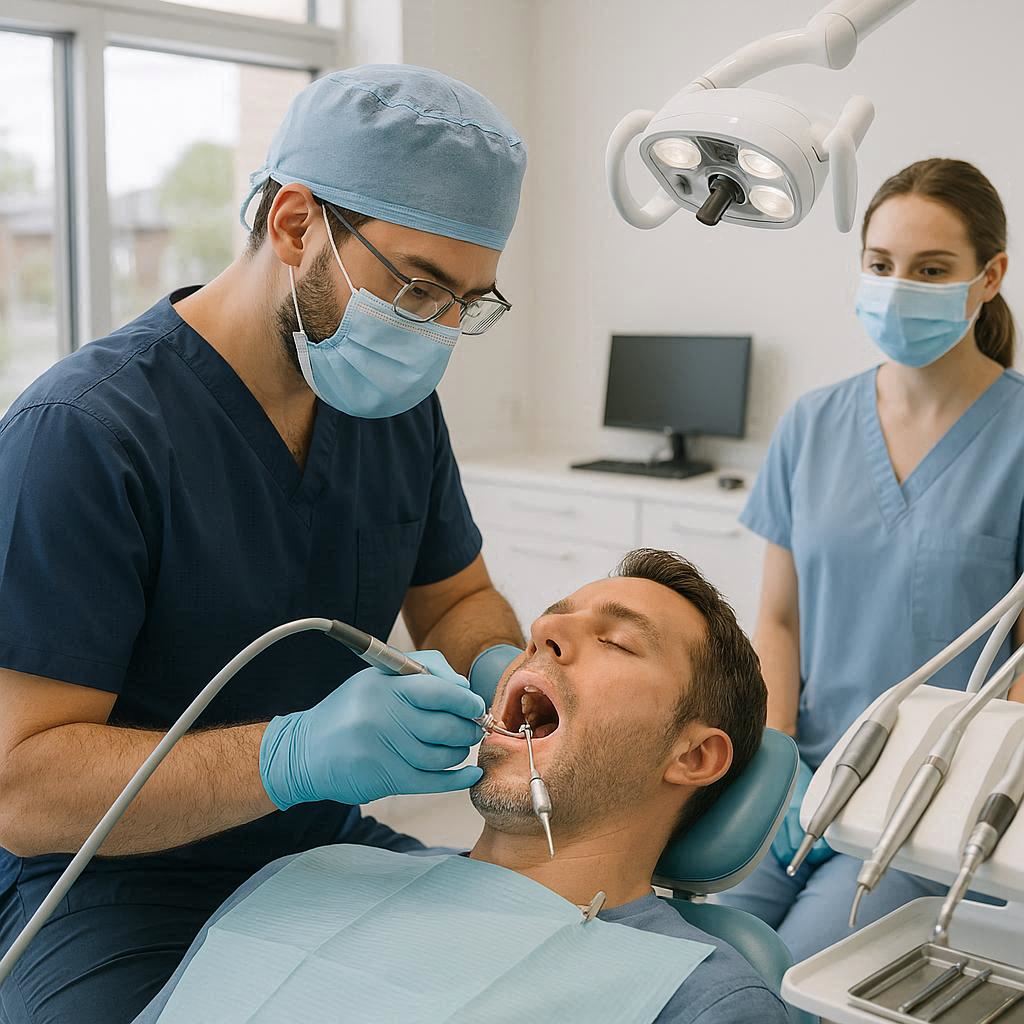
Why Consider Dental Implants in Mississauga?
You have choices. Bridges, dentures, and implants all replace missing teeth. But they work very differently.
Imagine a solution that stays in place permanently. You do not remove it at night. You clean it just like your natural teeth. That is the reality of modern implants.
Many Mississauga residents prefer implants because they stop bone loss. When you lose a tooth, the jawbone under it starts to shrink. Implants act like natural roots. They stimulate the bone and keep it healthy.
Realistic Benefits You Can Expect
- Natural look and feel. No one will know you have an implant unless you tell them.
- Eat normally again. Bite into an apple or enjoy steak. No slipping or clicking.
- Long-term value. With proper care, implants can last decades or even a lifetime.
- Protect nearby teeth. Unlike a bridge, implants do not require shaving down healthy teeth.
- Better speech. No loose dentures sliding around in your mouth.
A Quick Comparison
| Feature | Dental Implant | Traditional Bridge | Removable Denture |
|---|---|---|---|
| Longevity | 20+ years | 5–15 years | 5–8 years |
| Bone preservation | Yes | No | No |
| Affects adjacent teeth | No | Yes (shaving required) | No |
| Stability | Permanent | Fixed but fragile | Can slip |
| Cleaning | Brush and floss normally | Special floss needed | Remove and soak |
Important note: Not everyone is a candidate right away. But most people can become candidates with proper preparation. Your dentist in Mississauga will assess your unique situation.
How Do Dental Implants Work? The Simple Explanation
Think of an implant as an artificial tooth root. A small titanium post goes into your jawbone. Over time, your bone grows around this post. This process is called osseointegration (a big word for a simple idea: your bone accepts the implant as part of you).
Once the implant is secure, your dentist attaches a connector called an abutment. Finally, a custom-made crown goes on top.
That is it. One missing tooth. Three parts. One permanent solution.
The Step-by-Step Procedure in Mississauga Clinics
Knowing what happens helps reduce anxiety. Most implant treatments follow a similar timeline. Your specific plan may vary, but here is the standard flow.
Step 1: Initial Consultation and Imaging
Your first visit is all about information. The dentist examines your mouth. They take X-rays or a 3D cone beam CT scan. This imaging shows bone density, nerve locations, and sinus positions.
The dentist asks about your health history. Conditions like uncontrolled diabetes or heavy smoking can affect healing. Be honest. Many issues can be managed.
Questions to ask during this visit:
- How many implants have you placed?
- What brand of implants do you use?
- What is the total estimated cost?
- How long will my entire treatment take?
Step 2: Treatment Planning
Using the scan data, your dentist creates a surgical guide. This guide ensures precise implant placement. Modern Mississauga clinics often use computer-guided surgery. It is safer and more predictable.
If your bone is too thin or soft, you may need a bone graft. Do not worry. This is very common. The graft adds volume to your jaw. It can come from your own body or a donor source. Healing from a graft takes four to nine months.
Step 3: Implant Placement Surgery
This is a minor surgical procedure. Most dentists perform it in their office.
- Anesthesia: Local anesthesia numbs the area completely. You feel pressure but no pain.
- Incision: The dentist makes a small cut in your gum.
- Drilling: A precise hole is drilled into the bone.
- Placement: The titanium post goes into the hole.
- Closing: The gum is stitched over or around the implant.
The entire surgery takes 30 to 90 minutes for a single implant. For multiple implants, plan for two to three hours.
Step 4: Healing and Osseointegration
Now your body does the hard work. Over three to six months, your bone bonds with the implant surface. During this time, you wear a temporary tooth replacement if needed. You can eat soft foods. Avoid putting direct pressure on the surgical site.
Note: Some patients receive a same-day implant or immediate loading implant. This means a temporary crown goes on right after surgery. But not everyone qualifies. Your dentist will be honest about your options.
Step 5: Abutment Placement
Once healing is complete, a second minor procedure places the abutment. The dentist reopens the gum to expose the implant. The abutment screws into the implant. Then the gum heals around it for two weeks.
Some modern implants combine the implant and abutment into one piece. This eliminates the second surgery. Ask your Mississauga dentist if this is right for you.
Step 6: Crown Fabrication and Placement
Your dentist takes impressions of your mouth. A dental lab creates your custom crown. This takes two to four weeks. The crown matches the colour, shape, and size of your natural teeth.
Finally, the dentist screws or cements the crown onto the abutment. You walk out with a complete smile.
Types of Dental Implants Available in Mississauga
Not all implants are identical. Your needs determine which type works best.
Single Tooth Implant
Replaces one missing tooth. The most common and straightforward procedure.
Implant-Supported Bridge
Replaces two or more missing teeth in a row. Two implants hold a bridge of three or four crowns. This avoids placing an implant for every single tooth.
All-on-4 or Full Arch Implants
For people missing all teeth in one jaw. Four to six implants support a full set of fixed teeth. You never remove them. They feel far more stable than traditional dentures.
Implant-Supported Dentures
A removable denture that snaps onto two to four implants. More stable than regular dentures but still comes out for cleaning.
| Type | Best for | Number of Implants | Fixed or Removable |
|---|---|---|---|
| Single implant | One missing tooth | 1 | Fixed |
| Implant bridge | 2–4 missing teeth in a row | 2–3 | Fixed |
| All-on-4 | Entire arch missing | 4–6 | Fixed |
| Overdenture | Entire arch missing (budget option) | 2–4 | Removable |
The Real Cost of Dental Implants in Mississauga
Let us talk money honestly. Implants cost more upfront than bridges or dentures. But they last much longer. Over 20 years, an implant is often cheaper because you do not replace it repeatedly.
Typical Price Ranges (Per Tooth)
- Single implant (post, abutment, crown): $4,000 to $7,000
- Implant-supported bridge (three units): $9,000 to $15,000
- All-on-4 (one jaw): $20,000 to $35,000
- Full mouth implants (both jaws): $40,000 to $70,000
What Influences the Price?
- Material costs: Titanium vs. zirconia implants
- Bone grafting: $500 to $3,000 extra if needed
- Sinus lift: $1,500 to $3,000 for upper back teeth
- Temporary teeth: $500 to $1,500 during healing
- Dentist’s experience: Specialists charge more but offer better results
- Clinic location: Central Mississauga may cost more than outskirts
Does Insurance Cover Implants?
Some plans cover part of the cost. Many categorize implants as major restorative. Coverage ranges from 30% to 60% of the total, up to a yearly maximum. Call your insurance provider before booking.
If you have no insurance, ask about payment plans. Many Mississauga dental clinics offer financing through third-party companies like Dentalcard or Facet. Some have in-house monthly payment options.
Important note: Never choose an implant based on price alone. Cheap implants from inexperienced providers fail more often. Replacement surgery costs more and takes longer. Invest in quality the first time.
Finding the Right Dentist for Dental Implants in Mississauga
Mississauga has hundreds of dentists. Not all place implants. Some refer patients to specialists. You want someone who does both the surgery and the crown. This simplifies your care.
Who Places Implants?
- General dentists with implant training: Many complete hundreds of hours of continuing education.
- Oral surgeons: Focus on complex cases and bone grafting.
- Periodontists: Gum specialists excellent for implants in aesthetic zones.
- Prosthodontists: Experts in replacing teeth and full mouth reconstruction.
For a single, straightforward implant, an experienced general dentist is fine. For multiple implants or significant bone loss, see a specialist.
10 Questions to Ask Before Choosing
- How many implant procedures have you performed?
- What is your success rate?
- Do you use a surgical guide for placement?
- What brand of implants do you use (e.g., Nobel Biocare, Straumann, Hiossen)?
- Who makes the crowns (in-house or external lab)?
- What happens if the implant fails?
- Do you offer a warranty on the implant or crown?
- How do you manage pain during and after surgery?
- Can you show me before-and-after photos of similar cases?
- What is the total cost including all possible complications?
Red Flags to Avoid
- A dentist who guarantees 100% success (no one can).
- Prices significantly lower than the Mississauga average.
- Pressure to decide on the same day.
- Unwillingness to explain the bone grafting process.
- No digital X-rays or CT scan available in-office.
Recovery and Aftercare: What Feels Normal vs. What Does Not
Recovery varies. Most people return to work the next day after a single implant. For multiple implants or bone grafts, take two to three days off.
Day-by-Day Healing Timeline
Day 1–3:
- Swelling and mild bruising
- Minor bleeding (pink saliva is normal)
- Stick to cold soft foods like yogurt, smoothies, and pudding
- Apply ice packs (20 minutes on, 20 off)
Day 4–7:
- Swelling decreases
- Discomfort manageable with over-the-counter pain relievers
- Start warm salt water rinses (do not spit hard)
- Eat mashed potatoes, scrambled eggs, or soup
Week 2–4:
- Gums heal and stitches dissolve or are removed
- Resume most normal activities
- Avoid chewing on the implant side
Month 2–6:
- Osseointegration happens silently
- No pain or visible changes
- Continue regular brushing and flossing around the area
Signs of Problems (Contact Your Dentist)
- Severe pain not controlled by medication
- Bleeding that soaks through gauze after 48 hours
- Fever over 101°F (38.3°C)
- Implant feels loose or moves
- Pus or foul taste from the site
Long-Term Maintenance
Implants cannot get cavities. But they can get peri-implantitis (inflammation around the implant). This is like gum disease. It destroys bone and causes implant failure.
Your daily routine:
- Brush twice daily with a soft toothbrush
- Floss around the implant using special implant floss or a water flosser
- Avoid chewing ice or hard candy
- Visit your Mississauga dentist every six months for checkups
- Get professional cleanings that include the implant area
Note: Smokers have higher implant failure rates. If you smoke, quitting for two months before and four months after surgery dramatically improves success.
Who Is a Good Candidate? Honest Answers
Most healthy adults qualify. Age is not a barrier. People in their 80s receive implants successfully. What matters is overall health and bone quality.
Good Candidates Have:
- Healthy gums (no active periodontal disease)
- Enough jawbone density (or willingness to get a graft)
- Good overall health (controlled diabetes, normal blood pressure)
- Realistic expectations about timeline and recovery
- Commitment to daily oral hygiene
Challenging Cases (Still Possible)
- Heavy smokers: Success rates drop to 85% vs. 98% for non-smokers.
- Uncontrolled diabetes: High blood sugar slows healing. Get it managed first.
- Bruxism (teeth grinding): You need a night guard to protect the implant.
- Radiation therapy to the jaw: Healing is impaired. Special protocols exist.
- Pregnancy: Wait until after delivery. Hormones affect gum healing.
Who Should Avoid Implants?
- Children and teens whose jaws are still growing
- People with untreated active cancer
- Severe uncontrolled bleeding disorders
- Active drug or alcohol abuse
Dental Implants vs. Other Options: A Clear Choice
Let us compare implants to the alternatives honestly.
Implant vs. Fixed Bridge
A bridge shaves down healthy teeth on both sides of the gap. Those teeth become weaker forever. An implant leaves neighboring teeth untouched.
Winner: Implant (for tooth preservation).
Implant vs. Removable Partial Denture
A partial denture has metal clasps that hook onto remaining teeth. These clasps trap food and bacteria. They also loosen over time. Many people find them uncomfortable and embarrassing.
Winner: Implant (for comfort and confidence).
Implant vs. Doing Nothing
Leaving a gap causes nearby teeth to shift. The tooth above the gap may drift down. Your bite changes. Jawbone shrinks. Problems get worse over years.
Winner: Implant (for long-term oral health).
Real Patient Experiences in Mississauga
Names changed for privacy.
Maria, 54, from Square One area:
“I lost a back molar from an old root canal. I wore a partial denture for two years. It clicked when I talked. I was so self-conscious. My dentist in Mississauga recommended an implant. The surgery was easier than the root canal I had years ago. Six months later, I forget I even have an implant. I wish I had done it sooner.”
David, 67, from Clarkson:
“I had full dentures for 15 years. They never fit right. I used adhesive every single day. Last year I got All-on-4 implants on my lower jaw. The difference is night and day. I ate corn on the cob for the first time in a decade. Yes, it cost money. But my quality of life improved completely.”
Priya, 41, from Meadowvale:
“I needed two implants after a car accident. I was nervous about pain. The dentist explained every step. The worst part was the numbing injection. After that, I felt nothing. Recovery was two days of Advil and soft food. That was three years ago. My implants look perfect.”
Common Myths About Dental Implants
Let us clear up misinformation.
Myth 1: Implants are painful.
Truth: The procedure uses local anesthesia. Most patients report less pain than a tooth extraction. Over-the-counter pain relievers manage post-op discomfort.
Myth 2: Implants fail often.
Truth: Success rates are 95% to 98% over 10 years. That is higher than bridges or root canals.
Myth 3: Implants look fake.
Truth: Modern crowns are made from layered zirconia or porcelain. They reflect light like natural enamel. Even dentists struggle to tell real teeth from implants.
Myth 4: The process takes too long.
Truth: From start to finish, plan on four to nine months. That is a short time for a solution that lasts 30 years.
Myth 5: I am too old for implants.
Truth: Age does not matter. Bone health matters. As long as you are healthy enough for a simple tooth extraction, you are likely healthy enough for an implant.
Preparing for Your Implant Consultation in Mississauga
Make your first visit productive. Bring:
- Your dental insurance card
- A list of current medications (including over-the-counter)
- Any recent X-rays from another dentist
- Your questions (use the list from earlier in this article)
- A friend or family member to help remember details
What the Dentist Needs to Know
Disclose everything. Do not hide health issues. Common conditions that require special planning:
- Heart valve problems (may need antibiotics before surgery)
- Joint replacements (usually no longer requires antibiotics, but confirm)
- Blood thinners (Aspirin, Warfarin, Eliquis)
- Osteoporosis medications (especially bisphosphonates like Fosamax)
- Chemotherapy or radiation history
The Psychological Benefit of Implants
We focus on the physical aspects. But the emotional impact matters just as much.
A missing tooth affects how you smile. You may cover your mouth when laughing. You might avoid photos or social situations. Over time, this wears on your confidence.
Dental implants restore more than a tooth. They restore your willingness to smile openly. Patients often describe feeling normal again. That is not a small thing.
What If an Implant Fails? Honest Reality Check
Failure is rare but possible. The two most common times for failure:
- Early failure (first three months): The implant does not integrate with bone. Causes include infection, overheating during surgery, or the patient clenching too soon. The dentist removes the implant, lets the bone heal for a few months, and tries again. Success on the second attempt is still high.
- Late failure (years later): Usually from peri-implantitis (poor hygiene) or excessive bite forces. Prevention is better than treatment. Clean your implant daily and wear a night guard if you grind.
If an implant fails, do not panic. Your dentist will discuss options. Many clinics offer a replacement warranty for the implant component (labour not included). Ask about this before treatment.
How to Maintain Your Implant for Life
Think of your implant like a luxury car. It needs regular maintenance.
Daily home care:
- Use an extra-soft toothbrush
- Try a water flosser on a low setting around the implant
- Interdental brushes clean between implant crowns
- Avoid whitening toothpaste (it can roughen the crown surface)
Professional care:
- Biannual cleanings with plastic or graphite instruments (metal scalers scratch implants)
- Annual X-rays to check bone levels around the implant
- Bite check to ensure you are not clenching
Lifestyle choices:
- Stop smoking or using tobacco
- Wear a custom night guard if you grind
- Avoid chewing pens, ice, or hard candies
Choosing Between Mississauga Dental Clinics
Mississauga has dental clinics in every neighbourhood: Streetsville, Port Credit, Cooksville, Erin Mills, Malton, and more. Location matters for convenience. But skill matters more.
What to Look for in a Clinic
- Technology: Digital X-rays, CT scanner, intraoral camera, 3D printer for surgical guides
- Sterilization: Observe the cleanliness. Staff should wear masks and gloves.
- Reviews: Read Google and RateMDs reviews. Look for mentions of implant-specific experiences.
- Transparency: Clear written treatment plan with costs before you commit
What to Avoid
- Clinics advertising “implants in one day” for every case (this is marketing hype for most patients)
- No pre-surgical CT scan (placing implants blind is risky)
- High staff turnover (sign of management problems)
Financing Your Dental Implants in Mississauga
Cost is the biggest barrier for many people. Here are realistic ways to afford implants.
Option 1: Dental insurance. Check your maximum yearly benefit. Some plans cover 50% of implants up to $2,000. Spread treatment over two calendar years to double the benefit.
Option 2: Health Spending Account (HSA). If you have one through work, use pre-tax dollars for implants.
Option 3: Payment plans. Many Mississauga clinics partner with financing companies. Monthly payments of $150 to $300 make implants achievable.
Option 4: Dental school. The University of Toronto Faculty of Dentistry offers reduced fees. Dental students perform work under supervision. Wait times are longer. But costs are 30% to 50% lower.
Option 5: Save in advance. Open a separate savings account. Contribute $200 monthly. In two years, you have nearly $5,000 for a single implant.
Note: Be very cautious with medical tourism for dental implants (Mexico, Costa Rica, India). If an implant fails or gets infected, no local Mississauga dentist will warranty someone else’s work. You pay again to fix it. Savings often disappear with the first complication.
The Future of Dental Implants
Technology improves every year. Here is what is emerging in Mississauga clinics:
- Same-day crowns: Some offices have in-house milling machines. They create your final crown while you wait.
- Narrow-diameter implants: For small teeth or thin bone, avoiding grafts.
- Zirconia implants: Metal-free option for patients with metal allergies.
- Digital smile design: See your final result on a screen before surgery starts.
These advances make implants faster, safer, and more comfortable. But the basic principle remains unchanged since the 1960s: a titanium post fusing to living bone. That science is proven.
Summary Checklist Before Starting Your Implant Journey
Use this checklist to stay organized.
- See a dentist for a comprehensive exam and CT scan
- Understand if you need bone grafting
- Get a written treatment plan with all costs
- Verify your insurance coverage or financing options
- Choose a dentist with extensive implant experience
- Schedule time off work for surgery and recovery
- Prepare soft foods and ice packs at home
- Arrange a ride home if you receive sedation
- Fill any prescribed medications before surgery day
- Ask about warranty and failure policies
Additional Resource
For a trusted directory of licensed implant dentists in Mississauga, visit the Royal College of Dental Surgeons of Ontario (RCDSO) public register. You can verify any dentist’s credentials, disciplinary history, and years in practice.
👉 Find a Dentist – RCDSO Public Register
Conclusion
Dental implants in Mississauga offer a permanent, natural-looking solution for missing teeth. The process takes several months and requires a financial investment, but the long-term benefits—bone preservation, normal eating, and restored confidence—far outweigh the temporary inconveniences. By choosing an experienced local dentist, following proper aftercare, and maintaining excellent oral hygiene, your implant can last a lifetime.
Frequently Asked Questions (FAQ)
1. How long do dental implants last?
With proper care, 20 to 30 years or longer. The crown may need replacement after 10 to 15 years due to normal wear, but the titanium post often lasts a lifetime.
2. Is the procedure painful?
Most patients report less discomfort than a tooth extraction. Local anesthesia numbs the area completely. Over-the-counter pain relievers manage post-surgery soreness.
3. Can I get dental implants if I have bone loss?
Yes. Bone grafting rebuilds lost bone. This adds four to nine months to your treatment timeline but makes implant placement possible for nearly everyone.
4. How much do dental implants cost in Mississauga?
Between $4,000 and $7,000 for a single tooth. Full mouth reconstruction ranges from $40,000 to $70,000. Financing and insurance can reduce out-of-pocket costs.
5. Does OHIP cover dental implants?
No. OHIP does not cover routine dental care for adults. Some private insurance plans cover 30% to 60% of implant costs.
6. Am I too old for dental implants?
No. Healthy seniors in their 80s and 90s receive implants successfully. Your overall health and bone density matter more than your age.
7. How do I clean my dental implant?
Brush normally. Floss using implant-specific floss or a water flosser. Visit your dentist every six months for professional cleaning with plastic instruments.
8. What happens if an implant fails?
Your dentist removes it, lets the bone heal for several months, and places a new implant. Success rates on the second attempt remain high (over 90%).
9. Can smokers get dental implants?
Yes, but failure rates are higher. Quitting smoking for two months before surgery and four months after significantly improves success. Some dentists require a commitment to smoking cessation.
10. How do I choose the best implant dentist in Mississauga?
Ask about their training, success rates, use of CT scanning, and implant brand. Review before-and-after photos. Read verified patient reviews. Never choose based on price alone.