Dental Implants Round Rock Texas
If you are missing one tooth, several teeth, or even all of your teeth, you have likely searched for “dental implants Round Rock Texas” at some point. You are not alone. Thousands of people in Williamson County deal with gaps in their smiles every year.
The good news is that modern dentistry offers a long-term solution that looks, feels, and functions like natural teeth. The not-so-secret secret is that dental implants have changed the way people think about tooth replacement.
This guide walks you through everything you need to know. No confusing medical jargon. No sales pitches. Just clear, realistic, and practical information to help you make the best decision for your health and your budget.
What Are Dental Implants? A Simple Explanation
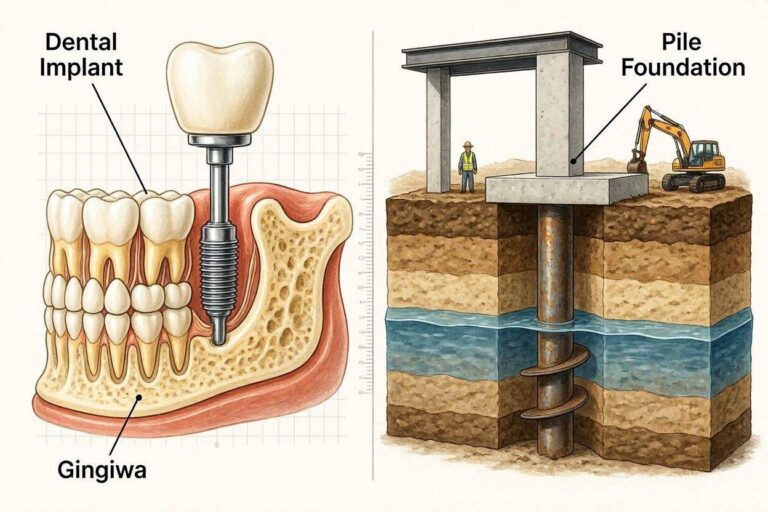
A dental implant is not a fake tooth in the traditional sense. It is actually a small, strong post made of medical-grade titanium. A dentist places this post into your jawbone, right where the root of your natural tooth used to be.
Once the implant fuses with your bone, the dentist attaches a custom-made crown on top. The result is a complete, stable, and beautiful tooth.
Think of it as building a house. The implant is the foundation. The crown is the house itself.
The Three Main Parts of a Dental Implant
- The implant post – This goes into the bone. It acts as the new root.
- The abutment – A small connector piece that sits on top of the post.
- The dental crown – The visible, tooth-colored part that completes your smile.
Most people never realize someone has an implant. They look and feel that natural.
Why Round Rock Residents Choose Implants Over Older Options
Before implants became mainstream, people had limited choices. Bridges required shaving down healthy teeth. Dentures slipped, clicked, and made eating difficult.
Round Rock is a growing city with a health-conscious population. People here want solutions that last. They do not want to keep coming back for repairs or replacements every few years.
Here is why dental implants have become the gold standard locally.
No Damage to Neighboring Teeth
Traditional bridges rely on the two teeth next to a gap. A dentist must grind those teeth down to fit a crown over them. That means you damage perfectly healthy enamel.
Implants stand alone. They do not touch or alter your other teeth. Your natural teeth stay exactly as they are.
Bone Preservation You Cannot Get Elsewhere
When you lose a tooth, your jawbone starts to shrink. The bone only stays strong because tooth roots stimulate it. Without that stimulation, the bone melts away over time.
Implants mimic natural roots. They stimulate the bone every time you chew. That keeps your jaw strong and preserves your facial structure.
Comfort and Confidence
Dentures move. They rub against gums. They make embarrassing noises.
An implant becomes part of you. It does not slip. It does not hurt. You forget it is even there.
Long-Term Value
Yes, implants cost more upfront than bridges or dentures. But a well-maintained implant can last 20, 30, or even 40 years. Bridges last 5 to 10 years on average. Dentures need relining or replacing every 5 to 7 years.
Over a lifetime, implants often cost less because you replace them far less often.
Note from a local dental professional: “The most common thing I hear from patients who waited years to get implants is: ‘I wish I had done this sooner.'”
Who Is a Good Candidate for Dental Implants in Round Rock?
Not everyone qualifies for implants right away. A good candidate has:
- Healthy gums – No active gum disease.
- Enough jawbone – Implants need sufficient bone to fuse with.
- Good overall health – Conditions like uncontrolled diabetes can affect healing.
- Non-smoker or willing to quit – Smoking dramatically increases implant failure rates.
- Realistic expectations – Implants require surgery and a healing period.
Do not worry if you lack bone. Many Round Rock implant specialists offer bone grafting procedures to rebuild what is missing. That adds time and cost, but it makes implants possible for almost everyone.
Who Might Need Extra Precautions?
Some health conditions require extra planning but do not automatically disqualify you.
- Diabetes (well-controlled is usually fine)
- High blood pressure
- Osteoporosis (depending on medications)
- Autoimmune disorders
Always share your complete medical history with your dentist. Honesty prevents complications later.
The Different Types of Dental Implants Available
Not all implants are the same. The right type depends on how many teeth you are missing and the condition of your jawbone.
Single Tooth Implants
This is the most straightforward option. One implant post supports one crown. It fills a single gap perfectly.
Best for: People missing just one tooth.
Implant-Supported Bridges
When you have two or three missing teeth in a row, you do not need an implant for every gap. Two implants can support a bridge that covers three missing teeth.
Best for: People missing multiple adjacent teeth.
All-on-4 or All-on-6 Implants
For people missing all teeth on the upper or lower arch, placing an implant for every missing tooth is impractical and expensive. The All-on-4 technique uses four strategically placed implants to support a full set of fixed teeth.
You cannot remove these teeth at home. Only a dentist can take them out. They feel very close to natural teeth.
Best for: People needing full arch replacement.
Implant-Supported Dentures
This option combines a removable denture with implants. Two to four implants snap into a special denture. You can take the denture out for cleaning, but it stays secure while eating or talking.
Best for: People who want better stability than regular dentures but prefer removable prosthetics.
Comparison Table: Types of Dental Implants
| Type | Number of Implants | Number of Teeth Replaced | Removable? | Typical Healing Time |
|---|---|---|---|---|
| Single implant | 1 | 1 | No | 3-6 months |
| Implant bridge | 2 | 3-4 | No | 3-6 months |
| All-on-4 | 4 per arch | 10-14 per arch | No (only dentist removes) | 4-8 months |
| Implant denture | 2-4 per arch | Full arch | Yes (user removes) | 3-5 months |
The Step-by-Step Dental Implant Process in Round Rock
Understanding what happens during treatment reduces anxiety. Here is the realistic timeline you can expect from a typical Round Rock implant dentist.
Step 1: Initial Consultation (1 hour)
The dentist examines your mouth. They take X-rays or a 3D CT scan. This imaging shows the exact shape and density of your jawbone.
You discuss your goals, budget, and medical history. The dentist tells you if you need any preparatory work like bone grafting.
Step 2: Treatment Planning (1-2 weeks)
Your dentist creates a custom surgical plan. They determine exactly where each implant will go. Modern computer-guided surgery makes this incredibly precise.
Step 3: Preparatory Procedures (if needed)
Some patients need:
- Bone grafting – Adding bone to areas that are too thin or soft.
- Sinus lift – Lifting the sinus floor to make room for upper jaw implants.
- Tooth extraction – Removing damaged teeth that cannot be saved.
These procedures add 4 to 12 months to your overall timeline. Do not skip them if your dentist recommends them. They are essential for long-term success.
Step 4: Implant Placement Surgery (1-2 hours per implant)
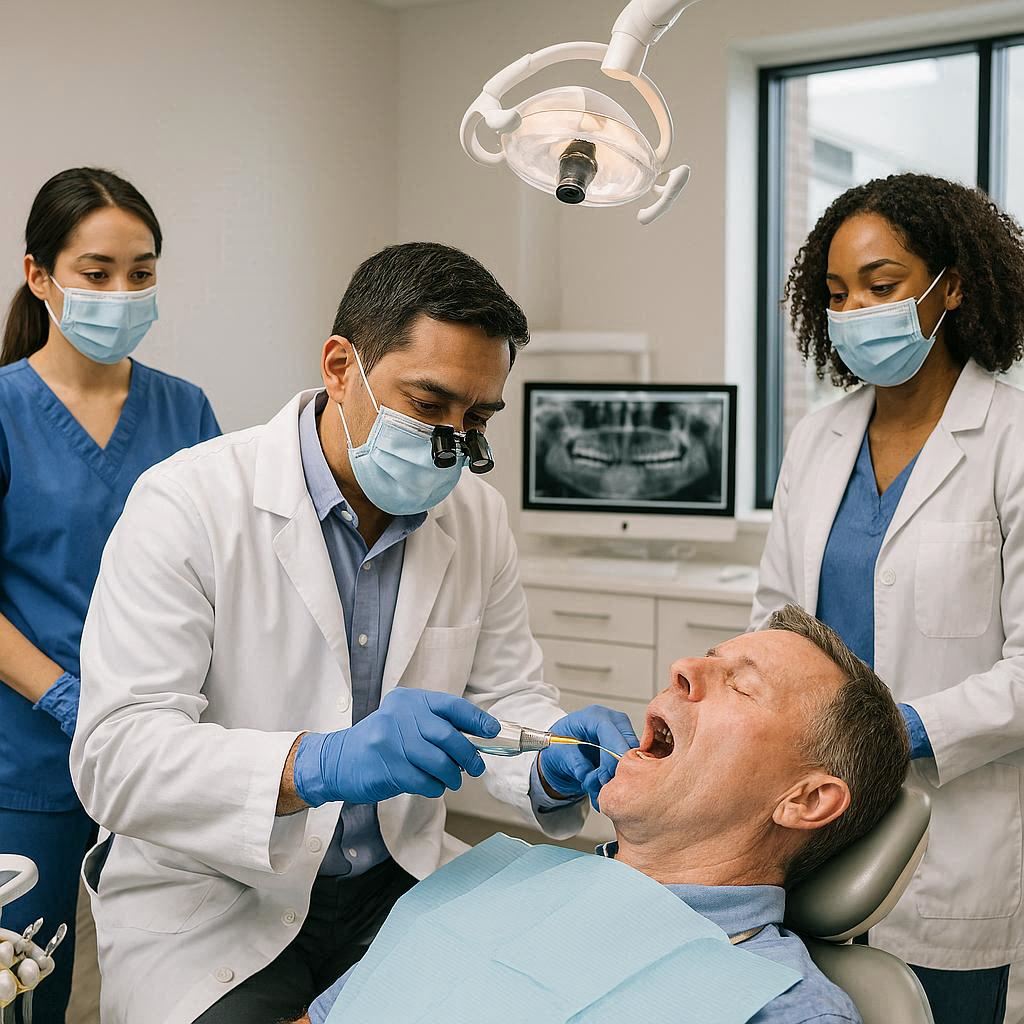
The dentist numbs your mouth completely. Most people feel pressure but no pain. They make a small cut in your gum, drill a precise hole into the bone, and insert the implant post.
Then they stitch the gum closed over or around the implant. You go home the same day.
Step 5: Osseointegration (3-6 months)
This is the most important phase. Your bone grows tightly around the implant surface. The implant becomes permanently fixed in your jaw.
You wear a temporary tooth or denture during this time. You can eat soft foods and live normally, but you avoid chewing directly on the implant site.
Step 6: Abutment Placement (30 minutes)
Once the implant is fully fused, the dentist reopens the gum to attach the abutment. This small metal piece sticks up above the gum line. It acts as the connection point for your final crown.
Healing from this minor procedure takes about two weeks.
Step 7: Crown Fabrication (2-4 weeks)
Your dentist takes impressions of your mouth. A dental laboratory crafts your custom crown. They match the color, shape, and size to your natural teeth.
Step 8: Final Crown Placement (1 hour)
The dentist screws or cements your new crown onto the abutment. They check your bite and make small adjustments. You walk out with a complete, beautiful smile.
How Much Do Dental Implants Cost in Round Rock, Texas?
Let us talk honestly about money. Dental implants require a significant investment. Prices vary based on:
- How many implants you need
- Whether you need bone grafting or extractions
- The type of crown material (porcelain, zirconia, etc.)
- The dentist’s experience and technology
Average Cost Ranges in Round Rock
| Procedure | Low End | High End | Notes |
|---|---|---|---|
| Single implant (all-in) | $3,000 | $6,000 | Includes implant, abutment, and crown |
| Implant bridge (3 teeth) | $6,000 | $12,000 | Two implants supporting three crowns |
| All-on-4 (per arch) | $15,000 | $30,000 | Full arch fixed teeth |
| Implant denture (per arch) | $7,000 | $15,000 | Removable but stable |
| Bone grafting (per site) | $500 | $2,000 | Sometimes necessary |
| Sinus lift | $1,500 | $3,000 | For upper molars only |
Important note: These are estimates. Always ask for a written treatment plan with all costs included. Some offices charge separately for the CT scan, temporary teeth, or final adjustments.
Does Insurance Cover Dental Implants?
Most dental insurance plans do not cover implants. They consider them cosmetic or elective. However, some plans cover parts of the procedure, such as:
- Extractions
- Bone grafting
- Crowns (if coded as a necessary replacement)
Call your insurance company before your consultation. Ask specifically: “Does my plan have any implant benefits?” Some PPO plans now offer partial coverage.
Financing Options in Round Rock
Many local implant dentists offer payment plans. Common options include:
- CareCredit – A healthcare credit card with promotional financing.
- LendingClub – Personal loans for medical procedures.
- In-house payment plans – Some offices let you pay over 6 to 12 months.
- Health savings account (HSA) or flexible spending account (FSA) – Use pre-tax dollars.
Do not let cost stop you from at least getting a consultation. Most offices provide free or low-cost initial exams.
Choosing the Right Implant Dentist in Round Rock
Not all dentists place implants. You need someone with specific training and experience.
Questions to Ask Before You Commit
- How many implants have you placed? Look for hundreds or thousands.
- What is your success rate? Over 95% is standard for healthy patients.
- Do you use 3D CT scanning? This is essential for safety and precision.
- Who makes your crowns? In-house labs are faster. Outside labs are fine too.
- What happens if my implant fails? Reputable dentists offer warranties or free replacements.
- Do you handle the entire process or refer out? One dentist doing everything is more convenient.
Credentials to Look For
- DDS or DMD – Standard dental degrees.
- AAID credential – American Academy of Implant Dentistry certification.
- Periodontist or oral surgeon – Specialists with extra implant training.
- Years in practice – Experience matters with surgery.
Red Flags to Avoid
- Prices that seem too good to be true (they usually are)
- High-pressure sales tactics
- No clear written treatment plan
- Vague answers about complications or failures
Take your time. Meet two or three dentists before deciding. A good implant lasts decades. A few weeks of research is a small investment.
Recovery and Aftercare: What Real Round Rock Patients Experience
Healing from implants is usually easier than people expect. Most patients compare it to having a wisdom tooth removed.
The First 24 Hours
- Some bleeding is normal. Bite on gauze.
- Swelling peaks around day two or three.
- Use ice packs for 15 minutes at a time.
- Eat only cold or lukewarm soft foods.
- Do not spit, use a straw, or smoke.
The First Week
- Stick to soft foods: yogurt, mashed potatoes, scrambled eggs, smoothies.
- Rinse gently with warm salt water after meals.
- Take prescribed or recommended pain relievers as needed.
- Most people return to work the next day for desk jobs.
The Healing Months
During osseointegration, you must protect the implant site.
- Avoid chewing hard foods on that side.
- Do not use the area for biting into apples or corn on the cob.
- Maintain excellent oral hygiene around the healing cap.
Long-Term Maintenance
Implants cannot get cavities, but the gum tissue around them can get infected. This is called peri-implantitis. It is the number one cause of late implant failure.
Your daily implant care routine:
- Brush twice a day like normal.
- Floss carefully around the implant.
- Use a water flosser to clean hard-to-reach areas.
- Visit your dentist every six months for checkups.
- Avoid chewing ice, hard candy, or pens.
With proper care, most implants outlive their owners.
Risks and Complications: Honest Information
No surgery is 100% risk-free. Being informed helps you prevent problems.
Common (but usually minor) issues
- Swelling and bruising – Normal. Resolves in 7-10 days.
- Minor bleeding – Normal for the first day.
- Temporary numbness – Rare but possible. Usually resolves in weeks.
Less common but serious
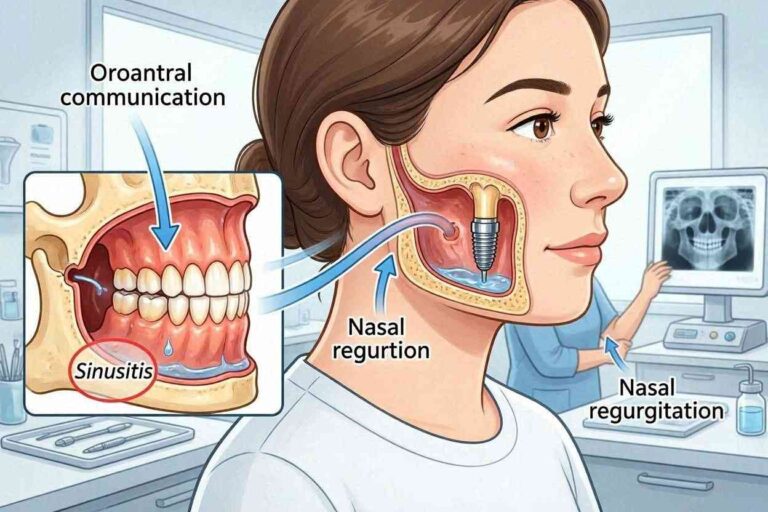
- Implant failure to fuse – Happens in 2-5% of cases. Risk factors include smoking, diabetes, and poor bone quality.
- Infection – Prevented with good hygiene and antibiotics when needed.
- Nerve damage – Extremely rare with 3D CT planning. Causes tingling or numbness in lip or chin.
Who has the highest failure rates?
- Smokers – Failure rates up to 20% higher than non-smokers.
- People with uncontrolled diabetes – Healing is slower and less predictable.
- Those who grind their teeth – Grinding puts extreme pressure on implants.
- Patients who skip follow-up visits – Small problems become big ones.
If you fall into any of these categories, do not despair. Many patients still succeed with extra precautions. Your dentist can fit you with a night guard or recommend smoking cessation programs.
Dental Implants vs. Alternatives: A Fair Comparison
You have choices. Here is how implants stack up against the other options.
Implants vs. Traditional Bridge
| Factor | Implant | Bridge |
|---|---|---|
| Affects adjacent teeth? | No | Yes (shaved down) |
| Lifespan | 20+ years | 5-10 years |
| Bone loss prevention | Yes | No |
| Cost upfront | Higher | Lower |
| Cost over 20 years | Lower | Higher |
Implants vs. Regular Dentures
| Factor | Implant | Denture |
|---|---|---|
| Stability | Excellent | Poor to fair |
| Chewing ability | 90% of natural | 30% of natural |
| Bone preservation | Yes | No |
| Comfort | Feels like teeth | Can rub and slip |
| Maintenance | Normal brushing | Special cleaners required |
Implants vs. Doing Nothing
Leaving a gap is not harmless. Over time, you will experience:
- Teeth shifting into the empty space
- Difficulty chewing on that side
- Bone loss in the jaw
- Changes in your facial appearance
- Increased risk of decay on neighboring teeth
Doing nothing is free today but expensive tomorrow.
Real Patient Stories from Round Rock (Anonymized)
These are composite stories based on real experiences from local practices.
Mark, 52 – Single Implant
“I lost a molar to a crack. My old dentist said a bridge would cost $2,500. An implant was $4,200. I chose the implant. Five years later, that tooth is still perfect. My friend’s bridge failed after seven years. I am glad I spent more upfront.”
Linda, 68 – All-on-4 Upper Arch
*“I wore dentures for 15 years. I hated them. They made me gag. I could not taste my food properly. My daughter in Round Rock convinced me to see her dentist. The All-on-4 changed my life. I eat steak again. I laugh without covering my mouth. It was expensive, but worth every penny.”*
James, 45 – Two Implants After Accident
“A bike accident knocked out my two front teeth. I felt horrible. The implant process took about seven months total. I wore a flipper (temporary plastic tooth) during healing. It was annoying but fine. Now you cannot tell anything happened. My smile looks exactly like before.”
Preparing for Your First Consultation in Round Rock
Make the most of your appointment with these tips.
What to Bring
- Insurance card
- List of current medications
- Any recent dental X-rays (if switching dentists)
- A list of questions
What to Expect
The dentist will:
- Ask about your goals and concerns
- Examine your mouth and gums
- Take digital X-rays or a CT scan
- Explain your options with prices
- Give you a written treatment plan
Questions You Should Ask
- “Am I a good candidate today, or do I need bone grafting?”
- “How long from start to finish for my specific case?”
- “What type of sedation do you offer?”
- “Do you provide a warranty on the implant or crown?”
- “What happens if the implant fails?”
Frequently Asked Questions (FAQ)
Are dental implants painful?
Most patients report less discomfort than expected. The surgery itself is painless due to local anesthesia. Afterward, over-the-counter pain relievers usually suffice. The pain is typically a mild ache, not sharp pain.
How long do dental implants last?
With good oral hygiene and regular dental visits, implants often last 20 to 30 years or longer. The crown may need replacement after 10 to 15 years due to normal wear.
Can I get same-day implants in Round Rock?
Yes, some offices offer same-day or “teeth in a day” procedures. However, this is not right for everyone. Same-day implants carry higher risks. Most dentists recommend the traditional staged approach for better long-term results.
Do dental implants look natural?
Absolutely. Modern crowns are custom-shaded and shaped to match your surrounding teeth. Even a specialist cannot tell the difference without an X-ray.
Can I smoke with dental implants?
Smoking significantly increases failure rates. If you smoke, your implant is much more likely to fail. Most dentists strongly recommend quitting at least two weeks before surgery and during the healing period.
What is the age limit for implants?
There is no upper age limit. Healthy adults in their 80s and 90s receive implants successfully. The lower limit is when jaw growth finishes, usually around age 18 for girls and 20 for boys.
How do I clean my implants?
Brush normally. Floss carefully using implant-specific floss or superfloss. A water flosser on low pressure works very well. Your dentist may also recommend rubber-tipped stimulators.
Can my body reject a dental implant?
True rejection (allergic reaction) is extremely rare because titanium is hypoallergenic. What people call “rejection” is usually failure of the bone to fuse (osseointegration). This happens in about 2-5% of cases.
Additional Resources
For more reliable information, visit the American Academy of Implant Dentistry’s patient education page:
AAID Patient Resources – Dental Implants Explained
This nonprofit organization provides unbiased, science-based information about implant safety, types, and finding qualified dentists.
Final Thoughts: Your Next Step in Round Rock
Searching for “dental implants Round Rock Texas” is the first step toward a better smile. You now understand the process, costs, risks, and benefits. You know what questions to ask and what red flags to avoid.
The only thing left to do is schedule a consultation. You do not have to commit to anything. Just go talk to a professional. Bring your questions. See what is possible for your unique situation.
Thousands of Round Rock residents have already made the investment. They eat what they want. They smile without hesitation. They stopped worrying about their teeth.
You can be next.
Conclusion :
Dental implants in Round Rock offer a permanent, natural-looking solution for missing teeth. While the upfront cost is higher than alternatives, implants save money over time and preserve your jawbone and facial structure. Choose an experienced local dentist, follow proper aftercare, and enjoy a confident smile for decades.