Dental Implant Locator Abutment: The Complete Patient’s Guide (2026)
If you have ever worn traditional dentures, you know the feeling. They slip. They click. They make you feel self-conscious when you eat or laugh.
There is a better way. It is called an overdenture supported by implants. And at the heart of this system sits a small but powerful part: the dental implant locator abutment.
This guide will walk you through everything you need to know. No confusing dental jargon. No unrealistic promises. Just clear, honest information to help you make an informed decision.
Let us start from the beginning.
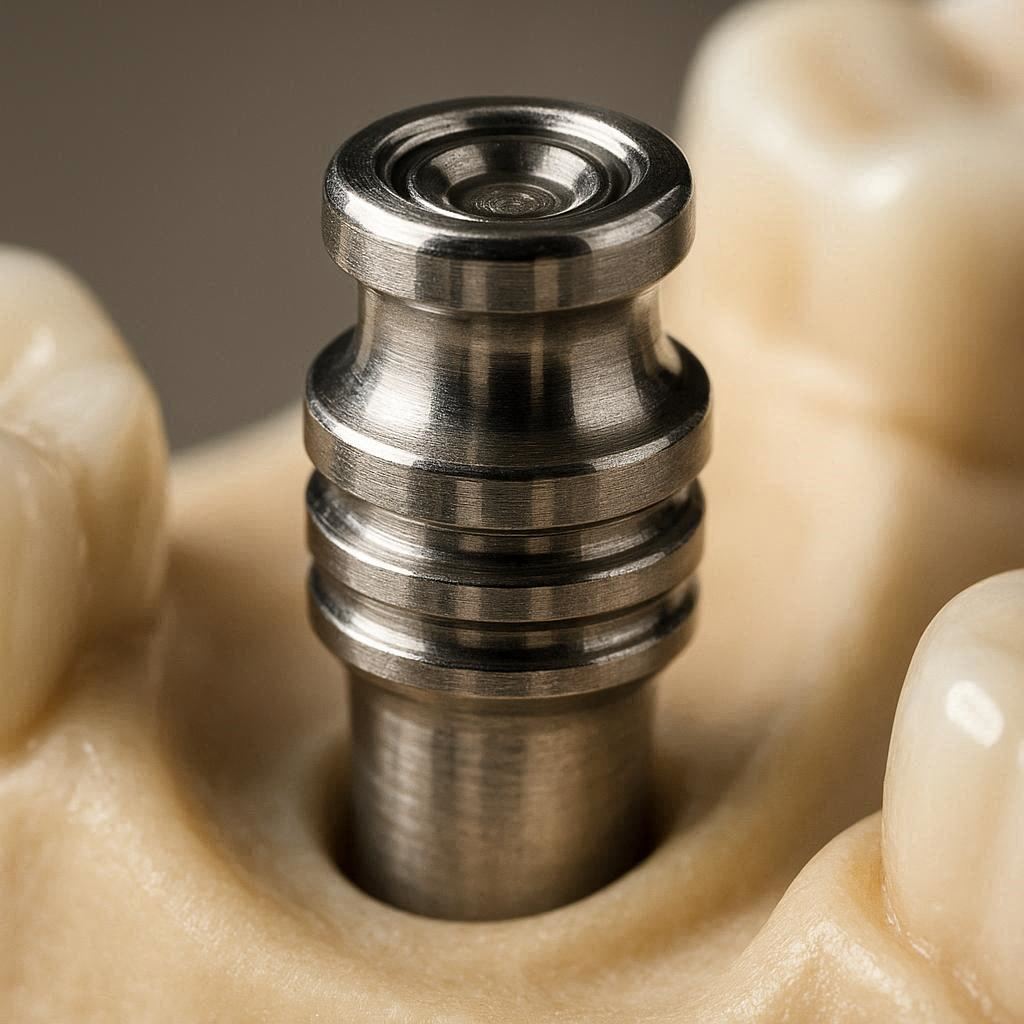
What Exactly Is a Dental Implant Locator Abutment?
Think of a locator abutment as a smart connector. It is a small metal piece that attaches directly to a dental implant. The implant itself is the screw placed into your jawbone. The abutment sits on top of it.
What makes the locator abutment special? It has a unique inner shape. This shape allows a removable denture to snap firmly into place. Yet, you can still take the denture out for cleaning.
The “locator” part of the name comes from how it works. The denture contains special plastic inserts that “locate” and lock onto the abutment. You get stability without needing cement or permanent screws.
Important note: A locator abutment is not the same as a regular implant abutment. Regular abutments are usually for fixed crowns or bridges. Locator abutments are specifically for removable overdentures.
How Does a Locator Abutment Differ from Other Implant Attachments?
This is a common point of confusion. There are several ways to attach a denture to implants. Here is a simple breakdown.
| Attachment Type | Best For | Removable? | Ease of Cleaning | Longevity |
|---|---|---|---|---|
| Locator Abutment | Most overdentures (2-4 implants) | Yes | Very easy | 3-5 years (male part) |
| Ball Attachment | Older systems, limited space | Yes | Moderate | 2-4 years |
| Bar Attachment | Full arch, multiple implants | Yes/No | Complex | 5-10 years |
| Fixed Screw-Retained | Permanent bridges | No | Professional only | 10+ years |
The locator abutment has become the most popular choice. Why? It is low profile. It allows for slight misalignment between implants. And it is very patient-friendly. You can clean around it with a simple toothbrush.
Who Is a Good Candidate for Locator Abutments?
Not everyone needs locator abutments. But for the right person, they are life-changing.
You might be a good candidate if:
- You already wear a complete or partial denture.
- You have enough jawbone to support two to four implants.
- You want your denture to stay put without glue.
- You are willing to remove the denture nightly for cleaning.
- You have healthy gums and no uncontrolled medical conditions.
A locator abutment system works best with two to four implants in the lower jaw. For the upper jaw, four implants are often recommended. This provides more support.
When Should You Avoid Locator Abutments?
Let us be realistic. This system is not for everyone.
Avoid locator abutments if:
- You cannot maintain good oral hygiene.
- You have severe bone loss without grafting.
- You want a fixed, non-removable solution.
- You have bruxism (heavy teeth grinding). The extra force can damage the plastic inserts.
Always get a professional evaluation. A prosthodontist or an implant dentist can tell you if you are a good fit.
The Step-by-Step Process: From Implant to Snapping Denture
Understanding the process helps reduce anxiety. Here is what a typical treatment looks like.
Initial Consultation
Your dentist will examine your mouth. They will take X-rays or a CBCT scan. This shows bone density and volume. They will discuss your goals and budget.
Implant Placement Surgery
This is a minor surgical procedure. The dentist places titanium implants into your jawbone. You receive local anesthesia. Many people report less discomfort than a tooth extraction.
Healing time follows. This takes three to six months. During this time, the bone fuses with the implant. This process is called osseointegration.
Uncovering and Abutment Placement
Once healed, the dentist uncovers the top of each implant. Then they screw the locator abutments into place. No pain here. It feels like a small pressure.
Denture Conversion or Fabrication
Your existing denture gets modified. Or a new denture gets made. The dentist adds special metal housings and plastic inserts into the denture base. These match the locator abutments.
Fitting Day
This is the exciting day. Your dentist places the denture over the abutments. You hear a click. You feel the difference. The denture is secure but still removable.
“The first time I bit into an apple after years of eating soft foods, I almost cried. It was that simple and that powerful.” — Margaret, 68, lower jaw locator overdenture wearer.
Follow-Up Adjustments
You will return after 24 hours, then one week, then one month. Small adjustments are normal. The retention may feel too tight or too loose at first. Your dentist can change the plastic inserts to adjust the holding force.
Pros and Cons: An Honest Look
No dental solution is perfect. Here is the real picture.
The Good (Pros)
- Excellent stability. No more slipping or rocking.
- No adhesive needed. Say goodbye to messy creams and powders.
- Easy to clean. You remove the denture and brush both it and the abutments.
- Preserves bone. Implants stimulate the jawbone. This prevents the “sunken face” look.
- Affordable compared to fixed bridges. A locator overdenture costs less than a full arch of fixed implants.
- Repairable. If a plastic insert wears out, you replace only that small part.
The Not-So-Good (Cons)
- Annual maintenance required. The plastic inserts wear down. They need replacement every 12 to 24 months depending on use.
- Not completely rigid. The denture can still move very slightly. Most people do not notice, but some do.
- Food can get underneath. You must clean under the denture after meals.
- Initial cost is moderate. You pay for implants, abutments, and the denture. However, it is less than fixed options.
- Requires commitment. You must remove and clean the denture nightly. If you skip this, inflammation occurs.
Locator Abutment Parts and Materials
Knowing the parts helps you understand what your dentist is talking about.
The locator system has three main components:
- The abutment itself. Made of titanium alloy or titanium nitride (gold-colored). It screws into the implant. It stays there permanently unless the dentist removes it.
- The metal housing. This sits inside the denture. It acts as a socket that receives the abutment.
- The nylon insert (male part). This is the colored plastic piece inside the metal housing. It creates the snap. Inserts come in different colors: clear, blue, red, orange, and green. Each color provides a different retention force.
| Insert Color | Retention Level | Best For |
|---|---|---|
| Clear | Light | First-time wearers, low force needed |
| Blue | Light-Medium | Standard lower jaw |
| Red | Medium | Standard upper jaw |
| Orange | Medium-Heavy | Stronger hold |
| Green | Heavy | Heavy biting force, bruxism patients |
Your dentist will start with light or medium retention. You can always move to heavier inserts later.
How to Care for Your Locator Abutment Overdenture
Good care extends the life of your system. It also keeps your gums healthy.
Daily Cleaning Routine
- Remove your denture over a sink filled with water. This prevents breakage if you drop it.
- Rinse the denture under lukewarm water.
- Use a soft denture brush and mild soap or denture paste. Do not use regular toothpaste. It is too abrasive.
- Brush around each locator abutment in your mouth. Use a soft toothbrush and non-abrasive gel.
- Rinse the denture well. Reinsert it by pressing down evenly until you hear clicks.
- Never sleep with the denture in place. Your gums need rest.
Weekly Deep Cleaning
Soak the denture in an effervescent denture cleaner once a week. Remove the metal housings from the denture if you know how. Ask your dentist to show you. This removes biofilm that regular brushing misses.
What to Avoid
- Whitening toothpastes. They scratch the nylon inserts.
- Hot water. It warps the plastic.
- Bleach. It damages metal components.
- Vinegar. It corrodes the abutment surface over time.
How Long Do Locator Abutments Last?
This is a fair question. Let us separate the parts.
- The titanium abutment itself: This can last indefinitely if well maintained. It does not wear out.
- The metal housing in the denture: 5 to 10 years.
- The nylon inserts: 6 to 24 months. Heavy biters need replacement more often.
Replacing an insert is simple. Your dentist pops out the old one and clicks in a new one. It takes less than five minutes per abutment. The cost is low, typically $15 to $30 per insert.
Note for readers: Do not wait until the denture feels completely loose. Replace inserts as soon as you notice reduced retention. This prevents the metal housing from wearing down prematurely.
Cost of a Dental Implant Locator Abutment System
Let us talk money. Prices vary widely based on location, dentist experience, and lab fees.
Here is a realistic breakdown for the United States (2026 estimates).
| Item | Cost Range |
|---|---|
| Single implant placement | $1,500 – $3,000 |
| Locator abutment (per unit) | $250 – $500 |
| Locator housing and insert (per unit) | $75 – $150 |
| New overdenture (if needed) | $1,200 – $2,500 |
| Conversion of existing denture | $500 – $1,200 |
For a lower jaw with two implants, total cost typically falls between $4,000 and $7,000.
For a lower jaw with four implants, expect $7,000 to $12,000.
For an upper jaw with four implants, expect $8,000 to $15,000.
Dental insurance may cover part of the denture but rarely covers implants. Medical insurance usually does not cover this procedure. However, many dentists offer payment plans. CareCredit and similar healthcare credit cards are common options.
Is It Worth the Cost?
Consider this. High-quality denture adhesive costs $5 to $10 per week. Over ten years, that is $2,600 to $5,200. Plus the frustration, the mess, and the social embarrassment.
A locator overdenture removes all of that. Most patients say it pays for itself in quality of life.
Common Problems and How to Fix Them
No system is perfect. Here are real issues patients face and their solutions.
The Denture Feels Too Loose
This happens over time as the nylon inserts wear. Solution: Replace the inserts with new ones. You may also switch to a higher retention color.
The Denture Is Too Hard to Remove
Sometimes new inserts are too tight. Solution: Switch to a lower retention color. Your dentist can also adjust the metal housing.
One Abutment Feels Loose
The abutment screw may have loosened. This is rare but possible. Solution: Do not ignore this. See your dentist. They will retorque the screw. Do not attempt this yourself.
Redness or Swelling Around an Abutment
This is usually trapped food or plaque. Solution: Improve your cleaning routine. Use a water flosser on low pressure around each abutment. If redness persists for more than three days, see your dentist.
The Denture Rocks from Side to Side
This suggests uneven wear on the inserts. Or one abutment may be placed at a different height. Solution: Your dentist can use different retention inserts to balance the rocking. In severe cases, they may replace the abutment.
Locator Abutments vs. Other Implant Overdenture Systems
You have choices. Here is how locator compares to the two main alternatives.
Locator vs. Ball Attachments
Ball attachments have a round head. The denture has a rubber O-ring that snaps over it.
- Locator advantage: More retention options, less wear on the denture, better for tilted implants.
- Ball advantage: Simpler design, slightly cheaper parts.
- Verdict: Locator is superior for most patients. Ball attachments are fading from use.
Locator vs. Bar Attachments
A bar connects two or more implants. The denture clips onto the bar.
- Locator advantage: Less expensive, easier to clean, no bar to break, easier to repair.
- Bar advantage: More rigid, better for many implants, distributes force evenly.
- Verdict: Locator for 2-4 implants. Bar for 4+ implants or full arch fixed hybrid dentures.
Frequently Asked Questions (FAQ)
1. Can I use a locator abutment with only one implant?
Technically yes, but it is not recommended. One implant creates a pivot point. The denture will rotate. Two implants are the minimum for a stable lower overdenture. For the upper jaw, four implants are strongly preferred.
2. Does a locator abutment show when I smile?
No. The abutment sits at or slightly below the gum line. Your denture covers it completely. No one sees any metal.
3. Will food get stuck between the abutments?
Yes, sometimes. This is normal. You remove the denture, rinse both your mouth and the denture, and reinsert. It becomes a quick habit.
4. How painful is the procedure?
Implant placement is done with local anesthesia. Most patients report less pain than a tooth extraction. After the numbness wears off, over-the-counter pain relievers manage any discomfort for a day or two.
5. Can I have an MRI with locator abutments?
Yes. Titanium is non-ferromagnetic. It is safe for MRI up to 3 Tesla. However, always tell the MRI technician about your implants beforehand.
6. What happens if I lose my denture?
You will need a new denture made. The locator abutments remain in your mouth. The dentist can copy the existing housing positions into a new denture base. This is easier than starting over.
7. Can locator abutments be used for partial dentures?
Yes. Locator abutments work well for removable partial dentures that attach to both implants and natural teeth. This is called an implant-supported removable partial denture.
8. Do I need to see a specialist?
A general dentist with implant training can place locator abutments. However, for complex cases (low bone, upper jaw, multiple implants), a prosthodontist or an oral surgeon is a safer choice.
Additional Resource
For a deeper dive into implant overdenture options, including clinical studies and cost calculators, visit the American College of Prosthodontists’ patient education page:
🔗 Go to: www.gotoapro.org (search for “locator overdenture”)
This resource includes a “find a prosthodontist” tool and downloadable care guides.
Final Thoughts: Is a Locator Abutment Right for You?
A dental implant locator abutment is not magic. It is engineering. Good engineering that solves a real problem.
If you are tired of loose dentures. If you miss eating corn on the cob or a crisp apple. If you want to laugh without covering your mouth. Then this system deserves your attention.
It requires an investment of time and money. It requires daily cleaning. It requires a dentist you trust.
But for thousands of people, the trade-off is more than worth it. They get their confidence back. They get their favorite foods back. They get their smile back.
Conclusion :
A dental implant locator abutment connects a removable denture securely to implants, eliminating the need for adhesives. It offers excellent stability, easy cleaning, and replaceable parts, but requires daily maintenance and periodic insert changes. For patients with two to four implants, it is a reliable, cost-effective middle ground between traditional dentures and fixed bridges.