Holistic Alternatives to Dental Implants
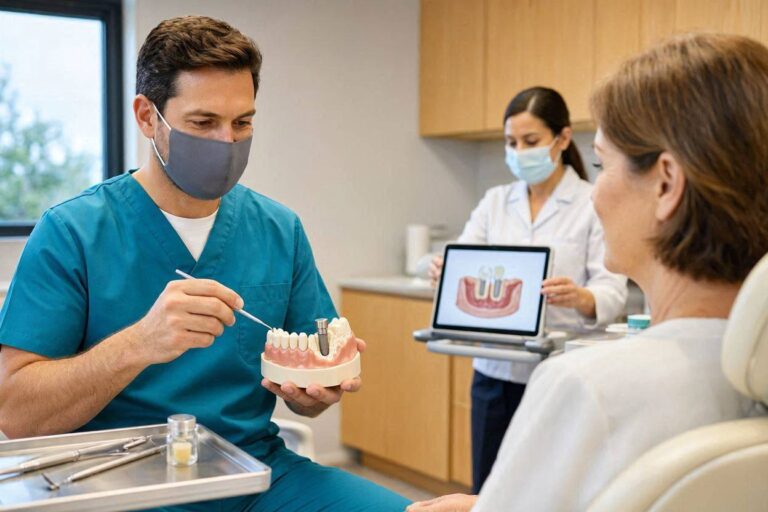
Deciding how to replace a missing tooth is a big deal. When you hear the words “dental implant,” it often sounds like the final answer. And for many people, it is a fantastic solution. But what if you are looking for a different path?
Maybe you are sensitive to metals. Perhaps you want to avoid surgery due to a health condition. Or maybe you simply believe that a natural, whole-body approach is better for you.
You are not alone.
More and more people are searching for holistic alternatives to dental implants. They want options that work with the body’s natural biology, not against it. They want solutions that are less invasive, more affordable, and free from synthetic materials.
This guide is for you.
We will explore realistic, effective, and scientifically sound alternatives. You will learn about biological dentistry, metal-free restorations, and even natural methods to support your oral health. No fluff. No fake promises. Just honest, practical information to help you make the best choice for your unique smile.

Why Look Beyond Dental Implants? Understanding the Holistic Perspective
Before we dive into the alternatives, it is fair to ask: why look for something else? Dental implants have a success rate of over 95%. They look and feel like natural teeth. So, what is the problem?
From a holistic standpoint, the concerns are not about the implant itself, but about the materials and the surgery.
The Concerns About Traditional Implants
Holistic dentists often point to three main issues:
- Metal Sensitivity: Most traditional implants are made from titanium alloy. While titanium is considered “biocompatible” for most people, some individuals develop a sensitivity or allergic reaction over time. This can lead to chronic inflammation, fatigue, or skin rashes.
- Galvanic Toxicity: When you place different metals in your mouth (like a titanium implant next to an amalgam filling), saliva acts like a battery. This creates a small electric current. Some holistic practitioners believe this constant current can disrupt the body’s natural energy flow and contribute to long-term health issues.
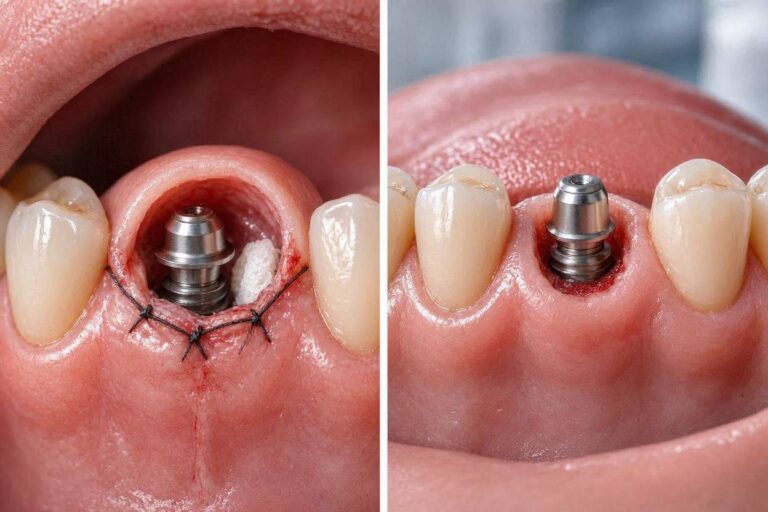
- Surgical Trauma: Placing an implant requires drilling into the jawbone. Even with modern techniques, this is an invasive procedure. For someone with a compromised immune system, osteoporosis, or certain autoimmune conditions, the surgery may carry more risks than benefits.
Important Note: This does not mean implants are “bad.” They are a miracle of modern dentistry. But for a specific group of patients seeking a biological approach, exploring holistic alternatives to dental implants makes perfect sense.
The Guiding Principles of Holistic Dentistry
To understand the alternatives, you first need to understand the philosophy behind them. Holistic dentistry follows four core rules:
- Rule 1: The mouth is connected to the body. Any material placed in your mouth affects your entire system.
- Rule 2: Prevention over intervention. The best tooth replacement is keeping your natural teeth healthy.
- Rule 3: Use biocompatible materials. Avoid known toxins, metals, and synthetics whenever possible.
- Rule 4: Minimally invasive techniques. Preserve as much natural tooth and bone structure as you can.
With these rules in mind, let us explore the real-world options available to you today.
The Top 9 Holistic Alternatives to Dental Implants (Ranked by Invasiveness)
We have organized these options from the least invasive to the most invasive. This way, you can start with the gentlest choices and move forward only if needed.
| Alternative | Best For | Invasiveness | Metal-Free? | Average Lifespan |
|---|---|---|---|---|
| 1. Space Maintenance | Recently lost tooth | None | Yes | Permanent (habit) |
| 2. Resin Bonded Bridge | Front teeth, non-smokers | Low | Yes | 5-10 years |
| 3. Flexible Partial Denture | Multiple missing teeth | Low | Yes | 3-8 years |
| 4. Zirconia Bridge | Back teeth, strong bite | Medium | Yes | 10-15+ years |
| 5. Removable Partial Denture | Budget-friendly option | Low | Yes (acrylic) | 5-10 years |
| 6. Biological Root Canal | Saving a damaged tooth | Medium | Yes | Varies |
| 7. Ozone Therapy | Early decay or infection | None | Yes | N/A (treatment) |
| 8. Dental Transplantation | Specific single tooth cases | High | Yes | 10-20+ years |
| 9. Natural Regeneration | Very small bone defects | None | Yes | N/A (supportive) |
Let us break down each option in detail.
1. Space Maintenance: The Underrated Holistic Strategy
Here is a secret that few dentists will tell you: you do not always need to replace a missing tooth.
If you have lost a wisdom tooth, or a second molar that does not affect your chewing or smile, leaving the space empty is a perfectly valid holistic choice. The body is excellent at adapting.
When This Works Best
- Missing the very last tooth in the arch (the third molar or second molar).
- No shifting of adjacent teeth has occurred.
- You have no pain or functional issues when chewing.
How to Do It Holistically
Instead of an implant, focus on “space maintenance” through natural means:
- Regular monitoring: Take photos of your teeth every six months to check if gaps are closing.
- Myofunctional therapy: Gentle exercises for your tongue and cheeks to prevent natural drifting.
- Occlusal equilibrium: A holistic dentist can slightly reshape opposing teeth to improve bite balance without filling the gap.
Quote from a biological dentist: “Sometimes the most holistic treatment is no treatment at all. If the gap isn’t causing problems, respect the body’s wisdom and leave it alone.”
2. Resin Bonded Bridges (Maryland Bridges): The Metal-Free Favorite
If you need to replace a front tooth or a premolar, a resin bonded bridge is often the most popular holistic alternative to dental implants. Why? Because it requires no drilling into healthy teeth.
How It Works
A resin bonded bridge has a false tooth (pontic) with small metal or ceramic “wings” that glue to the back of the adjacent teeth. In a holistic version, you request zirconia or fiber-reinforced composite wings instead of metal.
The Holistic Advantages
- Zero drilling: Your natural teeth remain 100% intact.
- Reversible: If you change your mind later, the bridge can be removed.
- Metal-free options: Modern ceramics bond beautifully to enamel without metal.
- Low cost: Usually $800 to $1,500 per tooth (compared to $4,000+ for an implant).
The Realistic Downsides
Let us be honest. This is not a permanent solution. The bonding can fail after 5-7 years. You cannot bite into hard apples or crusty bread with that tooth. And it is not recommended for back molars where chewing forces are high.
Who is a good candidate?
- People with healthy enamel on adjacent teeth.
- Non-smokers (smoking weakens the bond).
- Those replacing a small upper lateral incisor or lower incisor.
3. Flexible Partial Dentures: Comfort Without Metal Clasps
Traditional partial dentures use ugly metal clasps that wrap around your teeth. They trap food, irritate gums, and look artificial. Flexible partial dentures solve all of these problems.
What Makes Them Holistic?
These dentures are made from a medical-grade thermoplastic resin called nylon or acetal resin. They contain no metal, no BPA (in high-quality versions), and no acrylic monomers that can irritate sensitive tissues.
Key Benefits
- Invisible: The material is translucent and blends with your gums.
- Gentle on teeth: No metal clasps mean no wear on your natural enamel.
- Comfortable: They flex with your mouth movements.
- Hypoallergenic: Ideal for people with metal or acrylic allergies.
How to Get a Truly Holistic Version
Not all flexible dentures are equal. Ask your biological dentist for:
- Valplast® (medical-grade nylon) or BioTens® (BPA-free resin).
- A design that does not cover your palate (palate-free design).
- Regular cleaning with non-toxic, peroxide-based soaks (not chemical tablets).
Lifespan: 3 to 8 years with proper care. They can crack if dropped, but they are repairable.
4. Zirconia Bridges: The Strong, Metal-Free, Fixed Option
If you need to replace a back molar and you want a permanent, fixed solution without metal, a full-contour zirconia bridge is your best bet. This is the closest you can get to the strength of an implant without the surgery.
What Is Zirconia?
Zirconia is a white ceramic known as “ceramic steel.” It is incredibly strong (stronger than titanium in some metrics), completely biocompatible, and 100% metal-free. Holistic dentists love it because:
- It causes no galvanic currents.
- It is hypoallergenic.
- It does not conduct heat or cold.
- It integrates beautifully with gum tissue.
The Procedure (Minimally Invasive)
Unlike an implant, a zirconia bridge does require drilling down the two adjacent teeth. However, a skilled holistic dentist will use air abrasion (a sandblasting technique) instead of a high-speed drill to prepare the teeth. This preserves more healthy enamel.
Step by step:
- Your dentist uses air abrasion to prepare the supporting teeth.
- Digital impressions are taken (no goopy, chemical-laden materials).
- A CAD/CAM machine mills your zirconia bridge in one visit (same-day dentistry).
- The bridge is bonded with a BPA-free, fluoride-free resin cement.
The Honest Truth About Zirconia Bridges
- Cost: $2,500 to $4,500 per bridge (still cheaper than an implant + crown).
- Strength: It will not break. You can chew normally.
- The catch: You must keep the supporting teeth perfectly clean. If one of those teeth gets decay, the entire bridge fails.
Verdict: The best holistic alternative to dental implants for back teeth.
5. Removable Partial Dentures: The Budget-Friendly Biological Choice
Let us not overlook the classic partial denture. When made correctly with modern, non-toxic materials, it is a perfectly valid holistic option.
The Holistic Upgrade
A traditional partial denture uses a pink acrylic base and metal clasps. A holistic partial denture uses:
- Pink zirconia or flexible resin for the base (no acrylic).
- Valplast clasps (nylon) instead of metal.
- Hand-layered, non-porous teeth that resist bacteria.
Advantages for Holistic Patients
- No permanent alteration: You do not damage any natural teeth.
- Easy to clean: You remove it at night and soak it in a natural cleanser (baking soda and water).
- Adjustable: If your mouth changes, the denture can be relined.
- Lowest upfront cost: $600 to $1,800.
The Daily Reality
You will feel it in your mouth for the first two weeks. You must remove it every night to let your gums breathe. And it will never feel as solid as natural teeth. But for many people on a budget or with health sensitivities, these trade-offs are worth it.
6. Biological Root Canal Therapy: Saving a Natural Tooth
Here is a powerful thought: the most holistic alternative to a dental implant is not replacing the tooth at all. If your tooth is damaged but still alive, you can save it with biological root canal therapy.
How It Differs From a Standard Root Canal
Standard root canals use sodium hypochlorite (bleach) and formaldehyde-based disinfectants. They leave microscopic dead spaces that can harbor bacteria.
A biological root canal follows a different protocol:
| Step | Standard | Biological |
|---|---|---|
| Disinfection | Sodium hypochlorite | Ozone gas + herbal rinses |
| Filling material | Gutta-percha (plastic) | Bioceramic sealer (calcium silicate) |
| Antibacterial | Formaldehyde | Silver nanoparticles + propolis |
| Visualization | 2D X-ray | 3D CBCT scan (to find all canals) |
The Results
When performed by a trained biological dentist (often an IAOMT member), the success rate approaches that of a standard root canal. You keep your natural tooth. No implant. No bridge. Just a healed, living tooth inside your body.
Important Warning: A poorly done biological root canal is worse than none. Seek only dentists with advanced training in ozone therapy and bioceramics.
7. Ozone Therapy: Preventing the Need for Replacement
What if you could stop tooth loss before it starts? Ozone therapy is the most exciting development in holistic dentistry today. It is not a replacement for a missing tooth, but it is a powerful way to avoid becoming a candidate for implants.
What Is Ozone Therapy?
Ozone (O3) is a highly reactive form of oxygen. When applied to a decayed tooth or infected gum, it kills bacteria, viruses, and fungi on contact. It also stimulates blood flow and activates the body’s own healing mechanisms.
Practical Applications
- Reversing early decay: Ozone can remineralize a cavity that has not yet reached the dentin.
- Treating gum disease: Ozone gas or ozonated water flushed into gum pockets eliminates the bacteria that cause bone loss (the #1 reason for tooth loss).
- Disinfecting before fillings: A biological dentist will use ozone before placing any filling to ensure zero bacteria remain.
A Realistic Expectation
Ozone will not regrow a tooth that has already fallen out. But it can:
- Save a tooth that conventional dentistry said needed extraction.
- Heal infected bone around a failing tooth.
- Prevent the need for future extractions.
Cost: $75 to $250 per session. Often not covered by insurance.
8. Dental Transplantation: The True Biological Replacement
If you want to replace a missing tooth with living tissue, consider an autogenous tooth transplantation. This is as holistic as it gets because you are using your own body.
How It Works
You have a tooth that is healthy but useless (like a wisdom tooth) and a missing tooth that needs replacement. An oral surgeon extracts the healthy tooth and immediately transplants it into the empty socket.
The Ideal Scenario
- Donor tooth: A fully formed, non-infected wisdom tooth or premolar.
- Recipient site: A fresh extraction socket (ideally within 30 minutes of the loss).
- Patient age: Under 35 years old (younger patients have better blood supply).
Success Rates
When performed correctly, transplanted teeth have a 10-year survival rate of 70-80%. The transplanted tooth can even develop a new blood supply and nerve connection over time.
The challenge: Finding a surgeon who performs this procedure. It is rare. Most dentists will recommend an implant because it is easier and more predictable.
9. Natural Bone Regeneration: Preparing for Nothing (Or Something Small)
Our final alternative is not a replacement, but a preparation strategy. If you have lost a tooth and the bone has shrunk, you might think you need an implant to preserve the bone. But holistic medicine offers another path.
The Body Can Heal Bone
Yes, your jawbone can regenerate naturally under the right conditions. This requires:
- Absence of infection: Ozone therapy or herbal rinses (goldenseal, myrrh) to clean the site.
- Mechanical stimulation: A removable appliance or a “space maintainer” that transmits chewing forces to the bone.
- Nutritional support: Vitamin D3 (5000 IU), vitamin K2 (180 mcg), and calcium from whole foods (not supplements).
The Priti Protocol
Some biological dentists use a technique called the Priti Method (named after Dr. Priya Verma). It involves placing a small, removable medical-grade silicone plug in the extraction socket for six months. The plug keeps the space open while your body regenerates its own bone. After six months, you have enough new bone for a small bridge or even a new implant if you change your mind.
Cost: $300 to $600 for the plug and follow-up visits.
Making Your Final Decision: A Practical Flowchart
Not sure which path is right for you? Follow this simple decision tree.
Step 1: Is the tooth already missing?
- Yes → Go to Step 2.
- No (but it is damaged) → Try biological root canal or ozone therapy first.
Step 2: Is the missing tooth visible when you smile?
- Yes (front tooth) → Resin bonded bridge or flexible partial.
- No (back tooth) → Zirconia bridge or leave the space.
Step 3: Do you have metal allergies or autoimmunity?
- Yes → Avoid all metal. Choose zirconia or Valplast.
- No → Traditional options (including implants) remain on the table.
Step 4: What is your budget?
- Under $1,000 → Removable partial denture or space maintenance.
- $1,000 – $3,000 → Resin bonded bridge or flexible partial.
- Over $3,000 → Zirconia bridge or seek out a dental transplant specialist.
How to Find a Truly Holistic Dentist
Not every dentist who says “holistic” actually practices biological dentistry. Look for these credentials:
- IAOMT membership: The International Academy of Oral Medicine and Toxicology is the gold standard.
- SMART certified: This means they safely remove amalgam fillings (a good sign they take toxicity seriously).
- Ozone equipment: Ask if they have an ozone generator in the office.
- Biocompatibility testing: Some holistic dentists can test your blood against 100+ dental materials to find the one your body loves best.
Red flags to avoid:
- A dentist who says “implants are the only way.”
- A dentist who charges extra for “detox” protocols without evidence.
- Anyone who claims ozone or herbs can regrow a fully missing tooth (that is not possible).
Maintaining Your Smile Naturally (So You Never Need Implants)
The best alternative is prevention. Even if you already have a missing tooth, these habits will protect your remaining teeth.
Daily Holistic Oral Care Routine
Morning:
- Oil pulling with coconut oil (10 minutes).
- Brush with a nano-hydroxyapatite toothpaste (repairs enamel naturally).
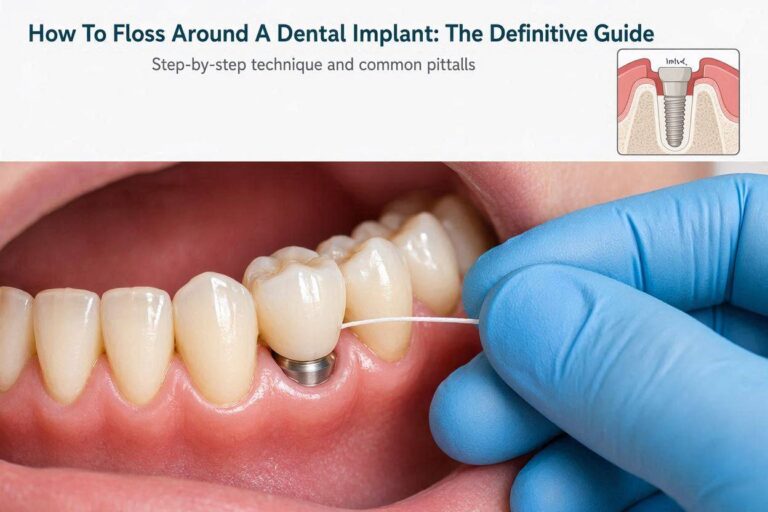
- Floss with unwaxed, unflavored silk floss.
Evening:
- Tongue scraping with a copper scraper.
- Brush again with the same toothpaste.
- Rinse with a homemade solution: 1 cup water + 1 teaspoon baking soda + 2 drops tea tree oil.
Weekly:
- Saltwater rinse (1 teaspoon Himalayan salt in warm water).
- Check your gums for bleeding or recession.
Foods That Strengthen Your Jawbone
- Grass-fed butter: Rich in vitamin K2 (directs calcium to your jaw).
- Sardines with bones: Natural calcium and vitamin D.
- Fermented cod liver oil: The ultimate bone-building supplement.
- Bone broth: Provides collagen and minerals.
Foods to Avoid
- Phytic acid: Found in grains, nuts, and seeds (blocks mineral absorption). Soak or sprout these foods before eating.
- Sugar: Feeds decay-causing bacteria.
- Carbonated water: The carbonic acid erodes enamel over time.
The Cost Comparison: Holistic Alternatives vs. Dental Implants
Let us talk about money honestly. Dental care is expensive. Here is a realistic breakdown for a single missing tooth (US average prices).
| Procedure | Average Cost | Insurance Coverage | Long-Term Cost |
|---|---|---|---|
| Dental Implant (titanium + crown) | $4,000 – $6,000 | Partial (50% often) | Low (if successful) |
| Zirconia Bridge (3-unit) | $2,500 – $4,500 | Partial | Medium (may need replacement) |
| Resin Bonded Bridge | $800 – $1,500 | Often covered | Medium (rebonding every 5 years) |
| Flexible Partial Denture | $1,200 – $2,500 | Often covered | High (replacement every 8 years) |
| Removable Acrylic Partial | $600 – $1,800 | Yes | High (relines and replacements) |
| Dental Transplantation | $1,500 – $3,000 | Rarely | Low (if successful) |
The holistic math: While a zirconia bridge costs less upfront than an implant, it may need replacement after 15 years. An implant, if successful, can last 30+ years. But if you are metal-sensitive, the implant is not an option at any price.
Real Patient Stories (Anonymous, But True)
Case 1: Sarah, Age 42, Metal Allergy
Sarah lost her upper lateral incisor in a biking accident. Her first dentist recommended a titanium implant. But Sarah has a known nickel allergy (titanium implants often contain trace nickel). She chose a resin bonded zirconia bridge instead. Five years later, the bridge is still intact. She avoids biting into corn on the cob, but she is thrilled to have a metal-free solution.
Case 2: Michael, Age 58, Autoimmune Condition
Michael has rheumatoid arthritis. His rheumatologist advised against any elective surgery, including dental implants. When Michael lost a lower first molar, his holistic dentist recommended a flexible Valplast partial denture. Michael removes it at night and soaks it in baking soda. “It took two weeks to get used to,” he says. “But my arthritis has not flared once. That is a win.”
Case 3: Elena, Age 29, Biological Root Canal Success
Elena was told her upper premolar needed extraction and an implant. The tooth had a deep cavity that reached the nerve. Instead, she found an IAOMT dentist who performed a biological root canal with ozone and bioceramics. Three years later, the tooth is still alive on X-ray. No implant. No bridge. Her natural tooth saved.
Frequently Asked Questions (FAQ)
1. Are holistic alternatives to dental implants as strong as implants?
No. Implants are fused to your bone, making them as strong as natural roots. Bridges and dentures rest on top of gums or adjacent teeth. For back molars, a zirconia bridge comes closest. For front teeth, a resin bonded bridge is sufficient.
2. Can I switch from a bridge to an implant later?
Yes, in most cases. If you have a resin bonded bridge or partial denture, you can remove it and place an implant at any time. If you have a traditional crown-and-bridge (drilled teeth), you may need to replace those crowned teeth with implants as well.
3. Do holistic alternatives cost less than implants?
Upfront, yes. A bridge or denture is almost always cheaper than an implant. But over 20 years, an implant may be cheaper because it rarely needs replacement. The choice depends on your health priorities, not just money.
4. Is there a 100% natural, no-procedure alternative?
Only if you leave the space empty. No herb, oil, or supplement will grow a new tooth. Be wary of anyone who claims otherwise. The body does not regenerate adult teeth.
5. How do I know if I am metal-sensitive?
Symptoms include: chronic fatigue, brain fog, skin rashes, or oral burning after dental work. You can take a MELISA test (lymphocyte sensitivity test) through a biological dentist. It costs around $500 and is not usually covered by insurance.
6. Can ozone therapy replace a missing tooth?
Absolutely not. Ozone kills bacteria and stimulates healing, but it cannot create new tooth structure. Use ozone to save a damaged tooth, not to replace a lost one.
7. What is the best holistic option for a child or teenager?
A resin bonded bridge or space maintainer. Never place an implant in a growing child because it will submerge as the jaw grows. Flexible partials are also safe for teens.
8. Do holistic dentists ever use implants?
Yes, many do. But they use zirconia implants (metal-free) instead of titanium. Zirconia implants are white, hypoallergenic, and conduct no electricity. They are more expensive ($5,000-$7,000) and less studied, but they exist for patients who want an implant but refuse metal.
Additional Resources
Link: IAOMT.org – The International Academy of Oral Medicine and Toxicology. Use their “Find a Dentist” tool to locate a SMART-certified, biological dentist near you.
Recommended Book: The Whole Body Approach to Dentistry by Dr. Stuart Nunnally (free PDF summary available on holistic dental forums).
Free Guide: Download “10 Questions to Ask Before Any Dental Procedure” from the Holistic Dental Association website.
Conclusion
You have options. You do not need to accept a titanium implant if your intuition tells you otherwise. From resin bonded bridges for front teeth to zirconia bridges for back molars, from flexible partials for multiple gaps to biological root canals for saving natural teeth, holistic alternatives to dental implants are real, effective, and accessible.
Listen to your body. Consult an IAOMT dentist. And remember: the most holistic choice is the one that respects your whole health, your budget, and your peace of mind.