Dental Implants in Mount Pleasant
Losing a tooth can feel frustrating. Maybe you hide your smile in photos. Perhaps chewing has become a careful chore. You are not alone. Thousands of adults face tooth loss due to decay, injury, or gum disease.
The good news? Modern dentistry offers a solution that looks, feels, and functions like a natural tooth: the dental implant.
If you live in or near Mount Pleasant, you have access to skilled implant dentists who can change your daily life. This guide walks you through everything you need to know. No jargon overload. No unrealistic promises. Just clear, honest information to help you decide.
What Exactly Is a Dental Implant?
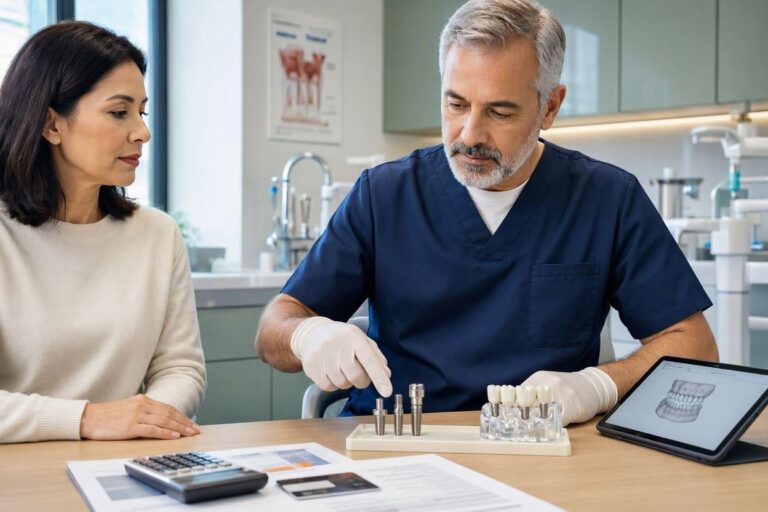
A dental implant is not a fake tooth floating in your mouth. It is a complete system. Think of it as an artificial tooth root, usually made of medical-grade titanium. A surgeon places this small screw-like post into your jawbone.
Over time, your bone grows around the implant. This process is called osseointegration. Once the implant is stable, your dentist attaches an abutment (a connector piece). On top of that goes a custom-made crown. That crown matches the color, shape, and size of your natural teeth.
The Three Main Parts of a Dental Implant
| Component | Purpose | Material |
|---|---|---|
| Implant post | Replaces the tooth root | Titanium or zirconia |
| Abutment | Connects post to crown | Titanium or gold alloy |
| Restoration (crown/bridge/denture) | Visible part for chewing and smiling | Porcelain or ceramic |
Important note: Not every patient needs the same number of implants. A single missing tooth needs one implant. Several missing teeth may need two to four implants supporting a bridge. Full arches can be restored with four to six implants (All-on-4 technique).
Why Choose Dental Implants Over Other Options?
You have alternatives: bridges, partial dentures, or full dentures. Each has its place. But implants offer unique advantages.
Implants vs. Traditional Dentures
- Stability: Dentures can slip or click. Implants are fixed in your bone.
- Comfort: No plastic plates covering your palate.
- Bone preservation: Dentures do not stop jawbone shrinkage. Implants do.
- Eating freedom: Bite into an apple. Chew steak. No restrictions.
- Speech: No clicking sounds or loose appliances.
Implants vs. Dental Bridges
A traditional bridge shaves down healthy adjacent teeth to support the false tooth. Implants leave neighboring teeth untouched. That alone is a major long-term win for your oral health.
Quote from a Mount Pleasant restorative dentist:
“I’ve placed thousands of implants. Patients almost always say the same thing: ‘I wish I had done this sooner.’ The confidence boost alone is worth it.”
The Step-by-Step Process of Getting Dental Implants in Mount Pleasant
Let’s demystify the journey. From first consultation to biting into your first pizza, here is what happens.
Step 1: Initial Consultation and Examination
Your first visit is all about information gathering. The dentist will:
- Take digital X-rays or a 3D CT scan
- Evaluate your jawbone density
- Check your gum health
- Review your medical history
Why this matters: You need enough healthy bone to support an implant. If you don’t, that is not the end. Bone grafting is often possible.
Step 2: Treatment Planning
Your dentist creates a custom plan. You will discuss:
- Number of implants needed
- Type of final restoration (crown, bridge, denture)
- Timeline (usually 3 to 9 months)
- Total cost and payment options
Step 3: Bone Grafting (If Necessary)
Some patients lack sufficient jawbone. This happens often due to:
- Long-term tooth loss
- Periodontal disease
- Injury
A bone graft adds donor bone or synthetic material to strengthen the area. Healing takes 4 to 6 months before implant placement.
Honest reality: About 30% of implant candidates need some form of grafting. Do not panic. This is routine and highly successful.
Step 4: Implant Placement Surgery
This is the main event. It is oral surgery, but don’t let that scare you.
- Anesthesia: Local anesthesia numbs the area completely. Sedation options are available for anxious patients.
- Procedure: The surgeon makes a small incision in the gum. They drill a precise hole into the bone. The implant post is screwed into place. The gum is sutured closed over or around the implant.
- Duration: 30 to 60 minutes per implant.
- Pain level during: Zero. You feel pressure, not pain.
Step 5: Osseointegration (Healing Phase)
This is the waiting period. Your bone bonds with the implant surface. Do not rush this step. It is the foundation of success.
- Typical healing: 3 to 6 months
- During this time: You may wear a temporary tooth or denture
- What to avoid: Chewing directly on the implant site
Step 6: Abutment Placement
Once healed, a minor procedure exposes the implant top. The abutment is attached. This sticks out slightly above the gum line. Healing around the abutment takes 2 to 4 weeks.
Step 7: Crown Fabrication and Placement
Your dentist takes impressions. A dental lab custom-makes your crown. When ready, the crown is cemented or screwed onto the abutment.
Result: A tooth that looks, feels, and functions naturally. No one will know it is an implant unless you tell them.
A Realistic Timeline for Dental Implants in Mount Pleasant
| Phase | Duration |
|---|---|
| Consultation & planning | 1–2 weeks |
| Bone graft (if needed) + healing | 4–6 months |
| Implant placement surgery | 1 day |
| Osseointegration healing | 3–6 months |
| Abutment placement | 1 visit |
| Crown delivery | 2–3 weeks after abutment |
| Total (without graft) | 4–7 months |
| Total (with graft) | 8–12 months |
Note: Some clinics offer same-day implants (immediate loading). This is not for everyone. It requires ideal bone quality and a non-smoking patient. Always get a second opinion before committing to rushed treatment.
How Much Do Dental Implants Cost in Mount Pleasant?
Let’s talk numbers openly. Cost is the number one concern for most patients.
Average Price Ranges in Mount Pleasant (per tooth)
| Procedure | Estimated Cost (USD) |
|---|---|
| Single implant + crown | $3,500 – $6,000 |
| Implant-supported bridge (3–4 units) | $7,000 – $15,000 |
| Full arch fixed denture (All-on-4) | $15,000 – $30,000 per arch |
| Bone grafting (per site) | $500 – $2,500 |
| Sinus lift | $1,500 – $3,000 |
What Influences the Price?
- Dentist’s expertise: A prosthodontist or oral surgeon may charge more than a general dentist.
- Materials: Zirconia implants cost more than titanium.
- Implant brand: Nobel Biocare, Straumann, and Zimmer are premium brands.
- Location: Mount Pleasant clinics offer competitive pricing compared to Charleston or Columbia.
- Insurance coverage: Medical insurance sometimes covers part of implant surgery if tooth loss is due to injury.
Ways to Make Implants Affordable
- Dental discount plans (not insurance, but reduce costs 10–20%)
- In-house membership plans (Mount Pleasant clinics often offer these)
- CareCredit or Proceed Finance (medical credit cards)
- FSA/HSA accounts (pre-tax dollars)
Quote from a local patient:
“I put off implants for three years because of cost. Then I found a clinic with a payment plan. I pay $150 a month. Best decision I ever made.”
Who Is a Good Candidate for Dental Implants?
Most healthy adults qualify. But some conditions require extra caution.
Ideal Candidate Profile
- Has one or more missing teeth
- Has a fully grown jawbone (over 18 years old)
- Has healthy gums (no active periodontal disease)
- Has enough bone density (or is willing to get a graft)
- Does not smoke heavily (smoking reduces success rates)
- Is committed to good oral hygiene
Conditions That Require Special Consideration
| Condition | Impact on Implants |
|---|---|
| Uncontrolled diabetes | Slower healing, higher infection risk |
| Heavy smoking (1+ pack/day) | Up to 20% higher failure rate |
| Osteoporosis (bisphosphonate meds) | Rare risk of jaw necrosis (discuss with MD) |
| Active gum disease | Must be treated first |
| Teeth grinding (bruxism) | Requires night guard protection |
Important note: Many clinics in Mount Pleasant offer free or low-cost consultations precisely to evaluate these factors. Do not self-disqualify. Let a dentist examine you.
Dental Implant Success Rates: Honest Statistics
Implants have an excellent track record. But no surgery is 100% guaranteed.
- 10-year success rate: 90–95% for lower jaw, 85–90% for upper jaw
- 20-year success rate: Approximately 85%
- Common causes of failure: Infection (peri-implantitis), failed osseointegration, excessive bite force, smoking
Smoking note: If you smoke, your success rate drops to 80–85% over 10 years. Quitting even 2 weeks before surgery improves outcomes significantly.
Finding the Best Dental Implant Provider in Mount Pleasant
Not all dentists are equal. Implant placement requires advanced training beyond dental school.
Types of Implant Providers
| Provider Type | Training Level | Best For |
|---|---|---|
| General dentist with implant CE | 100–300 hours of courses | Simple single implants |
| Oral surgeon | 4–6 years surgical residency | Complex cases, bone grafts, sedation |
| Periodontist | 3 years gum & bone specialty | Aesthetics, gum health, soft tissue |
| Prosthodontist | 3 years restorative specialty | Full mouth rehab, complex bite issues |
Questions to Ask Before Choosing a Mount Pleasant Implant Dentist
- How many implants have you placed?
- What is your success rate?
- Do you use 3D CT scanning?
- What implant brands do you use?
- Do you handle bone grafting in-house?
- What sedation options do you offer?
- Do you have before-and-after photos of similar cases?
- What is your policy on failed implants (warranty or replacement)?
Pro tip: Avoid any dentist who guarantees 100% success. That is not medically honest. A good dentist gives realistic expectations.
Top Local Resources for Dental Implants in Mount Pleasant
Mount Pleasant has a strong dental community. Many clinics offer advanced technology like intraoral scanners, same-day crowns, and guided implant surgery.
Recommended Steps to Start
- Ask your general dentist for a referral
- Read Google reviews (look for mentions of “implant,” “pain-free,” “professional”)
- Schedule 2–3 consultations (many are free or under $100)
- Compare treatment plans, not just prices
What to Avoid
- Dental tourism: Cheap implants abroad often lack follow-up care. If an implant fails, you pay again locally.
- “One-day implants” without evaluation: Immediate loading is possible but not for everyone.
- Unusually low prices ($1,500 total): That often means low-quality materials or inexperienced providers.
How to Care for Your Dental Implants
Implants cannot get cavities. But they can get peri-implantitis—an infection around the implant that leads to bone loss.
Daily Hygiene Routine
- Brush twice a day (use a soft brush or electric brush)
- Floss daily (use superfloss or implant-specific floss)
- Use a water flosser to clean around the abutment
- Avoid hard foods (ice, hard candy) on the implant crown
Professional Maintenance
- See your dentist every 6 months
- Annual X-rays to check bone levels
- Professional cleaning with plastic scalers (metal can scratch implant surface)
Lifespan: With proper care, most implants last 20+ years. The crown may need replacement after 10–15 years due to normal wear.
Common Fears and Misconceptions
Let’s address what really worries people.
“It will hurt.”
Most patients report less pain than a tooth extraction. Post-surgery discomfort is mild to moderate and managed with over-the-counter pain relievers.
“It is too expensive.”
Yes, upfront cost is higher than a bridge or denture. But over 20 years, implants often cost less because they don’t need replacement or damage adjacent teeth.
“I am too old.”
Age alone is not a barrier. Healthy 80-year-olds get implants successfully. Bone health and general health matter more than the number on your ID.
“My body will reject it.”
True rejection (allergic reaction) is extremely rare—less than 0.5% of cases. Titanium is biocompatible. “Failure” usually means poor bone integration, not rejection.
Comparing Implant Options for Different Situations
Single Missing Tooth
Best solution: One implant + one crown
Alternative: Three-unit bridge (damages two healthy teeth)
Multiple Missing Teeth (Not Adjacent)
Best solution: Separate implants for each gap
Alternative: Removable partial denture (less stable)
Several Adjacent Missing Teeth
Best solution: Implant-supported bridge (2 implants holding 3–4 crowns)
Alternative: Removable partial denture or traditional bridge (longer span less stable)
All Teeth Missing (Full Arch)
| Option | Implants Needed | Pros | Cons |
|---|---|---|---|
| Removable implant denture | 2–4 | Lower cost, easy to clean | Less stable, plastic base |
| Fixed implant bridge (All-on-4) | 4–6 | Fixed in mouth, no palate cover, natural feel | Higher cost, professional cleaning required |
What to Expect During Recovery: A Day-by-Day Guide
Day of Surgery
- Numbness for 3–5 hours
- Bite on gauze to stop bleeding
- Eat soft foods only (yogurt, smoothies, soup)
- No rinsing or spitting
Days 1–3
- Swelling peaks (use ice packs)
- Mild to moderate discomfort
- Stick to soft, cool foods
- Take prescribed or OTC pain medication
- No smoking or drinking through straws
Days 4–7
- Swelling decreases
- Can introduce warm soft foods (mashed potatoes, scrambled eggs)
- Begin gentle saltwater rinses
- Most patients return to work by day 3 or 4
Weeks 2–4
- Gums heal and close around the implant
- Normal light chewing allowed (avoid implant area)
- Sutures dissolve or are removed
Months 3–6
- Osseointegration occurs silently
- You may forget you have an implant
- Temporary tooth can be worn if needed
Warning signs to call your dentist: Fever, worsening pain after day 3, excessive bleeding, pus, or implant mobility.
The Psychological Benefit of Dental Implants
People often overlook this. Tooth loss affects more than chewing. It affects self-esteem.
A 2020 study found that patients with dental implants reported:
- Higher social confidence
- Less avoidance of laughter or smiling
- Improved career confidence (especially in client-facing roles)
- Better sleep (no worry about dentures falling out)
Quote from a Mount Pleasant implant recipient:
“I spent five years covering my mouth when I laughed. Now I don’t think about it. That freedom is priceless.”
Frequently Asked Questions (FAQ)
1. Are dental implants covered by insurance?
Sometimes partially. Many dental plans cover 50% of the crown but not the implant post. Medical insurance may cover implants if tooth loss is due to an accident or tumor.
2. Can I get implants if I have gum disease?
Yes, but only after successful gum disease treatment. Active infection must be resolved first.
3. How long does each appointment take?
Consultation: 30–60 minutes. Implant placement: 30–90 minutes. Crown delivery: 30 minutes.
4. Will my implant look natural?
Absolutely. Modern ceramics mimic enamel translucency. Your dentist matches shape and color to adjacent teeth.
5. Can implants fail years later?
Yes, but rarely. Peri-implantitis (like gum disease around an implant) is the main cause. Regular cleanings prevent this.
6. Do I need time off work?
Most people take 1–2 days off for implant surgery. For bone grafting, 2–3 days.
7. Are zirconia implants better than titanium?
Zirconia is metal-free and white, which appeals to some patients. But titanium has a longer track record. Both are excellent.
8. Can I have an MRI with implants?
Yes. Titanium is non-ferromagnetic and MRI-safe. Inform the technician beforehand.
9. What if I don’t have enough bone?
Bone grafting from your own bone, donor bone, or synthetic material is routine and highly successful.
10. How do I choose between Mount Pleasant dentists?
Look for advanced training, digital CT scanning, transparent pricing, and before/after photos of real patients.
Additional Resource
For a deeper dive into implant technology, patient stories, and financing options specific to South Carolina, visit the South Carolina Dental Association’s patient education page (search “SCDA dental implants patient guide”). This resource lists verified implant providers and explains your rights as a dental patient.
Note: Always verify any online information with your treating dentist. Every mouth is different.
Conclusion
Dental implants in Mount Pleasant offer a permanent, natural-looking solution for missing teeth. The process takes several months but rewards you with decades of confident eating, smiling, and speaking. Costs range from $3,500 to $30,000 depending on complexity, but financing options make treatment accessible. Choose an experienced provider, commit to good oral hygiene, and you can expect a 90%+ success rate. Your journey to a complete smile starts with a single consultation.