Dental Implant Crowns: Your Complete Guide to a Natural, Permanent Smile
If you are missing a tooth, you have probably heard about dental implants. But the part you actually see and use every day is the crown. That small, tooth-colored piece on top is what changes your smile and helps you chew your food.
A dental implant crown is not the same as a regular crown. It connects directly to an implant post inside your jawbone. This makes it feel more like a natural tooth. No slipping. No clicking. No sticky adhesives.
This guide will walk you through everything you need to know. We will talk about what these crowns are made of, how much they cost, how long they last, and what to expect during treatment. No fluff. Just honest, useful information.
What Is a Dental Implant Crown? (And How It Is Different)
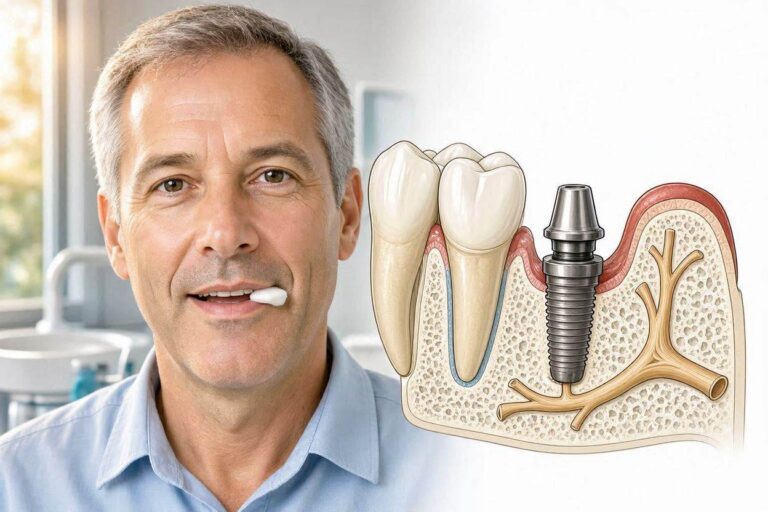
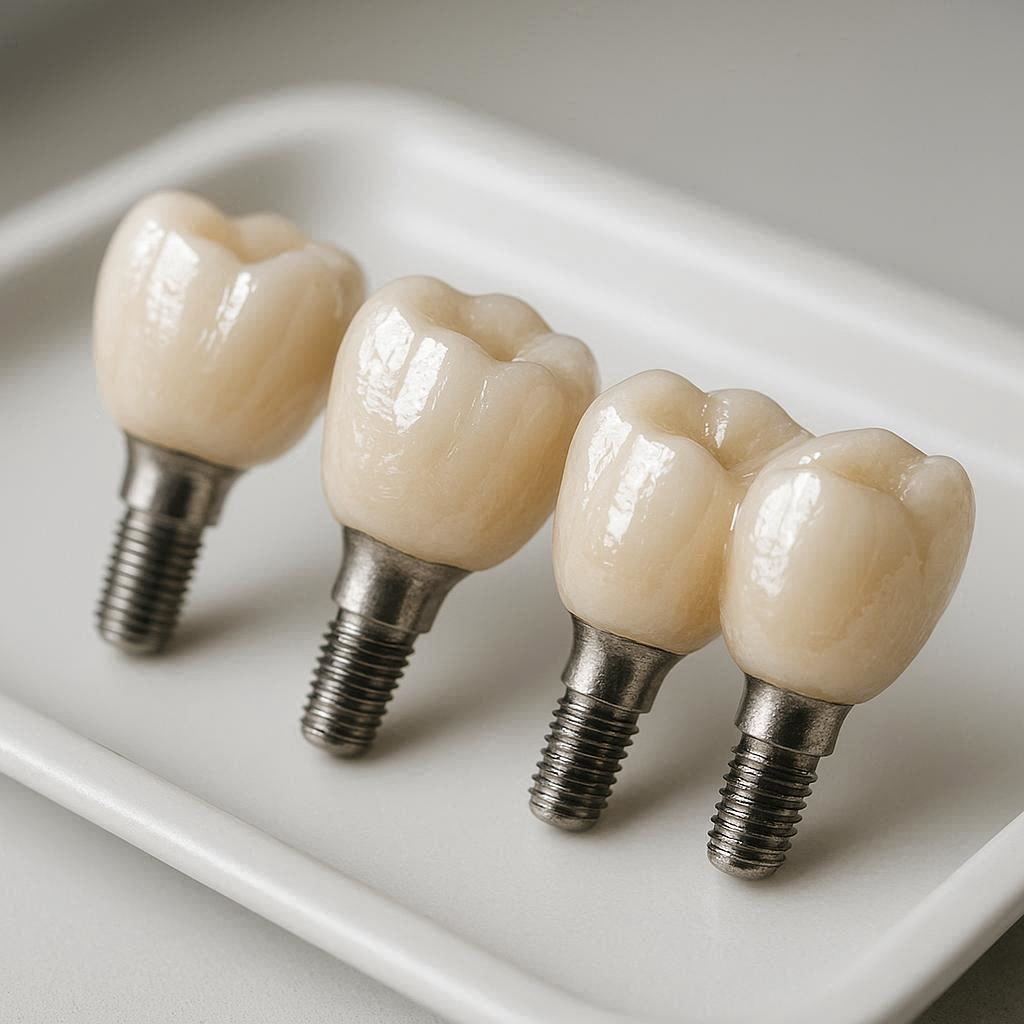
Let us start with the basics. A complete dental implant is made of three parts.
- The implant post (made of titanium or zirconia) that goes into your jawbone.
- The abutment (a small connector piece) that sits on top of the post.
- The dental implant crown (the artificial tooth) that attaches to the abutment.
Many people think the whole thing is the implant. But the crown is the only part you see. It is custom-made to match the color, shape, and size of your other teeth.
“A dental implant crown is like the cap of a permanent structure. Without it, the implant post serves no cosmetic or chewing function.”
How It Differs From a Traditional Dental Crown
A traditional crown sits over a damaged but natural tooth. Your dentist shaves down the original tooth and places the crown on top. In contrast, a dental implant crown attaches to a metal post that has no natural tooth underneath.
| Feature | Traditional Crown | Dental Implant Crown |
|---|---|---|
| Support | Natural tooth root | Titanium or zirconia implant post |
| Neighboring teeth | May require shaving down | No impact on adjacent teeth |
| Bone preservation | Does not stop bone loss | Prevents jawbone deterioration |
| Longevity | 5 to 15 years | 15 to 25+ years |
| Decay risk | Possible under crown | No decay (but gums still need care) |
The main takeaway is this. A dental implant crown acts independently. It does not rely on other teeth for support. That is a big advantage for your long-term oral health.
The Main Components of an Implant-Supported Crown
Before we go further, let us look under the hood. A high-quality dental implant crown is not a simple cap. It is a carefully designed piece of dental engineering.
The Outer Layer (The Visible Part)
This is what people see when you smile. It is made from either porcelain, ceramic, or zirconia. Sometimes a combination of materials is used to increase strength without losing beauty.
Modern crowns look incredibly natural. They reflect light like real enamel. Your dentist will match the shade to your existing teeth. This includes subtle variations in color from the gum line to the biting edge.
The Inner Core
Many dental implant crowns have a stronger inner core. This core provides resistance against chewing forces. Your molars need a stronger core than your front teeth. Your dentist will choose the right strength based on where the crown will go.
The Connection Point (Screw or Cement)
There are two ways to attach a dental implant crown to the abutment.
- Screw-retained crown: A small screw goes through the crown and into the abutment. The screw hole is then filled with a tooth-colored material. This type is easier to remove for repairs.
- Cement-retained crown: The crown is glued to the abutment with dental cement. It looks slightly more natural because there is no visible screw hole. But it is harder to remove if something goes wrong.
Most dentists prefer screw-retained crowns for back teeth and cement-retained crowns for front teeth. Both options work well when done correctly.
Types of Materials Used for Dental Implant Crowns
Not all crowns are created equal. The material you choose affects the cost, appearance, and durability of your restoration. Here are the most common options.
Porcelain-Fused-to-Metal (PFM)
This is the old standard. A metal shell provides strength. Porcelain is layered over the top for appearance.
Pros:
- Very strong and durable
- Less expensive than all-ceramic options
- Good for molars and high-pressure areas
Cons:
- Metal can show as a dark line near the gum
- May cause allergic reactions in some people
- Porcelain can chip over time
All-Ceramic (Lithium Disilicate, Like E-max)
This material is popular for front teeth and premolars. It offers excellent aesthetics without any metal.
Pros:
- Very natural appearance
- No dark gum lines
- Biocompatible (no metal allergies)
Cons:
- Less strong than zirconia for molars
- Higher cost than PFM
- Can fracture under extreme force
Zirconia (Monolithic)
Zirconia is a white, metal-free ceramic that is incredibly strong. Many dentists now prefer it for all areas of the mouth.
Pros:
- Extremely strong (stronger than PFM)
- Metal-free and hypoallergenic
- Resists chipping and cracking
- Gentle on opposing natural teeth
Cons:
- More expensive than PFM
- Can be harder to adjust after placement
- Less translucent than all-ceramic options
Comparison Table of Crown Materials
| Material | Aesthetics | Strength | Cost | Best For |
|---|---|---|---|---|
| PFM | Moderate | High | $ | Molars |
| All-Ceramic (E-max) | Very High | Moderate | $$ | Front teeth |
| Zirconia | High | Very High | $$$ | All areas |
| Resin (temporary) | Low | Low | $ | Short-term use |
Note: Do not accept a temporary resin crown as your permanent restoration. Resin wears down quickly and stains easily. It is only meant to protect the area while your permanent crown is being made.
The Step-by-Step Process of Getting a Dental Implant Crown
Getting a dental implant crown takes time. Patience is important. Rushing the process leads to poor results. Here is what a typical timeline looks like.
Step 1: Implant Placement (Surgery Day)
Your oral surgeon or periodontist places the titanium post into your jawbone. This procedure is done under local anesthesia. You should not feel pain, but you will feel pressure and vibration.
After placement, you wait. The bone needs to grow around the implant. This is called osseointegration. It usually takes 3 to 6 months.
Step 2: Abutment Placement
Once the implant is stable, your dentist uncovers it and attaches the abutment. This is a minor procedure. In some cases, the abutment is placed at the same time as the implant. Your dentist will discuss which approach makes sense for you.
Step 3: Impressions and Digital Scanning
Your dentist takes a precise impression of your implant area. Older methods use putty-like materials. Newer methods use a digital intraoral scanner. The scan creates a 3D model of your mouth.
This model is sent to a dental laboratory. A technician designs your custom crown based on the scan and your dentist’s instructions.
Step 4: Crown Fabrication
The lab manufactures your crown. This takes 2 to 4 weeks for most materials. Some offices have in-house milling machines (same-day crowns). That option saves time but is not available everywhere.
Step 5: Try-In and Fitting
Your dentist places the crown on your abutment without permanently attaching it. You look in a mirror. You check the color and shape. You bite down to see if it feels comfortable.
This is your chance to request changes. Speak up if something looks off. Minor adjustments can be made at this stage.
Step 6: Final Placement
Once everything looks good, your dentist attaches the crown permanently. For a screw-retained crown, they tighten the screw and fill the hole. For a cement-retained crown, they use permanent cement.
Your dentist will check your bite one more time. They will also show you how to clean around the crown properly.
Average Timeline by Case Type
| Case Type | Healing Time | Total Time from Start to Crown |
|---|---|---|
| Front tooth, good bone | 3 months | 4 to 5 months |
| Molar, normal bone | 4-5 months | 5 to 6 months |
| Needing bone graft | 6-9 months | 7 to 10 months |
| Immediate implant (same day) | Not applicable | 1 to 2 days (temporary crown) |
Important note: Same-day implants and crowns are not for everyone. They work best when you have excellent bone density and do not have active infection. Your dentist will tell you if you are a candidate.
How Much Do Dental Implant Crowns Cost?
Let us talk about money. This is often the biggest concern for patients. The price of a dental implant crown varies widely based on where you live, the material you choose, and your dentist’s experience.
Breaking Down the Numbers
A single dental implant crown (the crown only) typically costs between 1,500and1,500and3,500.
But remember: the crown is just one part. The full implant treatment (post, abutment, and crown) usually ranges from 3,000to3,000to6,000 per tooth.
Here is a realistic breakdown:
- Implant post placement: 1,500to2,500
- Abutment: 300to600
- Crown: 1,500to3,500
- Total average: 3,300to6,600
What Affects the Price?
Several factors influence the final bill.
- Geographic location: Big cities cost more than rural areas.
- Dentist specialty: A prosthodontist or periodontist charges more than a general dentist.
- Material choice: Zirconia costs more than PFM.
- Laboratory fees: High-end custom labs charge more for better aesthetics.
- Additional procedures: Bone grafting or sinus lifts add 500to3,000.
Does Insurance Cover Dental Implant Crowns?
This is tricky. Many dental insurance plans call implants a “major service.” They may cover 50% of the crown after you meet your deductible. But some plans exclude implants entirely. They only cover traditional bridges or dentures.
Always call your insurance provider before starting treatment. Ask these specific questions:
- Does my plan cover the implant crown, the abutment, or both?
- Is there a waiting period for major services?
- What is my annual maximum benefit?
Medicare generally does not cover dental implants. Some Medicare Advantage plans offer limited dental benefits. Medicaid coverage varies by state.
Financing Options
If you cannot pay upfront, ask your dentist about payment plans. Many offices work with third-party healthcare financing companies like CareCredit. These plans offer 6 to 24 months of interest-free financing if you pay on time.
Recovery and Healing After Crown Placement
The good news is that crown placement itself is not a major surgery. You have already healed from the implant surgery months earlier. Attaching the crown is a quick, minimally invasive appointment.
What to Expect Right After
- Mild gum soreness: Your gums may feel tender for 2 to 3 days.
- Pressure sensitivity: The new crown may feel tall at first. Your bite usually adjusts within a week.
- Minor bleeding: Rare, but possible if your dentist had to trim gum tissue.
Post-Procedure Care Instructions
For the first 24 hours after your crown is placed:
- Eat soft foods like yogurt, soup, and scrambled eggs
- Avoid chewing directly on the new crown
- Do not floss around the crown for 24 hours
- Use a warm saltwater rinse (one teaspoon of salt in a cup of water) twice a day
After the first day, return to normal brushing and flossing. But be gentle around the gum line for the first week.
Signs of Trouble
Call your dentist if you experience any of these:
- Sharp pain when biting down (the crown may be too high)
- The crown feels loose or moves when touched
- Bleeding that does not stop after 10 minutes of pressure
- Swelling that gets worse after 48 hours
Most crown placement appointments go smoothly. Complications are rare when the crown is well-made and properly fitted.
How to Clean and Maintain Your Dental Implant Crown
A dental implant crown cannot get a cavity. That is a huge advantage. But the area where the crown meets the gum is vulnerable to peri-implantitis (a gum infection around the implant). This infection can cause bone loss and implant failure if ignored.
Daily Cleaning Routine
Cleaning an implant crown requires a few extra steps compared to natural teeth.
- Brush twice a day: Use a soft-bristled toothbrush. Pay special attention to the gum line where the crown meets the tissue.
- Floss daily: Use implant-specific floss or superfloss. Regular floss can shred and get stuck under the crown.
- Use a water flosser: A water flosser (like Waterpik) is excellent for cleaning around the abutment. Use it on a low to medium setting.
- Try interdental brushes: Small brushes (like proxy brushes) clean the spaces between the crown and neighboring teeth.
What to Avoid
- Metal scrapers: Do not use metal dental tools on your crown. They can scratch ceramic or zirconia surfaces.
- Hard foods: Avoid chewing ice, hard candy, or bones on the implant crown.
- Staining foods: Coffee, tea, red wine, and tobacco can stain some crown materials over time.
- Whitening products: Do not use whitening toothpaste or bleaching gels on your crown. They will not whiten the porcelain.
Professional Maintenance
Visit your dentist every 6 to 12 months. They will check the crown for chips, cracks, or cement loss. They will also evaluate the gum tissue around the implant.
Your hygienist will use special plastic or graphite instruments to clean around the crown. These tools will not scratch the surface.
*A well-maintained dental implant crown can last 20 years or longer. Neglected crowns may fail within 5 years due to gum disease.*
Longevity: How Many Years Can You Expect?
Dental implant crowns are among the longest-lasting tooth replacements available. But they do not last forever. Wear and tear, oral hygiene, and material choice all affect lifespan.
Average Lifespan by Material
| Crown Material | Average Lifespan | With Excellent Care |
|---|---|---|
| Porcelain-fused-to-metal | 10 to 15 years | Up to 20 years |
| All-ceramic (E-max) | 12 to 18 years | Up to 20+ years |
| Zirconia | 15 to 25 years | Up to 30+ years |
Factors That Shorten Crown Life
- Bruxism (teeth grinding): Grinding puts extreme pressure on the crown. A night guard is essential for grinders.
- Poor oral hygiene: Gum disease around the implant weakens the bone and abutment.
- Chewing hard objects: Ice, pens, and hard candies are the top causes of crown fracture.
- Smoking: Smokers have higher rates of gum inflammation and implant complications.
- Poor initial fit: A crown that is too high or poorly contoured will fail faster.
Signs Your Crown Needs Replacement
Do not wait until the crown breaks completely. Watch for these warning signs:
- Visible chips or cracks in the porcelain
- The crown feels loose or rotates slightly
- Food gets trapped more often than before
- Dark line appearing at the gum (for PFM crowns)
- Gum redness or bleeding around only that tooth
If you notice any of these, call your dentist. A simple repair or recementation may save the crown. Ignoring the problem often leads to a full remake.
Common Problems and How to Solve Them
Even with good care, problems can happen. Here are the most common issues with dental implant crowns and what to do about them.
Problem 1: The Crown Feels Too High
This is the most common complaint after placement. Your bite feels uneven. You might tap that tooth first when closing your mouth.
Solution: Return to your dentist for a quick bite adjustment. They will mark the high spot and polish it down. The adjustment takes 2 minutes and solves the problem immediately.
Problem 2: The Crown Came Loose
A cement-retained crown can lose its bond over time. You may feel the crown shift slightly when chewing.
Solution: Do not glue it back yourself. Household glues are toxic and will ruin the crown. Call your dentist. They can clean the crown and recement it properly.
Problem 3: Food Traps Under the Crown
Some crowns leave a small gap between the crown and the gum. Food collects there and causes bad breath or irritation.
Solution: Improve your cleaning routine. Use a water flosser daily. If the problem persists, your dentist may need to remake the crown with a better gum contour.
Problem 4: Porcelain Chipped Off
A small chip on the edge of the crown is common, especially with PFM or all-ceramic crowns.
Solution: Small chips can be polished smooth. Larger chips require a new crown. Do not ignore sharp edges. They can cut your tongue or cheek.
Problem 5: Gum Recession Around the Crown
The gum tissue pulls back, exposing the metal abutment or the edge of the crown.
Solution: See your dentist for evaluation. They may recommend a gum graft or a new crown with pink porcelain to mask the exposed area.
Dental Implant Crown vs. Other Tooth Replacement Options
You have choices. A dental implant crown is not the only way to replace a missing tooth. Let us compare it to the two main alternatives.
Dental Implant Crown vs. Traditional Bridge
A dental bridge uses the two neighboring teeth as anchors. Those teeth are shaved down and crowned. The false tooth (pontic) sits in between.
| Factor | Implant Crown | Traditional Bridge |
|---|---|---|
| Impact on adjacent teeth | None | Requires shaving healthy teeth |
| Bone preservation | Yes | No (bone shrinks under bridge) |
| Longevity | 15-25 years | 7-15 years |
| Cleaning difficulty | Normal brushing/flossing | Requires floss threaders |
| Cost (single tooth) | 3,000−6,000 | 2,000−4,000 |
| Reversible | No (implant is permanent) | Yes (but teeth are already shaved) |
Verdict: An implant crown is better for long-term oral health. A bridge is faster and cheaper upfront but damages healthy teeth.
Dental Implant Crown vs. Removable Partial Denture
A partial denture is a plastic or metal framework with a fake tooth attached. It clips onto your remaining teeth.
| Factor | Implant Crown | Partial Denture |
|---|---|---|
| Stability | Fixed, does not move | Can shift or rock |
| Comfort | Feels like natural tooth | Bulky and irritating |
| Eating restrictions | None | Avoid sticky or hard foods |
| Maintenance | Normal oral hygiene | Must remove and clean nightly |
| Speech impact | None | May click or slur words |
| Cost over 10 years | Higher upfront, lower long-term | Lower upfront, higher long-term |
Verdict: An implant crown provides vastly better quality of life. A partial denture is a budget-friendly short-term fix.
Frequently Asked Questions (FAQ)
Is placing a dental implant crown painful?
No. The crown placement appointment is not painful. Your gums may be slightly numb from local anesthesia. You might feel pressure but not sharp pain. After the numbing wears off, most people have mild soreness for a day or two.
Can I get a dental implant crown if I have gum disease?
Not until the gum disease is under control. Active gum disease increases the risk of implant failure. Your dentist will treat the gum disease first. Once your gums are healthy, you can proceed with the implant crown.
How many appointments does it take to get the crown?
Typically 3 appointments. One for impressions, one for try-in, and one for final placement. Some offices combine the try-in and final placement into a single visit.
Can a dental implant crown be whitened?
No. The ceramic or zirconia material does not respond to whitening products. If you want whiter teeth, whiten your natural teeth before the crown is made. Your dentist will then match the crown to your brighter shade.
What happens if the crown breaks?
Call your dentist. Do not continue chewing on a broken crown. If the porcelain is cracked but the crown is still attached, your dentist may repair it with composite resin. Large breaks usually require a new crown.
Can I eat normally with a dental implant crown?
Yes, after a short adjustment period. Start with soft foods for the first 2 to 3 days. Then return to your normal diet. You can eat steak, apples, and nuts. Just be reasonable. Do not use the crown as a tool to crack nuts or open packages.
Do dental implant crowns feel like real teeth?
Very close. You will not have the same ligament sensations as a natural tooth. But most people forget they have an implant after a few months. The crown feels solid and stable. No clicking or slipping like dentures.
Additional Resources
For more trusted information on dental implants and crown materials, visit the American Academy of Implant Dentistry at www.aaid.com.
This resource offers patient education guides, a directory of qualified implant dentists, and the latest research on implant success rates.
Conclusion
A dental implant crown restores both the appearance and function of a missing tooth. It does not harm neighboring teeth and preserves your jawbone for years to come.
The material you choose, your dentist’s skill, and your daily cleaning habits determine how long the crown lasts. Zirconia offers the best combination of strength and beauty for most people.
While the upfront cost is higher than bridges or dentures, the long-term value and quality of life make implant crowns the gold standard for single-tooth replacement.