What is Bone Grafting in Teeth
If you have recently visited a dentist and heard the words “bone graft,” you might have felt a small wave of panic. It sounds intense, almost surgical in a futuristic way. But here is the truth: dental bone grafting is one of the most common, safe, and helpful procedures available today.
So, what is bone grafting in teeth? In simple terms, it is a minor surgical procedure that adds bone material to your jaw. The goal is to create a stronger, denser foundation. This new bone holds your teeth in place or prepares your mouth for dental implants.
Think of your jawbone like the foundation of a house. Over time, that foundation can erode. When it does, the house becomes unstable. Bone grafting rebuilds that foundation.
You do not need to be a medical expert to understand this. Let us walk through everything together. By the end, you will feel informed, confident, and ready to talk with your own dentist.
Why Your Jawbone Loses Density
Before we dive into the grafting process, it helps to know why bone loss happens in the first place. Your jawbone is alive. It constantly rebuilds itself. But it needs one thing to stay strong: stimulation.
The Role of Tooth Roots
Your natural teeth have roots. Every time you chew, bite, or even grind your teeth at night, those roots send signals to your jawbone. Those signals say, “Stay strong. We need you.”
When you lose a tooth, that stimulation stops. The bone no longer gets the memo. Slowly, over months and years, the jawbone begins to melt away. Doctors call this resorption.
Common Causes of Bone Loss
- Tooth extraction: Even if you remove a damaged tooth, the empty socket often loses bone.
- Gum disease: Advanced periodontitis eats away at both gum tissue and the bone underneath.
- Trauma or injury: A bad fall or accident can crack the jawbone and lead to long-term loss.
- Infection: An abscess that goes untreated can destroy surrounding bone.
- Missing teeth for years: The longer a gap stays empty, the more bone you lose.
Important note: Bone loss does not happen overnight. It is gradual. Many people do not even notice it until they try to get an implant or their remaining teeth start shifting.
What is Bone Grafting in Teeth? A Simple Breakdown
Now let us answer the core question directly.
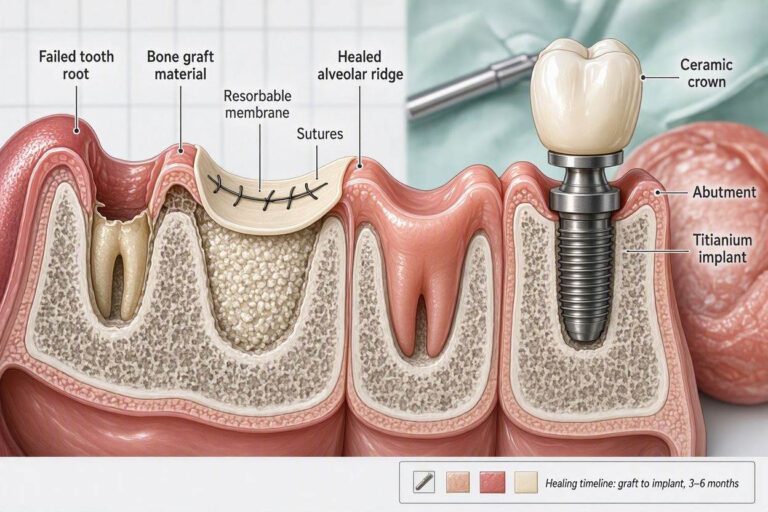
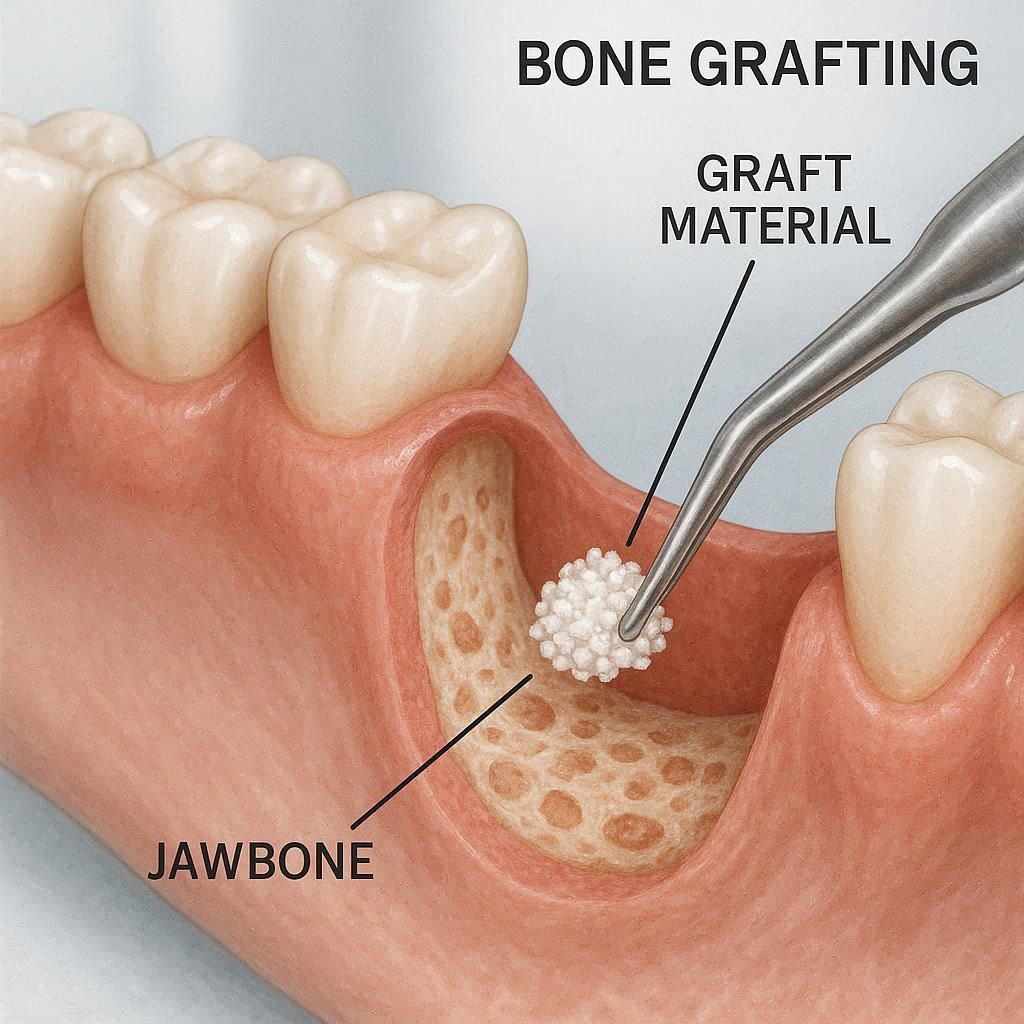
Bone grafting in teeth is a procedure where a dentist or oral surgeon adds bone tissue to your jaw. That bone can come from your own body, a donor, an animal, or a synthetic source. The graft acts as a scaffold. Your natural bone grows into it over time.
The result is a thicker, taller, or wider jawbone. That new bone can then support a dental implant or help stabilize loose natural teeth.
A Helpful Analogy
Imagine you have a garden. The soil has washed away in one corner. You want to plant a new tree. Without soil, the tree cannot stand. So you bring in fresh soil. You pack it down. Over time, the new soil blends with the old. The tree roots grow deep.
The graft is the fresh soil. Your living bone is the old soil. The implant is the tree.
Who Needs a Dental Bone Graft?
You might be surprised to learn how common this procedure is. Millions of people get bone grafts every year. Here are the most typical situations.
1. Before Dental Implants
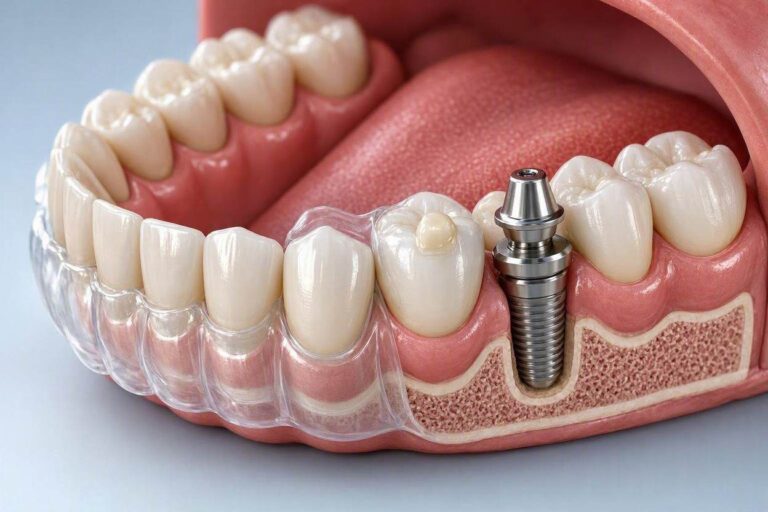
This is the number one reason. Dental implants need a certain amount of bone to stay secure. If your jaw is too thin or too short, the implant will fail. A graft builds up the bone first. Then the implant has a solid home.
2. After Tooth Extraction
Many dentists will place a bone graft immediately after pulling a tooth. This is called socket preservation. It stops the bone from shrinking in the first place. If you know you want an implant later, this is a smart move.
3. For Loose Teeth
Severe gum disease can destroy bone around natural teeth. A graft can sometimes regrow enough bone to tighten those teeth back up. This is not always possible, but it works in many cases.
4. For Denture Wearers
Lower dentures often fit poorly because the jawbone has flattened. A few small grafts can add ridges that lock the denture in place. No more slipping or clicking.
5. To Support a Bridge
Some long dental bridges need a stronger foundation. A graft can reinforce the bone under the bridge’s anchor teeth.
Types of Bone Grafting Materials
Not all grafts are the same. Your dentist will choose a material based on your health, budget, and personal preference. Here is a clear breakdown.
| Type of Graft | Source | Pros | Cons |
|---|---|---|---|
| Autograft | Your own body (usually from chin, jaw, or hip) | No risk of disease. Heals predictably. | Requires a second surgery site. More pain. |
| Allograft | Human donor (cadaver bone) | No second surgery. Safe and tested. | Very rare risk of immune reaction. |
| Xenograft | Animal (usually cow or pig bone) | Plentiful. Well-studied. Low cost. | Slower replacement by natural bone. |
| Alloplast | Synthetic (lab-made minerals) | No disease risk. Unlimited supply. Very safe. | Can take longer to integrate. |
Reader note: Do not panic about “cadaver bone” or “animal bone.” These materials are thoroughly cleaned, sterilized, and processed. They leave no living cells. Only the mineral scaffold remains.
Your dentist will explain exactly which type they recommend and why.
The Step-by-Step Procedure
Knowing what happens during the procedure can remove a lot of fear. You are not awake for the scary parts. Most bone grafts are done under local anesthesia. For larger cases, you might get IV sedation.
Step 1: Evaluation and Imaging
Your dentist takes X-rays or a 3D CT scan. This shows exactly how much bone you have and where the gaps are. They use this map to plan the graft.
Step 2: Numbing the Area
You receive local anesthetic. The same shot you get for a filling. You will feel pressure but no sharp pain.
Step 3: Making the Incision
The dentist makes a small cut in your gum. They lift the gum tissue back to expose the bare bone underneath.
Step 4: Placing the Graft Material
The bone graft material is packed into the deficient area. Sometimes it comes as granules that look like small grains of sand. Other times it is a putty or a block. Your dentist shapes it to match your natural bone.
Step 5: Covering the Graft
A special membrane may be placed over the graft. This membrane keeps soft gum tissue from growing into the bone space. Only bone cells should enter.
Step 6: Closing Up
The gum is stitched back into place. Most stitches dissolve on their own within one to two weeks.
Step 7: Healing Time
Now the waiting begins. Your body will slowly replace the graft material with living bone. This takes three to nine months on average. For large grafts, it can take up to a year.
What to Expect After Surgery
Recovery from a bone graft is usually mild. Most people compare it to having a tooth pulled. You will not be laid up in bed for weeks.
The First 24 Hours
- Bleeding: Some oozing is normal. Bite on a gauze pad.
- Swelling: Expect your cheek or lip to swell. Ice packs help.
- Pain: Over-the-counter ibuprofen or Tylenol usually works. Your dentist may prescribe something stronger.
- Diet: Stick to cold, soft foods. Yogurt, pudding, smoothies (no straws).
Days 2 to 7
- Swelling peaks around day two or three, then goes down.
- Start warm salt water rinses (gently, no spitting).
- Do not poke the area with your tongue or fingers.
- Eat soft foods only. Mashed potatoes, scrambled eggs, soup.
Weeks 2 to 4
- Stitches dissolve or are removed.
- You can slowly return to normal chewing, but avoid the graft side.
- No hard or crunchy foods like chips, nuts, or popcorn.
Months 1 to 6
- The graft is fusing with your bone. You cannot feel this happening.
- Your dentist will take periodic X-rays to check progress.
- Once healed, you are ready for the implant or other restoration.
Helpful List: Tips for a Smooth Recovery
- Sleep with your head elevated for the first three nights. This reduces swelling.
- Do not smoke. Smoking ruins bone grafts. It cuts blood flow and causes failure.
- Avoid alcohol for at least one week. It thins the blood and delays healing.
- Brush carefully. Keep the rest of your mouth clean, but be gentle near the graft.
- Attend all follow-up appointments. Your dentist needs to monitor healing.
Important warning: Signs of graft failure include severe pain that worsens after three days, pus or foul taste, fever over 101°F (38.3°C), and graft material falling out in chunks. Call your dentist immediately.
Success Rates and Risks
You deserve an honest conversation about how well this works.
How Often Do Bone Grafts Succeed?
Small grafts placed for single implants have a success rate above 95%. Larger grafts that rebuild entire sections of the jaw still succeed in 85% to 90% of cases.
These are excellent numbers. Most surgery carries more risk.
Potential Risks
No procedure is perfect. Here are the real risks, presented plainly.
| Risk | How Common | What Happens |
|---|---|---|
| Infection | 1-3% | Bacteria get into the graft site. Treated with antibiotics. |
| Graft failure | 5-10% | Body rejects or absorbs the graft. Requires re-do. |
| Nerve injury | Rare (<1%) | Temporary numbness in lip or chin. Usually heals on its own. |
| Membrane exposure | 2-5% | The protective cover pokes through gum. Needs trimming. |
| Bleeding or hematoma | Very rare | Blood pools under the gum. Drains on its own or by dentist. |
Who Has Higher Risk?
- Smokers (risk doubles)
- People with uncontrolled diabetes
- Those who clench or grind their teeth severely
- Patients who have had radiation to the head or neck
- Heavy drinkers
If you fall into any of these groups, talk openly with your dentist. They can adjust the plan.
Bone Grafting vs. Other Options
Sometimes a bone graft is not your only choice. But often, it is the best one. Here is a quick comparison.
| Option | How It Works | Pros | Cons |
|---|---|---|---|
| No graft, no implant | Leave the gap empty | Free. No surgery. | Teeth shift. Bone loss continues. Hard to clean. |
| Dental bridge | File down adjacent teeth. Place a false tooth in between. | Faster than implant. No surgery. | Damages healthy teeth. Does not stop bone loss. |
| Dentures | Removable plate with false teeth. | Low upfront cost. No surgery. | Poor fit over time. Sore spots. Embarrassing movement. |
| Bone graft + implant | Rebuild bone. Place titanium root. Crown on top. | Stops bone loss. Feels like natural tooth. Lasts 20+ years. | More expensive. Takes longer (6-12 months). |
Quotation from a real patient (name changed for privacy):
“I was terrified of the words ‘bone graft.’ I thought it meant months of pain. Honestly, the worst part was the numbing shot. The recovery was easier than my wisdom teeth removal. Now I have an implant that feels completely normal.” — David, age 58
Cost of Dental Bone Grafting
Let us talk money. This is not cheap, but it is an investment in your long-term health.
Average Costs (USA, no insurance)
| Graft Type | Typical Cost Per Site |
|---|---|
| Socket preservation (simple) | 200–500 |
| Small ridge augmentation | 500–1,200 |
| Large block graft (from your hip) | 1,500–3,000 |
| Sinus lift (special graft for upper back teeth) | 1,500–2,500 |
| Full arch graft (entire upper or lower jaw) | 4,000–8,000 |
These prices usually do not include the implant or crown. That adds another 3,000to5,000 total.
Does Insurance Cover Bone Grafts?
- Medical insurance sometimes covers grafts needed after an accident or tumor removal.
- Dental insurance rarely covers grafts for implants. But it may cover socket preservation after extraction.
- Discount plans and dental schools offer lower prices.
Always ask for a written treatment plan with costs before starting.
How to Find a Qualified Dentist
Not every dentist performs bone grafting. You need someone with specific training.
Look for These Credentials
- Oral surgeon (DDS, MD): Best for complex, large grafts.
- Periodontist: Gum and bone specialist. Excellent for moderate grafts.
- Implant dentist: Many general dentists with extra training do simple grafts.
Questions to Ask Before Booking
- How many bone grafts do you perform each month?
- What type of graft material do you use most often?
- Can I see before-and-after photos of your own patients?
- What happens if my graft fails?
- Do you handle the implant placement too, or will I need a second doctor?
Red Flags to Avoid
- A dentist who promises an implant in four weeks start to finish.
- Prices that seem too good to be true (under $200 for a large graft).
- No pre-surgical CT scan or X-ray.
- Pressuring you to decide the same day.
Take your time. Get a second opinion if something feels off.
Frequently Asked Questions (FAQ)
1. Is bone grafting for teeth painful?
No. The procedure itself is painless because of local anesthesia. Afterward, most people describe mild soreness, similar to a tooth extraction. Over-the-counter pain relievers work well.
2. How long does a dental bone graft last?
The graft itself gets replaced by your own living bone. That new bone lasts as long as natural bone—decades or even a lifetime, as long as you maintain good oral health.
3. Can I get a bone graft and an implant on the same day?
Sometimes. This is called an immediate implant with simultaneous grafting. It works only if you have at least some natural bone left. Your dentist will tell you if you qualify.
4. What happens if I do nothing after bone loss?
The bone will continue to shrink slowly. Neighboring teeth will tilt into the gap. Teeth on the opposite jaw may grow longer. Chewing becomes less efficient. Eventually, you may lose more teeth.
5. Is there an age limit for bone grafting?
No. Healthy older adults heal well. Age alone is not a barrier. Overall health matters much more than your birthdate.
6. Can my body reject the graft material?
True rejection is extremely rare. More common is failure of the graft to integrate (non-union). This happens in less than 10% of cases. Smoking is the leading cause.
7. Do I have to miss work?
Most people take one to two days off. If your job is physically demanding, you may need three to five days. Desk workers often return the next day.
8. How will I eat while healing?
Stick to soft, room-temperature foods. Avoid crunchy, spicy, hot, or sticky items. Think oatmeal, pasta, fish, bananas, and protein shakes.
Additional Resources
For deeper reading and trusted verification, visit the American Academy of Periodontology’s patient education page on bone grafting.
👉 [Link placeholder: www.perio.org/patient-resources/bone-grafting]
You can also check the American Association of Oral and Maxillofacial Surgeons for a surgeon finder tool.
Important Notes for Readers
- Do not self-diagnose bone loss. Only a dental X-ray or CT scan can confirm it.
- Healing times vary. Do not compare yourself to online strangers. Trust your dentist’s timeline.
- Bone grafts are not emergency surgery. You usually have weeks or months to decide.
- Second opinions are normal. Good dentists expect and welcome them.
- Financing exists. CareCredit, LendingClub, and in-house payment plans make treatment possible.
Conclusion
Bone grafting in teeth rebuilds lost jawbone so you can smile, chew, and live with confidence. It is a safe, predictable procedure used by millions of people worldwide. While it requires patience and healing time, the result is a strong foundation that lasts for decades—whether for a single implant or a full mouth restoration.
In three lines: Bone grafting replaces missing bone in your jaw. It allows dental implants to succeed and prevents further bone loss. The procedure is routine, minimally painful, and successful in over 90% of cases.
Disclaimer: This article is for informational purposes only. It does not replace professional medical or dental advice. Always consult a licensed dentist or oral surgeon for diagnosis and treatment options tailored to your specific health situation.