Dental Implants in Paramus NJ
Losing a tooth can feel overwhelming. You might worry about your appearance, your ability to chew, or even how it will affect your long-term health. The good news is that modern dentistry offers a solution that looks, feels, and functions just like a natural tooth.
That solution is the dental implant.
If you live in Bergen County or the surrounding area, you have access to some of the best implant dentists in the state. Paramus, NJ, has become a regional hub for advanced dental care. But what exactly makes dental implants different from bridges or dentures? How much do they cost? And most importantly, is this the right choice for you?
This guide answers all of those questions. We will walk you through everything from the initial consultation to long-term care. No fluff, no false promises. Just clear, honest, and practical information to help you make the best decision for your smile.
What Are Dental Implants? A Simple Explanation
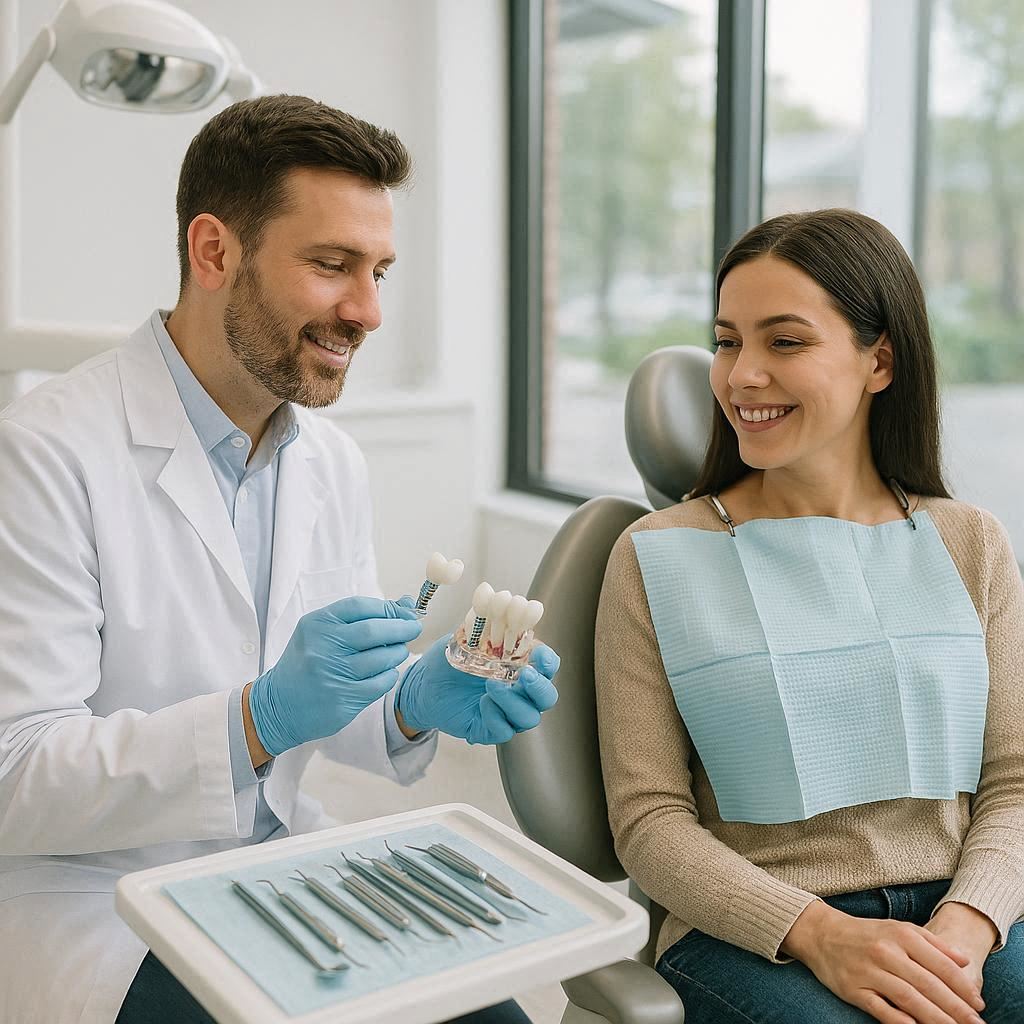
Let us start with the basics. A dental implant is not a fake tooth in the traditional sense. It is actually a small, strong post made of medical-grade titanium. Your dentist surgically places this post into your jawbone. It acts as a new, artificial tooth root.
Once the implant is in place and your bone grows around it (a process called osseointegration), your dentist attaches a custom-made crown on top. That crown is the visible part that looks like your natural tooth.
Think of it this way:
- The implant = the root (hidden in the bone)
- The abutment = the connector piece
- The crown = the visible tooth
Unlike dentures that sit on your gums or bridges that rely on neighboring teeth for support, an implant stands completely on its own. It restores both the visible part of your tooth and the root below the surface.
Important note for readers: Not everyone is an immediate candidate for implants. Your jawbone needs to be healthy and dense enough to hold the post. However, many Paramus dentists offer bone grafting to prepare your jaw for implants if needed.
Why Choose Dental Implants in Paramus, NJ?
You might wonder why you should specifically look for treatment in Paramus rather than a smaller town nearby. The answer comes down to access, technology, and experience.
Paramus is home to several multi-specialty dental practices. These clinics often bring together oral surgeons, periodontists, and prosthodontists under one roof. That matters because placing an implant is a team effort.
Here is what makes Paramus stand out:
- Concentration of experts: Many board-certified implantologists practice here.
- Advanced technology: You will find practices with 3D CBCT scanners, intraoral cameras, and same-day CEREC crowns.
- Competitive pricing: Because of the number of providers, prices tend to be fair and transparent.
- Convenient location: Major highways (Route 4, Route 17, and the Garden State Parkway) make access easy from all of Bergen County.
Local patients also report shorter wait times for consultations compared to New York City, often with the same level of expertise.
Realistic Expectations: What Implants Can and Cannot Do
Let us be honest. Dental implants are fantastic, but they are not magic.
What implants can do:
- Restore up to 100% of your natural chewing power
- Prevent bone loss in your jaw
- Last 20+ years or a lifetime with proper care
- Look identical to natural teeth
- Never get cavities (though your gums still need care)
What implants cannot do:
- Guarantee success if you smoke heavily or have uncontrolled diabetes
- Work if you have untreated gum disease
- Replace every missing tooth for free (they are an investment)
- Skip the healing period (your bone needs time to grow)
Being realistic from the start will save you disappointment later. A trustworthy Paramus dentist will tell you if you are a good candidate or if you need preparatory work first.
The Main Types of Dental Implants Available in Paramus
Not all implants are the same. The right type depends on how many teeth you are missing and the health of your jawbone. Here is a breakdown of what local practices typically offer.
Single Tooth Implants
This is the most common type. You have one missing tooth, so you get one implant post and one crown. It does not touch or alter your adjacent healthy teeth.
Best for: People missing one tooth due to injury, decay, or root canal failure.
Implant-Supported Bridge
If you have two or three missing teeth in a row, you do not need an implant for every gap. Instead, dentists place two implants (one on each end) and a bridge of false teeth connects between them.
Best for: Two to three consecutive missing teeth.
All-on-4 or All-on-6 Implants
This is a full-arch restoration. If you are missing all of your upper or lower teeth, a specialist can place four or six implants strategically into your jaw. These implants support a fixed, non-removable denture.
Best for: Patients who have worn traditional dentures for years and are tired of slipping, clicking, or sore spots.
Mini Implants
These are smaller-diameter implants. They are sometimes used to stabilize a lower denture or replace a small tooth like a lower incisor. However, they are not as strong as standard implants.
Best for: Very specific cases where bone volume is too low for standard implants and bone grafting is not an option.
Comparison Table: Types of Implants at a Glance
| Type | Number of Implants | Number of Teeth Replaced | Average Healing Time | Best For |
|---|---|---|---|---|
| Single Tooth | 1 | 1 | 4–6 months | One missing tooth |
| Implant Bridge | 2 | 3–4 | 4–6 months | A small gap of 2–3 teeth |
| All-on-4 (Upper) | 4 | 12–14 | 6–8 months | All upper teeth missing |
| All-on-4 (Lower) | 4 | 12–14 | 6–8 months | All lower teeth missing |
| Mini Implants | 2–4 | Varies | 2–3 months | Stabilizing a denture |
Important note for readers: Do not let anyone rush you into All-on-4 if you are only missing one or two teeth. That would be over-treatment. A good dentist always starts with the least invasive, most conservative option.
The Step-by-Step Procedure: What to Expect in Paramus
Knowing what will happen during your treatment takes away fear. Here is the typical journey of a patient getting dental implants in Paramus, NJ.
Step 1: The Initial Consultation (60–90 minutes)
Your first visit is all about information gathering. The dentist will:
- Examine your mouth and gums
- Take a 3D CBCT scan (this shows your bone density and nerve positions)
- Review your medical history
- Discuss your goals and budget
By the end of this visit, you should know if you are a candidate and what type of implant you need.
Step 2: Pre-Treatment (If Necessary)
Some patients need preparatory work before implants. This may include:
- Tooth extraction – If you still have the damaged tooth
- Bone grafting – Adding bone material to a weak jaw
- Sinus lift – For upper molars near the sinus cavity
- Gum disease treatment – Healthy gums are non-negotiable
These steps can add 3 to 9 months to your overall timeline. That is normal.
Step 3: Implant Placement Surgery
This is the day the post goes into your bone. Most Paramus dentists perform this in their office with local anesthesia and sedation options (like nitrous oxide or oral sedatives).
What you will feel: Nothing during the procedure. Pressure but no pain.
How long it takes: 30 to 90 minutes per implant.
Afterward: Some swelling and mild discomfort, like having a tooth pulled.
Step 4: Osseointegration (The Healing Phase)
This is the most critical period. Your bone needs to grow around the implant surface to lock it in place. This takes time.
- Average wait: 4 to 6 months
- During this time, you may wear a temporary partial or denture
- You eat soft foods and avoid chewing directly on the implant site
Rushing this step leads to failure. Be patient.
Step 5: Abutment Placement
Once the implant is solidly fused to your bone, the dentist uncovers the implant and attaches a small metal connector called an abutment. This sticks out above your gum line and will hold your crown.
This is a minor procedure. Recovery takes about two weeks.
Step 6: Crown Placement
Your dentist takes impressions of your abutment. A dental lab custom-makes your permanent crown to match the color, shape, and size of your natural teeth.
When the crown is ready (usually 2–3 weeks later), you return to the office. The dentist screws or cements the crown onto the abutment.
At this moment, you have a new tooth. Congratulations.
Timeline Summary
| Phase | Duration |
|---|---|
| Consultation & Planning | 1–2 visits |
| Pre-treatment (if needed) | 3–9 months |
| Implant surgery | 1 day |
| Osseointegration healing | 4–6 months |
| Abutment & crown | 2–4 weeks |
| Total from start to finish | 5–12 months |
Yes, it is a long process. But remember: you are building something that should last decades.
How Much Do Dental Implants Cost in Paramus, NJ?
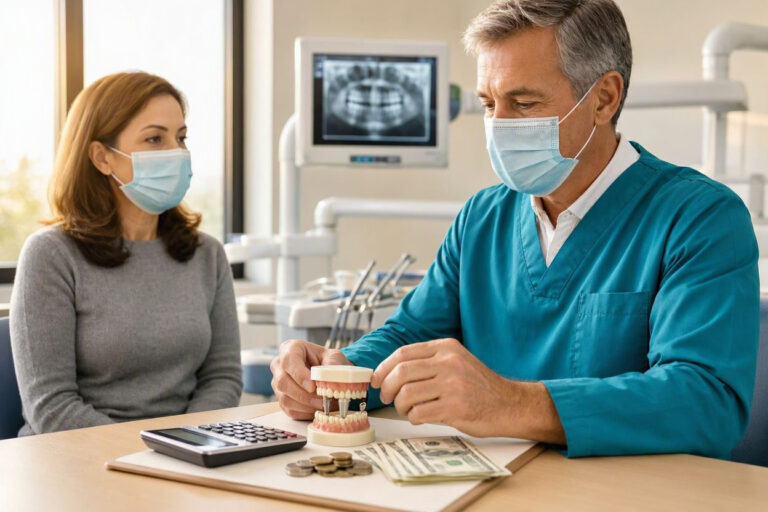
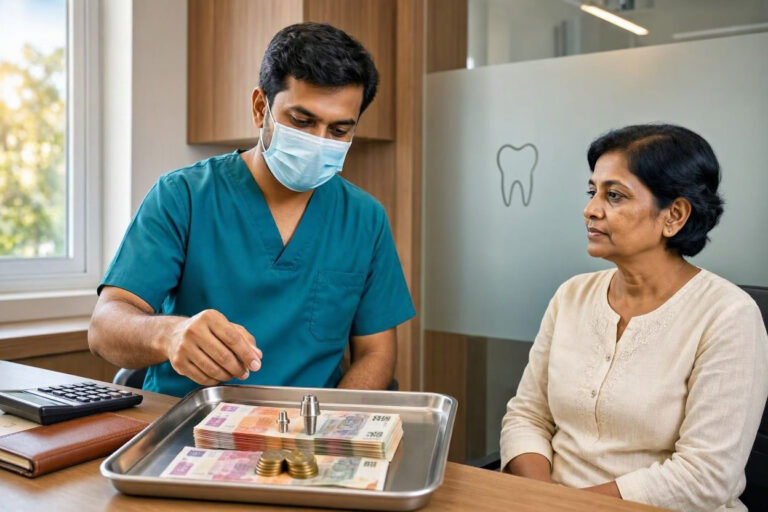
Let us talk money openly and honestly. Dental implants are an investment. Prices vary based on the dentist’s training, the type of implant, and whether you need bone grafts or extractions.
Here are typical price ranges in Paramus as of 2026. These are estimates for self-pay patients without insurance.
Average Costs Breakdown
| Service | Typical Cost Range |
|---|---|
| Initial consultation & 3D CBCT scan | 150–350 |
| Single implant post (surgical placement) | 1,500–2,500 |
| Abutment | 300–600 |
| Custom crown | 1,200–2,000 |
| Total for one complete implant | 3,000–3,000–5,000 |
| Bone graft (if needed, per site) | 500–1,500 |
| Sinus lift | 1,500–3,000 |
| All-on-4 per arch | 15,000–25,000 |
| Full mouth implants (both arches) | 30,000–50,000 |
Does Insurance Cover Implants?
This is where many patients get confused. Most dental insurance plans do not fully cover implants. However, they often cover parts of the procedure.
For example:
- Extraction of the damaged tooth (covered at 50–80%)
- The crown portion (sometimes covered as a “major service”)
- Bone grafting (rarely covered)
Some medical insurance plans may cover implants if tooth loss resulted from an accident or injury. Always ask for a pre-treatment estimate.
Payment Options in Paramus Practices
Many local offices offer:
- In-house membership plans – A yearly fee gives you discounts on implants
- Third-party financing – CareCredit, LendingClub, or Proceed Finance
- Payment plans – Some dentists offer 0% interest for 12–24 months
Do not let cost scare you away before asking about options. Many patients break the total fee into monthly payments that fit a regular budget.
Quote from a Paramus implant coordinator: “We see patients every week who assume they cannot afford implants. After we run the numbers with financing, most find a way. The real obstacle is usually fear, not money.”
Who Is a Good Candidate? (Honest Self-Assessment)
You want implants. But does your body agree with that plan? Here is a realistic checklist.
Good signs you are a candidate:
- You have one or more missing teeth
- Your gums are pink, firm, and do not bleed when you brush
- You do not smoke, or you are willing to quit during treatment
- You have enough jawbone height and width
- You are committed to good oral hygiene at home
Warning signs you may need preparatory work:
- You have active gum disease (red, swollen, bleeding gums)
- You smoke more than 10 cigarettes per day
- You have uncontrolled diabetes (A1C above 7.0)
- You take certain medications like bisphosphonates for osteoporosis
- You grind or clench your teeth severely at night
Age is not a barrier
Healthy adults of any age can receive implants. Paramus dentists regularly treat patients in their 70s and 80s. The only requirement is that your jaw has stopped growing (typically after age 18 for women, 20 for men).
Dental Implants vs. Alternatives: An Honest Comparison
You have choices. Before committing to implants, understand how they compare to other tooth replacement options.
Dental Implants vs. Traditional Bridge
| Feature | Dental Implant | Traditional Bridge |
|---|---|---|
| Affects healthy teeth | No | Yes (files down adjacent teeth) |
| Prevents bone loss | Yes | No |
| Lifespan | 20+ years | 10–15 years |
| Initial cost | Higher | Lower |
| Cleaning | Like natural teeth | Requires special floss |
Verdict: Implants win for longevity and bone preservation. Bridges win for speed and lower upfront cost.
Dental Implants vs. Removable Dentures
| Feature | Dental Implants | Traditional Dentures |
|---|---|---|
| Stability while eating | Excellent | Poor (can slip) |
| Chewing power | 90–100% | 20–30% |
| Bone loss | Prevents it | Accelerates it |
| Daily removal | No | Yes |
| Speech impact | None | May click or whistle |
Verdict: Implants are vastly superior for quality of life. Dentures are cheaper but offer less comfort and function.
A helpful list: When to choose which option
Choose a dental implant if:
- You want a permanent solution
- You are missing only one tooth
- You are willing to wait for healing
- You can invest more money upfront for long-term value
Choose a bridge if:
- You need a quick solution (under 3 weeks)
- You have two adjacent healthy teeth that need crowns anyway
- Your budget is limited today
Choose dentures if:
- You are missing all teeth in an arch
- You have medical conditions that prevent surgery
- You prefer a lower upfront cost despite daily hassles
Finding the Best Implant Dentist in Paramus: What to Look For
Not all dentists place implants. In fact, placing implants requires advanced training beyond dental school. Here is how to find the right specialist for you.
Credentials to seek
- DDS or DMD (Doctor of Dental Surgery or Medicine) – required
- Fellow or Master of the International Congress of Oral Implantologists (ICOI) – advanced training
- Board certification in periodontics or oral surgery – ideal for complex cases
- Membership in the American Academy of Implant Dentistry (AAID)
Questions to ask during your consultation
Write these down and bring them with you.
- How many implants have you placed in the last year?
- What is your success rate for someone with my bone condition?
- Do you handle the entire procedure in-house or refer to outside surgeons?
- What sedation options do you offer?
- Can you show me before-and-after photos of similar cases?
- What happens if my implant fails? Do you offer a warranty?
Red flags to avoid
- A dentist who guarantees 100% success (no one can)
- Pressure to decide the same day
- Prices that seem too good to be true (e.g., $1,500 for a complete implant)
- No 3D CT scanner in the office
Important note for readers: Always get a second opinion for major dental work. Paramus has many excellent implant dentists. They will not be offended if you seek another perspective.
Recovery, Aftercare, and Long-Term Maintenance
You made it through surgery. Now protect your investment.
The first 24 hours after surgery
- Bite on gauze to stop bleeding
- Apply ice packs (20 minutes on, 20 off)
- Eat only cold or lukewarm soft foods (yogurt, smoothies, soup)
- Do not spit, use a straw, or smoke
- Take prescribed or over-the-counter pain relievers as directed
Weeks 1 to 2
- Rinse gently with warm salt water after meals
- Brush carefully around the implant site with a soft brush
- Avoid crunchy, sticky, or hard foods
- Continue taking any prescribed antibiotics
Long-term care (for life)
Your implant cannot get a cavity, but your gums around it can get infected. This is called peri-implantitis, and it is the leading cause of implant failure years later.
To prevent this:
- Brush twice a day, paying special attention to the gumline around the implant
- Floss daily (use super floss or implant-specific floss)
- Use a water flosser on a low setting
- Visit your Paramus dentist every 6 months for professional cleanings
- Wear a night guard if you grind your teeth
Signs of trouble: When to call your dentist
Call immediately if you experience:
- The implant feels loose (it should not move at all)
- Persistent pain or swelling months after healing
- Bleeding when brushing around the implant
- A bad taste or odor from the area
Most problems are treatable if caught early. Do not wait.
Success Rates and Risks: The Real Numbers
Let us be fully transparent. Dental implants have an excellent track record, but they are not risk-free.
Reported success rates (based on long-term studies)
| Location | Success Rate |
|---|---|
| Lower jaw (mandible) | 95–98% |
| Upper jaw (maxilla) | 90–95% |
| With bone grafting | 85–90% |
| In smokers | 80–85% |
| In controlled diabetic patients | 90–95% |
Possible complications (rare but real)
- Implant failure – The bone rejects or fails to fuse (2–5% of cases)
- Infection – At the surgical site (treated with antibiotics)
- Nerve injury – Numbness in lip or chin (temporary in most cases, permanent in <1%)
- Sinus problems – For upper molars (usually resolves)
- Screw loosening – The crown may need tightening (simple fix)
A skilled Paramus implant dentist minimizes these risks by using 3D guided surgery and proper case selection.
Frequently Asked Questions (FAQ) About Dental Implants in Paramus NJ
1. Does the procedure hurt?
Most patients report less discomfort than a tooth extraction. You are numb during surgery. Afterward, over-the-counter ibuprofen usually handles any soreness.
2. How long do implants last?
With proper care, 20 years to a lifetime. The crown may need replacement after 15–20 years due to normal wear.
3. Can I get a dental implant years after losing a tooth?
Yes. But you may need a bone graft because the jawbone shrinks over time without a tooth root.
4. Are dental implants covered by Medicare or Medicaid?
Original Medicare does not cover dental implants. Some Medicare Advantage plans offer limited dental benefits. NJ Medicaid covers implants only in very specific cases (e.g., congenital deformities).
5. Can I smoke after getting an implant?
Smoking dramatically increases failure risk. Many Paramus dentists require you to quit for at least 2 weeks before and 2 months after surgery. Long-term smokers have a 15–20% higher failure rate.
6. How do I clean my implant?
Brush it like a natural tooth, floss around it daily, and use a water flosser. Regular dental cleanings are essential.
7. What if my implant fails?
Your dentist will remove the failed implant (a simpler procedure than placement). After the bone heals for 2–3 months, you can try again with a larger implant or a different location.
8. Can I have implants on the same day as extraction?
Yes, this is called immediate placement. However, not everyone is a candidate. It requires excellent bone quality and no active infection.
9. Do implants look fake?
No. Modern crowns are made of zirconia or layered porcelain that mimics natural tooth translucency. Only a dentist with a shade guide would know it is an implant.
10. How do I start?
Search for “dental implants in Paramus NJ” and read Google reviews. Call three offices for consultations. Most offer free or low-cost initial exams with a CBCT scan.
Conclusion: Three Key Takeaways
Dental implants in Paramus, NJ, offer a permanent, natural-looking solution for missing teeth. The process requires patience (5–12 months) and a financial investment, but the result is a restored smile that can last a lifetime when properly maintained. Your best next step is to schedule consultations with two or three local implant specialists to compare plans and pricing before making a decision.
Additional Resource
For a list of board-certified implant dentists in Paramus and verified patient reviews, visit the American Academy of Implant Dentistry’s patient referral page at aaid.com/referral (external link). You can also check the New Jersey Dental Association’s “Find a Dentist” tool.
Disclaimer: This article is for informational purposes only and does not constitute medical or dental advice. Always consult with a licensed dentist in Paramus, NJ, for a personal diagnosis and treatment plan. Individual results vary. The author and publisher are not responsible for any actions taken based on this content.