Why Are Dental Implants Needed?
A missing tooth is not merely a cosmetic problem. It sets in motion a cascade of biological, functional, and structural changes in the mouth and jaw that worsen over time. Dental implants are needed because they are the only tooth replacement option that addresses the root cause of these changes—the loss of the tooth root and the cessation of functional stimulation to the underlying bone. This guide provides a comprehensive, anatomy-based explanation of why dental implants are clinically necessary, not merely elective. We will explore the consequences of tooth loss, the limitations of conventional replacements, and the specific functional, structural, and psychological needs that implants fulfill.
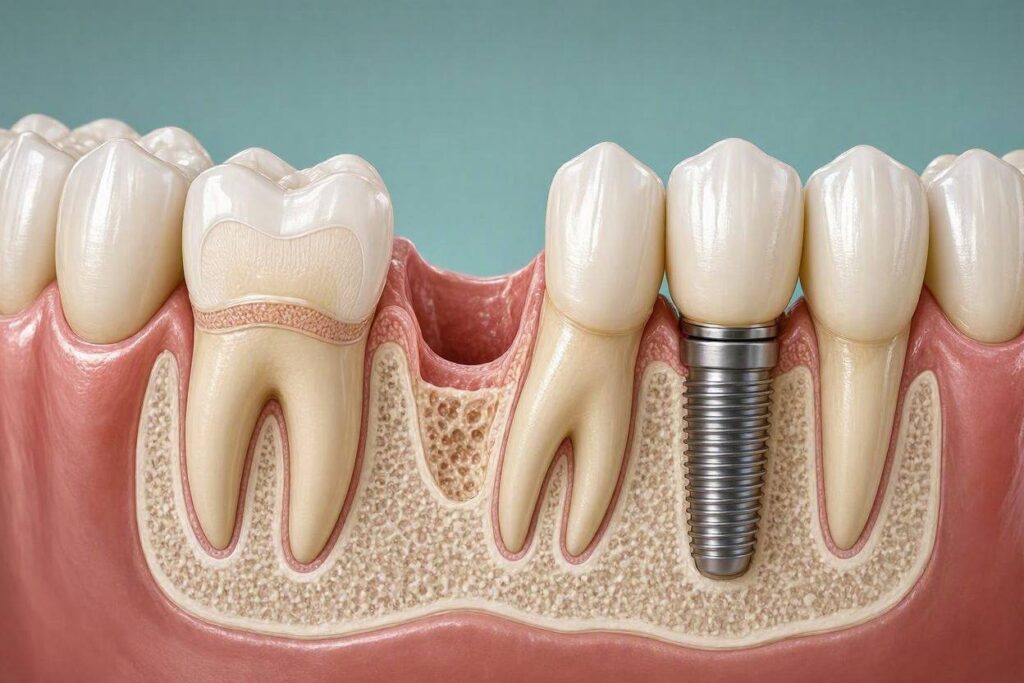
The Biological Cascade of Tooth Loss
When a tooth is extracted or lost to trauma or decay, the immediate visible gap is only the beginning of the problem. The most profound changes occur beneath the gum tissue, in the alveolar bone.
Alveolar Bone Resorption
The alveolar bone is the specialized portion of the jawbone that surrounds and supports the tooth roots. It exists for one purpose: to house the teeth. The bone is maintained by the functional forces transmitted through the tooth during chewing. When a tooth bites down, the periodontal ligament compresses, stretching the bone and stimulating osteoblasts (bone-building cells) to maintain bone density.
When the tooth is lost, the functional stimulation ceases. The body initiates a process of disuse atrophy. Over the first year after extraction, the alveolar ridge in the area loses approximately 25% of its width, with the majority of the loss occurring on the facial (cheek-side) aspect. Over subsequent years, the ridge continues to resorb in both height and width. In the mandible (lower jaw), the ridge resorbs downward and outward. In the maxilla (upper jaw), it resorbs upward and inward. Over decades, an edentulous patient can lose so much bone that the mandibular canal, containing the inferior alveolar nerve, becomes exposed on the crest of the ridge, making denture wearing painful or impossible.
This bone resorption is progressive, irreversible, and inevitable without an implant. A conventional bridge or a removable denture replaces the visible crown of the tooth. It does not replace the root. It does not transmit functional forces to the bone. The bone beneath a bridge pontic or a denture saddle continues to resorb silently.
The Shifting of Adjacent and Opposing Teeth
The dental arch is a balanced system. Each tooth is stabilized by the contact with its neighbors and by the opposing tooth in the opposite arch. When a tooth is extracted, this equilibrium is disrupted.
The adjacent teeth begin to drift into the space. The tooth behind the gap tilts forward (mesial drift). The tooth in front of the gap may drift backward. The opposing tooth in the opposite arch, having nothing to bite against, begins to supra-erupt, moving down (or up) into the empty space. This creates occlusal interferences, food traps, and areas that are difficult to clean, predisposing the remaining teeth to decay and periodontal disease.
A dental implant fills the space and stabilizes the arch. The adjacent teeth remain in position, and the opposing tooth has a functional contact, preventing supra-eruption.
The Loss of Chewing Function
The human dentition is designed for efficient mastication. The loss of a single posterior tooth, such as a first molar, reduces the chewing efficiency on that side. The patient unconsciously shifts chewing to the other side, overloading the remaining teeth. The loss of multiple posterior teeth or the absence of any opposing pairs of teeth drastically reduces the ability to break down food. The patient may be forced to adopt a soft, processed diet, which can have nutritional consequences.
Implants restore the individual tooth and the chewing unit. A single implant-supported crown on a first molar restores approximately 90% of the chewing efficiency of a natural tooth. An implant-supported full-arch bridge restores near-normal chewing function.
The Aesthetic and Psychological Impact
The loss of an anterior tooth is a visible, socially consequential event. The loss of multiple teeth leads to a sunken facial appearance. The lips lose support, the vertical dimension of the lower face collapses, the chin rotates forward, and deep nasolabial folds and marionette lines develop. The patient appears prematurely aged. The psychological impact—loss of self-esteem, reluctance to smile, social withdrawal—is well-documented.
Dental implants restore the natural tooth contour and, by preserving the underlying bone, maintain the facial support. A full-arch implant bridge restores the correct vertical dimension and provides a stable, aesthetic smile.
The Limitations of Conventional Tooth Replacement
The clinical need for dental implants is underscored by the significant drawbacks of the alternatives.
The Conventional Fixed Bridge
A fixed bridge replaces a missing tooth by crowning the adjacent teeth on either side and suspending a false tooth (pontic) between them. This requires the irreversible removal of healthy enamel from the abutment teeth. The long-term survival of abutment teeth is reduced. The pontic rests on the gum tissue, and the alveolar bone beneath it continues to resorb. The bone defect becomes larger over time, creating an unhygienic space under the pontic and an aesthetic deformity. A bridge is a tooth-supported restoration that sacrifices healthy tooth structure and does not preserve bone.
The Removable Partial Denture
A partial denture replaces missing teeth with a removable appliance that clips onto the remaining teeth with metal clasps. The clasps can stress the abutment teeth, promoting decay and periodontal disease. The denture base covers the gum tissue and the palate or lingual area, affecting taste and comfort. The underlying bone resorbs continuously. The denture becomes loose over time, requiring relines and eventually replacement. Many patients find removable partial dentures uncomfortable and socially embarrassing.
The Complete Denture
A complete denture rests entirely on the gum tissue. In the upper arch, suction against the palate provides some retention. In the lower arch, where the tongue and the floor of the mouth displace the denture, retention is poor, and the denture is frequently loose and non-functional. The underlying bone resorbs relentlessly, and the denture becomes progressively less stable. The patient struggles to eat, speak, and smile with confidence.
Dental implants provide a fixed, stable, bone-preserving alternative to all of these conventional prostheses.
The Bone Preservation Imperative
The single most important medical reason to choose a dental implant is the preservation of the alveolar bone. When an implant is placed and osseointegrated, it transmits the forces of chewing directly to the bone, just as a natural tooth root does. The bone around the implant is functionally loaded, and the osteoblasts are stimulated to maintain bone density. The resorption that follows tooth loss is arrested.
This is not merely a theoretical advantage. It has tangible, lifelong clinical consequences. A patient who loses a tooth and chooses an implant preserves the bone, maintains the ridge contour, and keeps all future restorative options open. A patient who chooses a bridge or a removable prosthesis experiences progressive bone loss, which may, years later, preclude the placement of an implant without extensive and costly bone grafting. The decision at the time of tooth loss has a compound effect over a lifetime.
Medical Necessity vs. Elective Cosmetic Treatment
There is a pervasive misconception that dental implants are a cosmetic luxury. This is incorrect. While the aesthetic benefit is significant, the primary indications for implants are functional and structural. Implants are medically necessary when they prevent the biological consequences of tooth loss that conventional alternatives cannot address.
This distinction has implications for insurance coverage and tax treatment. Implant placement and restoration are qualified medical expenses for Health Savings Accounts and Flexible Spending Accounts. In certain state Medicaid programs and Medicare Advantage plans, implants are covered when medical necessity criteria—such as severe bone atrophy precluding functional denture use—are met. The clinical need is well-established in the scientific literature.
Conclusion
Dental implants are needed because they are the only tooth replacement that replaces the missing tooth root, transmitting functional forces to the jawbone and preventing the progressive, irreversible alveolar bone resorption that follows tooth loss. They stabilize the dental arch, preventing the drifting and supra-eruption of adjacent and opposing teeth, and they restore near-normal chewing function. By preserving bone and facial support, implants address the biological, functional, and aesthetic consequences of edentulism more completely than any conventional bridge or removable denture.
Frequently Asked Questions
Can I just leave the space after a tooth extraction?
You can, but the consequences are not neutral. The adjacent teeth will drift, the opposing tooth will supra-erupt, and the bone will resorb. A small space may become a larger space, and the shifting teeth can create occlusal problems and areas that trap food, leading to decay and gum disease. The longer you wait, the more complex and costly the eventual replacement becomes.
Is a dental implant better than a bridge?
In most cases, yes. An implant is independent; it does not involve or damage the adjacent healthy teeth. It preserves the underlying bone. A bridge requires grinding down the adjacent teeth and does not prevent bone resorption under the pontic. The implant is the biologically conservative option.
At what point after tooth loss should I get an implant?
The ideal window for implant placement is within the first 6 to 12 months after extraction. During this period, the bone has healed from the extraction, but significant resorption has not yet occurred. Immediate implant placement on the day of extraction is possible if the socket is intact and infection-free. Delaying beyond a year or more increases the likelihood that bone grafting will be required.
Can an old person get dental implants?
Yes. There is no upper age limit for dental implants. A healthy 85-year-old can successfully receive implants. The key factors are the patient’s overall medical status, bone volume, and ability to maintain oral hygiene. Age alone is not a contraindication. Implants can dramatically improve nutrition and quality of life for elderly patients struggling with loose, painful dentures.
Additional Resource
The American Academy of Implant Dentistry provides a comprehensive patient education section at aaid.com that includes an “Understanding Dental Implants” guide, an explanation of the bone preservation benefits, and a directory of credentialed implant dentists. This is an authoritative starting point for patients seeking to understand the clinical rationale for implant treatment.