Are Mini Dental Implants Expensive?
The world of dental implants has expanded beyond the standard-sized implants that have been the gold standard for decades. For many patients, the term “mini dental implant” offers a glimmer of hope. It sounds smaller, less invasive, and perhaps, most importantly, cheaper.
This leads to a very common and practical question: Are mini dental implants expensive? The answer is a resounding no, they are significantly less expensive than traditional implants. However, understanding the full picture requires a closer look at what mini implants are, what they cost, and, most critically, what their limitations are.
This guide will provide a clear, honest, and comprehensive overview of mini dental implants, their cost, and the specific situations where they are a brilliant solution versus where they fall short.
What is a Mini Dental Implant?
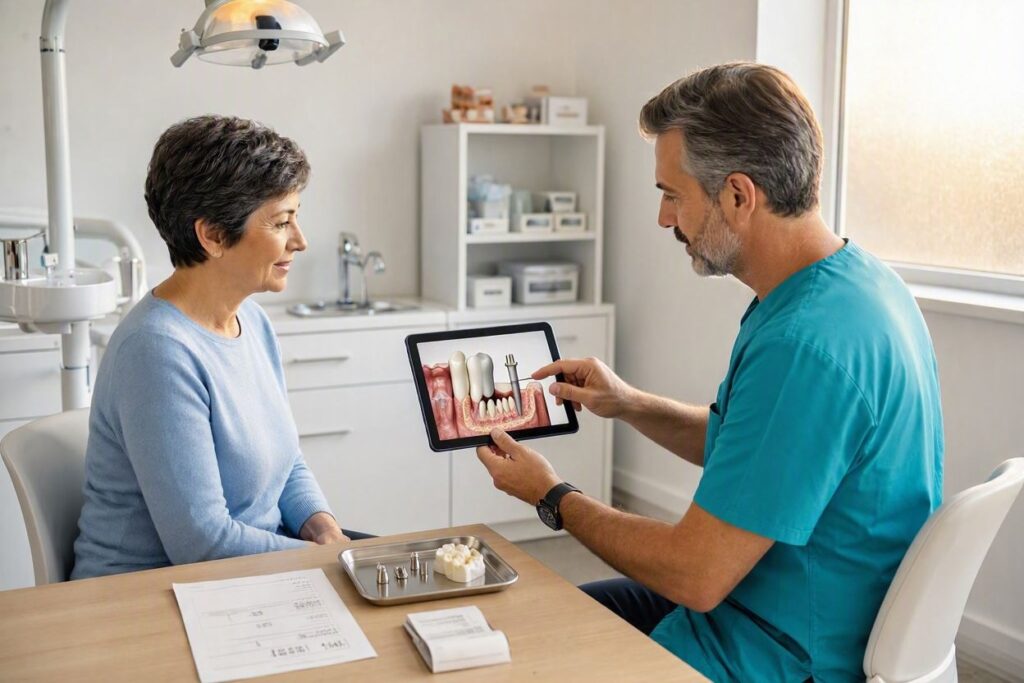
A mini dental implant (MDI) is very similar in concept to a standard implant. It is a titanium post that is placed into the jawbone to serve as an anchor. The key difference is in the size.
A standard dental implant has a diameter of about 3.5 to 6 millimeters. A mini implant, on the other hand, is much thinner, typically with a diameter of less than 3 millimeters, often around 1.8 to 2.4 millimeters.
This difference in size is profound. It leads to a different placement procedure, a different healing process, and a different set of applications. Mini implants are often described as looking like a small, solid screw.
The Cost of Mini Dental Implants: The Numbers
The most compelling advantage of a mini dental implant is its cost. They are dramatically more affordable than their full-sized counterparts.
To understand the value, let’s compare the costs directly. The prices below represent the complete cost for a single tooth replacement, including the implant and the crown, in US Dollars.
| Type of Implant | Typical Cost (Single Tooth) |
|---|---|
| Standard Dental Implant | $3,000 – $6,000 |
| Mini Dental Implant | $500 – $1,500 |
This is an enormous difference. A mini implant can cost as little as one-sixth the price of a standard implant. This price advantage is the primary reason patients seek them out.
Why Are Mini Implants So Much Cheaper?
Several factors contribute to the lower price point of mini implants.
1. Less Invasive Surgery
Because mini implants are so small, they require a much less invasive surgical procedure. In many cases, they can be placed directly through the gum tissue and into the bone using a small pilot drill. This is often called a “flapless” procedure.
This is in stark contrast to a standard implant, which often requires an incision in the gum to expose the bone. The less invasive nature of the mini implant procedure means:
- Less surgical time: The procedure is faster.
- Less surgical skill required: While still a skilled procedure, it is less complex than placing a standard implant.
- Lower costs for the dentist: Less time, less equipment, and less overhead.
2. Simpler Restoration
The restoration (the tooth part) for a mini implant is often simpler. For example, when used to stabilize a denture, the denture is simply modified with small attachments that snap onto the ball-shaped top of the mini implant. This is less complex and less expensive than the custom abutments and crowns used for standard implants.
The Right Tool for the Job: What Are Mini Implants For?
To understand the value of a mini implant, you must understand its intended use. It is not simply a “cheaper standard implant.” It is a different tool for a different job.
The Best Use: Denture Stabilization
This is the area where mini implants truly shine. One of the most common and life-changing uses of mini implants is to stabilize a lower denture.
A traditional lower denture is notoriously unstable. It rests on the gums and is often held in place by little more than hope and adhesive. Mini implants solve this problem. A few mini implants (often four) are placed in the lower jaw. The denture is then fitted with special attachments that allow it to “snap” securely onto the implants.
This provides a dramatic improvement in stability, comfort, and confidence for a fraction of the cost of using standard implants for the same purpose. The surgery is minor, and the transformation is immediate.
A Limited Use: Replacing Small Teeth
Mini implants can sometimes be used to replace a single tooth in an area of the mouth where the forces of chewing are low. This is typically limited to small teeth in the front of the mouth (incisors or lateral incisors). They are not recommended for molars, which bear the brunt of heavy chewing forces.
What They Are Not For: A Direct Replacement for Standard Implants
It is crucial to understand that a mini implant is not a one-to-one substitute for a standard implant. Because of their small size, they have significant limitations.
- Lower Strength: The narrow diameter of a mini implant makes it inherently weaker. It is more prone to fracture under heavy chewing forces. This is why it is not recommended for back teeth.
- Less Bone Support: A mini implant has less surface area to integrate with the bone. This means it may not be as stable or long-lasting as a standard implant, especially in areas of high stress.
- Potential for Failure: The long-term success rates of mini implants, particularly for single-tooth replacement, are not as well-documented or as high as those for standard implants.
Here is a table comparing their primary applications:
| Feature | Standard Dental Implant | Mini Dental Implant |
|---|---|---|
| Size | 3.5 – 6mm diameter | Less than 3mm diameter |
| Surgical Procedure | More invasive, often requires incision. | Less invasive, often “flapless.” |
| Primary Use | Replacing any missing tooth, from front to back. | Stabilizing lower dentures. |
| Single Tooth Use | Excellent for all teeth, including molars. | Limited to small teeth in low-stress areas. |
| Strength | High. Can withstand full chewing force. | Lower. More prone to fracture. |
| Cost | $3,000 – $6,000 | $500 – $1,500 |
| Long-Term Data | Decades of research and high success rates. | Less long-term data, especially for single teeth. |
The Risk of Choosing Based on Price Alone
The low cost of mini implants can be tempting, especially if you have been told you need a standard implant and are struggling with the price. However, choosing a mini implant as a cheaper substitute for a standard implant can be a costly mistake.
If a mini implant is placed in a location where it cannot withstand the forces of chewing, it is likely to fail. It may fracture, become loose, or cause bone loss. When it fails, you are back at square one, having spent money on a procedure that did not work and potentially having made your future treatment more complicated.
The decision must be based on what is best for your clinical situation, not just your budget. A good dentist will explain why a standard implant is recommended for a specific location and will offer a mini implant only when it is a clinically sound option.
Important Note: The success of a mini implant is heavily dependent on proper case selection. An experienced dentist will know when a mini implant is a brilliant solution and when it is a recipe for failure. Seek a professional opinion and trust their clinical judgment.
Conclusion
Are mini dental implants expensive? No, they are one of the most affordable options in implant dentistry, costing a fraction of what a standard implant costs. Their low price is due to a less invasive surgical procedure and a simpler restoration process.
However, their value lies in their specific application. They are a superb, life-changing solution for stabilizing a removable lower denture. They are not, however, a universal substitute for a standard implant. Their smaller size makes them weaker and less durable, limiting their use for single-tooth replacement to very specific, low-stress situations.
The key to success is not to choose based on price alone, but to work with a skilled dentist who can determine if a mini implant is the right tool for your specific needs.
Frequently Asked Questions
How long do mini dental implants last?
When used for their intended purpose, such as stabilizing a denture, mini implants can last for many years. However, they do not have the same decades-long track record of success as standard implants. Their lifespan depends on factors like the quality of the bone, the forces placed on them, and the patient’s oral hygiene.
Can mini implants be used to replace a molar?
Generally, no. Molars are subject to the highest chewing forces in the mouth. Mini implants lack the strength and bone support to withstand these forces over the long term and are at a high risk of fracture or failure. A standard implant is almost always the correct choice for a back tooth.
Do mini implants hurt?
The placement of mini implants is typically less painful and has a faster recovery time than standard implant surgery. The procedure is less invasive, often requiring no incisions or stitches. Many patients report only minor soreness afterward.
Can I eat normally with mini implant-supported dentures?
You will be able to eat much more comfortably and with more confidence than with a traditional, loose denture. However, a denture supported by mini implants is still a removable appliance. It will not have the same absolute stability and chewing power as a fixed bridge on standard implants. You will still want to avoid very hard or sticky foods.
Additional Resource
For a patient-friendly explanation of implant-supported dentures, including those using mini implants, you can visit the American College of Prosthodontists website: https://www.gotoapro.org/