When Do You Require Dental Implants?
Dental implants are a remarkable solution for tooth loss. But they are not the right choice for every situation. Some people can live with a missing tooth, while others find it profoundly affects their quality of life. So, when do you require dental implants? The answer involves understanding the consequences of tooth loss, the limitations of alternative treatments, and your specific health needs. This guide will explore the clinical and lifestyle indicators that point toward the need for dental implants. It will help you determine if this treatment is the right path for you.
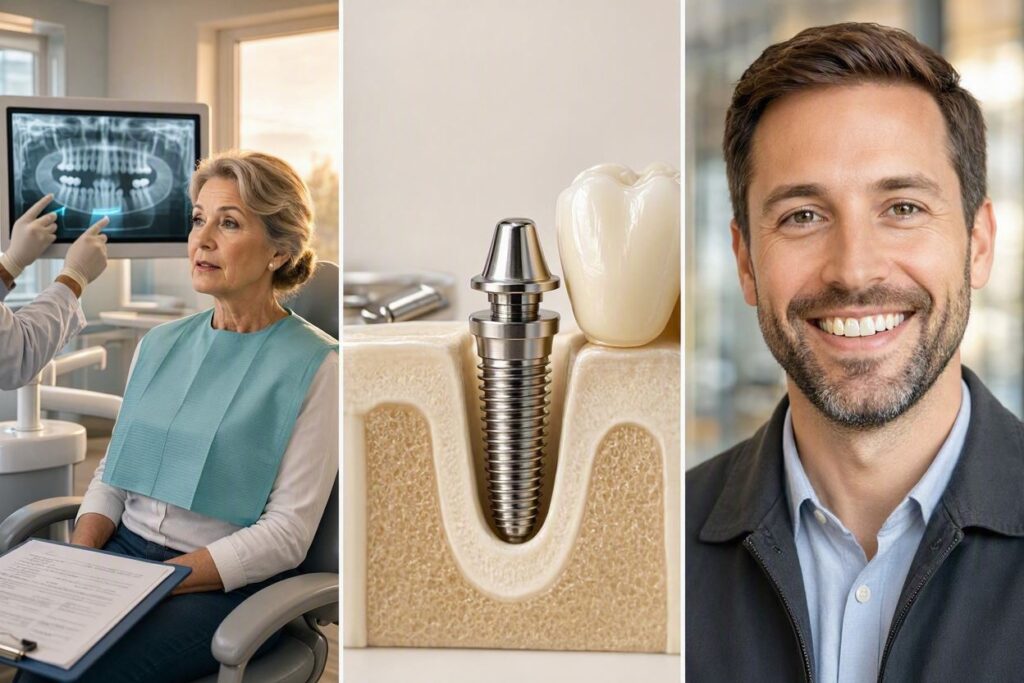
The Primary Indication: Missing Teeth
The most obvious answer is simple: you require a dental implant when you are missing one or more teeth. But the need goes deeper than just filling a gap. A missing tooth sets off a chain of events in your mouth.
1. Bone Loss (Resorption):
This is the most significant consequence. The roots of your teeth do more than just anchor them. They stimulate the jawbone. When you chew, the pressure travels down the root and into the bone. This signals the body to keep that bone strong and dense. When a tooth is removed, this stimulation stops. The body begins to resorb, or break down, the bone in that area. Over time, this leads to significant bone loss, which can change the shape of your face and make you look older.
2. Shifting of Teeth:
Your teeth are held in a delicate balance. When one is missing, the neighboring teeth begin to drift into the empty space. The tooth in the opposite jaw (the opposing tooth) can also start to erupt further out of its socket, searching for a biting partner. This leads to misalignment, bite problems, and difficulty cleaning.
3. Difficulty Eating:
Depending on the location of the missing tooth, you may find it difficult to chew certain foods. A missing back tooth can make it hard to grind food properly, leading to digestive issues. A missing front tooth can make biting into an apple or a sandwich awkward.
4. Speech Problems:
Teeth play a crucial role in speech. Missing front teeth can cause a lisp or difficulty pronouncing certain sounds like “s,” “th,” or “f.”
5. Aesthetic Concerns:
This is often the most immediate concern for patients. A visible gap in your smile can affect your self-confidence and your willingness to smile or laugh.
Beyond Single Teeth: Other Indications
Dental implants are not just for single missing teeth. They are used in a variety of restorative situations.
1. Full Arch Replacement:
If you are missing all of your teeth, implants can provide a stable foundation for a full denture. As discussed in previous articles, implant-supported dentures are far superior to traditional removable dentures. They prevent bone loss, improve chewing, and eliminate the fear of slipping.
2. Stabilizing Dentures:
Even if you have some natural teeth remaining, a few strategically placed implants can be used to anchor a partial denture, making it more secure and comfortable.
3. Avoiding a Bridge:
A traditional dental bridge requires the dentist to file down the healthy teeth on either side of the gap. These teeth are then covered with crowns that support the false tooth. If these adjacent teeth are healthy and intact, an implant is a more conservative option. It preserves the natural tooth structure.
When You Might NOT Require an Implant (Alternatives)
It is important to be honest. Dental implants are not the only option. You might not “require” an implant if an alternative treatment is more suitable for your situation.
1. The Missing Back Tooth (No One Sees It):
If you are missing a second molar (the very last tooth), some dentists may not recommend an implant. This tooth is not highly visible, and the chewing function can often be handled by the first molar. The risk and cost of an implant may not be justified.
2. Existing Health Conditions:
Certain health conditions can make implant surgery risky or lead to a higher failure rate. These include:
- Uncontrolled diabetes.
- Severe immune deficiencies.
- Active cancer treatment (especially radiation to the jaw).
- Certain bone diseases.
In these cases, a bridge or a removable denture may be a safer alternative.
3. Financial Constraints:
Implants are expensive. If the cost is prohibitive, a bridge or a partial denture is a functional, if less ideal, alternative. It is better to have a less-than-perfect solution than to have no solution at all.
4. Age Considerations:
Dental implants are generally not placed in children or adolescents whose jaws are still growing. The implant would not grow with the jaw and could become misaligned. Implants are typically delayed until the jaw has finished growing (usually late teens for girls, early 20s for boys).
The Medical Necessity Argument
Sometimes, the need for an implant goes beyond comfort and aesthetics. It becomes a matter of medical necessity.
1. Trauma or Injury:
If you lose a tooth in an accident, an implant is often the best way to restore function and prevent bone loss.
2. Congenital Absence (Hypodontia):
Some people are born with missing teeth. Implants can replace these teeth and provide a permanent solution.
3. Failed Existing Restorations:
If a bridge fails or a denture becomes unbearable, implants offer a more reliable long-term solution.
A Dentist’s Perspective on Need
“I always ask my patients: ‘How is this missing tooth affecting your life?’ If they tell me they avoid smiling, or they can’t eat the foods they love, I know the need is real. An implant is not just about aesthetics; it is about restoring quality of life.” – Dr. Elizabeth Wright, DDS
Assessing Your Own Need
Ask yourself these questions:
- Do I avoid smiling or laughing because of my missing tooth?
- Do I avoid certain foods because I cannot chew them properly?
- Does my missing tooth affect my speech?
- Have I noticed my other teeth shifting?
- Am I concerned about long-term bone loss and facial changes?
If you answered yes to any of these questions, you likely have a genuine need for a dental implant.
Important Notes for Readers
- Get a Professional Evaluation: Only a dentist can tell you if you are a good candidate for an implant. They will assess your oral health, bone density, and medical history.
- Do Not Delay: The longer you wait to replace a missing tooth, the more bone you will lose. This can make future implant placement more difficult and expensive.
- The Value of Prevention: The best way to avoid needing an implant is to prevent tooth loss in the first place. Brush, floss, and see your dentist regularly.
The Bottom Line
You require a dental implant when a missing tooth is negatively impacting your oral health, your function, or your quality of life. The need is driven by the consequences of tooth loss—bone resorption, shifting teeth, and functional limitations—and by the desire for a permanent, stable solution. If you are missing a tooth, a consultation with a qualified dentist is the first step to determining if an implant is the right choice for you.
Frequently Asked Questions (FAQ)
Q: Can I get an implant years after losing a tooth?
A: Yes, but you may need a bone graft first. The bone in the area will have resorbed over time. A bone graft can rebuild the bone so it can support an implant.
Q: Is it okay to live with a missing tooth?
A: It is possible, but it is not ideal. Over time, the bone will shrink, the other teeth will shift, and you may experience functional problems. The longer you wait, the more complex the treatment becomes.
Q: Are dental implants medically necessary or cosmetic?
A: This depends on the situation. If the implant is needed to restore basic function, prevent bone loss, or replace a tooth lost due to trauma or disease, it is considered restorative and potentially medically necessary. If it is purely to improve the appearance of a healthy smile, it is considered cosmetic.
Q: How many teeth can one implant replace?
A: A single implant can replace a single tooth. However, a few strategically placed implants can support a bridge or a full denture. For example, four implants can often support a full arch of teeth (the All-on-4 concept).
Additional Resource
For a comprehensive overview of tooth loss, its consequences, and replacement options, visit the American College of Prosthodontists: https://www.gotoapro.org/