When Do Most Dental Implants Fail?
Dental implants have a remarkable success rate. Studies consistently show that over 95% of implants are successful over the long term. But what about the other 5%? Understanding when and why implants fail is crucial for anyone considering this procedure. It helps you make informed decisions and recognize early warning signs. This leads to an important question: “When do most dental implants fail?” The answer is that failures occur in two distinct phases: early and late. This guide will explore both phases, the causes, and what you can do to prevent failure.
The Two Phases of Implant Failure
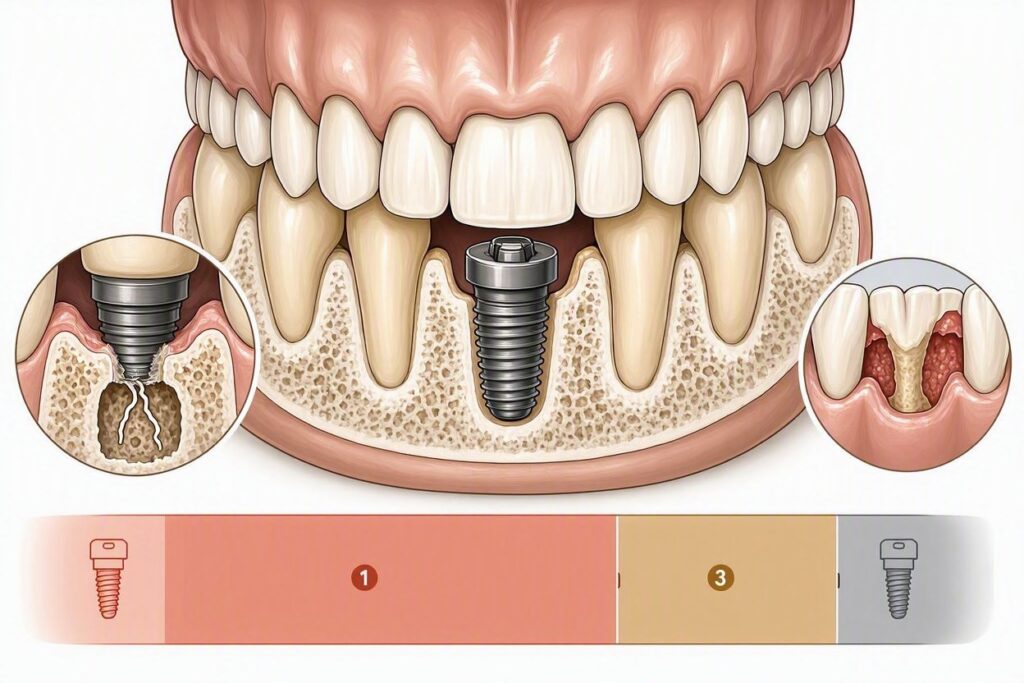
Dental implant failure is not a single event. It is a process that can happen at different stages of the implant’s life. The causes and the solutions are different depending on the timing.
1. Early Failure (Before the Final Crown)
This occurs during the healing phase, before the final crown is placed. The implant fails to integrate with the bone. This is a failure of osseointegration.
2. Late Failure (After the Final Crown)
This occurs after the implant has successfully integrated and the final crown has been placed. The implant fails due to infection or mechanical problems.
Early Failure: The Critical First Months
Early failure is the most common type of failure. It happens in the weeks and months following the initial surgery.
When It Happens: Typically within the first 3 to 6 months after placement.
The Cause: The bone fails to fuse to the titanium implant. Instead of bone growing onto the implant surface, a layer of fibrous scar tissue forms. This tissue is not strong enough to anchor the implant. The implant becomes loose.
Why Does This Happen?
1. Poor Bone Quality or Quantity:
If the bone is too soft, too thin, or too short, the implant may not have enough support to integrate. This is why dentists perform bone grafts when necessary.
2. Surgical Trauma:
If the surgeon overheats the bone during drilling, or if the implant is placed with too much force, the bone cells can be damaged. This prevents healing.
3. Infection at the Surgical Site:
If bacteria contaminate the surgical site, an infection can develop. This inflammation prevents the bone from fusing to the implant.
4. Micro-Movement:
This is a critical factor. If the implant moves even slightly during the healing phase, the bone cells cannot attach. The movement disrupts the delicate process of osseointegration. This is why patients are told to eat a soft diet and avoid putting pressure on the implant.
5. Smoking:
Smoking constricts blood vessels and reduces blood flow to the healing tissues. This starves the bone of oxygen and nutrients, dramatically increasing the risk of early failure.
6. Systemic Conditions:
Uncontrolled diabetes, autoimmune diseases, and certain medications (like bisphosphonates) can impair healing and increase the risk of failure.
Signs of Early Failure:
- Persistent pain or discomfort at the implant site.
- Swelling or redness that does not improve.
- The implant feels loose.
- Pus or discharge around the implant.
If an implant fails early, it is usually removed. The area is cleaned, and the bone is allowed to heal. In many cases, a new implant can be placed after a few months.
Late Failure: The Long-Term Threat
Late failure is less common than early failure, but it is a significant concern. It occurs after the implant has been functioning successfully for months or years.
When It Happens: Any time after the final crown is placed. It can happen 1 year later or 20 years later.
The Cause: The most common cause of late failure is a condition called peri-implantitis.
What Is Peri-implantitis?
Peri-implantitis is an inflammatory disease that affects the gums and bone surrounding an implant. It is similar to gum disease (periodontitis) around natural teeth.
How Does It Develop?
- Plaque and bacteria accumulate around the implant, especially at the junction where the implant meets the gum.
- The bacteria trigger an inflammatory response.
- The inflammation destroys the gum tissue and the bone supporting the implant.
- As the bone is lost, the implant loses its support.
- Eventually, the implant becomes loose and falls out.
Other Causes of Late Failure:
1. Occlusal Overload (Too Much Bite Force):
If the implant is subjected to excessive biting forces, it can cause the bone around it to resorb. This can happen if you grind your teeth (bruxism), or if the crown is too high and you are hitting it harder than the other teeth.
2. Mechanical Failure:
This is rare, but it can happen. The implant post itself can fracture, or the screw that holds the crown can break.
Signs of Late Failure:
- Bleeding gums around the implant.
- Swelling or redness around the implant.
- A bad taste or odor coming from the implant area.
- The implant feels loose.
- Pain when biting.
A Comparison of Early and Late Failure
| Feature | Early Failure | Late Failure |
|---|---|---|
| Timing | Within 3-6 months of surgery. | After the final crown is placed (months or years later). |
| Primary Cause | Failure of osseointegration (bone does not fuse). | Peri-implantitis (infection and bone loss). |
| Role of Infection | Often due to surgical contamination or poor healing. | Due to chronic plaque buildup over time. |
| Role of Bite Force | Micro-movement during healing. | Occlusal overload (excessive force). |
| Reversibility | Usually requires removal of the implant. | Can sometimes be treated if caught early. |
The Most Critical Timeframe
So, when do most dental implants fail? The answer is within the first few months after placement. This is the period when the bone is trying to fuse to the implant. If the conditions are not perfect, the fusion will not happen.
This is why the selection of a skilled surgeon and adherence to post-operative instructions are so critical. You have a significant amount of control over the success of your implant during this early phase.
How to Prevent Implant Failure
You are not a passive bystander. You can take active steps to ensure your implant’s long-term success.
1. Choose an Experienced Surgeon:
This is the most important decision you will make. A skilled surgeon will assess your bone quality, plan the surgery meticulously, and use proper techniques.
2. Follow Post-Operative Instructions:
Eat a soft diet, take your medications as prescribed, and avoid smoking. Do not use a straw. Do not disturb the surgical site.
3. Maintain Excellent Oral Hygiene:
Once the implant is healed, treat it like a natural tooth. Brush twice a day, floss daily, and use a water flosser if recommended.
4. Attend Regular Dental Checkups:
Your dentist needs to monitor the health of your implant. They will check for signs of peri-implantitis and ensure the bite is balanced.
5. Manage Parafunctional Habits:
If you grind or clench your teeth, get a night guard. This will protect your implant (and your natural teeth) from excessive force.
6. Do Not Smoke:
If you want your implant to last, do not smoke. This is one of the biggest risk factors for both early and late failure.
A Periodontist’s Warning
“I see late failures all the time. The patient got an implant, it felt great, and they forgot about it. They stopped flossing. They skipped their checkups. Then they come in with a loose implant and significant bone loss. An implant is not a ‘set it and forget it’ solution. It requires lifelong care.” – Dr. Susan Chen, DDS, Periodontist
Important Notes for Readers
- The 5% Failure Rate Is Real: While the success rate is high, failure does happen. Knowing the signs can help you catch problems early.
- Early Detection Saves Implants: If peri-implantitis is caught early, it can often be treated. The bone loss can be halted, and the implant can be saved.
- Do Not Ignore Warning Signs: A loose implant is a failed implant. A bleeding gum around an implant is not normal. Seek professional help immediately.
The Bottom Line
Dental implants most commonly fail during the early healing phase, within the first 3 to 6 months after placement. This early failure is due to a failure of osseointegration. Late failures, caused primarily by peri-implantitis, can occur years later. By understanding these two phases, choosing a skilled provider, and committing to excellent oral hygiene, you can dramatically reduce your risk and enjoy the benefits of your implant for decades to come.
Frequently Asked Questions (FAQ)
Q: What is the most common cause of dental implant failure?
A: The most common cause of early failure is a failure of the bone to fuse to the implant (osseointegration). The most common cause of late failure is peri-implantitis, an infection that destroys the supporting bone.
Q: Can a failed dental implant be replaced?
A: Yes, in most cases. The failed implant is removed, the area is cleaned, and the bone is allowed to heal. After a few months, a new implant can often be placed.
Q: How do I know if my dental implant is failing?
A: Warning signs include pain, swelling, bleeding, a bad taste, and most importantly, a feeling that the implant is loose. If you notice any of these signs, see your dentist immediately.
Q: Is dental implant failure painful?
A: Not always. In many cases, the only sign of a failing implant is mobility (looseness). This is why regular dental checkups are so important. Your dentist can spot early signs of bone loss on an X-ray before you feel any symptoms.
Additional Resource
For a comprehensive resource on the complications and failures of dental implants, visit the National Center for Biotechnology Information: https://www.ncbi.nlm.nih.gov/