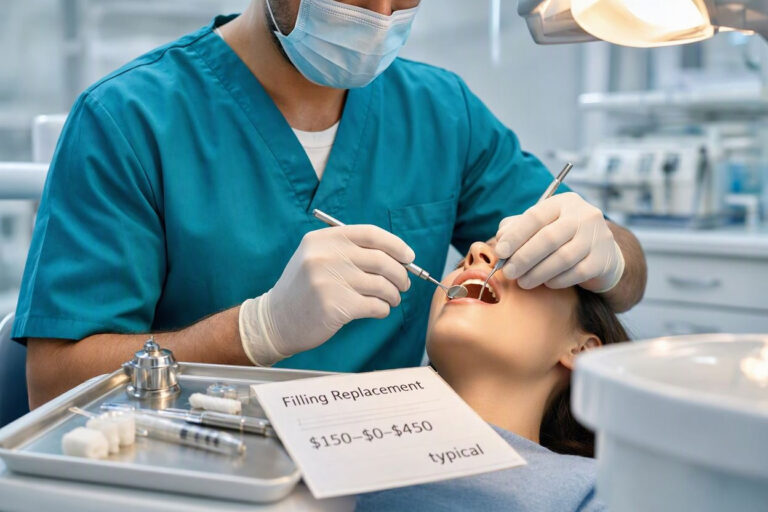
What Is The Cost Of Filling A Gap In Your Teeth?
A gap in your smile can be more than just a cosmetic concern. It can affect how you chew, how you speak, and how you feel about yourself. Whether you lost a tooth to decay, injury, or genetics, you are probably wondering how to fix it. And the first question on your mind is likely: How much will it cost?
The answer is not simple. Filling a gap in your teeth can range from a few hundred dollars to tens of thousands, depending on the method you choose. There is no single price because there is no single solution. The best option for you depends on the size of the gap, the health of your surrounding teeth and gums, your budget, and your long-term goals.
This guide will walk you through every major option for filling a gap. We will cover dental implants, bridges, dentures, orthodontics, and bonding. We will give you real price ranges, compare the pros and cons, and help you understand what insurance will and will not cover.

Why You Should Fill A Gap In Your Teeth
Before we talk about costs, let’s talk about why you should not ignore a gap. Some people live with missing teeth for years without problems. But for many, the consequences catch up.
The Risks Of Leaving A Gap
- Bone Loss: When a tooth is missing, the jawbone in that area no longer receives stimulation from chewing. It begins to shrink. This is called resorption. Over time, the bone can deteriorate, changing the shape of your face and making future tooth replacement more difficult.
- Shifting Teeth: Your remaining teeth will naturally drift into the empty space. They can tilt, rotate, and become crooked. This can lead to bite problems and difficulty cleaning your teeth.
- Gum Disease: The shifting teeth create hard-to-reach spaces where plaque and food particles accumulate. This increases the risk of gum disease and cavities.
- Chewing And Speech Issues: Depending on where the gap is, you may have trouble chewing certain foods. You might also develop a lisp or have difficulty pronouncing certain words.
- Confidence: Many people feel self-conscious about a gap in their smile. This can affect their social life and career.
Filling the gap is not just about looking good. It is about protecting your oral health.
Your Options For Filling A Gap
There are several ways to fill a gap. Each has its own price, process, and lifespan. Let’s go through them one by one.
1. Dental Implants
A dental implant is the gold standard for replacing a missing tooth. It is a titanium post that is surgically placed into the jawbone. The bone grows around the implant in a process called osseointegration. Once healed, the implant acts as an artificial tooth root. A crown is then attached to the top of the implant.
How It Works:
- The implant is placed in the jawbone.
- Healing takes 3 to 6 months.
- An abutment (connector) is attached.
- A custom crown is placed on the abutment.
Cost:
- Single Implant (including crown): $3,000 to $6,000
- Implant Crown Only (if implant already placed): $1,500 to $3,000
- Bone Graft (if needed): $200 to $3,000 extra
Pros:
- Looks and feels like a natural tooth.
- Does not affect adjacent teeth.
- Prevents bone loss.
- Can last a lifetime with good care.
Cons:
- Most expensive option.
- Requires surgery.
- Takes several months to complete.
- Not always covered by insurance.
2. Dental Bridges
A dental bridge fills the gap by anchoring a false tooth (or teeth) to the adjacent teeth. The adjacent teeth are ground down to serve as supports (abutments) for the bridge. The bridge is a single piece that includes the crowns for the abutment teeth and the false tooth in the middle.
How It Works:
- The dentist prepares the adjacent teeth.
- Impressions are taken.
- A temporary bridge is placed.
- The permanent bridge is cemented into place.
Cost:
- Traditional Bridge (3 units): $1,500 to $5,000
- Cantilever Bridge (2 units): $1,000 to $3,000
- Maryland Bridge (Resin-Bonded): $500 to $2,500
Pros:
- Less expensive than implants.
- Faster treatment (usually 2-3 visits).
- Does not require surgery.
Cons:
- Requires grinding down healthy teeth.
- Does not prevent bone loss.
- Lifespan is 10-15 years.
- Can be difficult to clean under the false tooth.
3. Partial Dentures
A partial denture is a removable appliance that fills in the gap. It has a metal or acrylic frame that clasps onto your remaining teeth. The false teeth are attached to the frame.
How It Works:
- Impressions are taken.
- The partial denture is custom-made in a lab.
- You insert and remove it as needed.
Cost:
- Acrylic Partial: $300 to $800
- Cast Metal Partial: $800 to $2,000
- Flexible Partial: $1,000 to $2,500
Pros:
- Least expensive option.
- Non-invasive.
- Easy to adjust or replace.
Cons:
- Removable, so it can feel bulky.
- Does not prevent bone loss.
- Can affect speech and chewing.
- Requires daily cleaning.
4. Orthodontics (Braces Or Aligners)
If the gap is due to spacing issues (not a missing tooth), orthodontics can close it. Braces or clear aligners move your teeth together to eliminate the gap.
How It Works:
- Braces or aligners apply gentle pressure.
- Teeth gradually move into the desired position.
- Treatment takes 6 to 24 months.
Cost:
- Traditional Braces: $2,500 to $6,000
- Clear Aligners (Invisalign): $3,000 to $8,000
- Limited Treatment (minor gaps): $1,500 to $3,500
Pros:
- Preserves natural teeth.
- Corrects bite issues at the same time.
- Results are permanent with retainer use.
Cons:
- Takes months or years.
- Can be uncomfortable.
- Not suitable for large gaps or missing teeth.
5. Dental Bonding Or Veneers
For very small gaps, bonding or veneers can be an option. Bonding uses tooth-colored resin to build up the sides of the teeth, closing the gap. Veneers are thin shells of porcelain or composite that cover the front of the teeth.
How It Works:
- For bonding: Resin is applied and shaped.
- For veneers: Teeth are prepared, and custom shells are bonded.
Cost:
- Bonding (per tooth): $100 to $400
- Composite Veneers (per tooth): $250 to $800
- Porcelain Veneers (per tooth): $800 to $2,500
Pros:
- Fast (bonding can be done in one visit).
- Conservative (minimal tooth removal).
- Aesthetic.
Cons:
- Only suitable for small gaps.
- Bonding can stain and chip.
- Veneers are expensive for multiple teeth.
Table: Cost Comparison Of Gap-Filling Options
| Option | Average Cost Range (USD) | Lifespan | Best For |
|---|---|---|---|
| Dental Implant | $3,000 – $6,000 | Lifetime | Single missing tooth, healthy jawbone |
| Dental Bridge | $1,500 – $5,000 | 10 – 15 years | Missing tooth with healthy adjacent teeth |
| Partial Denture | $300 – $2,500 | 5 – 10 years | Multiple missing teeth, budget-friendly |
| Orthodontics | $1,500 – $8,000 | Lifetime (with retainer) | Gaps from spacing, not missing teeth |
| Bonding | $100 – $400 per tooth | 3 – 7 years | Very small gaps |
| Veneers | $250 – $2,500 per tooth | 10 – 20 years | Small gaps, cosmetic improvement |
Factors That Affect The Cost
The prices above are averages. Your actual cost will depend on several factors.
1. Where You Live
Dental costs vary by region. A bridge in rural Arkansas might cost $1,800. The same bridge in Los Angeles could cost $4,500. Big cities have higher overhead costs, and those are passed on to patients.
2. The Dentist’s Experience And Specialty
A general dentist may charge less than a prosthodontist (a specialist in tooth replacement). Implant surgery is often done by an oral surgeon or periodontist, who charges more than a general dentist.
3. The Complexity Of Your Case
If you have bone loss, you may need a bone graft before an implant. If your adjacent teeth are damaged, you may need crowns on them before a bridge. These add to the cost.
4. The Materials Used
For bridges and dentures, the type of material matters. A porcelain-fused-to-metal bridge is cheaper than a full zirconia bridge. A metal partial denture is cheaper than a flexible one.
5. Additional Procedures
You may need extractions, root canals, or gum treatment before the gap can be filled. These are separate costs.
Does Insurance Cover Gap-Filling Procedures?
Dental insurance coverage for gap-filling varies widely.
Dental Implants
Implants are often classified as major restorative or elective. Many plans do not cover them at all. If they do, they usually cover 50% up to the annual maximum. Some plans have a separate lifetime maximum for implants.
Dental Bridges
Bridges are usually covered at 50% because they are considered major restorative. However, some plans classify them as basic and cover 70-80%.
Partial Dentures
Dentures are often covered at 50%. Some plans cover them at 80% if they are deemed medically necessary.
Orthodontics
Orthodontics is usually covered at 50% up to a lifetime maximum of $1,000 to $2,000. Coverage is often limited to children, but some plans include adults.
Bonding And Veneers
These are almost always considered cosmetic. Insurance rarely covers them unless they are needed to repair damage from an accident.
Table: Insurance Coverage For Gap-Filling Options
| Procedure | Typical Coverage | Notes |
|---|---|---|
| Dental Implant | 0% – 50% | Often excluded or has a separate maximum |
| Dental Bridge | 50% | Usually covered as major restorative |
| Partial Denture | 50% – 80% | Often covered |
| Orthodontics | 50% | Lifetime maximum applies |
| Bonding | 0% | Cosmetic |
| Veneers | 0% | Cosmetic |
Important Note: Always check your plan’s specific terms. Some plans have waiting periods for major procedures. You may need to be enrolled for 6 to 12 months before you can use benefits for a bridge or implant.
What If You Don’t Have Insurance?
If you are paying out of pocket, you have several strategies to reduce the cost.
1. Dental Schools
Dental schools offer all these procedures at reduced rates. A bridge at a dental school might cost $1,000 instead of $3,000. The trade-off is time. Appointments are longer, and you will be treated by students under supervision.
2. Dental Tourism
Some people travel to countries like Mexico, Costa Rica, or Thailand for dental work. The savings can be 50% to 70%. However, you need to do your research. Not all clinics are reputable. You also need to consider travel costs and the risk of complications after you return home.
3. Payment Plans
Most dentists offer in-house payment plans. You pay a down payment and then monthly installments. Some offer interest-free plans for 6 to 12 months.
4. Third-Party Financing
Companies like CareCredit and LendingClub offer medical loans. You can apply online and get a decision quickly. Be aware of interest rates and deferred interest promotions.
5. Community Health Centers
Federally Qualified Health Centers (FQHCs) provide dental care on a sliding scale. If your income is low, you may pay very little.
6. Negotiate
Ask for a cash discount. Many offices offer 5% to 10% off if you pay in full on the day of service.
The Hidden Costs Of Cheap Options
When you are on a budget, it is tempting to choose the cheapest option. But cheap can be expensive in the long run.
The Danger Of Cheap Implants
A bargain implant might use low-quality materials or be placed by an inexperienced provider. If the implant fails, you will need to pay to have it removed and replaced. This costs more than doing it right the first time.
The Bridge Trap
A bridge is cheaper than an implant upfront. But a bridge lasts 10 to 15 years. An implant can last a lifetime. Over 30 years, you might need two or three bridges. The total cost could exceed the cost of one implant.
The Denture Discomfort
A partial denture is the cheapest option. But it can be uncomfortable, affect your speech, and require frequent adjustments. Many people upgrade to implants or bridges later, spending more money overall.
The Lesson: Consider the long-term cost, not just the upfront price. Ask your dentist about the lifespan of each option and the cost of maintenance.
What Do Patients Say?
We spoke to three people who filled gaps in their teeth using different methods.
Jennifer, 42, chose a dental implant.
“I was terrified of the surgery, but it was easier than I expected. I paid $4,200 out of pocket because my insurance didn’t cover implants. It was a lot of money, but it feels just like a real tooth. I would do it again in a heartbeat.”
David, 58, chose a partial denture.
“I needed to replace three teeth, but I couldn’t afford implants. The partial denture cost me $1,200. It took a few weeks to get used to. I have to take it out to clean it, and sometimes it feels loose. But it works for now.”
Maria, 29, chose orthodontics.
“My gap was from spacing, not a missing tooth. I wore Invisalign for 14 months. It cost $4,500. I loved that no one could tell I was wearing them. My teeth are perfectly straight now, and I wear my retainer every night.”
Frequently Asked Questions
Q: What is the cheapest way to fill a gap in my teeth?
A: A partial denture is usually the cheapest option, costing $300 to $800 for an acrylic partial. However, it is removable and does not prevent bone loss. Bonding is also cheap for very small gaps, at $100 to $400 per tooth.
Q: Can I just leave the gap alone?
A: You can, but it is not recommended. Leaving a gap can lead to bone loss, shifting teeth, gum disease, and bite problems. It can also affect your confidence and ability to chew.
Q: How long does it take to fill a gap with an implant?
A: The entire process takes 3 to 6 months or longer. This includes the implant placement, healing time, and crown placement. In some cases, immediate implants can be placed on the same day as the extraction, but this is not always possible.
Q: Does Medicaid cover dental implants?
A: Medicaid coverage for dental care varies by state. Most states do not cover dental implants for adults. Some states cover bridges or dentures if they are medically necessary.
Q: Can I get a bridge instead of an implant?
A: Yes. A bridge is a good option if the teeth on either side of the gap are healthy and strong. However, a bridge requires grinding down those teeth, which can weaken them over time.
Q: What is the best option for a front tooth gap?
A: For a front tooth gap, aesthetics are important. A dental implant is often the best choice because it looks the most natural. A Maryland bridge or bonding can also work for small gaps. Veneers are an option if the teeth are otherwise healthy.
Conclusion
Filling a gap in your teeth is an investment in your health and confidence. The cost ranges from a few hundred dollars for a partial denture to several thousand for a dental implant. The best option for you depends on your budget, the health of your mouth, and your long-term goals. Dental implants offer the most natural look and feel, while bridges and dentures are more affordable but have shorter lifespans. Insurance coverage varies, so check your plan carefully. If you are paying out of pocket, explore dental schools, payment plans, and financing. Do not let the cost stop you from seeking treatment. A complete smile is worth the investment.
Additional Resources
For more information on tooth replacement options and costs, visit the American College of Prosthodontists (ACP) at prosthodontics.org. They provide patient resources and a directory of specialists.