A Complete Guide to the True Cost of a Dental Implant for Tooth 18
The loss of a tooth is a silent crisis. It begins not with a scream, but with an absence—a void in the chewing surface, a hesitant tongue exploring unfamiliar territory. When that tooth is number 18, the first molar on the lower left side of your mouth, the stakes are deceptively high. This is no mere back-office player; tooth 18 is a cornerstone of mastication, bearing tremendous force every time you eat. Its loss sends ripples through your oral ecosystem, a cascade of subtle shifts that can, over years, lead to jawbone deterioration, misalignment of neighboring teeth, and a strained opposite tooth.
For most patients facing this reality, the initial clinical diagnosis is quickly followed by a financial one: “How much will it cost to fix this?” The answer, particularly for a dental implant, is rarely simple. A quoted price of “$3,000” can balloon to $6,000, while an estimate of “$5,000” might be all-inclusive. The confusion breeds anxiety and inaction. This article exists to dispel that fog. We will embark on a detailed, exhaustive exploration of the true cost of replacing tooth 18 with a dental implant. This is not a superficial glance at price tags, but a deep dive into the anatomy of the procedure, the value of expertise, the geographic and biological variables, and the long-term financial calculus. By the end, you will possess not just numbers, but the knowledge to make an empowered, confident decision about your oral health and financial investment.
2. Understanding the Stakes: Why Replacing Tooth 18 is Critical
To understand the cost, one must first understand the value. Opting to leave the space of tooth 18 empty is not a neutral, cost-saving decision; it is an active choice with significant biological and financial consequences.
-
Bone Resorption: The jawbone requires the constant stimulation provided by a tooth root to maintain its density and volume. Once tooth 18 is extracted, the alveolar bone that once supported it begins to atrophy—a process called resorption. This loss is most rapid in the first year and continues indefinitely, potentially compromising the future feasibility of an implant without complex bone grafting.
-
Supra-eruption and Drifting: Nature abhors a vacuum. The opposing tooth (tooth 15, upper left second molar) will begin to drift downward into the empty space (supra-eruption). Simultaneously, the teeth adjacent to the gap (tooth 17, the second molar, and tooth 19, the second premolar) will tilt and drift into it. This disrupts your bite (occlusion), creating interferences that can lead to TMJ pain, headaches, and uneven wear.
-
Compromised Function and Diet: The molars are responsible for the heavy grinding of food. Losing tooth 18 reduces chewing efficiency on that side, often leading to unilateral chewing which can strain jaw muscles and joints. Patients may unconsciously avoid harder, healthier foods like nuts, raw vegetables, and certain meats.
-
The Bridge Alternative and Its Hidden Cost: A traditional three-unit dental bridge is a common alternative. It requires the deliberate grinding down of two healthy, virgin teeth (teeth 17 and 19) to serve as abutments. This irreversible alteration of healthy tooth structure commits those teeth to a lifetime of restorative work, with higher long-term maintenance costs and risk of decay at the bridge margins.
The dental implant, by replacing the root and the crown, is the only treatment that addresses all these issues: it preserves bone, prevents tooth migration, restores full function, and leaves adjacent teeth untouched.
3. Deconstructing the Dental Implant: More Than Just a “Screw”
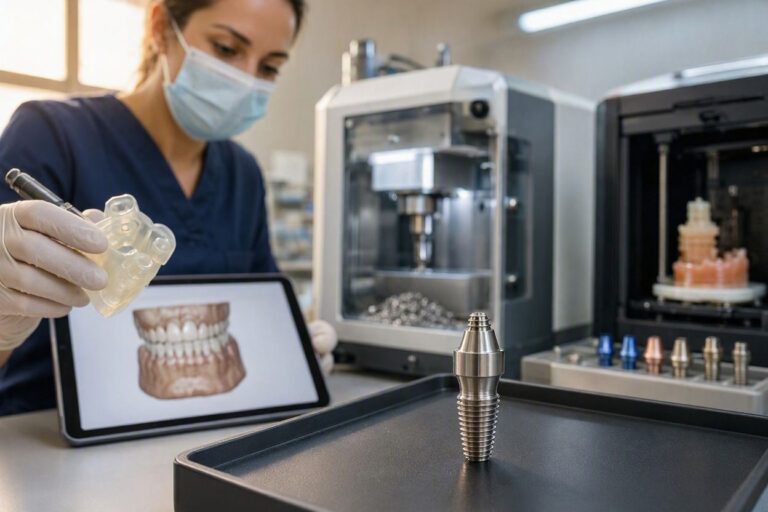
The term “dental implant” colloquially refers to the entire prosthetic construct. Medically, it is a system of precisely engineered components. Each carries a separate cost and serves a vital function.
-
The Fixture (The Implant Body): This is the titanium or zirconia “screw” that is surgically placed into the jawbone. It undergoes osseointegration—fusing with the living bone to become a synthetic root.
-
The Abutment: This is the connector piece that attaches to the fixture and protrudes above the gum line. It is the foundation upon which the crown is cemented or screwed. Abutments can be stock (pre-fabricated) or custom-milled for optimal aesthetics and emergence profile.
-
The Prosthetic Crown: This is the visible tooth, typically made of porcelain fused to metal (PFM), all-ceramic (e.g., zirconia, lithium disilicate), or full gold alloy. Its material and fabrication method (lab-milled vs. pressed) significantly impact cost and durability.
4. The Complete Cost Breakdown for a Single Tooth 18 Implant
The total fee is an amalgamation of surgical and restorative phases, each with its own sub-costs. Here is a typical, detailed breakdown for a straightforward case of tooth 18 replacement:
Comprehensive Cost Breakdown for a Single Tooth 18 Implant (Straightforward Case)
| Phase | Component/Service | Description | Average Cost Range (U.S.) | Notes Specific to Tooth 18 |
|---|---|---|---|---|
| Diagnostic & Planning | Consultation & Exam | Initial evaluation, oral cancer screening | $75 – $200 | Often applied to treatment cost. |
| 3D Cone Beam CT Scan | Essential for assessing bone quality, nerve canal location | $250 – $500 | Critical for lower molars due to proximity to the inferior alveolar nerve. | |
| Surgical Guide | Computer-guided stent for precision surgery | $300 – $1,000 | Optional for simple cases, highly recommended for accuracy. | |
| Surgical Phase | Tooth Extraction (if needed) | Simple or surgical extraction of tooth 18 | $150 – $450 | If already missing, this cost is omitted. |
| Implant Fixture (Brand) | Cost of the titanium implant itself | $500 – $1,500 | Surgeon’s cost; major brands (Nobel Biocare, Straumann) are premium. | |
| Surgical Placement Fee | Professional fee for the surgeon/os | $1,000 – $2,500 | Varies wildly with expertise and region. | |
| Bone Grafting (if needed) | Material placed at time of extraction to preserve bone | $300 – $1,200 | Very common for molars to prevent sinus issues (upper) or preserve ridge width. | |
| Restorative Phase | Healing Abutment | Temporary cap placed during healing | $100 – $300 | Sometimes included in surgical fee. |
| Final Abutment | Custom or stock connector | $250 – $800 | Custom zirconia abutments are higher cost, better for aesthetics (less critical for tooth 18). | |
| Implant Crown | Laboratory-fabricated prosthetic tooth | $1,000 – $2,500 | Material choice (PFM vs. Zirconia) is the biggest cost driver here. | |
| Crown Placement Fee | Professional fee for the restoring dentist | $500 – $1,500 | For taking impressions, fitting, and cementing/screwing the crown. | |
| Ancillary Costs | Sedation/Anesthesia | Nitrous oxide, IV sedation | $200 – $800 | Common for anxious patients or complex surgeries. |
| TOTAL ESTIMATED RANGE | For a complete, single-stage procedure | $3,575 – $12,450+ | National average often quoted: $4,500 – $6,500. |
5. The Surgical Phase: Fees, Complexity, and The Silent Cost of Expertise
The surgical placement for tooth 18 is considered a complex procedure due to its anatomical neighborhood. Directly beneath the roots lies the inferior alveolar nerve canal, which provides sensation to the lower lip and chin. Damage to this nerve can cause temporary or permanent numbness (paresthesia). A skilled, experienced oral surgeon or periodontist uses the 3D CT scan to map a safe pathway, often justifying their higher professional fee. This is not an area to seek the cheapest bidder. The surgical fee encompasses their years of training, precision, and the liability they assume.
Furthermore, the bone in the posterior mandible is often denser than in the front, which is good for stability but requires more precise drilling techniques. The cost of the implant fixture itself varies by brand; established brands with decades of clinical research and a proven track record (Straumann, Nobel Biocare, Zimmer Biomet) command higher prices than generic or newer-market brands.
6. The Restorative Phase: The Crown That Bites
Once osseointegration is complete (3-6 months for the lower jaw), the restorative dentist takes over. For tooth 18, the primary concerns are strength, occlusion, and hygiene access. A gold alloy crown is exceptionally durable and kind to the opposing tooth, but its aesthetics are poor. Porcelain-Fused-to-Metal (PFM) is a strong, cost-effective choice, but the metal margin can sometimes be visible at the gumline, and the porcelain can chip. Full contour zirconia is increasingly popular for posterior implants—it is monolithic, extremely strong, and avoids porcelain chipping. The lab fee for the crown and the dentist’s placement fee constitute the bulk of this phase’s cost.
7. The Hidden Variables: What Can Send Your Costs Soaring or Saving
-
Bone Grafting/Sinus Lift: If tooth 18 has been missing for years, significant horizontal or vertical bone loss may have occurred. A block bone graft or ridge augmentation can add $1,500 – $5,000 to the surgical cost. For upper molars (tooth 2, 3, 14, 15), a sinus lift ($1,500 – $3,500) is frequently needed.
-
Periodontal Disease: Active gum disease must be controlled before implant placement, adding the cost of periodontal therapy ($500 – $2,000+).
-
Immediate Load vs. Traditional: Placing a temporary crown the same day as surgery (“immediate load”) is technique-sensitive and not always advised for molars due to biting forces. It may add $500 – $1,500.
-
Specialists vs. General Dentists: A general dentist may charge less than an oral surgeon or periodontist. However, their experience with complex posterior placements should be carefully evaluated.
8. Geographic Influence: Cost of a Tooth 18 Implant in New Jersey vs. The Nation
New Jersey, particularly the metropolitan areas adjacent to New York City (Bergen, Hudson, Essex counties), has a high cost of living, which is reflected in dental fees. A complete tooth 18 implant in Northern NJ can easily range from $5,000 to $7,500+ for a standard case. Central and Southern NJ may see averages closer to the national norm of $4,500 – $6,000. This contrasts with lower-cost regions in the Midwest or Southeast, where fees might be 20-30% less. However, “dental tourism” to other countries carries profound risks (see Section 10).
9. The Payment Puzzle: Insurance, Financing, and Alternative Paths
Dental insurance coverage for implants is notoriously inconsistent. Many plans still classify implants as “cosmetic” or have low annual maximums ($1,000 – $1,500). However, the coverage landscape is improving. Key points:
-
The surgical phase may be covered under the plan’s “surgical” benefits, sometimes at 50-80%.
-
The implant crown may be covered under “prosthetic” benefits, often at 50%.
-
The implant abutment is frequently excluded or minimally covered.
-
Medicare does not cover routine dental procedures, including implants. Some Medicaid programs in NJ may offer limited adult dental benefits, but implants are rarely covered except in medically necessitated cases.
Financing Options:
-
In-house payment plans: Many offices offer phased payments aligned with treatment stages.
-
Third-party healthcare credit: CareCredit, Alphaeon Credit offer promotional no-interest periods (e.g., 12, 18, 24 months).
-
Flexible Spending Accounts (FSA) / Health Savings Accounts (HSA): Use pre-tax dollars to pay for eligible expenses.
-
Dental Schools: The Rutgers School of Dental Medicine in Newark provides care at significantly reduced fees (often 40-60% less) by supervised students and residents. Wait times can be longer, but the quality of care is high and meticulously reviewed.
10. The High Cost of Choosing Cheap: Risks of Dental Implant Tourism and Unrealistic Discounts
A $1,500 implant package abroad or a “too-good-to-be-true” domestic offer often omits critical details:
-
Implant Quality: Use of unbranded, non-FDA approved implants with no long-term data.
-
Follow-up Care: No local provider to manage complications like peri-implantitis, loosening, or nerve injury.
-
Standards and Sterilization: Variable international infection control protocols.
-
Hidden Costs: Travel, hotel, and the staggering cost of remedial treatment if it fails, which can exceed the original U.S. quote.
The greatest cost of a failed implant is not just financial—it’s the loss of precious, irreplaceable bone needed for any future restoration.
11. Finding Value: How to Vet a Provider for Your Tooth 18 Implant
Value = Quality / Cost. To maximize value:
-
Get Multiple Consultations: See a general dentist, an oral surgeon, and a periodontist. Compare their plans, technology (do they use a CT scan?), and your comfort level.
-
Ask for a Detailed, Written Estimate: It should break down every phase and component (as in Table 1).
-
Inquire About Experience: “How many molar implants do you place per year?” “Can you show me similar cases?”
-
Verify Credentials: Check board certification for surgeons (AAOMS, AAP).
-
Understand the Warranty: What do they guarantee (the fixture, the abutment, the crown) and for how long?
12. The Long-Term Economic View: Implant vs. Bridge vs. Do Nothing
A 20-year cost analysis often reveals the implant’s true value:
-
Dental Implant: High initial cost ($4,500-$7,000). With proper care, it can last 25+ years. Maintenance is routine brushing, flossing, and professional cleanings. No recurrent costs for adjacent teeth.
-
Three-Unit Bridge: Lower initial cost ($2,500-$4,500). Lasts 10-15 years on average. Requires floss threading, risks decay on abutment teeth, and eventual replacement involves re-treating the same two teeth or moving to an implant anyway.
-
Do Nothing: $0 initial cost. High long-term cost: Bone grafting needed later (+$2,000), orthodontics to correct drifting (+$3,000-$6,000), root canals/crowns on over-erupted opposing tooth (+$2,000), and potential TMJ therapy.
The implant, while a significant upfront investment, is often the most biologically sound and economically predictable solution over a lifetime.
13. Conclusion
Replacing tooth 18 with a dental implant is a multifaceted investment in your long-term oral health, function, and systemic well-being. Its true cost extends beyond a single quoted price, encompassing the expertise of the surgical team, the quality of the components, the biological complexities of your jaw, and the geographic context of your care. By arming yourself with detailed knowledge—from the necessity of a 3D CT scan to the nuances of abutment selection—you transition from a passive patient to an informed consumer. This empowers you to seek not the cheapest option, but the best value, ensuring that your investment yields a lifetime of confident smiles and effortless chewing.
14. Frequently Asked Questions (FAQs)
Q: What is the single biggest factor in the cost of a tooth 18 implant?
A: The need for bone grafting. If significant bone loss has occurred, the grafting procedure and materials can add $1,500 to $5,000 to the total, representing the largest potential cost increase over a straightforward case.
Q: Does dental insurance cover implants for tooth 18?
A: It’s variable. More plans are offering partial coverage. Typically, the crown portion may be covered at 50% under a “major prosthetic” benefit, and the surgery may have some coverage. However, the implant fixture itself is often excluded. You must check your specific plan’s “Evidence of Coverage” document.
Q: Is the procedure for a tooth 18 implant painful?
A: The surgery itself is performed under local anesthesia (like a filling) and often with sedation, so you feel no pain. Post-operative discomfort is typically managed well with over-the-counter or prescribed analgesics for a few days, similar to a tooth extraction.
Q: How long does the entire process take from start to finish?
A: For a lower molar like tooth 18, the timeline is usually 4 to 8 months. This includes healing from extraction/grafting (2-4 months), osseointegration of the implant (3-4 months for the lower jaw), and fabrication/placement of the final crown (2-4 weeks).
Q: Are there affordable options for low-income patients in New Jersey?
A: Yes. Rutgers School of Dental Medicine is the primary resource for reduced-cost care. Also, look for Federally Qualified Health Centers (FQHCs) with dental services and dental hygiene schools for low-cost maintenance care. The NJ Department of Health clinic directory is an essential starting point.
15. Additional Resources
-
American Academy of Implant Dentistry (AAID): https://www.aaid-implant.org/ – Patient education and a credentialed dentist finder.
-
American College of Prosthodontists (ACP): https://www.gotoapro.org/ – Resource on tooth replacement and specialist (prosthodontist) finder.
-
International Congress of Oral Implantologists (ICOI): https://www.icoi.org/ – Global implant education resource.
-
National Institute of Dental and Craniofacial Research (NIDCR): https://www.nidcr.nih.gov/health-info/implants – Government-backed, unbiased information on dental implants.
-
CareCredit: https://www.carecredit.com/ – A major healthcare financing option accepted by many dental practices.
Date: December 4, 2025
Author: The Dental Implant Research Group
Disclaimer: The information provided in this article is for educational purposes only and does not constitute medical advice. Costs, procedures, and recommendations can vary significantly. Always consult with a licensed dental professional for diagnosis and treatment planning.