A Comprehensive Guide to the Cost of Teeth Scaling and Root Planing
Imagine the foundation of your home quietly crumbling. The walls may still look fine, but beneath the surface, the integrity of the entire structure is at risk. This is a potent analogy for periodontal (gum) disease, a silent, progressive condition that undermines the very foundation of your teeth—your jawbone and gum tissue. For millions of adults diagnosed with periodontitis beyond its earliest stage, a routine dental cleaning is no longer sufficient. The treatment required is a more intensive, therapeutic procedure known as scaling and root planing (SRP), often termed a “deep cleaning.”
The moment this diagnosis is delivered, a pressing, practical question almost invariably arises in the patient’s mind: “How much will this cost?” This question is layered with anxiety—concern for health intertwines with fear of financial burden. The answer, however, is rarely a simple, flat fee. The cost of scaling and root planing is a complex calculus, influenced by a tapestry of medical, geographical, and economic factors. This article aims to be your definitive guide through this complexity. We will dissect every component that contributes to the final cost, explore the significant role of dental insurance, provide realistic price ranges, and outline concrete strategies for making this essential treatment accessible. Understanding the investment in SRP is not merely about budgeting for a dental procedure; it is about comprehending the value of preventing tooth loss, protecting overall health, and making an informed decision that will resonate for decades to come.
2. Understanding the Procedure: Scaling and Root Planing Demystified
To appreciate the cost, one must first understand the depth and detail of the procedure itself. Scaling and root planing is a non-surgical but profoundly therapeutic periodontal treatment. It is fundamentally different from a prophylactic cleaning, which is designed for maintenance of healthy gums.
-
Scaling: This is the process of meticulously removing dental plaque, hardened calculus (tartar), and bacterial toxins from the tooth surfaces, both above and, critically, below the gumline. Using specialized ultrasonic scalers and manual curettes, the clinician accesses the periodontal pockets—the spaces that form between the gum and tooth as disease progresses. This debridement must be thorough and precise to disrupt the disease-causing biofilm.
-
Root Planing: Following scaling, the root surfaces of the teeth are smoothed or “planed.” This step is crucial. By creating a smooth, clean surface, it removes lingering bacterial byproducts and microscopic areas of softened cementum (the tooth root’s outer layer). A smooth root surface enables the gum tissue to reattach more healthily to the tooth, reducing pocket depth and depriving bacteria of a conducive environment to recolonize.
The procedure is typically performed in quadrants (upper right, upper left, lower right, lower left) or halves (one side of the mouth at a time), often requiring two to four appointments. Local anesthesia is commonly administered to ensure patient comfort, as the work is subgingival (below the gums) and can be sensitive.
3. The Critical “Why”: From Gum Inflammation to Systemic Health
Why is this intensive procedure necessary? The implications of untreated periodontitis extend far beyond bad breath or bleeding gums. It is a chronic inflammatory disease initiated by specific bacteria. The body’s immune response to this bacterial assault breaks down the connective tissue and bone that hold teeth in place. The consequences are dire:
-
Tooth Loss: Periodontitis is the leading cause of tooth loss in adults.
-
Systemic Health Links: Chronic inflammation in the gums doesn’t stay localized. A significant body of peer-reviewed research has established strong associations between severe periodontal disease and an increased risk of:
-
Cardiovascular diseases (heart attack, stroke)
-
Poorly controlled diabetes (a bidirectional relationship)
-
Respiratory infections
-
Adverse pregnancy outcomes (preterm birth, low birth weight)
-
Rheumatoid arthritis
-
Therefore, SRP is not a cosmetic or elective procedure. It is a medical intervention aimed at controlling a chronic infection and mitigating its local and systemic damage. Framing it as such is key to understanding its value proposition.
4. Deconstructing the Cost: A Multifaceted Pricing Model
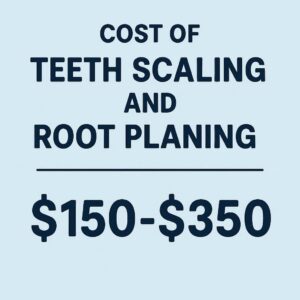
The national average cost for a full mouth scaling and root planing in the United States typically ranges from $1,000 to $4,000+, without insurance. This wide range is due to several interdependent factors. The cost is usually broken down per quadrant, with each quadrant averaging between $200 and $500. Let’s examine the core components that build this total.
Cost Breakdown of Scaling and Root Planing (Per Quadrant)
| Cost Component | Description & Variables | Typical Range (Per Quadrant) |
|---|---|---|
| Professional Fee | The core fee for the clinician’s expertise, time, and skill. Varies greatly by provider type (DDS vs. Periodontist) and practice overhead. | $175 – $450 |
| Diagnostic & Preparation | Includes comprehensive periodontal charting (measuring 6 points per tooth), X-rays (often a full-mouth series or panoramic), and diagnosis. | $100 – $300 (one-time) |
| Anesthesia | Local anesthesia is standard. Cost may increase for nitrous oxide (“laughing gas”) or if performed by a specialist. | $25 – $100 per visit |
| Technology/Adjuncts | Use of ultrasonic scalers is standard. Premium may be charged for antimicrobial rinses (e.g., chlorhexidine), localized antibiotic gels (e.g., Arestin), or laser therapy. | $0 – $150+ (for adjuncts) |
| Re-Evaluation / Maintenance | A critical follow-up appointment 4-6 weeks post-treatment to assess healing and pocket reduction. This is not included in the SRP fee. | $75 – $150 (one-time) |
| Geographic Adjustment | A multiplier effect based on the regional cost of living and market rates (e.g., Manhattan vs. rural Midwest). | Can add 20%-40% to fees |
5. The Insurance Labyrinth: Decoding Coverage, Codes, and Percentages
Dental insurance is a primary factor in out-of-pocket cost. Most plans classify SRP as a “basic” or “periodontal” procedure, distinct from “preventive” cleanings.
-
Coverage Tiers: Plans often cover a percentage (e.g., 80%) of the cost of SRP after your annual deductible is met. However, this percentage is usually applied to the insurance company’s “UCR” (Usual, Customary, and Reasonable) fee for your area, which may be lower than your dentist’s actual fee.
-
The Coding System: Dentists use specific Current Dental Terminology (CDT) codes:
-
D4341: “Periodontal scaling and root planing – four or more teeth per quadrant.” This is the most common code.
-
D4342: “Periodontal scaling and root planing – one to three teeth per quadrant.” Used for localized areas.
-
Frequency Limitations: Insurance often limits SRP coverage to once per site every 24-48 months, as it is considered a therapeutic treatment for an active disease state, not routine maintenance.
-
-
The Pre-Treatment Estimate: The single most important financial step you can take is to request a pre-treatment estimate from your dentist’s office. They will submit the proposed codes to your insurer, who will return a detailed breakdown of what they will pay and what your patient portion will be. This prevents unexpected bills.
6. The Geographic Factor: How Your Zip Code Influences the Bill
The cost of living directly translates to the cost of dental care. Practice overhead—rent, salaries, insurance, supplies—is markedly higher in urban centers and coastal metropolitan areas.
-
High-Cost Regions: Major cities like New York, San Francisco, Boston, and Los Angeles will see fees at the top end of the scale.
-
Moderate-Cost Regions: Suburban areas and midsize cities typically fall in the mid-range.
-
Lower-Cost Regions: Rural areas and smaller towns generally have the lowest fees. This geographic variance can easily account for a difference of $1,000 or more for a full-mouth treatment.
7. The Severity Spectrum: How the Stage of Periodontitis Dictates Cost
The extent of disease is perhaps the most significant clinical determinant of cost.
-
Mild/Moderate Periodontitis: Characterized by pocket depths of 4-6mm. Treatment may be more straightforward, potentially requiring less time per quadrant and fewer adjunctive therapies.
-
Severe/Advanced Periodontitis: Pockets of 7mm or greater, possible tooth mobility, and bone loss. This requires significantly more clinical time, skill, and potentially multiple adjunctive treatments (antibiotics, laser). It may also indicate that the general dentist will refer the patient to a periodontist, which carries a higher fee.
8. The Provider Variable: General Dentist vs. Periodontist
-
General Dentist (DDS/DMD): Many general dentists are highly skilled in performing SRP. Fees are generally lower. This is often the first and most cost-effective line of treatment.
-
Periodontist: A specialist with three additional years of training in gum disease and implants. A referral is typically made for complex cases (severe disease, anatomical challenges, medical comorbidities) or if initial SRP by a general dentist does not achieve the desired results. Their expertise commands a higher fee, often 25-50% more per quadrant.
9. The Technological Premium: Laser-Assisted Periodontal Therapy (LAPT)
Some practices offer the use of dental lasers (e.g., PerioLase® for LANAP® protocol) as an adjunct to or sometimes instead of traditional scaling. Proponents cite benefits like reduced bleeding, less discomfort, and potentially better regeneration. This advanced technology comes at a significant premium, potentially doubling the total cost of treatment. It is crucial to discuss the evidence-based benefits and necessity of this upgrade with your provider.
10. The Ancillary Costs: Anesthesia, Medications, and Follow-Up Care
The quoted SRP fee often does not include everything.
-
Anesthesia: Local is standard, but sedation options (nitrous oxide, oral sedation) add cost.
-
Localized Antibiotics: Tiny, dissolvable antibiotic gels like Arestin® can be placed in persistent pockets after scaling. These are charged per tooth, adding $50-$150 per tooth.
-
Post-Treatment Maintenance (Perio Maintenance): After SRP, you do not return to “regular cleanings.” You will require periodontal maintenance visits every 3-4 months (code D4910). These are more involved than a prophy and are critical to preventing recurrence. They are often covered at 50-80% by insurance.
11. The Price of Inaction: Long-Term Financial and Health Consequences
Declining SRP due to cost is a classic case of being “penny wise and pound foolish.” The long-term trajectory of untreated periodontitis is financially and physically devastating:
-
Cost of Tooth Replacement: A single dental implant and crown to replace one lost tooth can cost $3,000-$6,000.
-
Complex Restorations: Replacing multiple teeth with bridges or partial dentures costs thousands.
-
Increased Medical Costs: Exacerbated diabetes, higher cardiovascular risk, and other systemic implications lead to higher lifetime medical expenses.
-
Pain, Infection, and Diminished Quality of Life: The human cost of tooth loss, chronic infection, and dietary limitations is immense.
12. Pathways to Affordability: Strategies for Managing the Expense
The upfront cost of SRP can be managed. Do not let financial concern be the reason to forego essential care.
-
Dental Insurance: Maximize your benefits. Understand your plan’s details.
-
Dental Savings Plans: These are not insurance but discount plans offered by companies like Careington or Aetna Dental Savings. For an annual fee, you gain access to a network of dentists who provide services at a pre-negotiated discount (often 15-50%).
-
Payment Plans: Most dental offices offer in-house monthly payment plans or work with third-party medical credit companies like CareCredit or Sunbit. These often provide interest-free promotional periods (e.g., 6, 12, or 18 months) for qualified patients. Crucially, understand the terms; deferred interest can be severe if not paid in full by the end of the promo period.
-
Dental Schools: Accredited dental and dental hygiene schools offer treatment provided by supervised students at dramatically reduced costs (often 30-60% less). Treatment takes longer but is meticulously checked. This is an excellent option for budget-conscious patients.
-
Federally Qualified Health Centers (FQHCs) & Community Clinics: These non-profit community health centers provide dental care on a sliding fee scale based on income and family size.
-
Negotiation: For uninsured patients, it is perfectly acceptable to ask the office administrator if there is a “prompt pay” discount for paying in full at the start of treatment, or if the fee can be adjusted for self-pay patients.
13. Conclusion: An Investment, Not an Expense
The cost of scaling and root planing is a multifaceted figure, shaped by disease severity, location, provider, and technology. While the initial outlay may seem substantial, it must be reframed not as a discretionary expense, but as a critical investment in preserving your natural dentition and safeguarding your systemic health. By understanding the components of the cost, leveraging insurance and alternative payment methods, and prioritizing this foundational treatment, you are making a financially savvy and health-conscious decision that will pay dividends in comfort, function, and well-being for years to come.
14. Frequently Asked Questions (FAQs)
Q: Will scaling and root planing hurt?
A: With local anesthesia, the procedure itself should not be painful. You will feel pressure and vibration. Some tenderness and sensitivity in the days following the appointment is normal and manageable with over-the-counter pain relievers.
Q: How long does the procedure take?
A: A full-mouth SRP is typically scheduled over two visits, each lasting 60-90 minutes, focusing on one half of the mouth per visit. Complex cases may require more time or additional appointments.
Q: Is scaling and root planing a cure for gum disease?
A: It is a highly effective control for the disease. Periodontitis is a chronic condition, much like diabetes or hypertension. SRP halts its active progression, but lifelong, dedicated maintenance (professional cleanings every 3-4 months and impeccable home care) is essential to manage it.
Q: Can my gums grow back after SRP?
A: Gum tissue that has receded due to bone loss will not fully “grow back.” However, SRP reduces inflammation and swelling, which can make gums appear fuller and healthier. The primary goal is the reattachment of gum tissue to the now-clean root surface, reducing pocket depth and creating a healthier environment.
Q: What happens if I don’t get the recommended deep cleaning?
A: The disease will almost certainly progress. This leads to deeper pockets, more bone loss, increased tooth mobility, and eventual tooth loss. The chronic inflammation will also continue to pose systemic health risks.
15. Additional Resources
-
American Academy of Periodontology (AAP): Patient information on gum disease and treatments. https://www.perio.org/
-
American Dental Association (ADA): Find a dentist and general oral health information. https://www.ada.org/
-
National Institute of Dental and Craniofacial Research (NIDCR): Periodontal Disease overview. https://www.nidcr.nih.gov/health-info/gum-disease
-
CareCredit Locator Tool: Find dental providers who accept this payment option. https://www.carecredit.com/dentistry/
-
HRSA Find a Health Center Tool: Locate an FQHC near you for sliding-scale care. https://findahealthcenter.hrsa.gov/
Date: December 12, 2025
Author: The Health & Wellness Research Institute
Disclaimer: The information provided in this article is for educational and informational purposes only and is not intended as medical advice or a substitute for professional dental consultation. Treatment costs are estimates and can vary significantly based on individual patient needs, geographic location, and provider fees. Always consult with a licensed dental professional for diagnosis and treatment.