Adult Dental Sealant Cost: A Realistic Guide to Protection and Price
For many adults, the word “cavity” brings to mind childhood dental visits. But tooth decay isn’t just a kid’s problem. As we age, our enamel can wear down, gums may recede, and old fillings can break down, making adult teeth vulnerable. Dental sealants, a clear protective coating applied to the grooves of teeth, are a powerful preventive tool—not just for children, but for adults too.
If you’re considering this treatment, your first question is likely about the investment. The cost of dental sealants for adults isn’t a single flat fee; it’s a range influenced by many factors. This guide will walk you through everything you need to know, from the procedure itself to the detailed breakdown of expenses, insurance nuances, and the undeniable long-term value. Our goal is to provide you with clear, honest information so you can make a confident decision for your oral health.
What Are Dental Sealants and How Do They Work for Adults?
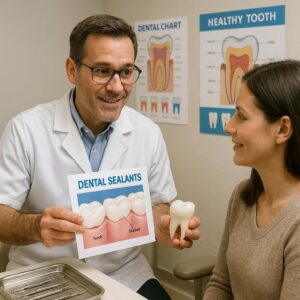
Dental sealants are a thin, plastic coating painted directly onto the chewing surfaces of teeth, primarily the molars and premolars. These back teeth have deep pits and fissures—tiny grooves where food particles and cavity-causing bacteria love to hide. Even with diligent brushing and flossing, it’s challenging to clean these microscopic crevices completely.
A sealant acts as a physical barrier. It smooths over the terrain of your tooth, sealing out food and plaque. Think of it like applying a waterproof sealant to the grout between tiles; it prevents decay from getting a foothold in the most susceptible areas.
“Prevention is always better and more cost-effective than treatment. Sealants for adults with deep grooves or early signs of enamel wear are a proactive step that can avoid the need for more complex procedures like fillings or crowns down the line.” – Dr. Lisa Morgan, DDS
While commonly associated with pediatric dentistry, the application is identical and equally effective for adults. The process is quick, painless, and requires no drilling or anesthesia.
The Step-by-Step Procedure
-
Cleaning: The tooth is thoroughly cleaned and dried.
-
Preparation: A gentle acidic solution is applied to the tooth’s surface. This etches the enamel slightly, creating a better surface for the sealant to bond to. It’s rinsed and dried again.
-
Application: The liquid sealant material is carefully painted onto the tooth.
-
Curing: A special blue curing light is used to harden and set the sealant, which takes just seconds.
The entire process for one tooth takes only a few minutes. You can eat and drink normally immediately after.
Breaking Down the Cost: What You Can Expect to Pay
So, what is the actual cost? It’s important to understand that dental sealants are priced per tooth. You and your dentist will decide which teeth are good candidates, typically focusing on molars with deep, stain-holding grooves or signs of early, non-cavitated decay (watchful areas).
Average Cost Range
Without dental insurance, the cost for a single dental sealant on an adult tooth in the United States typically ranges from $35 to $80 per tooth. The national average often falls between $45 and $60 per tooth.
This is a general range. Your specific cost can be lower or higher based on the factors we’ll explore next. For example, sealing the four main chewing molars (first and second molars) could range from approximately $140 to $320 out-of-pocket.
Factors That Influence the Final Price
Why such a range? Several key elements determine where your cost lands:
-
Geographic Location: Dental fees vary significantly by region and even by city. Practices in metropolitan areas or regions with a higher cost of living typically charge more than those in rural areas.
-
Dentist’s Expertise and Practice Overhead: An experienced dentist or a practice with state-of-the-art technology may have slightly higher fees, which can reflect in the cost of materials and the skill of application.
-
Type of Sealant Material: There are different materials available. The most common are resin-based sealants. Some newer, “glass ionomer” sealants release small amounts of fluoride, which can offer added protection, and may be priced differently.
-
Tooth Condition and Preparation: If a tooth requires minimal cleaning and is in ideal condition, the process is straightforward. However, if there is early decay that needs to be removed or if the tooth requires additional isolation from moisture, the procedure may take more time and skill, potentially increasing the cost.
-
Number of Teeth Sealed: Most dentists will offer a discounted per-tooth rate if you are sealing multiple teeth in one visit, as it maximizes the efficiency of their time and materials.
Dental Sealant Cost Comparison Table
| Factor | Lower Cost Scenario | Higher Cost Scenario |
|---|---|---|
| Per Tooth Cost | $35 – $45 | $60 – $80+ |
| Geography | Mid-West or rural area | Major coastal city (e.g., NYC, SF) |
| Material | Standard resin sealant | Fluoride-releasing or “premium” resin |
| Tooth Condition | Simple, clean grooves | Requires minimal decay removal or isolation |
| Dentist Type | General Dentist | Specialist (e.g., Prosthodontist) |
The Critical Role of Dental Insurance
This is where the cost equation changes dramatically for many adults. Dental insurance categorizes procedures into different classes with varying coverage levels.
How Insurance Typically Views Adult Sealants
-
Preventive vs. Basic Restorative: For children, sealants are almost universally covered as a preventive service, often at 80-100%. For adults, the classification is less consistent.
-
Common Insurance Scenarios:
-
Covered as Preventive: Some forward-thinking plans do cover adult sealants, especially on molars without existing fillings, at a high percentage (often 80-100%).
-
Covered as Basic Restorative: Many plans reclassify them for adults as a “basic restorative” procedure, which might be covered at 50-80%.
-
Not Covered: Some plans explicitly exclude sealants for patients over a certain age (e.g., 14, 16, or 18).
-
How to Navigate Your Insurance
Never guess. Always verify. A few minutes on the phone can save you hundreds of dollars.
-
Call Your Insurance Provider: Ask specifically: “Does my plan cover dental sealants for adults? If so, what is the coverage percentage and are there any age or tooth limitations?”
-
Get a Pre-Treatment Estimate: Before your appointment, ask your dentist’s office to submit a pre-authorization or pre-determination to your insurance. This is a written estimate from your insurer stating exactly what they will pay. This eliminates surprise bills.
-
Understand Your Annual Maximum: Remember that any insurance payout counts toward your annual maximum. If you have other planned dental work, factor this in.
Calculating Long-Term Value: An Investment, Not Just an Expense
To view sealant cost solely as an outlay is to miss the bigger financial picture. Let’s frame it as an investment with a potential for high returns in saved money and avoided discomfort.
Cost vs. Cavity Treatment
Compare the one-time cost of prevention to the ongoing cost of treatment:
-
One Sealant: $45 – $80 (one time, can last 5-10+ years)
-
One Composite (Tooth-Colored) Filling: $150 – $350 (may need replacement every 5-15 years)
-
Crown for a Severely Decayed Tooth: $1,000 – $2,500+ per tooth
-
Root Canal + Crown: $2,500 – $4,000+ per tooth
The math is compelling. Protecting a vulnerable molar with a sealant can cost less than a single dental co-pay for the filling you might otherwise need. It stops decay before it starts, preserving your natural tooth structure, which is always the best and most valuable outcome.
Lifespan and Durability
With proper care, sealants can last for many years—often 5 to 10, and sometimes longer. They are not permanent and will eventually wear down. Your dentist will check their condition at every routine check-up and can easily reapply them if needed, a process that is simpler and often less costly than the initial application.
Important Note for Readers: Sealants are not a substitute for good oral hygiene. They are a powerful ally. You must continue to brush twice daily with fluoride toothpaste, floss regularly, and maintain your routine dental cleanings. Sealants protect the chewing surfaces, but decay can still form on the smooth sides and between teeth.
Making Dental Sealants Affordable: Options and Alternatives
If insurance coverage is limited or non-existent, don’t dismiss the option. Several pathways can make sealants accessible.
1. Dental Discount Plans
These are not insurance, but membership plans (e.g., Careington, DentalPlans.com) that offer pre-negotiated discounts of 15-50% at participating dentists. An annual fee (often $100-$200 for a family) buys you access to these reduced rates. Always confirm the dentist participates and ask for the member price for sealants.
2. Dental School Clinics
Accredited dental schools offer services performed by supervised dental students at significantly reduced costs. The trade-off is that appointments take longer. This can be an excellent way to receive high-quality, low-cost preventive care.
3. Federally Qualified Health Centers (FQHCs) & Community Clinics
These community-based centers provide dental care on a sliding fee scale based on your income. They are designed to make care accessible to all.
4. Payment Plans & In-House Membership Plans
Many private dental offices offer:
-
In-house savings plans: For an annual fee (e.g., $300), you might get two cleanings, exams, X-rays, and a 15-20% discount on all other treatments, including sealants.
-
Monthly payment plans: Through third-party financiers like CareCredit or Sunbit, which often offer interest-free promotional periods.
5. Prioritize and Phase Treatment
You don’t have to seal all potential teeth at once. Work with your dentist to identify the highest-risk tooth (e.g., a molar with a deep, stained groove) and start there. You can budget to address others in the future.
Questions to Ask Your Dentist During a Consultation
Walking into a consultation informed will help you get the best care for your money. Consider asking:
-
“Which of my teeth would benefit most from sealants, and why?”
-
“What is your all-inclusive fee per tooth for a sealant, including the exam and any necessary preparation?”
-
“What type of sealant material do you use, and what is its expected longevity?”
-
“Can your office help me get a pre-treatment estimate from my insurance?”
-
“Do you offer any in-house discount plans or payment options?”
Conclusion
The cost of dental sealants for adults is a manageable investment in long-term oral health, often ranging from $35 to $80 per tooth. By understanding the factors that affect price, proactively navigating insurance, and exploring alternative payment options, this preventive treatment becomes highly accessible. Ultimately, the modest upfront cost of sealants pales in comparison to the financial and physical cost of treating the cavities they are designed to prevent, making them a wise and valuable choice for preserving a healthy, strong smile well into adulthood.
Frequently Asked Questions (FAQ)
Q: At what age are you too old for dental sealants?
A: There is no age limit for dental sealants. As long as you have natural teeth with deep grooves that are susceptible to decay, you can benefit from sealants. Adults of any age can be good candidates.
Q: Can sealants be placed over existing fillings or cavities?
A: No. Sealants are a preventive measure for healthy tooth surfaces or areas of very early, surface-level demineralization. If a cavity has formed and requires a filling, the decay must be removed and the tooth restored with a filling material. A sealant cannot be placed over an existing filling.
Q: Do sealants make teeth feel different?
A: Initially, you may feel a slight difference with your tongue as it gets used to the smooth surface. This sensation typically fades within a day or two. Sealants are very thin and should not affect your bite.
Q: How often do sealants need to be replaced?
A: They are checked at each regular dental exam for wear or chipping. With good care, they can last 5-10 years or more. If a sealant wears down, it can be easily repaired or reapplied.
Q: Are there any risks or downsides to sealants?
A: The risks are minimal. Rarely, if the tooth is not properly isolated during application, moisture can get trapped under the sealant, potentially leading to decay. This is why an experienced dentist is key. Some people have concerns about BPA in some dental materials; however, the American Dental Association states that exposure from sealants is extremely low and not a health risk.
Date: January 13, 2026
Author: The Dental Health Guide Team
Disclaimer: This article is for informational purposes only and does not constitute professional medical advice. Always consult with a qualified dentist or healthcare provider for diagnosis, treatment, and answers to your specific dental health questions. Costs and insurance coverage are estimates and can vary widely.