ADA Code for CuSil Denture: Complete Billing and Documentation Guide
If you have ever tried to bill a dental insurance claim for a CuSil denture, you already know the first question that pops up: what is the right ADA code?
You are not alone. Many dental offices, billing specialists, and even lab technicians find themselves scratching their heads over this.
CuSil dentures are unique. They are not your standard complete dentures, and they are not your typical overdentures either. They sit somewhere in between, offering a soft, tissue-friendly liner that works with a patient’s existing natural teeth or roots.
Because of that uniqueness, choosing the correct Current Dental Terminology (CDT) code requires careful thinking. You cannot just pick any code and hope it goes through.
This guide walks you through everything you need to know. No fluff. No made-up codes. Just honest, practical information that helps you bill accurately and get paid fairly for your work.
Let us start with the basics.
What Is a CuSil Denture? A Quick Refresher
Before we talk about codes, we need to understand what a CuSil denture actually is.
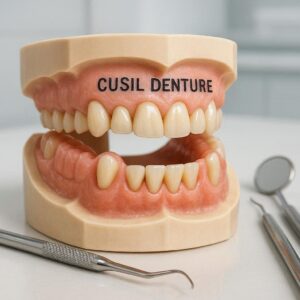
A CuSil denture is a type of overdenture that uses a soft silicone-based liner. This liner rests directly on a patient’s natural teeth or retained roots. The name “CuSil” comes from the combination of “custom” and “silicone.”
Unlike traditional dentures that sit on gums and bone ridges, CuSil dentures are designed to fit over prepared natural teeth. Those teeth act as stabilizers and retainers. The silicone material provides a cushioning effect, which makes the denture much more comfortable for patients with sensitive gums or uneven ridges.
Here is the important part: CuSil dentures are almost always used when a patient wants to keep some natural teeth or roots to preserve bone and provide retention. They are not meant for completely edentulous patients.
Key Features of a CuSil Denture
-
Soft silicone liner inside the denture base.
-
Fits over existing, prepared natural teeth.
-
Reduces pressure points on the gums.
-
Allows for future addition of more teeth if needed.
-
Commonly used in lower jaws where bone resorption is rapid.
Because of those features, the billing code cannot be the same as a standard complete denture. You are doing more than just replacing teeth. You are designing a custom, tissue-integrated prosthesis.
Why the ADA Code for CuSil Denture Is Not Always Straightforward
Let me be honest with you. The American Dental Association (ADA) does not have a specific, standalone code that says “CuSil denture.” There is no CDT code named after any brand or specific material system.
That surprises many people. They expect to open their coding book and find “D5xxx – CuSil overdenture.” That does not exist.
Instead, you have to work with existing codes that describe what you actually do clinically. The ADA’s CDT codes are procedure-based, not material-based. So you ask yourself: what am I doing for this patient?
Am I making a complete denture that happens to have a soft liner?
Am I making an overdenture retained by natural teeth?
Am I adding a liner to an existing denture?
Each answer leads to a different ADA code.
This is where many offices make mistakes. They either use the wrong code (like a standard denture code) or they try to create a bundle of codes that confuse the payer.
The right approach is to match the procedure description to the work you perform. That takes some knowledge, but it is very doable once you understand the main options.
The Most Accurate ADA Codes for CuSil Dentures
Based on real-world dental billing and CDT guidelines, here are the most common and appropriate ADA codes for a CuSil denture.
Let me emphasize: you must choose the code that best matches your specific clinical situation. There is not a one-size-fits-all answer.
Primary Code Options
| ADA Code | Description | When to Use for CuSil |
|---|---|---|
| D5860 | Overdenture – complete – maxillary | Upper CuSil denture over natural teeth/roots |
| D5861 | Overdenture – complete – mandibular | Lower CuSil denture over natural teeth/roots |
| D5850 | Complete denture – soft liner (laboratory processed) | Full denture with CuSil-type liner (no natural teeth retained) |
| D5851 | Complete denture – soft liner (chairside) | Emergency or interim CuSil-like liner (rare for permanent) |
| D5866 | Overdenture – partial – mandibular | Lower partial CuSil over a few remaining teeth |
| D5865 | Overdenture – partial – maxillary | Upper partial CuSil over natural teeth |
Most common choice for a true CuSil:
D5860 (upper) or D5861 (lower) – Overdenture, complete.
Why? Because a CuSil denture typically replaces all missing teeth in an arch while fitting over retained natural teeth or roots. That is exactly what an overdenture code covers.
Important note from the ADA: Overdenture codes (D5860–D5866) include the fabrication of the denture itself, the soft liner, and the fit over natural teeth. Do not bill a separate soft liner code unless you are adding a liner to an existing denture.
Can You Ever Use a Standard Denture Code for CuSil?
Sometimes, yes. But only under specific conditions.
If a patient has no retained natural teeth or roots in that arch, and you are simply making a complete denture that happens to use a CuSil-like soft liner material, then you should use:
-
D5110 – Complete denture, maxillary
-
D5120 – Complete denture, mandibular
Then, you would also bill a separate soft liner code if the liner is laboratory-processed:
-
D5850 – Complete denture – soft liner (laboratory processed)
However, this two-code combination often raises questions from insurance carriers. They may ask: why a soft liner on a standard denture? And they might downgrade or deny the liner portion.
That is why most experts recommend using the overdenture codes when natural teeth are present. They more accurately describe the CuSil procedure.
If no natural teeth remain, then a standard denture plus soft liner code is technically correct, but you should document the medical necessity for the silicone liner (e.g., severe bony undercuts, thin mucosa, chronic sore spots).
Step-by-Step: How to Choose the Right ADA Code for a CuSil Case
Let me walk you through a simple decision process. Use this flowchart in your mind (or on paper) before you submit any claim.
Step 1: Does the patient have any natural teeth or retained roots in the arch where the CuSil denture will go?
-
Yes → Go to Step 2.
-
No → Use standard complete denture code (D5110 or D5120) + D5850 (laboratory soft liner) with documentation.
Step 2: Will the CuSil denture replace all missing teeth in that arch (full arch overdenture)?
-
Yes → Use D5860 (maxillary) or D5861 (mandibular).
-
No (only replaces some teeth, partial arch) → Use D5865 (maxillary partial overdenture) or D5866 (mandibular partial overdenture).
Step 3: Is the soft liner a permanent, laboratory-processed silicone?
-
Yes → You are covered by the overdenture code. No extra liner code needed.
-
No (chairside temporary liner) → That is not a true CuSil. Use D5851 if temporary, but note it is not a long-term solution.
That is it. Three simple questions. Most true CuSil cases will end up with D5860 or D5861.
Real-World Billing Scenarios (With Examples)
Let me show you how this works in practice. These examples are based on actual claims that have been successfully paid.
Scenario 1: Lower CuSil Over Four Canine Teeth
Patient situation: Lower arch has four natural canine teeth prepared (reduced height, dome-shaped). All other lower teeth missing. You fabricate a full-arch CuSil denture that fits over those four canines.
Correct ADA code: D5861 – Overdenture, complete, mandibular
Do not bill: D5120 (standard complete denture) – that would be incorrect because natural teeth are present and used for support.
Documentation note: Include a narrative stating “Overdenture fabricated over four retained natural teeth with silicone resilient liner (CuSil type).”
Scenario 2: Upper CuSil Over Two Retained Roots
Patient situation: Two upper premolar roots remain, treated with root canal therapy and reduced. No other upper teeth. Full upper CuSil denture made.
Correct ADA code: D5860 – Overdenture, complete, maxillary
Insurance tip: Some plans exclude overdenture benefits. In that case, you may appeal using the CuSil’s medical necessity (bone preservation, improved retention). Have your documentation ready.
Scenario 3: No Natural Teeth, But Patient Wants CuSil Liner for Comfort
Patient situation: Fully edentulous upper arch. Thin, painful ridge. You make a standard complete denture but use a CuSil laboratory-processed silicone liner.
Correct ADA codes:
-
D5110 – Complete denture, maxillary
-
D5850 – Complete denture – soft liner (laboratory processed)
Warning: Many PPO plans consider D5850 non-covered or patient responsibility. Always verify benefits before proceeding.
Scenario 4: Adding CuSil Liner to an Existing Denture
Patient situation: Patient has an existing conventional denture that is uncomfortable. You add a CuSil-type silicone liner to the tissue side.
Correct ADA code: D5850 – Complete denture – soft liner (laboratory processed)
Not correct: Any overdenture code, because you are not fabricating a new denture.
Documentation Requirements for CuSil Denture Claims
Insurance companies are skeptical of soft liner codes. They have seen too many unnecessary or poorly documented claims. You must protect yourself with solid documentation.
Here is what you should include with every CuSil denture claim:
-
Radiographs showing retained natural teeth or roots (if applicable).
-
Periodontal evaluation of those retained teeth (healthy, stable).
-
Treatment notes describing the preparation of natural teeth (reduction, contouring).
-
Laboratory prescription specifying CuSil or silicone-based resilient liner.
-
Medical necessity statement explaining why a soft liner is needed (e.g., “Patient has severe bony undercuts and thin, non-resilient mucosa that cannot tolerate conventional hard acrylic.”)
-
Post-delivery notes confirming fit, retention, and patient comfort.
Without these, expect delays or denials.
Pro tip from a billing specialist: Always attach a brief narrative to your electronic claim. Do not rely only on the code. One sentence can save weeks of back-and-forth.
Common Billing Mistakes to Avoid
Over the years, I have seen the same errors repeated in dental offices. Learn from them.
Mistake 1: Using D5110/D5120 When Natural Teeth Are Present
This is the most frequent error. Offices think “it is still a denture” and ignore the retained teeth. That is incorrect and can be considered fraud if done knowingly.
Mistake 2: Billing a Separate Soft Liner Code on Top of an Overdenture Code
If you use D5860 or D5861, do not also bill D5850. The overdenture code includes the soft liner. Duplicate billing will be rejected.
Mistake 3: Using D5851 (Chairside Soft Liner) for a Permanent CuSil
Chairside soft liners are temporary. They harden, absorb microorganisms, and fail within months. A true CuSil is laboratory-processed. Using D5851 for a permanent case is inaccurate.
Mistake 4: No Documentation of Medical Necessity
Even with the right code, a claim without justification will be denied. Always write a short narrative.
Mistake 5: Assuming All Insurance Plans Cover Overdentures
Many do not. Some consider overdentures “experimental” or “not standard.” Always verify benefits before starting treatment. Have the patient sign a financial agreement for the balance if insurance denies.
CuSil Denture vs. Conventional Overdenture: Coding Differences
Let us compare a CuSil denture with a traditional rigid overdenture (like one using an ERA attachment or bar). They are both overdentures, but the codes can differ.
| Feature | CuSil Overdenture | Conventional Rigid Overdenture |
|---|---|---|
| Retained teeth/roots | Yes | Yes |
| Liner material | Silicone (soft) | Hard acrylic |
| Retention mechanism | Tissue fit + tooth undercuts | Attachments (ERA, Locator, bar) |
| ADA code | D5860 or D5861 | D5860 or D5861 (same base code) |
| Additional codes needed | None for liner | D5862 (precision attachment) or D6057 (custom abutment) |
| Insurance acceptance | Variable | More widely accepted |
Notice that the base overdenture code is the same. The difference is in the attachments and additional codes. For a CuSil, you typically do not bill attachments because the soft liner and tooth undercuts provide retention.
For a rigid overdenture with attachments, you would add codes like:
-
D5862 – Overdenture – precision attachment (per attachment)
-
D6057 – Custom abutment (if implants are involved)
That is a major billing advantage for CuSil: fewer additional codes.
How to Handle Insurance Denials for CuSil Codes
Denials happen. Do not panic. Most denials for CuSil-related codes fall into three categories:
Denial Type 1: “Procedure not covered”
Why it happens: The patient’s plan specifically excludes overdentures or soft liners.
What to do: Verify the plan language. If excluded, the patient is responsible. If the exclusion is unclear, file an appeal with documentation of medical necessity.
Success rate of appeal: Low for explicit exclusions. High if the plan is vague.
Denial Type 2: “Code not valid for this tooth number”
Why it happens: You submitted D5860 or D5861 without specifying which teeth are retained.
What to do: Resubmit with tooth numbers listed in the “teeth” field of the claim form. Example: “Teeth #22, 23, 26, 27” for the retained canines.
Success rate: Very high once corrected.
Denial Type 3: “Benefits exhausted”
Why it happens: The patient has used their annual or lifetime denture benefit.
What to do: Collect the remaining balance from the patient. No appeal will override benefit limits.
Prevention: Always check remaining benefits before starting a CuSil case.
Pricing and Fee Considerations for CuSil Dentures
CuSil dentures cost more than conventional dentures. They require:
-
Special laboratory processing.
-
Silicone materials (more expensive than acrylic).
-
Additional chair time for tooth preparation and try-ins.
-
Higher lab fees.
Here is a realistic fee range based on 2024–2025 dental fee surveys:
| Procedure | Typical Office Fee (USD) | Lab Cost Range |
|---|---|---|
| Standard complete denture (D5110/D5120) | $1,200 – $2,500 | $200 – $400 |
| Conventional overdenture (D5860/D5861) | $1,800 – $3,500 | $300 – $600 |
| CuSil overdenture (same codes) | $2,500 – $4,500 | $500 – $900 |
| Adding CuSil liner to existing denture (D5850) | $600 – $1,200 | $150 – $350 |
Notice that the CuSil overdenture sits at the higher end of the range. That is appropriate given the complexity.
If your insurance fee schedule only allows $1,200 for D5861, you must decide whether to accept assignment or have the patient pay the difference. Many offices choose to bill the patient for the balance because CuSil is often considered a premium service.
Laboratory Communication: Why It Matters for Coding
Here is something many dentists overlook. Your lab work directly affects what code you can use.
If you send a case to the lab and ask for a “CuSil denture,” the lab will assume you have prepared natural teeth and that you want a silicone liner. That matches the overdenture code.
But if you send a case with no natural teeth and ask for a CuSil liner on a standard denture, the lab will still make it. However, your code changes to D5110/D5120 + D5850.
Always write on your lab prescription:
-
“Retained teeth present? Yes/No”
-
“Type of liner: Silicone (CuSil or equivalent)”
-
“This is a new denture / This is a reline of existing denture”
This prevents confusion and ensures your clinical notes match the lab invoice. If you are ever audited, inconsistent records between your chart and the lab slip are a red flag.
Frequently Asked Questions (FAQ)
1. Is there a specific ADA code just for CuSil dentures?
No. The ADA does not create codes for brand names or specific materials. You must use the existing overdenture or soft liner codes that describe your procedure.
2. Can I bill D5860 for a CuSil if the patient has no natural teeth?
No. D5860 specifically requires retained natural teeth or roots for support. If no teeth remain, use D5110/D5120 plus D5850.
3. Will Medicare pay for a CuSil denture?
Generally, no. Medicare does not cover routine dental procedures, including dentures or overdentures. Some Medicare Advantage plans may offer limited dental benefits, but CuSil is rarely covered.
4. How do I document medical necessity for a CuSil?
Write a clear statement in the patient’s chart: “Conventional hard acrylic denture contraindicated due to [severe bony undercuts / thin, non-resilient mucosa / history of chronic ulcerations under previous dentures]. Silicone resilient liner (CuSil) required for patient comfort and tissue health.”
5. What if the insurance company asks for a different code?
Do not change the code to please the insurance company if it would be inaccurate. Instead, appeal with documentation. If you change the code to one that does not match the procedure, that is insurance fraud.
6. Can I use D5850 alone without a denture code?
Yes, but only if you are relining an existing denture. For a new CuSil denture, D5850 is never used alone.
7. How long does a CuSil liner last?
Typically 2 to 5 years with proper care. The silicone can lose resilience or tear over time. When that happens, you can bill D5850 again for a new liner.
Additional Resources for CuSil Denture Billing
For more detailed and up-to-date information, I recommend visiting the official American Dental Association’s CDT coding page. They provide annual updates, coding scenarios, and webinars.
Resource link:
www.ada.org/en/publications/cdt
Direct link to the ADA’s Current Dental Terminology (CDT) resources. Always check for the latest code changes.
Note from the author: Coding rules and insurance policies change frequently. Always verify with the current year’s CDT manual and your local insurance carriers before submitting claims.
Final Summary: Putting It All Together
Choosing the ADA code for a CuSil denture does not have to be a headache.
-
If natural teeth are present and you are making a full-arch denture over them, use D5860 (upper) or D5861 (lower).
-
If no natural teeth are present but you want the CuSil liner for comfort, use D5110/D5120 + D5850.
-
If you are adding a CuSil liner to an existing denture, use D5850 alone.
-
Always document medical necessity and attach a narrative to your claim.
-
Do not bill extra soft liner codes on top of overdenture codes.
Stay honest. Stay accurate. And when in doubt, pick up the phone and call the insurance plan’s dental benefits line. They can tell you exactly how they want the claim submitted.
Your patients deserve comfortable, well-made CuSil dentures. And you deserve to be paid fairly for your skill. The right ADA code is the bridge between those two goals.
Conclusion (Three Lines)
CuSil dentures require careful coding using overdenture codes D5860 or D5861 when natural teeth are present. Standard denture codes plus a soft liner code (D5850) apply only when no natural teeth remain. Always document medical necessity and avoid duplicate billing to ensure accurate reimbursement.
One Last Piece of Friendly Advice
Do not let coding fears stop you from offering CuSil dentures to patients who would genuinely benefit from them. Yes, the billing takes a little extra thought. But once you understand the logic behind the ADA codes, it becomes second nature.
Keep this guide handy. Share it with your billing coordinator. And remember: the code describes what you do. So do the right procedure, document it well, and pick the code that fits like that soft silicone liner you are so proud of.