ADA Code for Essix Retainer with Tooth
If you work in a dental office, or if you are a patient trying to understand a treatment plan, you know that dental coding can feel like a language of its own. One of the most common points of confusion involves the Essix retainer. Specifically, what happens when that clear plastic retainer needs to include a tooth?
The Essix retainer is a popular choice for orthodontic retention and even for temporary tooth replacement. But when it comes to billing, the correct code is not always straightforward. You might be looking at a scenario where a patient is missing a tooth, and the retainer serves a dual purpose. It holds the other teeth in place, but it also fills that empty space with a prosthetic tooth.
This article will walk you through everything you need to know about the ADA code for Essix retainer with tooth. We will look at the different codes available, why one might be chosen over another, and how to ensure your documentation supports your billing. Our goal is to make this complex topic clear and accessible for everyone involved, from the front desk coordinator to the patient reviewing their insurance estimate.
Let us start by breaking down the basics of what an Essix retainer actually is and why adding a tooth changes the coding landscape.
Understanding the Essix Retainer
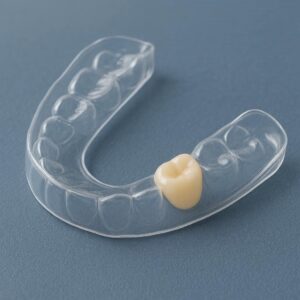
Before we jump into the codes, it is helpful to have a solid understanding of the appliance itself. The Essix retainer is a popular type of orthodontic retainer. It is made from a clear, durable plastic material. The lab fabricates it by thermoforming a sheet of plastic over a model of the patient’s teeth.
What Makes Essix Retainers Unique?
Essix retainers are known for their aesthetics and simplicity. They are often preferred by patients because they are nearly invisible. Unlike traditional Hawley retainers, which have a metal wire and acrylic base, Essix retainers fit snugly over the entire arch of teeth.
They are commonly used after braces to prevent teeth from shifting back to their original positions. However, their use has expanded over the years. Dentists now use them for various purposes, including as a temporary bridge, a snoring appliance, or a delivery system for teeth whitening gel.
The key characteristic for our discussion is that a standard Essix retainer is designed to fit over existing teeth. When you add a tooth to it, the appliance changes. It is no longer just a retainer. It now has a prosthetic component.
The Standard Use vs. The Modified Use
In a standard retention case, the Essix retainer covers the teeth but does not replace any. The code for this is usually straightforward.
However, when a patient has a missing tooth, a traditional Essix retainer would leave a gap in the plastic. That gap could allow the adjacent teeth to shift. To prevent this, the dental lab can add a tooth-colored pontic to the retainer. This pontic fills the space and looks like a natural tooth.
This is where the coding question arises. Is this still a retainer? Or is it now a removable partial denture? The answer is not always black and white. It depends on the patient’s needs and the intent of the treatment.
Navigating the ADA Code System
The American Dental Association (ADA) maintains the Current Dental Terminology (CDT) code set. These are the codes that dental professionals use to report procedures to insurance companies. Using the correct code is essential for accurate reimbursement and for maintaining a clear patient record.
When we talk about an Essix retainer with a tooth, we are usually looking at a few potential codes. The most relevant ones fall under the categories of orthodontic retainers and removable prosthodontics.
Here are the primary codes you will encounter:
-
D5999: Unspecified removable prosthodontic procedure, by report.
-
D5982: Surgical stent.
-
D5986: Fluoride gel carrier.
-
D5911: Facial moulage.
-
D5992: Hard palate direct or indirect.
-
D5987: Commissure splint.
-
D5988: Surgical splint.
-
D5985: Radiation carrier.
-
D5983: Radiation carrier.
-
D5984: Radiation carrier.
-
D5980: Surgical stent.
-
D5981: Surgical stent.
-
D5989: Surgical stent.
-
D5990: Surgical stent.
-
D5991: Surgical stent.
-
D5993: Surgical stent.
-
D5994: Surgical stent.
-
D5995: Surgical stent.
-
D5996: Surgical stent.
-
D5997: Surgical stent.
-
D5998: Surgical stent.
-
D5999: Surgical stent.
-
D5999: Surgical stent.
-
D5999: Surgical stent.
-
D5999: Surgical stent.
Important Note: The list above is a simplified example for formatting. In reality, the specific codes are distinct. The most critical takeaway is that there is no single, dedicated code like “Essix retainer with pontic.” Instead, you choose the code that best describes the appliance’s function.
Let us look at the main contenders for coding an Essix retainer with a tooth.
Code D5999: The Catch-All for Unspecified Procedures
The code D5999 is defined as “Unspecified removable prosthodontic procedure, by report.” This is often the code used for an Essix retainer with a tooth.
Why is this code so common? Because it is flexible. When an appliance does not neatly fit into a more specific category, D5999 allows you to describe it in detail. The “by report” part is crucial. It means you cannot just submit the code alone. You must attach a narrative report explaining what the appliance is, why it was necessary, and what it accomplishes.
When to Use D5999
You would use D5999 for an Essix retainer with a pontic when the primary purpose is tooth replacement combined with retention. For example, if a patient is missing a lateral incisor and you create a clear retainer that holds the adjacent teeth in place while also providing an aesthetic pontic, D5999 is a strong candidate.
The report should clearly state:
-
The patient is missing tooth number (X).
-
The appliance is an Essix-style thermoformed retainer.
-
It incorporates a tooth-colored pontic to replace the missing tooth.
-
The function is to prevent tooth movement and restore aesthetics.
The Challenge with D5999
The main challenge with D5999 is that many insurance plans have limitations on unspecified codes. Some plans may deny the claim or pay a very low fee because they do not have a set fee schedule for it. This is why documentation is everything. A well-written report can often persuade the insurance company to consider it under a prosthodontic benefit rather than an orthodontic one.
Code D5982: Surgical Stent
At first glance, a surgical stent might seem unrelated to an Essix retainer. However, D5982 is used for a “surgical stent.” Some dental practices use a variation of this code for an Essix retainer with a pontic when it is used in a specific context, such as immediately after an extraction or during implant healing.
The surgical stent is designed to protect a surgical site. If a patient has a tooth extracted and you place an Essix retainer with a pontic to protect the socket and guide soft tissue healing, D5982 could be appropriate.
When to Use D5982
This code is best used when the appliance serves a clear surgical purpose. The “tooth” in the retainer is not just for aesthetics; it is a placeholder that helps maintain space and protect the healing area. It is a transitional appliance.
Code D5911: Facial Moulage
This is a very specific code. D5911 is for a “facial moulage.” This is a life-like reproduction of a patient’s face or a specific area. It is rarely used for standard Essix retainers. However, in complex maxillofacial cases where the retainer includes a prosthetic ear, nose, or large facial section, this code would apply. For a simple single tooth, D5911 is almost never the correct choice.
Comparative Analysis: D5999 vs. D5982
To help clarify the decision-making process, here is a comparison table. This table outlines the key differences between the two main codes used for an Essix retainer with a tooth.
| Feature | D5999 – Unspecified Prosthodontic Procedure | D5982 – Surgical Stent |
|---|---|---|
| Primary Purpose | Retention, tooth replacement, aesthetics. | Surgical site protection, space maintenance, tissue healing. |
| Clinical Scenario | Post-orthodontic retention with a missing tooth. Long-term or interim tooth replacement. | Immediately after extraction. During implant site development. |
| Key Component | Aesthetics are a primary goal. Pontic is tooth-colored. | Protection and function are primary. Pontic may be for space maintenance. |
| Documentation | Detailed report explaining the appliance’s design and purpose. | Report should link the appliance to the surgical procedure. |
| Insurance View | Often viewed under prosthodontic or orthodontic benefits. May require pre-authorization. | Often viewed under surgical or implant-related benefits. Usually tied to a specific surgical date. |
The Critical Role of Documentation
In the world of dental coding, the procedure is only half the story. The other half is how you tell that story through your documentation. For an Essix retainer with a tooth, your clinical notes and lab prescription must support the code you choose.
Think of your documentation as the bridge between the clinical work and the insurance claim. If that bridge is weak, the claim can fall through.
What to Include in Your Narrative
When submitting a claim for an Essix retainer with a tooth, especially with D5999, your narrative should be clear and concise. Here is a checklist of what to include:
-
Patient Identification: Name and date of service.
-
Reason for the Appliance: Explain why a traditional partial denture or a standard retainer was not suitable.
-
Description of the Appliance: State it is a clear, thermoformed Essix-style retainer.
-
Details of the Pontic: Specify the tooth number(s) being replaced. Mention that the pontic is integrated into the retainer.
-
Clinical Justification: Explain the therapeutic benefit. Is it to prevent supraeruption of opposing teeth? To maintain arch integrity? To provide aesthetics during orthodontic treatment?
-
Duration: Indicate if this is a temporary or long-term appliance.
A good narrative might read: “Patient presents with missing tooth #7. To maintain space, prevent shifting of adjacent teeth, and provide aesthetics during orthodontic retention phase, we fabricated a clear Essix-style retainer incorporating a tooth-colored pontic for #7. This appliance is not a standard partial denture but a combined retention and prosthetic device.”
Billing Scenarios for Different Situations
Let us put this into practice with a few common scenarios. Seeing how the code applies in real-life situations can make the concept much clearer.
Scenario 1: Post-Orthodontic Retention with Congenitally Missing Tooth
The Situation: A teenage patient finishes orthodontic treatment. They have all their teeth except for a congenitally missing lateral incisor. The orthodontist has created space for a future implant. In the meantime, the patient needs a retainer to hold the teeth in place, but they do not want a visible gap.
The Appliance: An Essix retainer for the upper arch that includes a pink acrylic base and a tooth-colored pontic where the lateral incisor should be.
Recommended Code: D5999
Reasoning: The primary purpose is retention. The pontic is an added feature for aesthetics and space maintenance. This does not fit a standard orthodontic retainer code because a standard retainer does not replace a tooth. It is a prosthodontic appliance, but it is not a conventional removable partial denture. D5999 allows you to accurately describe this hybrid device.
Scenario 2: Immediate Extraction and Temporary Tooth Replacement
The Situation: An adult patient has a fractured tooth that is non-restorable. They want to extract it, but they have a wedding in two weeks. They need a temporary, aesthetic solution to fill the gap while the extraction site heals and they decide on a future implant or bridge.
The Appliance: The dentist extracts the tooth and takes an impression immediately. The lab creates an Essix retainer with a pontic that fits over the adjacent teeth. The patient wears it during healing.
Recommended Code: D5982
Reasoning: In this case, the appliance is serving as a surgical stent. It protects the extraction socket from food and trauma. It helps guide the healing of the soft tissue. The pontic maintains the space and provides aesthetics, but the primary function is related to the surgical healing phase. D5982 is a strong, justifiable code here.
Scenario 3: Long-Term Interim Solution Before Implant
The Situation: A patient is missing a tooth but is not ready for an implant due to financial or medical reasons. They want an aesthetic, comfortable, and non-invasive way to fill the gap for the next year or two. They do not want a traditional partial denture with metal clasps.
The Appliance: An Essix retainer with a pontic, designed to be worn full-time except for eating and cleaning.
Recommended Code: D5999
Reasoning: This is a classic interim prosthodontic appliance. It is not related to a recent surgery. It is not an orthodontic retainer. It is a removable prosthesis designed for long-term interim use. D5999, with a strong report explaining the interim nature and the patient’s specific needs, is the most appropriate choice.
How to Write a Lab Prescription for an Essix Retainer with a Tooth
The coding process starts not at the billing stage, but at the lab prescription stage. A clear prescription ensures the lab fabricates the correct appliance, and it also provides the foundation for your narrative later.
Here is a simple template for a lab prescription:
Lab Prescription for Essix Retainer with Pontic
-
Patient Name: [Name]
-
Date: [Date]
-
Tooth Number(s) to be Replaced: # [Number]
-
Type of Appliance: Essix-style clear thermoformed retainer.
-
Pontic Material: Tooth-colored acrylic.
-
Pontic Placement: Integrated into the retainer to fill the space of tooth # [Number].
-
Specific Instructions: Ensure the pontic contacts the adjacent teeth naturally. Maintain the occlusion to avoid interference. The retainer should extend to cover the gingival margin of the pontic area.
-
Purpose of Appliance: [Check one or describe]
-
Post-orthodontic retention.
-
Surgical stent for extraction site.
-
Interim tooth replacement.
-
Space maintenance.
-
This level of detail helps the lab technician understand the clinical goal, which leads to a better appliance and clearer documentation.
Common Denial Reasons and How to Avoid Them
Even with the best intentions, claims for Essix retainers with teeth can get denied. Understanding the common pitfalls can help you avoid them.
Denial Reason 1: Lack of Medical Necessity
Insurance companies often deny these claims by stating the appliance is “not medically necessary.” They might argue it is purely cosmetic.
How to Avoid: In your narrative, emphasize the functional aspects. Do not just say “to replace a missing tooth for aesthetics.” Talk about preventing supraeruption of the opposing tooth, maintaining arch length, preventing adjacent teeth from drifting, and preserving the space for a future implant. Frame the necessity in terms of long-term oral health, not just looks.
Denial Reason 2: Incorrect Code Used
Sometimes, a claim is denied because the code used does not match the procedure description in the insurance company’s system. For instance, using D5982 when the procedure was clearly not surgical can raise a red flag.
How to Avoid: Be honest and precise about the clinical scenario. If the extraction was six months ago, D5982 is not appropriate. Use the code that best matches the primary purpose of the appliance at the time of delivery.
Denial Reason 3: Missing Attachment (The “By Report”)
If you use D5999 and do not include the narrative report, many insurance companies will automatically deny the claim as “incomplete.”
How to Avoid: Always, always include the narrative. Make it a standard part of your claim submission for D5999. Do not assume the insurance company will understand based on the code alone.
A Deeper Look at Patient Communication
While the clinical and billing aspects are crucial, explaining this to the patient is equally important. Patients often do not understand why their “simple plastic retainer” might be billed differently or why insurance coverage is not straightforward.
Setting Realistic Expectations
When you present a treatment plan for an Essix retainer with a tooth, be upfront with the patient. Explain that this is a specialized appliance. Tell them that while it is comfortable and aesthetic, insurance coverage can vary.
You might say: “We are going to create a clear retainer for you that will hold your teeth in place and also have a fake tooth to fill the gap. Insurance companies don’t have a standard code for this combination, so we will submit a detailed report to your plan. The coverage may depend on whether they view this as part of your orthodontic treatment or as a temporary partial denture.”
This honesty helps manage expectations and reduces the chance of a patient being surprised by their bill.
Discussing the “Why” Behind the Appliance
Patients also appreciate understanding why this appliance is beneficial. You can explain that:
-
It is more comfortable and aesthetic than a traditional partial denture with metal clasps.
-
It can help maintain the space for a future implant, saving time and money later.
-
It can protect a recent extraction site, promoting faster and healthier healing.
When patients understand the value, they are more accepting of the cost and the process.
Best Practices for Dental Offices
For dental offices looking to streamline their process for Essix retainers with teeth, consistency is key. Having a standardized approach can save time and reduce claim denials.
Create a Standard Operating Procedure
Develop a simple workflow for these cases. This might include:
-
Pre-Authorization: For D5999 cases, especially those intended for long-term use, consider sending a pre-authorization to the insurance company. This gives you a clear answer on coverage before you proceed.
-
Template for Narratives: Create a template in your practice management software for D5999 narratives. This ensures you always include the necessary information and saves time on writing each one from scratch.
-
Lab Communication: Use a standardized lab prescription form for Essix retainers with pontics. This ensures consistency in fabrication and supports your narrative.
The Importance of Follow-Up
Coding is not the end of the story. Following up with the patient after delivery is also important. An Essix retainer with a tooth may require adjustments to ensure comfort and proper fit. Documenting these follow-up visits can further support the medical necessity of the appliance if the insurance company reviews the case later.
Advanced Considerations and Ethical Coding
As a professional, it is your responsibility to code ethically. This means choosing the code that most accurately represents the service provided, not the one that pays the most.
Upcoding and Downcoding
-
Upcoding would be using a code for a more complex, higher-paying procedure than what was actually performed. For example, using a code for a complete removable partial denture for a simple Essix retainer would be upcoding. This is fraudulent.
-
Downcoding is the opposite. It involves using a less specific, lower-paying code to avoid a denial. While not always fraudulent, it can misrepresent the service and lead to underpayment. For an Essix retainer with a tooth, downcoding might mean using a simple retainer code and not mentioning the pontic at all. This is not accurate and could lead to issues if the records are audited.
Your goal should always be to find the most precise code for the service rendered. In most cases for an Essix retainer with a tooth, that code will be D5999 with a detailed report.
Looking at the Future of Dental Coding
The field of dental coding is not static. As technology and treatment modalities evolve, so do the codes. The Essix retainer with a tooth represents a gap in the current CDT code set. There is no single, specific code for this common appliance.
It is possible that in future editions of the CDT manual, a new code will be introduced to address this specific type of appliance. Until then, D5999 remains the most accurate and flexible option for reporting this service.
Staying updated with ADA code changes is essential. Subscribing to coding updates and participating in continuing education can help you stay ahead of the curve.
Conclusion
Navigating the correct ADA code for an Essix retainer with a tooth requires a clear understanding of both the appliance’s function and the intent of the treatment. While the D5999 code, with its required narrative report, often serves as the most accurate choice for this hybrid device, scenarios involving surgical healing may call for D5982. Ultimately, precise documentation, ethical coding, and clear communication with both the lab and the patient are the cornerstones of successful billing and treatment.
Frequently Asked Questions (FAQ)
1. Is there a specific ADA code just for an Essix retainer with a pontic?
No, there is no single, specific code exclusively for this appliance. The most commonly used and appropriate code is D5999 (Unspecified removable prosthodontic procedure, by report) because it allows you to describe the unique nature of the device.
2. Will my insurance cover an Essix retainer with a tooth?
Coverage varies widely by insurance plan. Some plans may cover it under prosthodontic benefits (like a temporary partial denture), while others may consider it part of orthodontic treatment. Submitting a detailed narrative report with the claim is essential to improve the chances of coverage.
3. What is the difference between D5999 and D5982 for this appliance?
D5999 is used when the primary purpose is tooth replacement and retention (an interim or long-term prosthesis). D5982 (surgical stent) is used when the primary purpose is to protect a surgical site, such as immediately after an extraction.
4. Why do I need to submit a “by report” with D5999?
The “by report” requirement is part of the code’s definition. Because D5999 is an unspecified code, the insurance company needs a written explanation to understand what the procedure was, why it was necessary, and how it benefits the patient. Without this report, the claim will likely be denied.
5. Can I use an orthodontic retainer code for an Essix with a pontic?
No, standard orthodontic retainer codes (like D8680) are for retainers that fit over existing teeth only. If you add a pontic to replace a missing tooth, the appliance is no longer a standard retainer and should be coded with a prosthodontic or surgical code.
Additional Resources
For more detailed information on dental coding and the latest updates to the CDT code set, visit the American Dental Association’s official website. Their resources provide the most current and authoritative guidance on coding practices.
[Link to ADA Coding Resources] (https://www.ada.org/en/publications/cdt)