Demystifying the ADA Code for Implant Housing
If you’ve ever found yourself staring at a dental claim form, wondering whether to bill for the metal post, the attachment that clicks, or the tooth that sits on top, you are definitely not alone.
Dental implant procedures are some of the most rewarding treatments we can offer patients. They restore function, confidence, and quality of life. But when it comes to the administrative side—specifically, finding the correct ADA code for implant housing—things can get a little murky.
The terminology alone is enough to cause a headache. Is the “housing” part of the abutment? Is it part of the prosthesis? Does the insurance company even cover it?
In this guide, we are going to clear up that confusion once and for all. We’ll walk through the specific Current Dental Terminology (CDT) codes used to describe implant components, with a sharp focus on the often-misunderstood concept of “housing.” Whether you are a dentist, a office manager, or a billing specialist, this article will serve as your reliable roadmap to accurate coding and maximum reimbursement.
Let’s get started.
Understanding Dental Implant Terminology
Before we dive into the specific codes, it is crucial to establish a common language. In the world of implant dentistry, the term “housing” can refer to different things depending on the context.
Often, when clinicians or billing coordinators search for the “ADA code for implant housing,” they are specifically looking for the code that covers the retention mechanism for an overdenture or a removable prosthesis. In other scenarios, they might be confusing “housing” with the abutment itself.
What Exactly is Implant Housing?
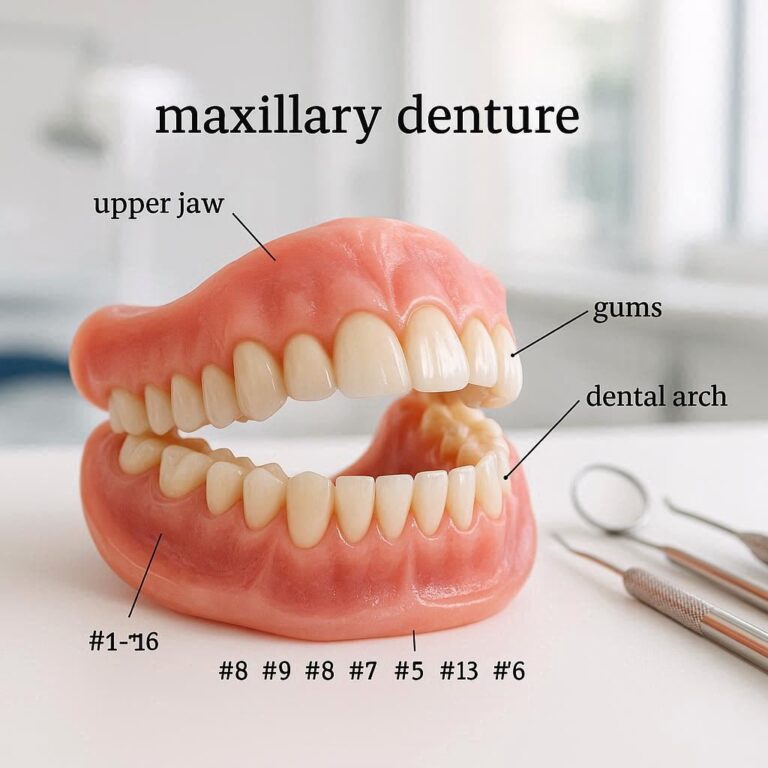
In simple terms, implant housing is the component that sits inside a removable denture or partial that allows it to snap onto the implant abutment.
Think of it this way: The implant is the anchor in the bone. The abutment is the connector that sticks out above the gumline. The housing is the “receiver” embedded in the denture that clicks onto the abutment.
If the abutment acts like a button, the housing acts like the buttonhole. It is the part that provides the retention, allowing the patient to snap their denture securely into place while still being able to remove it for cleaning.
Components vs. Procedures
One of the biggest challenges in dental coding is distinguishing between a physical component and the procedure to place that component.
You might pay a laboratory fee for a metal housing. You also spend chair time attaching that housing to the denture base. The CDT code you choose should reflect the service provided, not just the part used.
Important Note: Insurance companies rarely cover the “lab fee” for components like housings at 100%. Usually, the code you bill covers the professional service (your time and expertise), and the lab fee is considered part of your overhead.
The Core ADA Codes for Implant Services
To accurately bill for implant housing, we need to look at the broader family of implant codes. The American Dental Association (ADA) updates the CDT codes annually, but the structure for implants has remained relatively stable.
Here are the key players you need to know:
D6010: Surgical Placement of Implant Body
This is the code for placing the actual titanium screw (the implant fixture) into the bone. This is the foundation. You do not use this code for housing.
D6055: Connecting Bar
This is often confused with housing. A connecting bar is a rigid structure that connects two or more implants to support a removable prosthesis. If you are placing a bar, you bill this code. However, for single housings (like Locator attachments), this is usually not the correct choice.
D6056: Prefabricated Abutment
This code is used for the abutment—the part that screws into the implant. This includes stock abutments (like a Locator abutment or a standard titanium hex). If you are placing the abutment that the housing will eventually snap onto, you bill D6056 (or D6057 for custom).
D6058 – D6060: Abutment Supported Crowns/Bridges
These codes are for the final restoration when the crown is cemented or screwed onto the abutment. If the prosthesis is fixed (non-removable), you use these codes.
D6110 – D6112: Implant Supported Overdentures
This is where the housing often lives. These codes are used for removable dentures that are supported by implants.
-
D6110: Implant supported overdenture, mandibular (lower jaw).
-
D6111: Implant supported overdenture, maxillary (upper jaw).
-
D6112: Implant supported overdenture, partial (for partially edentulous arches).
Pinpointing the Right ADA Code for Implant Housing
Now we arrive at the heart of the matter. If you are placing a removable overdenture (a denture that snaps on and off), how do you bill for the housing?
The answer depends entirely on whether the housing is part of the initial fabrication of the denture or if it is a repair later on.
Scenario 1: The “Housing” as Part of the Overdenture Fabrication
When you are fabricating a new overdenture, the housing is an integral part of that prosthesis.
In this case, you do not bill a separate code for the “housing insertion.” Instead, you bundle the work into the overdenture code (D6110, D6111, or D6112).
When you bill D6110 for a mandibular overdenture, the code’s description implies the inclusion of the attachments (housings) and the chair time necessary to pick them up intraorally. You are billing for the complete prosthesis.
Why this matters: If you try to bill D6110 for the denture and a separate code like D6056 (again) or a miscellaneous code for the housing, the insurance company will likely deny the claim as “duplicate” or “inclusive.” The fee for D6110 should be high enough to cover the complexity of adding the housings.
Scenario 2: The “Housing” as a Repair (Adding to an Existing Denture)
This is where it gets tricky. What if a patient has existing implants and an existing denture, but the denture does not currently have housings? Perhaps the old housings wore out, or the patient is converting a traditional denture to an implant-supported one.
In this case, you are not fabricating a new overdenture. You are repairing or retrofitting an existing prosthesis.
The most accurate code for this specific service—adding a new housing to an existing denture—is often D6999 (Unspecified restorative procedure) or D5850 (Tissue conditioning) if applicable, though D5850 is not technically for adding housings.
However, the standard accepted practice for attaching new housings to an existing denture (like picking up Locator housings intraorally) is to use:
-
D6094: Abutment supported crown – (titanium)
-
Or, more commonly for overdentures: D6058 (if it’s a single unit) but since it’s a denture, it doesn’t fit perfectly.
Given the limitations of the CDT codes, many offices use D6095 (Repair implant supported prosthesis) or D6999 with a detailed narrative.
Let’s look at the comparison:
| Scenario | Action | Recommended ADA Code | Reasoning |
|---|---|---|---|
| New Overdenture | Fabricating new denture with new housings. | D6110, D6111, D6112 | The housings are considered part of the prosthesis fabrication. No separate code needed. |
| Repair/Retrofit | Adding new housings to an existing denture (old denture conversion). | D6095 (Repair implant supported prosthesis) | This covers the chairside or laboratory repair of the prosthesis, including adding new retention elements. |
| Repair/Replace | Replacing a worn-out housing matrix in the denture. | D6095 or D6999 | If a matrix (nylon insert) is worn, some offices bill D6095; if the metal housing itself broke, D6999 with narrative is safest. |
| Replacing Abutment | Replacing the abutment (the part in the mouth). | D6056 | This is separate from the housing. If the abutment is stripped or broken, you bill this code. |
Important Note: When using an unspecified code like D6999, you must submit a detailed narrative. Simply writing “Implant housing” is not enough. You should write: “Repair of existing mandibular overdenture by intraoral pickup of two new Locator housings and attachment matrices to engage existing implants.” This justifies the fee and the use of the unspecified code.
The Role of the Locator System
To make this more concrete, let’s talk about the most common attachment system in the world today: the Locator.
The Locator system, manufactured by Zest Dental Solutions, is popular because it allows for a low-profile attachment. It consists of two parts:
-
The Abutment (D6056): This screws into the implant.
-
The Housing: This is embedded in the denture.
When you place a new overdenture, the housing is part of the D6110 code. But what about the replacement of the nylon inserts inside the housing (often called the “male” component)?
Worn Out Inserts: Not a New Housing
If a patient comes in because the denture is loose, often the issue is not the metal housing, but the small nylon replacement insert that sits inside it.
These inserts wear out every 6 to 24 months depending on the patient’s habits.
-
Is this a D6095 (repair)? Possibly. However, many offices consider this a “minor adjustment” or “maintenance.”
-
Is there a specific code? Unfortunately, there is no specific ADA code just for changing the nylon inserts in a Locator housing.
-
Best Practice: Most offices bill a D6080 (Implant maintenance procedures) for this service. D6080 is designed for cleanings and minor adjustments of implants. Replacing the retention inserts falls under “adjustment” or “maintenance.”
Common Billing Mistakes and How to Avoid Them
Even experienced billers can trip up on implant housing codes. Here are the most common pitfalls we see in dental offices.
1. Double Billing for Components
As mentioned earlier, trying to bill D6056 (abutment) and D6110 (overdenture) on the same day for the same tooth site is a red flag for insurance auditors. The D6110 code assumes the abutment and housing are in place.
2. Using D6010 for Non-Surgical Services
D6010 is strictly for the surgical placement of the implant body. It should not be used for seating an abutment or picking up a housing. If you use it for restorative procedures, it will be denied for incorrect service type.
3. Not Verifying “Implant Coverage”
Many older PPO plans have a clause that excludes “implants and implant related services.” If a patient has this exclusion, none of these codes—including the housing repair—will be covered. It is vital to verify benefits before starting treatment. Even if the implant body was placed years ago, if the restorative (housing) work is done now, the exclusion still applies.
4. Confusing “Housing” with “Healing Cap”
A healing cap (or healing abutment) is placed during the surgical phase to shape the gum tissue.
-
Code: D6057 (Custom abutment) or sometimes included in the surgical fee.
A housing is placed months later in the restorative phase.
Mixing these up on a claim will result in a denial for “timing” or “frequency.”
Step-by-Step Guide: Billing for a Locator Overdenture Conversion
Let’s walk through a real-world example to see how these codes flow together.
Scenario: A patient has two implants in the lower jaw (placed 1 year ago). They have an old, traditional denture that is 10 years old. They want to convert that denture to snap onto the implants.
Step 1: Surgical/Re-opening
You need to expose the implants and place the Locator abutments.
-
Code: D6056 (Prefabricated abutment) x 2.
-
Note: Some insurances require a separate code for the “implant cap” or “attachment,” but D6056 covers the placement of the abutment.
Step 2: Laboratory/Chairside Conversion
You take the existing denture and add the metal housings to the intaglio (inner surface) of the denture. This is often done by picking them up intraorally with acrylic.
-
Code: D6095 (Repair implant supported prosthesis) or D6112 if you consider this a “new” partial overdenture.
-
Best Practice: If you are only adding housings and not rebuilding the entire denture base, D6095 is the most appropriate.
Step 3: Maintenance
Six months later, the patient returns because the denture is slightly loose. The nylon inserts are worn.
-
Code: D6080 (Implant maintenance procedures).
Insurance Reimbursement Realities
It is important to be honest about what happens when you submit these claims. The ADA code for implant housing—whether bundled into D6110 or billed as a repair—is often subject to strict limitations.
Frequency Limitations
Most insurance plans allow an overdenture (D6110) to be billed once every 5 to 10 years.
Repairs (D6095) are usually limited to once per year per prosthesis.
Maintenance (D6080) is often limited to once or twice per year, similar to a prophy.
The “Missing Tooth” Clause
If the patient was missing teeth before the insurance plan started (a pre-existing condition), the plan may deny coverage for the implants and the housing because it is considered “replacement of missing teeth” that were missing prior to coverage.
Patient Responsibility
Because of these complexities, it is essential to present a clear treatment plan to the patient before starting. Explain that while you will submit the claim using the correct ADA code for implant housing, the insurance company may categorize it as a major service (often covered at 50%) or may deny it entirely, leaving the patient responsible for the fee.
Pro Tip: When presenting the treatment plan, avoid using the term “housing” with the patient, as it might confuse them. Use terms like “the attachment inside the denture” or “the snap-on mechanism.” For the insurance portion, ensure your financial coordinator has a list of the exact CDT codes (D6110, D6095, etc.) to verify benefits accurately.
The Importance of Accurate Narrative Reporting
If there is one takeaway from this guide, it is this: When in doubt, write a narrative.
CDT codes are a shorthand. They don’t always capture the nuance of a complex case. If you are billing for a service that is uncommon—such as replacing a broken housing in a maxillary overdenture that is 3 years old—you need to tell the story.
A strong narrative includes:
-
The Diagnosis: Why is this needed? (e.g., “Worn retention matrix causing instability.”)
-
The Procedure: What did you do? (e.g., “Removed existing denture, cleaned existing Locator abutments, placed new nylon retention inserts, verified passive fit and retention.”)
-
The Necessity: Why is this not a simple adjustment? (e.g., “The existing housing matrices were fractured and non-retentive requiring complete replacement to prevent tissue trauma.”)
This narrative, attached to a code like D6999 or D6095, significantly increases the chances of reimbursement rather than a flat denial.
Future Trends in Implant Coding
The CDT codes are reviewed annually by the ADA. While there hasn’t been a specific code created for “implant housing matrix replacement” yet, there is a growing push for more granularity in implant restorative codes.
Currently, the codes favor the “surgical” side (D6010) and the “fixed” side (crowns). As overdentures become more common with the aging population, we may see a new code specifically addressing the maintenance and replacement of attachment housings.
For now, the industry standard remains the combination of D6110/D6111/D6112 for initial placement and D6095 for subsequent repairs.
Additional Resources for Dental Professionals
To stay current with coding changes, it is essential to rely on authoritative sources rather than internet forums.
-
CDT Manual: The ADA publishes the Current Dental Terminology (CDT) book annually. This is the definitive guide. If you are billing for implant housing, you should have a copy of the current CDT manual on your desk.
-
Coding Institute (TCI): They offer specialty coding guides for dentistry that provide scenario-based examples.
-
Zest Dental Solutions: Manufacturers of attachment systems often provide coding guides and support for their specific products. Their resources for Locator housings are particularly helpful.
Link to Resource: For detailed coding guides specific to attachment systems, visit the ADA Center for Professional Success (Link to ADA CDT Resources).
Conclusion
Navigating the ADA code for implant housing doesn’t have to be a guessing game. By understanding that the code depends on whether you are fabricating a new overdenture (D6110 series) or repairing an existing prosthesis (D6095), you can submit claims with confidence. Remember that the “housing” is a component of the larger restorative service, and accurate reimbursement relies on proper coding, detailed narratives, and clear communication with both the insurance carrier and the patient.
Frequently Asked Questions (FAQ)
Q1: Can I bill D6056 for the abutment and a separate code for the housing on the same day?
A: Generally, no. If you are placing a new overdenture (D6110), the housing is considered included. If you are repairing an old denture, you may bill D6095 (repair) for the housing pickup, but D6056 is specifically for the abutment (the part in the mouth), not the housing (the part in the denture).
Q2: What is the difference between D6095 and D6110?
A: D6110 is used for the initial fabrication of a new implant-supported overdenture. D6095 is used for the repair of an existing implant-supported prosthesis, such as adding new housings, repairing a crack, or replacing broken retention elements.
Q3: How do I bill for replacing the nylon inserts (male caps) in a Locator housing?
A: There is no specific CDT code for this. The most common and accepted code is D6080 (Implant maintenance procedures). This covers the chairtime and supplies for maintaining the implant attachment system.
Q4: Does medical insurance ever cover implant housing?
A: Rarely. Dental implant restorations are almost exclusively covered under dental insurance, if at all. Medical insurance typically only covers implants if they are due to an accident (trauma) or pathology (cancer resection). The housing (overdenture component) would still generally fall under dental benefits.
Q5: My patient’s insurance denied D6095 saying it was not a covered benefit. What should I do?
A: First, check if the patient has an “implant exclusion” on their policy. If they do, no implant code will be covered. If they do not, file an appeal with a detailed narrative and intraoral photos showing the worn or broken housing and the necessity of the repair to maintain oral health and function.
Disclaimer: This article is intended for educational and informational purposes only. Dental coding and insurance reimbursement are complex and subject to change. Always refer to the most current CDT manual and verify coverage with individual insurance plans before treatment.