The Comprehensive Guide to the ADA Code for Maryland Bridge
If you have ever sat in a dental chair discussing options for replacing a missing tooth, you have likely heard the term “Maryland Bridge.” It sounds like a historic landmark, but in the world of restorative dentistry, it is a clever, conservative solution for filling a gap in your smile.
However, behind every dental procedure lies a complex language of codes. For dental professionals, administrators, and even curious patients, understanding the specific ADA code for Maryland Bridge is essential. It ensures accurate billing, smooth insurance processing, and clarity in treatment planning.
This guide is designed to be your go-to resource. We will break down exactly what this code entails, when it applies, how it differs from other restorative options, and the clinical nuances that determine whether a case qualifies for this specific classification.
Whether you are a dentist looking to refine your coding practices, a dental biller trying to navigate a denied claim, or a patient wanting to understand your treatment plan, this article will provide the clarity you need.
What is a Maryland Bridge?
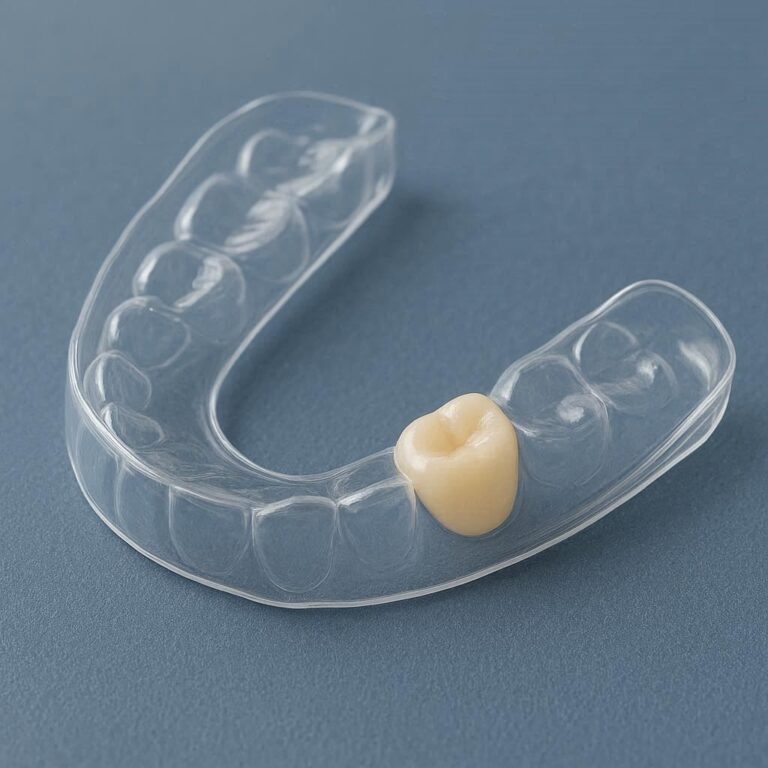
Before we dive into the numerical code, it is crucial to understand the restoration itself. The Maryland bridge—officially known in the industry as a resin-bonded fixed partial denture (RBFPD)—is a dental prosthesis used to replace a missing tooth.
Unlike a traditional fixed bridge, which requires the dentist to aggressively shave down the adjacent teeth (abutments) to accommodate crowns, the Maryland bridge takes a more conservative approach. It uses a framework of metal or zirconia with “wings” that are bonded to the back (lingual) surface of the neighboring teeth using high-strength resin cement.
This design was pioneered at the University of Maryland in the 1980s, hence the colloquial name. Its primary advantage is the preservation of healthy tooth structure, making it a popular choice for replacing missing incisors or premolars where the bite forces are manageable.
The Anatomy of a Maryland Bridge
To understand the coding, it helps to know what the prosthesis consists of:
-
The Pontic: The artificial tooth that fills the gap where the natural tooth is missing.
-
The Framework: Usually made from non-precious metal (nickel-chromium) or high-strength ceramics (zirconia).
-
The Wings (Retainers): Extensions from the pontic that are bonded to the abutment teeth. These are the defining feature of the Maryland bridge.
The Official ADA Code: D6545
In the Current Dental Terminology (CDT) code set, maintained by the American Dental Association (ADA), there is a specific code designated for this procedure.
The ADA code for Maryland Bridge is D6545.
The full nomenclature for this code is:
D6545 – Retainer – cast metal, for resin bonded fixed prosthesis
It is crucial to understand that this code refers specifically to the retainer (the wing) portion of the bridge, but in clinical practice, it is used to denote the entire unit when billing for a resin-bonded fixed partial denture (the Maryland bridge).
Breaking Down the Code
When you see D6545 on a claim form, it indicates that the dentist is providing a retainer made of cast metal designed to be bonded to the adjacent tooth with resin. This is distinct from full-coverage retainers (crowns) used in traditional bridges.
When to Use D6545 (Indications)
Not every missing tooth qualifies for a Maryland bridge, and therefore, not every claim using D6545 will be accepted by insurance. The code is intended for specific clinical scenarios.
Ideal Situations for D6545
-
Single Tooth Replacement: Typically used to replace one missing tooth (a single pontic). It is rarely used for multiple missing teeth in a row due to stress on the abutment teeth.
-
Anterior Teeth: The front teeth (incisors and canines) are the best candidates. These teeth experience less occlusal (chewing) force than the posterior molars.
-
Healthy Abutment Teeth: The teeth adjacent to the gap must be free of large restorations or active decay. Because the wings are bonded to enamel, the abutment teeth must have a sufficient surface area of enamel for a strong bond.
-
Intact Occlusion: The patient must have a stable bite where the opposing teeth do not exert excessive force on the pontic that could dislodge the bridge.
Contraindications (When to Avoid D6545)
-
Heavy Bruxism: Patients who grind or clench their teeth heavily are poor candidates. The intense forces can break the resin bond or fracture the metal framework.
-
Short Abutment Teeth: If the adjacent teeth are very short, there is insufficient surface area for the wings to create a durable bond.
-
Posterior Teeth: While technically possible, replacing molars with a Maryland bridge carries a higher risk of failure due to the heavy chewing load. Most dentists and insurance carriers prefer traditional bridges or implants for posterior teeth.
Important Note for Clinicians: When submitting a claim for D6545, it is highly advisable to include a narrative or radiographs demonstrating that the abutment teeth are free of caries and have adequate enamel for bonding. Insurance carriers frequently deny claims for Maryland bridges if they suspect the abutments require full crowns.
Billing and Coding Nuances
For dental billers and office managers, understanding the administrative side of D6545 is where the real value lies. Missteps here can lead to delays in payment or outright denials.
The “Per Retainer” Concept
One of the most confusing aspects of D6545 is that the code is defined as Retainer. In a standard two-retainer Maryland bridge (one wing on the mesial tooth and one wing on the distal tooth), the code should be reported with a quantity of two (2).
However, reimbursement structures vary by insurance carrier. Some plans view D6545 as a “per tooth” code for the retainer, while others bundle it as part of the total prosthesis.
Comparison: D6545 vs. D6750 (Traditional Crown)
To clarify why proper coding matters, here is a comparison between the Maryland bridge retainer and a traditional crown retainer.
| Feature | D6545 (Maryland Bridge Wing) | D6750 (Crown for Traditional Bridge) |
|---|---|---|
| Tooth Preparation | Minimal; confined to lingual surface | Extensive; 360-degree reduction of tooth |
| Material | Cast metal (usually) | Porcelain fused to metal or full ceramic |
| Coverage | Partial coverage (wing) | Full coverage (crown) |
| Fee Structure | Typically lower fee per retainer | Higher fee per crown |
| Longevity | Dependent on bond strength; may debond | Highly durable; cemented permanently |
Combining Codes
When billing for a Maryland bridge, the claim usually includes:
-
D6545 (x2 for the two retainers, depending on carrier rules).
-
D6210 or D6240 (Pontic codes). The pontic (the false tooth) is billed separately.
-
D6210: Pontic – cast metal (high noble metal)
-
D6240: Pontic – porcelain fused to metal
-
Example Claim Scenario
Patient X is missing tooth #7 (maxillary lateral incisor). Abutments are #6 and #8. The lab fabricates a porcelain fused to metal Maryland bridge.
Claim Submission:
-
D6240 (Pontic – PFM) – Tooth #7 (1 unit)
-
D6545 (Retainer – cast metal) – Tooth #6 (1 unit)
-
D6545 (Retainer – cast metal) – Tooth #8 (1 unit)
Clinical Considerations for Code Accuracy
As a writer focused on realism, it is vital to address the “gray areas” of coding. The ADA codes are updated every two years, and there is often confusion regarding whether a Maryland bridge should be coded as a bridge or as a type of “adhesive restoration.”
The Evolution of Adhesive Dentistry
Older versions of the CDT manual did not have a specific code for resin-bonded retainers. Historically, some offices would code a Maryland bridge using D9999 (Unspecified procedure), which is a red flag for insurance carriers and usually results in minimal reimbursement.
The introduction of D6545 provided clarity, but it also set specific parameters. If a dentist uses a fiber-reinforced composite resin bridge (a chairside, direct restoration), that would not fall under D6545. That would typically be coded under resin-based composite codes (D2000 series). D6545 is strictly for laboratory-fabricated, cast metal retainers.
Material Matters: Metal vs. Zirconia
While D6545 specifies cast metal, modern dentistry has seen a rise in zirconia Maryland bridges. Zirconia offers superior aesthetics because it is white and blends with the tooth, whereas metal wings can sometimes show through the enamel or cause a grayish hue.
However, the coding for zirconia Maryland bridges remains a point of debate. Because D6545 explicitly states “cast metal,” some billing experts argue that using a zirconia framework falls outside this code. In practice, many carriers still accept D6545 for zirconia bridges, but dentists should document the material clearly in the narrative to avoid denials.
Insurance Reimbursement Realities
Let’s talk money. Dental insurance is not medical insurance; it is a benefit plan designed to offset costs, not cover them entirely.
Frequency Limitations
Most dental insurance plans have a “once every 5 to 10 years” limitation for bridgework. If a patient had a traditional bridge replaced recently, the insurance will likely deny a new Maryland bridge on the same teeth, citing frequency limitations.
Percentage of Coverage
-
Traditional Bridge (D6750): Typically covered at 50% of the contracted fee.
-
Maryland Bridge (D6545): Coverage varies wildly.
-
Some plans classify it as a “bridge” and cover it at 50%.
-
Other plans classify it as a “minor restorative” procedure (like a filling) because of the minimal tooth reduction, covering it at 80%.
-
High-end PPO plans may cover it at 100% if it is deemed a “conservative alternative to full crowns.”
-
Predetermination is Key
Given the variability in coverage for D6545, submitting a predetermination of benefits is not just a suggestion; it is a necessity. This allows the office and the patient to know exactly what the financial responsibility will be before the lab fabricates the case.
Patient Perspective: Understanding Your Treatment Plan
If you are a patient reading this, you might be looking at a treatment plan that lists D6545 and wondering what it means for your wallet and your oral health.
Questions to Ask Your Dentist
When presented with a Maryland bridge, you should feel empowered to ask specific questions:
-
“Is this D6545 code covering the wings, and are we billing for two?” This helps you understand why the bridge might seem more expensive than expected.
-
“What is the warranty on this restoration?” Some offices offer a 1- to 5-year warranty on the bond. If it debonds (the wing detaches), the rebonding fee is often less than the full fabrication fee.
-
“What happens if it fails?” It is wise to have a backup plan. If the Maryland bridge debonds repeatedly, the next step might be a traditional bridge or an implant.
Cost Ranges
While we cannot provide specific pricing due to geographic variability, the fees associated with D6545 generally follow this structure:
-
Lab Fees: The cost of fabricating a cast metal retainer is lower than a full crown, making the overall bridge less expensive than a traditional three-unit bridge.
-
Practice Fees: The time saved on tooth preparation (since no crowns are made) typically translates to a lower fee for the patient compared to conventional bridgework.
Compliance and Documentation
For the dental practice, proper documentation is the shield against audits and liability. When coding for D6545, the patient chart must contain specific elements.
Required Documentation Checklist
-
Radiographs: Bitewing or periapical X-rays showing the abutment teeth are free of recurrent decay and have healthy bone support.
-
Photographs: Intraoral photos showing the intact enamel on the lingual surfaces of the abutment teeth. This proves that the conservative approach was viable.
-
Periodontal Charting: Probing depths around abutment teeth must be within normal limits. A Maryland bridge placed on periodontally compromised teeth has a high failure rate.
-
Lab Prescription: A copy of the lab slip specifying the “Maryland bridge” or “resin-bonded fixed partial denture” design.
Common Denial Reasons
If a claim for D6545 is denied, it is usually for one of three reasons:
-
Lack of Medical Necessity: The insurance carrier argues that a traditional bridge or implant was the standard of care.
-
Code Bundling: The carrier states that the pontic code includes the retainers (though this is rare for D6545, it happens with outdated plan designs).
-
Alternative Benefit: The plan downgrades the benefit to the least expensive alternative. For example, if a removable partial denture is cheaper, the plan will only pay what they would have paid for that, leaving the patient responsible for the difference.
Conclusion
Understanding the ADA code for Maryland Bridge (D6545) is about more than just submitting a number to an insurance company. It represents a philosophy of conservative dentistry—preserving healthy tooth structure while restoring function and aesthetics.
For clinicians, accurate use of D6545 ensures that you are fairly reimbursed for the skill and precision required to bond these delicate prostheses. For patients, seeing this code on a treatment plan demystifies the process, allowing you to engage in informed financial and clinical decisions. By respecting the nuances of the code—from the clinical indications to the specific billing requirements—we ensure that this valuable restorative option remains accessible and successful for years to come.
Frequently Asked Questions (FAQ)
1. Is the Maryland Bridge code (D6545) the same as a traditional bridge code?
No. A traditional bridge uses codes D6750 (crown) or D6740 (porcelain/ceramic crown) for the retainers. D6545 is specifically for the cast metal retainer (wing) used in resin-bonded bridges.
2. Does insurance always cover D6545?
Coverage varies significantly. Many plans cover it, but often as a less expensive alternative to a traditional bridge. Always check with your specific carrier or submit a predetermination before starting treatment.
3. Can D6545 be used for a zirconia Maryland bridge?
Officially, D6545 specifies “cast metal.” However, many practices and insurance carriers accept it for zirconia frameworks as there is no specific code for zirconia retainers. It is best to include a narrative explaining the material choice to avoid claim issues.
4. How long does a Maryland bridge last?
With proper oral hygiene and regular dental check-ups, a Maryland bridge can last 5 to 15 years or longer. The most common complication is debonding (the wing detaches), which can often be re-cemented.
5. Why does my treatment plan show D6545 twice?
Because the code is defined as a “retainer.” If the bridge has two wings (one on each adjacent tooth), most billing protocols require two units of D6545 to accurately reflect the service provided.
Additional Resources
For further reading and to verify the most current CDT codes, please refer to the official source:
-
American Dental Association (ADA) – CDT Code: https://www.ada.org/en/publications/cdt
-
National Institute of Dental and Craniofacial Research (NIDCR): For research on restorative materials and techniques. https://www.nidcr.nih.gov/
Disclaimer: This article is intended for informational and educational purposes only. Dental coding and insurance policies are subject to change. Always consult with the current CDT manual and individual payer contracts to verify coverage and coding requirements.