ADA Code for Palliative Treatment: A Practical Guide for Dental Professionals
- On
- InDENTAL CODE
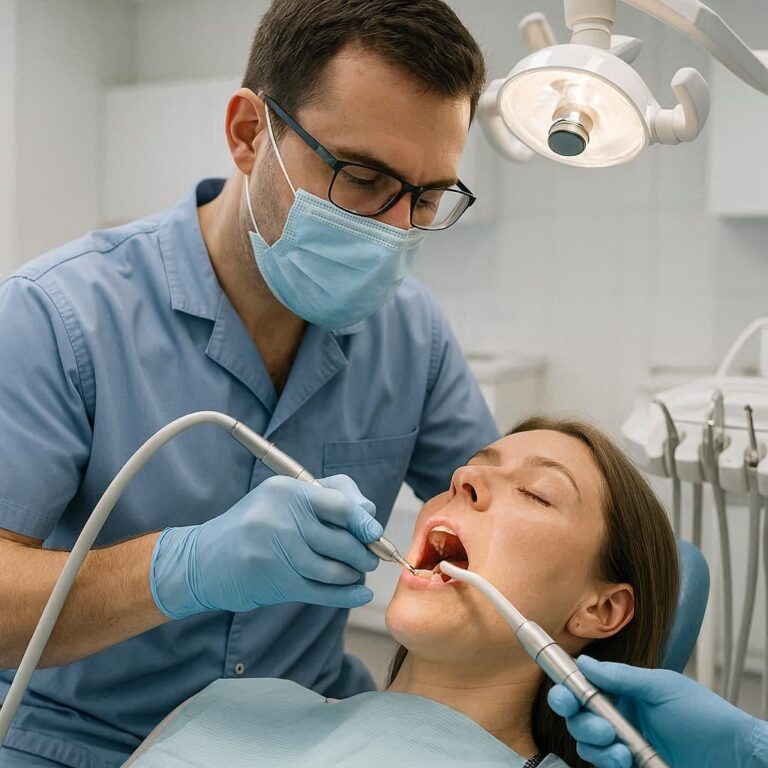
In the fast-paced world of a dental practice, you often encounter patients who aren’t there for a routine cleaning or a definitive crown preparation. They arrive in discomfort, sometimes in significant pain, seeking immediate relief. Their primary goal isn’t to complete a long-term treatment plan that day; it is simply to stop the pain.
As dental professionals, we have a specific tool in our coding arsenal for these exact situations. It exists to help us provide immediate care while clearly communicating to insurance payers that the treatment was, by design, limited in scope. This is where the ADA code for palliative treatment becomes essential.
Understanding this code is about more than just picking a code from a list. It is about ensuring your practice is reimbursed fairly for the care you provide, maintaining accurate patient records, and setting clear expectations with your patients. When used correctly, it protects the patient, the provider, and the integrity of the patient’s long-term treatment plan.
This guide will walk you through everything you need to know about this specific code. We will explore its definition, when to use it, when to avoid it, how to document it properly, and how it fits into the larger picture of comprehensive dental care. Our goal is to provide a reliable, realistic resource that you can refer back to whenever a patient presents in discomfort.
Table of Contents
ToggleWhat Exactly is the ADA Code D9110?
Let’s start with the foundation. In the American Dental Association’s (ADA) Current Dental Terminology (CDT) code set, the specific code for palliative treatment is D9110.
The formal descriptor for this code is: Palliative (emergency) treatment of dental pain minor procedures.
To understand this code fully, we need to break down its key components: “palliative,” “emergency,” and “minor procedures.”
Defining “Palliative” in a Dental Context
The word “palliative” comes from the Latin pallium, meaning “cloak.” In a medical and dental sense, it means to cloak or alleviate symptoms without addressing the underlying cause. It is care focused on providing relief from the symptoms—specifically pain and suffering—rather than curative or definitive treatment.
Think of it as putting a warm blanket over a patient’s discomfort. You are not performing a root canal to remove the infected pulp (the cause), nor are you extracting the tooth (the cause). You are simply alleviating the immediate pain so the patient can function and return for the definitive treatment later.
The “Emergency” Aspect
The inclusion of “emergency” in the descriptor can sometimes cause confusion. Does every palliative procedure need to be a true after-hours, 2 AM emergency? Not necessarily. In coding terms, “emergency” refers to the nature of the visit—an unscheduled appointment for an acute problem. A patient walking in at 10 AM on a Tuesday with severe pain that requires immediate intervention is, from a coding perspective, an emergency visit.
The code distinguishes this from a scheduled, comprehensive examination where palliative care might be a small part of a larger procedure.
What Constitutes “Minor Procedures”?
This is where the nuance lies. The code specifies “minor procedures.” This typically includes:
-
Selective grinding to relieve pressure from a high restoration or a tooth in traumatic occlusion.
-
Placement of a sedative dressing (like eugenol/zinc oxide) to soothe an irritated or inflamed pulp.
-
Irrigation and debridement of a localized area to remove irritants, such as food impaction around a tooth or a pericoronal flap.
-
Prescribing medication to manage pain or infection as a standalone service.
It is crucial to understand that D9110 is not for definitive procedures. You cannot perform a pulpectomy, an extraction, or a definitive restoration and bill it as palliative care. That would be inaccurate and could be considered fraudulent billing.
When to Use the Palliative Treatment Code
Proper utilization of D9110 hinges on a clear and simple principle: you are providing a service that alleviates pain but does not complete the definitive treatment. The service is a bridge—a temporary measure to get the patient out of pain until a more comprehensive procedure can be scheduled.
Here are common clinical scenarios where using the ADA code for palliative treatment is appropriate.
Scenario 1: The Symptomatic Irreversible Pulpitis
A patient presents with a tooth that is sensitive to hot and cold, with lingering pain, and spontaneous throbbing. You take a radiograph and confirm deep caries approaching the pulp. The patient is in significant discomfort. However, they are a new patient with no prior history, or they are scheduled to leave town for two weeks.
You have a conversation. You explain that the tooth needs a root canal or extraction, but today, your goal is to get them out of pain. You open the tooth, place a sedative dressing (e.g., a cotton pellet with eugenol and a temporary filling), and schedule them for definitive endodontic therapy. This is a perfect use of D9110.
Scenario 2: Pericoronitis
A patient comes in with pain and swelling around a partially erupted mandibular third molar. The tissue is inflamed, and there is food and debris trapped under the operculum. You irrigate the area with a chlorhexidine or saline solution, provide instructions for warm salt water rinses, and possibly prescribe an antibiotic and an analgesic. You schedule them for a follow-up to discuss extraction of the wisdom tooth.
No surgical procedure was performed. You provided irrigation, debridement, and medication. This is an ideal case for D9110.
Scenario 3: Post-Operative Adjustment
A patient had a crown seated yesterday. Today, they call and say the bite feels “off” and it’s causing pain when they chew. They come in, you identify a high spot on the new crown, and you perform selective occlusal adjustment with a bur. This is a minor procedure to relieve pain. Since it is a separate visit from the crown seating, you can bill D9110.
Scenario 4: Acute Apical Abscess (without surgical intervention)
A patient presents with a draining fistula and a tooth that is tender to percussion. You take a radiograph, diagnose a necrotic tooth, and prescribe an antibiotic to manage the acute infection. You schedule them for a root canal or extraction at a later date. If no other treatment is rendered beyond the examination, diagnosis, and prescription, D9110 is the appropriate code.
When NOT to Use D9110
Just as important as knowing when to use the code is knowing when to avoid it. Misusing this code can lead to denied claims, audits, and a loss of revenue for your practice.
Avoid Using D9110 for Definitive Care
If you complete the treatment, you must use the definitive code. For example:
-
If you perform a complete pulpectomy (the first step of a root canal), you should use the appropriate endodontic code (D3310, D3320, or D3330) even if you don’t finish the obturation. Once you instrument the canals, you have started definitive endodontic therapy.
-
If you extract the tooth, you use the extraction code (D7140, D7210).
-
If you place a permanent restoration, you use the restorative code (D2390, etc.).
Avoid Using D9110 for a Comprehensive Oral Evaluation
If a patient comes in for their scheduled comprehensive exam and it is discovered they have a small area of sensitivity that you adjust or treat with a sedative dressing during the same visit, you generally cannot bill both a comprehensive exam (D0150) and D9110.
Most insurance plans consider the palliative treatment as part of the comprehensive exam in this scenario. The “emergency” nature of D9110 is intended for unscheduled, problem-focused visits. If the patient was already in the chair for a scheduled exam, the palliative care is typically considered bundled.
Avoid Using D9110 as a “Workaround”
Do not use D9110 to bill for services that are part of a larger, ongoing treatment plan. For example, if a patient is in the middle of a multi-visit root canal and returns for the second appointment with pain, you cannot bill D9110 for the steps you take to manage that pain within the context of the ongoing endodontic treatment.
The Critical Role of Documentation
In the world of medical and dental billing, if it wasn’t documented, it didn’t happen. This is especially true for a code like D9110, which can sometimes be viewed by auditors as a “catch-all” for emergency visits. Your documentation must be thorough and defensible.
Your clinical notes for a palliative treatment visit should tell a clear story. They should answer three key questions:
-
Why was the patient there? (Chief complaint)
-
What did you find? (Objective findings, diagnosis)
-
What did you do? (The palliative procedure and the plan)
Here is a checklist of elements to include in your notes:
-
Chief Complaint: Direct quote from the patient. “Patient states, ‘I can’t sleep, my tooth is throbbing.’”
-
History of Present Illness (HPI): Onset, location, duration, characteristics, aggravating/alleviating factors. “Pain began two days ago, located in the LR, sharp and throbbing, worsened by chewing and cold, slightly relieved by ibuprofen.”
-
Objective Findings: Vital signs if relevant, extraoral and intraoral exam findings, periodontal probing, percussion test, palpation, mobility, radiograph findings.
-
Diagnosis: A clear, specific diagnosis. “Irreversible pulpitis tooth #30.” or “Pericoronitis #17.”
-
Procedure Description: A detailed description of the palliative care provided. “Tooth #30 isolated, caries removed, access opening gained, pulp chamber debrided, cotton pellet with eugenol placed, and IRM temporary restoration placed.” or “Area distal to #17 irrigated with 0.12% chlorhexidine, debris removed, patient instructed on warm salt water rinses.”
-
Medications: Name, dosage, quantity, and instructions for any prescribed medications.
-
Informed Consent: Note that you discussed the palliative nature of the treatment, the need for definitive care, and the risks of delaying that care.
-
Treatment Plan: A clear statement of the planned definitive treatment and that it has been scheduled. “Patient scheduled for root canal therapy #30 on [date]. Risks of delaying definitive treatment discussed.”
-
Post-Operative Instructions: Instructions provided to the patient.
This level of detail protects you. If an auditor asks why you didn’t perform a definitive root canal, your notes will show the patient was informed and that the definitive treatment was scheduled.
D9110 vs. Other Common Emergency Codes
One of the most common sources of confusion in dental coding is distinguishing D9110 from other codes used in emergency or problem-focused scenarios. Let’s clarify the differences.
| Code | Descriptor | Key Differentiator | When to Use |
|---|---|---|---|
| D9110 | Palliative (emergency) treatment of dental pain minor procedures | A service that alleviates symptoms without providing definitive treatment. | Irrigation, sedative dressing, occlusal adjustment, medication prescription as a standalone service. |
| D0140 | Limited oral evaluation problem focused | An examination only. You look, you diagnose, you may prescribe, but you perform no treatment. | Patient comes in, you examine, take a radiograph, diagnose, prescribe antibiotics, and send them home. No treatment (like a dressing) is rendered. |
| D7140 | Extraction, erupted tooth | The complete removal of a tooth. | If you extract the tooth, this is the code, not D9110. |
| D3310 | Endodontic therapy, anterior tooth | The beginning of definitive root canal treatment. | If you access the tooth and begin cleaning and shaping the canals, you are performing endodontic therapy, not palliative care. |
A common point of discussion is the difference between D0140 and D9110. The key is treatment. If you only examine, diagnose, and prescribe, D0140 is correct. If you perform any minor procedure, like placing a sedative dressing, you move to D9110.
Insurance and Reimbursement Realities
Let’s be honest about the financial side of using the ADA code for palliative treatment. While it is a legitimate and necessary code, it is not always a high-reimbursement code, and its coverage can vary significantly between insurance plans.
Typical Reimbursement
D9110 is generally considered a “minor” procedure. Reimbursement rates are often modest, typically falling in the range of $50 to $150, depending on your geographic location and the specific insurance carrier’s fee schedule. Some plans may pay at a percentage of your usual fee, while others have a fixed, low fee for emergency palliative care.
Frequency Limitations
Many insurance plans impose limitations on how often D9110 can be billed. It is common to see a plan that covers D9110 only once per tooth per six-month period or a certain number of times per year (e.g., two times per year). This is another reason why accurate documentation and a clear treatment plan are vital. If you bill it repeatedly for the same tooth without moving toward definitive care, you will likely face denials.
Coordination with Other Services
A frequent billing question is whether you can bill D9110 on the same day as a definitive procedure. Generally, you cannot. If a patient comes in for a scheduled root canal, you cannot bill D9110 for the emergency aspect and D3310 for the root canal on the same date of service. The root canal code includes the management of the patient’s pain as part of the global procedure.
However, there are exceptions. If a patient presents as an emergency in the morning, you perform D9110, and they leave, but then return in the afternoon for a scheduled extraction, you could potentially bill both with the appropriate modifiers (like a 76 or 77 modifier for a repeat procedure by the same provider or an 80 modifier for an assistant surgeon, though these are rare). Most often, these are separate visits.
A Step-by-Step Guide to the Palliative Treatment Visit
To help you integrate this into your practice flow, let’s walk through a typical palliative treatment visit from start to finish.
Step 1: The Patient Arrives in Distress
Your front desk team plays a crucial role. They should recognize that this is an emergency/unscheduled visit. They should inform the patient that today’s visit is focused on pain relief and that a comprehensive examination or definitive treatment may require a separate appointment. Setting this expectation upfront is key to patient satisfaction.
Step 2: The Clinical Evaluation
The dentist performs a focused evaluation. This is not a comprehensive exam. The goal is to diagnose the source of the pain. This will typically involve:
-
A targeted medical history update.
-
A chief complaint-focused clinical exam.
-
Percussion, palpation, and thermal testing as needed.
-
A periapical radiograph of the area in question.
Step 3: Diagnosis and Discussion
Once the diagnosis is made, a clear conversation must take place. The dentist explains the diagnosis, the nature of palliative care, and the recommended definitive treatment.
-
“Mrs. Jones, the tooth is infected, and the nerve is dying. That’s what’s causing the pain. Today, I’m going to place a medicine inside the tooth to calm the nerve and relieve the pain. This is a temporary fix. To fix the tooth permanently, you will need a root canal, which we will schedule for next week.”
Step 4: Obtain Informed Consent
Before performing the procedure, ensure the patient understands that this is a temporary measure. Document this discussion. The patient should acknowledge that delaying definitive treatment carries risks, such as the pain returning or the infection worsening.
Step 5: Perform the Palliative Procedure
Perform the minor procedure. This could be a sedative dressing, irrigation, occlusal adjustment, or a combination.
Step 6: Provide Post-Operative Instructions and Medications
Give the patient clear instructions. If you prescribed an antibiotic or analgesic, explain the purpose of each. Provide a written instruction sheet if possible. For a sedative dressing, warn the patient that the tooth may still be sensitive for a day or two and that the temporary filling is not permanent.
Step 7: Schedule Definitive Care
Before the patient leaves, schedule the appointment for the definitive treatment. If the patient is hesitant, explain why timely follow-up is important. This step is critical for continuity of care and for demonstrating to any potential auditor that you were not simply “kicking the can down the road.”
Step 8: Code and Bill
Code the visit as D9110 for the palliative procedure. If a limited oral evaluation was the only service without a procedure, you would use D0140. Remember, you cannot bill both D0140 and D9110 for the same visit. The D9110 code typically includes the evaluation component when a procedure is performed.
The Patient Experience and Communication
How you communicate the nature of a palliative treatment visit can profoundly impact patient trust and satisfaction. Patients often feel vulnerable when they are in pain. They may not fully grasp the difference between a temporary fix and a permanent solution. Your job is to be their guide.
Setting Expectations
From the moment the patient arrives, the message should be consistent. The front desk can say, “Dr. Smith will see you today to help you get out of pain. We’ll focus on that, and then we can schedule the definitive treatment to fix the problem for good.”
During the clinical discussion, use analogies. A helpful one is: “Think of this like a flat tire. Today, I’m putting on the spare tire so you can drive home safely. You’ll need to come back for the new tire to make it permanent.”
Managing Patient Concerns
Some patients may ask, “Why can’t you just do the root canal today?” Be honest about the reasons, which are often logistical:
-
Time: Definitive procedures require dedicated, often longer, appointment times that were not allocated.
-
Informed Decision: It’s important for patients to be out of pain and able to think clearly when making significant decisions about their dental care and finances.
-
Quality of Care: Rushing a complex procedure in an emergency setting can compromise the long-term outcome.
The Value of the Service
Patients sometimes question the bill for a palliative visit, especially if they are going to return for a more expensive procedure. They may feel it was “just a temporary filling.” It’s important to articulate the value. You provided:
-
Immediate relief from severe pain.
-
A diagnosis that gives them clarity.
-
A pathway to a permanent solution.
-
A professional assessment that prevented a potentially worsening condition.
A simple phrase can help: “The goal of today was to get you out of pain and stabilize the situation so we can do the definitive work under ideal, comfortable conditions.”
Compliance and Risk Management
In today’s regulatory environment, coding compliance is non-negotiable. The palliative treatment code is a common target for audits because it is frequently misused. Here is how to ensure your practice remains compliant.
Understanding Fraud and Abuse
Billing for a service that was not performed, or upcoding (billing a more expensive code than the service rendered), is fraud. Using D9110 when you actually performed a definitive procedure (like a pulpectomy) is upcoding in reverse? Actually, it’s downcoding, but it’s still inaccurate. If you performed a pulpectomy, you should bill for a pulpectomy (D3310, etc.). If you bill D9110 instead, you are misrepresenting the service. While this may seem harmless to the insurer (as it is a cheaper code), it is still inaccurate and can cause issues with patient records and treatment history.
Avoiding “Unbundling”
Unbundling is when you bill separately for services that are considered part of a comprehensive procedure code. As mentioned earlier, you cannot typically bill D9110 on the same day as a definitive procedure. The evaluation and management of the patient’s comfort are considered bundled into the definitive procedure code.
The Importance of a Signature
Ensure that the dentist who performed the service signs the clinical note. Many electronic health record systems have an audit trail, but it is a best practice to have a physical or digital signature affirming the accuracy of the record.
State and Federal Guidelines
Be aware of the guidelines from the Centers for Medicare and Medicaid Services (CMS) if you participate in any government programs. While dental services are often not covered for adults, the principles of documentation and medical necessity that CMS upholds are the gold standard for all payers. Your documentation must clearly establish the medical/dental necessity for the emergency palliative service.
Beyond the Code: The Philosophy of Palliative Care in Dentistry
While this article focuses heavily on the procedural and coding aspects, it’s worth reflecting on the deeper philosophy of palliative care. In dentistry, we are uniquely positioned to alleviate one of the most common and distressing forms of human suffering: dental pain.
The act of providing palliative care goes beyond a simple transaction. It is an expression of empathy and professionalism. When you take the time to see an emergency patient, to listen to their story of sleepless nights and frustration, and to provide relief, you build profound trust.
This trust is the foundation of a lasting patient-dentist relationship. A patient who is seen, heard, and helped in a moment of crisis is far more likely to accept the comprehensive treatment plan you later present. They have already experienced your skill, compassion, and commitment to their well-being.
The ADA code D9110, in this sense, is not just a billing tool. It is a framework for delivering compassionate, timely, and appropriate care. It allows us to formalize the act of providing relief in a way that is ethical, reimbursable, and well-documented.
A Comparative Overview of Emergency Visit Outcomes
To provide a clearer picture of how a palliative visit differs from other common emergency visit outcomes, the following table outlines the typical patient journey, coding, and long-term planning for various scenarios.
| Scenario | Typical Visit Focus | Primary Procedure | Primary ADA Code | Definitive Treatment Planned? | Key Documentation Points |
|---|---|---|---|---|---|
| Simple Relief & Referral | Diagnosis and pain management | Examination, radiographs, prescription | D0140 | Yes, referred to specialist or scheduled | Clear diagnosis, prescription details, referral note. |
| In-Office Palliation | Symptom relief with a temporary measure | Sedative dressing, occlusal adjustment, irrigation | D9110 | Yes, scheduled for definitive treatment | Detailed description of the minor procedure, materials used, and follow-up plan. |
| Definitive Treatment (Same Visit) | Complete resolution of the problem | Extraction, pulpectomy, definitive restoration | D7140, D3310, D2390 | Yes, treatment completed or advanced stage | Comprehensive note including consent for definitive procedure, treatment details. |
| No Treatment (Triage) | Assessment only, no active treatment | Examination only, advice given | D0140 | Patient advised, but not scheduled | Detailed note on patient’s decision to delay treatment, risks discussed. |
Common Questions from Dental Teams
Let’s address some frequently asked questions that arise in dental practices regarding the palliative code.
Can a dental hygienist perform a palliative procedure under the dentist’s supervision?
Yes, a hygienist can perform palliative procedures like irrigation or the placement of a desensitizing agent under the direct supervision of a dentist. However, the dentist must perform the examination, diagnosis, and treatment plan. The dentist is ultimately responsible for the service and the coding. The clinical note should reflect the supervising dentist’s involvement.
What if the patient’s insurance does not cover D9110?
This is a common reality. Many plans have limited or no coverage for palliative care. In these cases, you have two options:
-
Write-off the fee: This is often done for established, loyal patients as a gesture of goodwill.
-
Collect the full fee from the patient: Before providing the service, your front desk should verify benefits. If the service is not covered, they should inform the patient of the estimated cost and obtain payment at the time of service. This is the most financially sound approach.
Can I bill D9110 for a post-operative complication after a surgical procedure?
It depends. If the complication occurs within the typical post-operative period (e.g., 90 days) and is related to the original procedure, the management of that complication is generally considered part of the original surgical code. You cannot bill an additional code. However, if the complication is unrelated or occurs well after the global period has ended, and it requires a separate emergency visit and minor procedure, D9110 may be appropriate.
What is the difference between a sedative dressing and a temporary filling?
This is a nuance that is important for coding. A sedative dressing (often medicated with eugenol) is placed specifically to soothe an inflamed pulp and is palliative in nature. A temporary filling (often a non-medicated material like IRM or Cavit) placed as a temporary seal between appointments for a root canal is part of the definitive endodontic procedure. The intent matters. If the intent is solely to soothe and relieve pain without initiating definitive treatment, it is palliative.
Additional Resources for Dental Professionals
To stay current on coding best practices, it is important to consult authoritative resources. The coding landscape evolves, and the CDT manual is updated annually. Relying on memory or hearsay can lead to errors.
Here are some of the most reliable sources for accurate information:
-
The CDT Manual: Published annually by the American Dental Association. This is the definitive source for all ADA codes and their descriptors. Every dental practice should have the most current edition.
-
American Dental Association (ADA) Coding Resources: The ADA’s website offers seminars, webinars, and publications dedicated to coding. Their “Coding Advisor” series is particularly helpful.
-
State and Local Dental Societies: Many state dental associations offer coding and billing workshops. They can also provide guidance on specific payer issues in your region.
-
Dental Insurance Carriers: While you should always verify with the official CDT manual, your provider representatives can sometimes offer clarification on how their specific plans interpret and apply codes.
Additional Resource: Link
For the most current and official information on CDT codes, please refer to the American Dental Association’s official website: https://www.ada.org/en/publications/cdt
Conclusion
The ADA code for palliative treatment, D9110, is a small but mighty tool in the dental practice. It allows us to do what we are trained to do—alleviate suffering—while maintaining the integrity of our coding, documentation, and long-term treatment planning. When used correctly, it provides a clear pathway for patients from the distress of an emergency to the stability of definitive care.
This code is not about cutting corners or providing incomplete care. It is about providing the right care at the right time. It formalizes the compassionate act of providing relief, ensures that your practice is fairly reimbursed for your expertise and time, and establishes a documented, defensible record of your clinical judgment. By understanding its proper use, mastering the documentation, and communicating clearly with patients, you elevate the standard of care in your practice and build stronger, trust-based relationships with those you serve.
Frequently Asked Questions (FAQ)
1. What is the ADA code for palliative treatment?
The specific ADA CDT code for palliative treatment is D9110. Its full descriptor is “Palliative (emergency) treatment of dental pain minor procedures.”
2. Can I bill D9110 and a comprehensive exam on the same day?
Generally, no. If a patient arrives for a scheduled comprehensive exam and a minor palliative procedure is performed, most insurance plans consider the palliative treatment part of the comprehensive exam and will not reimburse both. D9110 is intended for unscheduled, problem-focused emergency visits.
3. Does insurance always cover D9110?
No. Coverage varies by plan. Many plans cover palliative treatment, but often with limitations on frequency (e.g., once per tooth per 6 months) and at a lower reimbursement rate. It is essential to verify benefits before providing the service.
4. What is the difference between D0140 (limited exam) and D9110 (palliative treatment)?
The key difference is treatment. D0140 is used when you perform an evaluation, take radiographs, and prescribe medication but do not perform any hands-on procedure. D9110 is used when you perform a minor procedure such as placing a sedative dressing, performing occlusal adjustment, or irrigating a pericoronal flap.
5. What kind of documentation do I need for a D9110 visit?
Your documentation must be thorough. It should include the patient’s chief complaint, objective clinical and radiographic findings, a clear diagnosis, a detailed description of the palliative procedure performed, any medications prescribed, evidence of informed consent regarding the temporary nature of the care, and the scheduled definitive treatment plan.
6. Can I use D9110 for a pulpectomy or a root canal?
No. A pulpectomy or root canal is definitive endodontic therapy and should be coded with the appropriate endodontic code (D3310, D3320, or D3330). D9110 is strictly for minor, palliative procedures that do not initiate definitive treatment.
7. What if the patient never returns for the definitive treatment after I performed D9110?
This is a common occurrence. As long as you documented that you informed the patient of the need for definitive treatment and scheduled them for it, you have fulfilled your professional obligation. The patient’s decision to delay or forego treatment does not invalidate the palliative service you provided.
8. Is D9110 considered a “same-day” service?
Yes, it is a service that is typically performed and completed in a single, unscheduled emergency visit. It is not a multi-appointment procedure code.

dentalecostsmile
Newsletter Updates
Enter your email address below and subscribe to our newsletter