Decoding the ADA Code for RCT Through Crown
When a tooth that already has a crown begins to cause trouble, it presents a unique challenge. The crown, which was meant to be a permanent solution, now stands as a barrier between the dentist and the source of the pain: the tooth’s nerve.
You might hear your dentist mention a procedure called an “apicoectomy” or simply say, “We need to do a root canal through the crown.” While the procedure is common, the way it is documented and billed—specifically the ADA code for RCT through crown—can be a source of confusion.
If you have been handed a treatment plan with a string of codes and numbers, you are in the right place. This guide will walk you through everything you need to know, from the specific dental procedure codes used by endodontists to what you can expect during the appointment. We will break down the jargon, explain the differences between standard root canals and those performed on crowned teeth, and help you understand exactly what you are paying for.
Let’s take the mystery out of the process so you can make informed decisions about your dental health.
Understanding the Basics: What is an RCT Through an Existing Crown?
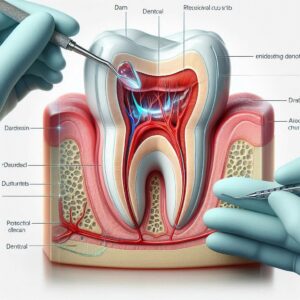
Before we dive into the codes, it is essential to understand what the procedure actually entails. RCT stands for Root Canal Therapy. In a typical scenario, a dentist drills through the top (occlusal surface) of a natural tooth to access the pulp chamber and canals.
However, when a tooth already has a crown, the dentist cannot simply drill through the natural enamel. Instead, they must drill directly through the existing dental crown—which is usually made of porcelain, ceramic, or metal—to reach the underlying tooth structure.
Why Would You Need This?
There are a few reasons why a tooth that already has a crown might require a root canal:
-
Decay: A cavity may have formed underneath the crown, reaching the nerve.
-
Deep Restoration: The original tooth preparation for the crown may have come too close to the nerve, causing delayed inflammation (pulpitis).
-
Fracture: The tooth root or the tooth structure beneath the crown may have cracked.
-
Recurrent Pain: The tooth was never asymptomatic; sometimes, a tooth that seemed fine when crowned later becomes sensitive.
The challenge here is that the crown must be drilled through. Afterwards, the hole is sealed with a filling material (like composite resin), but the crown itself remains. The goal is to save the existing restoration rather than removing the crown, performing the root canal, and making a new crown—which is often a more expensive and time-consuming alternative.
The Specific ADA Codes for Root Canal Therapy
The American Dental Association (ADA) maintains the Current Dental Terminology (CDT) code set. These are the universal codes used by dentists to bill insurance companies. When performing a root canal through an existing crown, the codes do not specifically say “through a crown” in their name; rather, the code used depends entirely on which tooth is being treated.
There is no specific “through crown modifier” in the standard code set for the root canal itself. The fact that it was done through a crown is usually a clinical note and a billing nuance regarding the restoration afterwards.
Here are the primary ADA codes used for RCT:
| ADA Code | Description | When It Applies |
|---|---|---|
| D3330 | Root canal therapy (excluding final restoration) – molar tooth (excluding post-space preparation) | This is used for any molar (back teeth like molars) requiring a root canal, regardless of whether a crown is present. |
| D3320 | Root canal therapy (excluding final restoration) – bicuspid tooth (premolar) | This applies to bicuspids (the teeth right before the molars). |
| D3310 | Root canal therapy (excluding final restoration) – anterior tooth (incisor or canine) | This applies to front teeth. |
Important Note: If your dentist is performing a root canal through an existing crown, they will use D3330, D3320, or D3310 based on the tooth type. The “through crown” aspect is not a separate code for the root canal itself, but it significantly impacts the complexity of the procedure.
The Code for the “Hole” in the Crown
When a dentist drills through a crown, they create an access opening. After the root canal is completed, they must seal this opening. If the crown is in good condition otherwise, the dentist does not replace the whole crown. Instead, they perform a D2950 or a D2940.
Let’s look at those:
-
D2950 – Core buildup, including any pins when required: This is often used when there is significant decay or loss of tooth structure under the crown. If the dentist has to remove decay and build up the internal structure of the tooth to support the crown again, this code is used. It is frequently paired with root canals on crowned teeth because decay is a common reason for the procedure.
-
D2940 – Protective restoration: This code is used for a temporary or intermediate filling. Sometimes, after the root canal, the dentist places a simple filling (a “sedative” or “temporary” filling) to seal the access hole. If the crown is structurally sound and the access hole is small, this is often the code used to seal the hole left in the crown.
When the Crown Needs to Be Removed (The Alternative)
It is also important to note that sometimes, the dentist cannot drill through the crown safely. If the crown is porcelain-fused-to-metal (PFM) and the metal is too thick, or if the dentist suspects the crown is failing (leaking, decayed, or loose), they may recommend removing the crown entirely.
In this case, the procedure changes:
-
D2990 – Crown removal (not followed by a new crown) or D2915 – Recement or reattach crown. The dentist may remove the crown, perform the root canal (D3330, etc.), and then recement the same crown if it is in good condition. This is often a better option than drilling through a compromised crown.
The Clinical Procedure: What to Expect
Understanding the physical process can help demystify the billing codes. Here is a step-by-step look at what happens during an RCT through an existing crown.
1. Diagnosis and Imaging
Your dentist will not simply guess if a root canal is needed. You will undergo X-rays (usually a periapical film) to look for infection at the tip of the root. A 3D imaging machine, known as a Cone Beam CT (CBCT), might also be used if the anatomy looks complex. This imaging helps the dentist see if the existing crown is hiding decay or if the roots are fractured.
2. Anesthesia and Isolation
The dentist will numb the area. Because you already have a crown, the nerve may be very inflamed, sometimes requiring additional anesthetic. Once numb, a rubber dam (a small sheet of latex or non-latex material) is placed around the tooth to isolate it, keeping the area sterile and preventing you from swallowing any debris from the drilling.
3. Drilling Through the Crown
This is the critical step. The dentist uses a high-speed handpiece with a specialized carbide or diamond bur designed to cut through porcelain or metal. They carefully drill a hole through the crown and into the underlying tooth structure. This requires precision to avoid accidentally splitting the tooth or damaging the crown margin.
4. Root Canal Therapy
Once access is achieved, the dentist uses the root canal codes (D3310, D3320, D3330). They remove the infected or dead nerve tissue from the pulp chamber and the canals. They clean the canals with disinfectants, shape them with tiny files, and fill them with a biocompatible material called gutta-percha.
5. Sealing the Access (The Restoration Code)
After the root canal is finished, the dentist must seal the hole in the crown.
-
If the hole is small and the crown is structurally sound, they place a permanent filling (composite) and bill D2940.
-
If the internal tooth structure is missing or decay is present, they place a “core buildup” to strengthen the foundation before sealing, billing D2950.
Insurance Nuances: What Gets Paid?
One of the most confusing aspects for patients is why insurance doesn’t always pay for the whole procedure the way they expect. When dealing with an RCT through a crown, you are essentially dealing with two separate procedures happening on one tooth.
The Root Canal (D3330, etc.)
Most dental insurance plans cover a percentage of root canal therapy. Typically, this falls under “major” or “endodontic” services. If you have a PPO plan, they might cover 50% to 80% of the allowed amount for D3330 (molar root canal), though you are responsible for the patient portion.
The Restoration (D2950 or D2940)
Here is where it gets tricky. If the dentist bills D2950 (Core Buildup) , many insurance plans view this as part of the crown preparation. If the crown was placed more than 5 to 10 years ago, the insurance might pay for the core buildup. However, if the crown is new, they may deny the claim, arguing that the dentist should have performed the root canal before crowning the tooth.
If the dentist bills D2940 (Protective Restoration) , this is often considered a “filling.” Many plans have a separate “filling” benefit that resets every 2-3 years. If you recently had a filling on that tooth (or the crown placed), they might deny the code, leaving you to pay for the sealing of the access hole out of pocket.
The Crown (If Replaced)
If the dentist determines that the crown must be removed and replaced (a new crown) after the root canal, they will bill a crown code (D2740 for porcelain, D2750 for PFM, etc.). Insurance usually covers crowns every 5 to 7 years. If your existing crown is only 3 years old, they will likely deny the new crown, meaning you would pay 100% of the cost for a new one if you choose to proceed.
Important Note for Readers: Always ask your dentist’s front office to submit a pre-treatment estimate (predetermination) to your insurance before starting an RCT through a crown. This is not a guarantee of payment, but it gives you a realistic estimate of what the insurance will cover and what your financial responsibility will be.
Comparative Analysis: RCT Through Crown vs. Standard RCT
To understand why the ADA codes might look similar on paper but feel different in your wallet, it helps to compare the two scenarios.
| Feature | Standard Root Canal (No Crown) | RCT Through Existing Crown |
|---|---|---|
| Primary ADA Code | D3310, D3320, D3330 | D3310, D3320, D3330 (Same codes) |
| Restoration Code | Usually a permanent filling (D2390 series) or core buildup (D2950) if needed. | Usually a core buildup (D2950) or protective restoration (D2940) to seal the crown. |
| Clinical Difficulty | Moderate; direct access to tooth structure. | High; requires drilling through hard ceramic/metal without damaging the underlying tooth or crown margins. |
| Crown Replacement | Crown is typically placed 4-6 weeks later (if needed). | Crown is already there. It may or may not need replacement depending on the size of the access hole and integrity of the crown. |
| Risk of Failure | Moderate; usually due to undetected canals or fractures. | Higher; risk of perforating the root, fracturing the crown, or compromising the seal of the existing crown. |
| Cost Range (USA) | $700 – $1,500 (depending on tooth) + cost of crown later. | $1,200 – $2,500 (root canal + core buildup) + possible cost of new crown if needed. |
Situations Where the Crown Must Be Replaced
Not all “RCT through crown” procedures are successful in saving the crown. Sometimes, the dentist starts the procedure with the intention of drilling through the crown, but the situation demands a different approach.
Here are three scenarios where the crown will likely need to be replaced:
-
Large Access Hole: If the dentist had to drill a very large hole to find the canals (sometimes due to tilted teeth or complex anatomy), the structural integrity of the crown is compromised. A large filling in a porcelain crown will not hold up to chewing forces for long.
-
Subgingival Decay: If the decay that necessitated the root canal extends under the margin of the crown (the edge where the crown meets the gum), the crown is essentially leaking. Keeping that crown on the tooth would trap bacteria.
-
Cracked Crown: Porcelain is brittle. During the drilling process, if the crown fractures, it cannot be repaired reliably. It must be removed and a new impression taken.
The Role of the Endodontist vs. General Dentist
Another factor influencing the codes and cost is who performs the procedure. A general dentist is qualified to perform root canals. However, complex cases—especially those involving calcified canals or existing crowns—are often referred to an endodontist.
Endodontists are specialists with three additional years of training focused solely on the tooth pulp and root canal systems. They have specialized equipment like dental operating microscopes that significantly increase the success rate of RCT through crowns.
Why this matters for codes:
The ADA codes (D3330, etc.) are the same whether a general dentist or an endodontist performs them. However, the fees associated with those codes are usually higher for a specialist. This is because the overhead, expertise, and equipment costs are greater. If your general dentist refers you to an endodontist, you will see the same code on the specialist’s bill, but the dollar amount attached to it may be 20% to 50% higher.
List of Factors That Influence the Final Cost
When reviewing your treatment plan for an RCT through a crown, look for these elements. They determine the final balance after insurance.
-
Tooth Type: Molars (D3330) are the most expensive because they have 3-4 canals and are harder to access.
-
Specialist vs. Generalist: Specialist fees are higher.
-
CBCT Scan: If the dentist takes a 3D X-ray (D0367 or D0368), this is an additional diagnostic code not always covered by insurance.
-
Core Buildup (D2950): If the tooth structure under the crown is compromised, this is almost always necessary.
-
Post and Core (D2952): If the tooth is very weak, a post may be placed inside the root canal to anchor the filling. This adds another code.
-
New Crown (D2740, etc.): If the existing crown fails during the procedure.
Common Misconceptions About RCT Through Crowns
Let’s clear up a few myths that often circulate in dental forums and waiting room conversations.
Myth 1: “If you drill through a crown, the whole crown is ruined.”
Reality: Not true. Modern dental materials allow for very precise drilling. A small access hole can be sealed with a tooth-colored composite filling. While the filling is visible, it does not compromise the function of the crown if the underlying tooth structure is healthy.
Myth 2: “Insurance will pay for a new crown because they drilled through the old one.”
Reality: Insurance almost never pays for a new crown just because a hole was drilled in the old one. They view the drilling as a necessary part of the endodontic treatment. Unless the crown was already defective or has been in place for the plan’s required replacement interval (usually 5+ years), you will likely be responsible for the cost of a new crown if you want one.
Myth 3: “It hurts more than a regular root canal.”
Reality: The procedure itself is painless due to local anesthesia. The recovery might feel slightly different because the crown is a foreign body that sits on the gumline, but the nerve removal process is identical. The discomfort comes from the inflammation in the surrounding tissue, not the crown.
Myth 4: “If I have a crown, I don’t need a root canal.”
Reality: A crown protects the outside of the tooth, but it does nothing to protect the nerve inside. The nerve can die from trauma, deep decay that occurred before the crown was placed, or simply age. A crowned tooth is just as susceptible to needing a root canal as an uncrowned tooth—sometimes more so, because it is harder to detect decay underneath a crown until it is advanced.
Financial Planning: How to Manage the Cost
Receiving a treatment plan that includes a root canal through a crown can be financially daunting. The combined cost of the root canal (D3330) plus the core buildup (D2950) can easily range from $1,500 to $2,500 per tooth, especially for molars.
Here are a few strategies to manage the cost:
-
Flexible Spending Account (FSA) or Health Savings Account (HSA): These are pre-tax dollars. If you have money in these accounts, this is the perfect use for them.
-
In-House Membership Plans: Many dental offices are moving away from traditional insurance models. They offer in-house membership plans where you pay an annual fee and receive a discount on major services (like 20-30% off root canals and crowns).
-
CareCredit or Financing: Most dental offices accept third-party healthcare financing. This allows you to break the total cost into interest-free monthly payments if paid within a specific promotional period.
-
Phased Treatment: Ask your dentist if you can split the treatment into phases. For example, pay for the root canal (D3330) and core (D2950) in one month, and then wait 4-6 weeks to pay for the new crown (if needed) in the next month.
Quotations from Dental Professionals
To add a layer of professional insight, here are perspectives from dentists who deal with this daily:
“Patients often ask me, ‘Can’t you just do the root canal and leave the crown alone?’ The answer is yes, but the success of the procedure relies heavily on the seal. If I drill through a crown and don’t place a proper core buildup, the filling over the root canal can leak, leading to failure. The core buildup isn’t a cash grab; it’s the foundation that keeps bacteria out.”
— Dr. Amanda Pierce, General Dentist, Austin, TX
“The hardest part of my job isn’t cleaning the canals; it’s deciding whether to drill through the crown or remove it. I use a microscope. If I see decay under the crown margin, I always recommend removing the crown. If I try to drill through a crown that has decay under it, I’m just sealing bacteria in. That’s a recipe for a future infection.”
— Dr. Steven Chen, Endodontist, New York, NY
Step-by-Step Guide to Reading Your Treatment Plan
When you receive a paper or digital treatment plan, it can look like alphabet soup. Here is how to decode it for an RCT through crown.
-
Look for the Tooth Number: (e.g., Tooth #19). This is the molar on the lower left.
-
Identify the Endodontic Code:
-
D3330: The dentist is charging for a molar root canal.
-
-
Identify the Build-Up Code:
-
D2950: A core buildup is planned. This means they expect to remove decay or build up the tooth under the crown.
-
-
Identify the Crown Code (if applicable):
-
D2740: A new porcelain crown.
-
If this code is missing, the plan is to keep your existing crown.
-
-
Check for “Re-care” Codes:
-
D0220 / D0230: Intraoral X-rays.
-
D0367: CBCT scan (3D imaging).
-
Conclusion
Navigating the world of dental codes, particularly the ADA code for RCT through crown, doesn’t have to be overwhelming. While the specific root canal code (D3310, D3320, D3330) remains the same regardless of whether a crown is present, the complexity, associated procedures, and financial implications are distinct.
The key takeaways are understanding that the restoration codes (D2950 or D2940) are crucial for sealing the access hole, recognizing that insurance may view these separately, and knowing that the existing crown may or may not survive the process. By familiarizing yourself with these codes and asking the right questions—such as whether the crown can be kept or if a core buildup is truly necessary—you empower yourself to make confident, informed decisions about your dental health. Always request a pre-treatment estimate and discuss payment options to ensure there are no surprises on billing day.
Frequently Asked Questions (FAQ)
Q1: Does the ADA have a specific code for “root canal through a crown”?
No, there is no specific code that says “RCT through crown.” The root canal codes (D3310, D3320, D3330) are based on the type of tooth (front, bicuspid, molar). The fact that the treatment is performed through an existing crown is a clinical descriptor, not a separate billing code.
Q2: Will my insurance pay for the hole in my crown after the root canal?
It depends. If the dentist uses D2950 (core buildup) , it is often covered partially if the tooth structure is decayed. If they use D2940 (protective restoration) , it is considered a filling and may be subject to your plan’s frequency limitations. Always check your plan details or get a pre-treatment estimate.
Q3: Can a dentist refuse to do a root canal through a crown?
Yes. Some general dentists prefer to remove the crown first to have better visibility and access to the tooth. If the crown is poorly made or has decay underneath, attempting to drill through it may cause more harm than good. In such cases, they may refer you to an endodontist or recommend a new crown.
Q4: Is it cheaper to have the crown removed and then replaced after the root canal?
Not usually. Removing and recementing a crown (D2915) adds an extra fee. If you have to remove a crown and make a new one (D2740, etc.), that is significantly more expensive than simply drilling through the existing crown and sealing it with a filling (D2940). The “drill through” approach is typically the most cost-effective option if the crown is in good condition.
Q5: How long does an RCT through a crown last?
With proper care, a root canal performed through a crown can last as long as a standard root canal—often 10 to 20 years or more. The longevity depends on the quality of the root canal, the seal (core buildup) over the access hole, and the integrity of the original crown. Maintaining good oral hygiene and regular check-ups is essential to prevent decay at the crown margins.
Additional Resource
For further reading on dental procedure codes and insurance clarification, the American Dental Association (ADA) offers a comprehensive guide to CDT codes.
Link: ADA.org – CDT Code Information