ADA Code for Removable Orthodontic Retainer: Costs and Coverage
If you have recently finished orthodontic treatment, or if you are about to start it, you have probably heard the term “retainer” more times than you can count.
But there is another term that often gets overlooked until the bill arrives: the ADA code.
For many patients, the first time they see a string of letters and numbers on a dental claim form, it feels like trying to read a foreign language. You know you need the retainer. You know your teeth need to stay straight. But understanding how that treatment is coded, billed, and paid for is a different challenge entirely.
The good news is that this does not have to be a mystery.
Whether you are a patient trying to understand an invoice, a parent managing orthodontic care for a teenager, or a dental professional looking for a clear way to explain codes to clients, this guide is here to help.
We are going to break down everything you need to know about the specific ADA code used for removable orthodontic retainers. We will cover what the code actually means, how it differs from other orthodontic codes, what influences the final cost, and how to make sure you are not caught off guard by insurance limitations.
Let us get started.
What Is an ADA Code?
Before we dive into the specifics of retainers, it helps to understand what an ADA code actually is.
The ADA (American Dental Association) maintains a standardized system called the Current Dental Terminology (CDT) code set. These codes are used by dentists, orthodontists, and insurance companies to communicate clearly about what procedure was performed.
Think of it as a universal language for dental care.
When your orthodontist recommends a removable retainer, they do not simply write “retainer” on a form. They assign a specific five-character alphanumeric code that tells the insurance company exactly what type of retainer was provided, why it was necessary, and how it fits into your overall treatment plan.
This system helps ensure that claims are processed consistently. It also helps patients because it creates a paper trail that you can review if you have questions about billing.
Without these codes, insurance claims would be vague, disputes would be common, and it would be nearly impossible to compare costs between providers.
The Specific ADA Code for Removable Orthodontic Retainers
Now, let us get to the heart of the matter.
The ADA code for a removable orthodontic retainer is D8680.
This code is officially described as: “Orthodontic retainer (removable), including adjustment and/or modification.”
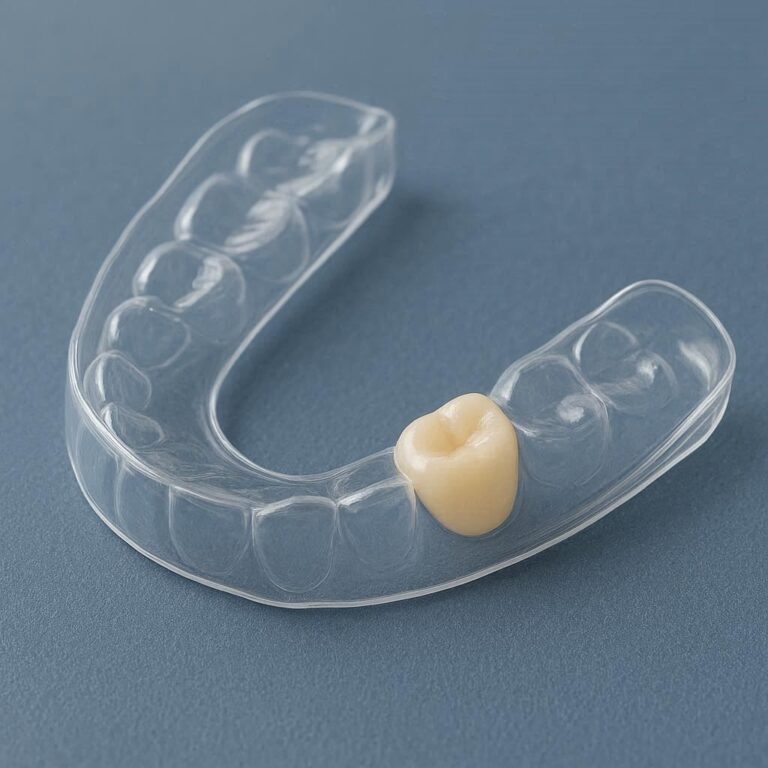
When you see D8680 on a dental claim form, it means that the orthodontist provided a removable retainer. This could be a Hawley retainer (the classic style with an acrylic base and metal wire), a clear plastic retainer (like Essix or Vivera), or another type of removable device designed to hold teeth in their corrected positions.
It is important to note that D8680 typically covers the fabrication and delivery of the retainer. It often also includes any necessary adjustments or modifications made to that specific retainer within a certain timeframe, though this can vary by practice and insurance policy.
What D8680 Does Not Cover
A common point of confusion is that D8680 is not the same code used for the initial active phase of orthodontic treatment.
If you are in braces or aligners, those services fall under different codes, such as:
-
D8080: Comprehensive orthodontic treatment of the adolescent dentition
-
D8090: Comprehensive orthodontic treatment of the adult dentition
These codes cover the active movement of teeth. D8680 is specifically for the retention phase, which comes after the active movement is complete.
Another important distinction is that D8680 usually applies to one retainer—either the upper or the lower. If you need both an upper and a lower removable retainer, you may see two separate charges, each with its own D8680 code, or a modified code depending on how your orthodontist bills.
Types of Removable Retainers Covered Under D8680
Not all retainers look the same, but most removable options fall under the D8680 umbrella.
Understanding the different types can help you have a more informed conversation with your orthodontist and your insurance provider.
Hawley Retainers
The Hawley retainer is the traditional removable retainer. It consists of a thin acrylic base that sits against the roof of the mouth (for the upper arch) or along the floor of the mouth (for the lower arch), combined with a metal wire that wraps around the front teeth.
This design has been used for decades because it is durable, adjustable, and effective. The wire can be adjusted to make small corrections if teeth shift slightly, which is one reason many orthodontists still prefer Hawley retainers for long-term retention.
Clear Plastic Retainers
Clear retainers, often referred to by brand names like Essix, Vivera, or Zendura, are made of transparent thermoplastic material. They fit snugly over the entire arch of teeth, much like an aligner.
Patients often prefer these because they are nearly invisible and more comfortable for the tongue. However, they are generally less durable than Hawley retainers and may need to be replaced more frequently if they crack or warp.
Other Removable Options
Less commonly, removable retainers may include specialized designs for specific clinical situations. These could include retainers with built-in bite ramps or springs to address minor relapse issues.
Regardless of the specific design, if the device is removable and its primary purpose is retention, it is typically billed under D8680.
Insurance Coverage and the D8680 Code
This is where things get a little more complicated, but understanding the nuances can save you a significant amount of money.
Insurance coverage for D8680 varies widely depending on your plan. There is no universal rule that applies to all dental insurers. However, there are several common scenarios that most patients encounter.
Coverage as Part of Comprehensive Treatment
If your orthodontic treatment (braces or aligners) was covered by insurance, many plans include the retention phase as part of that overall benefit.
In this case, the D8680 code may be bundled into the original treatment fee. You would not see a separate bill for the retainer because it was already included in the comprehensive fee you paid at the start of treatment.
This is the most straightforward situation. However, it is also the one that causes the most confusion when patients lose their insurance coverage midway through treatment. If you change jobs or insurance carriers after active treatment ends but before retainers are delivered, you may find yourself responsible for the full cost of D8680.
Coverage for Retainers as a Separate Procedure
Some insurance plans, particularly those that do not include major orthodontic benefits, treat retainers as a separate procedure under a “limited orthodontic” or “minor services” category.
In these cases, D8680 may be subject to your plan’s deductible and coinsurance. You might be responsible for a percentage of the cost, or the plan may cover the retainer at a fixed dollar amount.
It is also common for plans to place limits on how often D8680 can be used. For example, a plan might cover a replacement retainer only once every five or ten years. If you need a new retainer more frequently due to loss, damage, or normal wear, you may have to pay out of pocket.
No Coverage for Replacement Retainers
Many dental insurance plans do not cover replacement retainers at all.
Once you have completed active orthodontic treatment and your initial set of retainers has been provided, insurance often considers retention a maintenance issue rather than a medically necessary procedure.
If you lose your retainer, accidentally throw it away, or your dog decides it looks like a chew toy, you will likely be responsible for the full cost of a replacement, billed under D8680.
This is why orthodontists often emphasize the importance of keeping your retainers safe. A replacement can be a significant unexpected expense.
Cost Factors for D8680
If you are paying out of pocket for a removable retainer, or if your insurance only covers a portion, it helps to understand what influences the total cost.
There is no fixed national price for D8680. The fee can vary based on several factors.
Geographic Location
Dental fees, like most healthcare costs, vary significantly by region. A retainer in a major metropolitan area with a high cost of living will generally cost more than the same retainer in a rural area.
Type of Retainer
While both Hawley and clear retainers are billed under D8680, their fabrication costs are different. Hawley retainers require a dental lab to pour models, bend wire, and process acrylic. Clear retainers are typically fabricated using digital scans and 3D printing or thermoforming technology.
Depending on the orthodontist’s lab fees, one type may be slightly more expensive than the other. Many orthodontists charge a flat fee for D8680 regardless of the type, but it is worth asking if there is a price difference.
Number of Retainers
Remember that D8680 typically applies to a single arch. If you need both an upper and a lower retainer, you are essentially paying for two procedures. Some orthodontists may offer a bundled fee for a set of retainers, but the billing will still reflect D8680 for each.
Included Services
Some orthodontists include a certain number of follow-up visits or adjustments in the D8680 fee. Others charge separately for appointments after the retainer is delivered. It is always a good idea to ask what is included in the quoted price.
Here is a general comparison of what you might expect:
| Retainer Type | Typical Cost per Arch (Without Insurance) | Durability | Aesthetics |
|---|---|---|---|
| Hawley (Wire & Acrylic) | $300 – $600 | High; can last for years with care | Visible metal wire |
| Clear Plastic (Essix/Vivera) | $200 – $500 | Moderate; prone to cracking | Nearly invisible |
| Replacement Retainer | $200 – $600 | Varies | Varies |
Note: These are estimated ranges. Actual fees will vary by provider and location.
Common Scenarios and What to Expect
Let us walk through a few real-world scenarios to illustrate how D8680 works in practice.
Scenario 1: The Completed Treatment
Sarah finished her two years of braces last month. Her orthodontic insurance covered 50% of the comprehensive treatment fee, and she paid the remaining balance through a payment plan.
When her braces were removed, her orthodontist told her she would need upper and lower Hawley retainers. She asked if there would be an additional charge. The office explained that the retainers were included in the comprehensive fee she had already paid. No separate D8680 claim was submitted because the service was already accounted for in the original treatment code.
Scenario 2: The Lost Retainer
Marcus wore his clear retainers every night for three years after completing Invisalign. One morning, he accidentally wrapped them in a napkin while traveling and threw them away.
When he called his orthodontist to order replacements, he was told that his insurance would not cover replacements. The office quoted him $450 per arch for new clear retainers. He received an invoice with two D8680 codes, each for $450, for a total of $900 out of pocket.
Scenario 3: The Post-Treatment Gap
Emily finished her orthodontic treatment at age 16. Her parents’ dental insurance covered the braces. Now, at age 22, her lower retainer no longer fits comfortably because her wisdom teeth caused some shifting. She wants a new retainer to prevent further movement.
Because she is no longer covered under her parents’ orthodontic benefit, and because her own dental plan does not include orthodontic coverage for adults, Emily is responsible for the full cost. Her orthodontist charges $375 for a new lower Hawley retainer, billed under D8680.
How to Verify Your Coverage for D8680
The best way to avoid surprises is to be proactive. Do not wait until you are sitting in the orthodontist’s chair to ask about costs.
Here are a few steps you can take to understand your coverage.
Call Your Insurance Provider
Before your appointment, call the customer service number on the back of your dental insurance card. Ask specifically about coverage for code D8680.
You want to ask:
-
Is this code covered under my plan?
-
If so, what is my patient responsibility (deductible, coinsurance, etc.)?
-
Is there a frequency limitation? How often will the plan pay for a replacement?
-
Does coverage for D8680 require that I am still in active orthodontic treatment?
Ask Your Orthodontist’s Office
Orthodontic billing coordinators deal with insurance codes every day. They can often give you a good estimate of what your plan will cover based on their experience with similar carriers.
Be honest about your insurance situation. If you are between jobs, if your coverage is about to end, or if you are unsure about your benefits, let them know. They may offer payment plans or alternatives.
Review Your Explanation of Benefits (EOB)
If a claim has already been submitted, your insurance company will send you an Explanation of Benefits. This document will show what was billed (D8680), what the insurance paid, and what you owe.
Do not ignore this document. Review it carefully to make sure it matches what the orthodontist’s office told you.
Important Notes for Patients
There are a few critical things to keep in mind when dealing with D8680 and removable retainers.
Retainers are often considered separate from active treatment. Even if your braces or aligners were fully covered, do not assume your retainers are automatically covered. Always confirm this before your braces come off.
Replacement retainers are rarely covered. If you lose or break your retainer, expect to pay the full cost. Consider this when deciding whether to purchase a replacement plan or set aside savings for a potential replacement.
FSA and HSA funds can be used. If you have a Flexible Spending Account or Health Savings Account, you can typically use those funds to pay for retainers, even if insurance does not cover them. Keep your receipts and itemized invoices.
Ask about bundled pricing. If you need multiple retainers (for example, an upper, lower, and a spare set), some orthodontists offer a discounted bundled rate. It never hurts to ask.
Tips for Maximizing Value with D8680
Since retainers are an investment in your smile, it makes sense to get the most value for your money.
Wear Your Retainer as Instructed
The most common reason patients need replacements is that they stopped wearing their retainers, allowing their teeth to shift. When they eventually return for a new retainer, the teeth have moved, and the old one no longer fits.
Wearing your retainer consistently reduces the likelihood that you will need a replacement, saving you the cost of another D8680 claim.
Keep Spare Retainers
If you wear clear retainers, having a spare set can be a smart investment. Clear retainers are more prone to cracking or warping, especially if exposed to heat. If you have a spare, you are not left without retention while waiting for a replacement.
Some orthodontists offer a “buy one, get one at a reduced rate” for clear retainers. If you are paying for D8680 anyway, this can be a cost-effective way to secure a backup.
Handle Retainers with Care
Simple habits can extend the life of your retainer. Always store it in a protective case when not in use. Keep it away from hot water, direct sunlight, and curious pets. Clean it with a soft toothbrush and cool water rather than abrasive toothpaste that can scratch the surface.
How Orthodontists Use D8680 in Treatment Planning
From a clinical perspective, orthodontists view D8680 not just as a billing code, but as an essential part of the treatment process.
Retention is what makes orthodontic results last. Without it, teeth have a natural tendency to drift back toward their original positions—a phenomenon known as relapse.
When an orthodontist includes D8680 in a treatment plan, they are acknowledging that the active phase of tooth movement is just one part of the journey. The retention phase is equally important.
Many orthodontists now include multiple sets of retainers in their comprehensive fees. Some provide one Hawley retainer and one set of clear retainers as part of the initial package. Others offer a certain number of replacement retainers at no additional cost within a specified timeframe.
This approach reflects an understanding that retention is a long-term commitment, not a one-time event.
The Future of Orthodontic Retention and Coding
The field of orthodontics is constantly evolving, and coding practices occasionally change to reflect new technologies and treatment approaches.
Currently, D8680 remains the standard code for removable retainers. However, there is ongoing discussion within the ADA about whether new codes should be created to differentiate between traditional Hawley retainers, digitally fabricated clear retainers, and hybrid devices.
For now, D8680 continues to serve as the primary code for all removable orthodontic retainers. Patients can expect this to remain the case for the foreseeable future, though it is always wise to stay informed about updates to CDT codes, which are typically released every two years.
Conclusion
Navigating dental codes does not have to be overwhelming. The ADA code for removable orthodontic retainers is D8680, and understanding what this code represents gives you the power to ask the right questions, review your insurance benefits with confidence, and avoid unexpected costs.
Whether your retainer is included in your comprehensive treatment fee or requires a separate out-of-pocket payment, knowing how the system works helps you make informed decisions about your orthodontic care. Retainers are not just an afterthought—they are the key to protecting the investment you made in your smile.
Take a few minutes to review your insurance policy, talk to your orthodontist’s billing coordinator, and develop a plan for long-term retention. Your future self will thank you every time you look in the mirror and see teeth that are still perfectly aligned.
Frequently Asked Questions (FAQ)
1. What is the exact ADA code for a removable retainer?
The exact code is D8680, described as “Orthodontic retainer (removable), including adjustment and/or modification.”
2. Does insurance cover D8680?
It depends on your plan. Some plans include retainers as part of comprehensive orthodontic treatment. Others may cover them under a separate benefit with deductibles and frequency limits. Replacement retainers are often not covered.
3. How much does a removable retainer cost?
The cost varies but typically ranges from $200 to $600 per arch. Factors include your location, the type of retainer, and whether the orthodontist bundles services.
4. Is D8680 the same for upper and lower retainers?
Yes, D8680 applies to a single removable retainer. If you need both an upper and a lower retainer, you will typically see two separate charges, each with the D8680 code.
5. Can I use my FSA or HSA to pay for a retainer?
Yes, retainers are generally considered eligible medical expenses. You can use funds from a Flexible Spending Account or Health Savings Account to pay for them, even if insurance does not cover the cost.
6. What if I lose my retainer? Do I need a new code?
If you lose your retainer and need a replacement, the orthodontist will still use D8680 for the new retainer. However, insurance is unlikely to cover it, so you should expect to pay out of pocket.
7. How often should I replace my removable retainer?
With proper care, a Hawley retainer can last several years or even decades. Clear plastic retainers typically last 6 months to 3 years, depending on wear and tear. Your orthodontist can assess your retainer during routine visits.
Additional Resource
For the most up-to-date information on dental coding, including official CDT code descriptions and insurance billing guidelines, visit the American Dental Association’s CDT Code website:
ADA.org/en/publications/cdt
This resource provides access to the official coding manual, coding updates, and educational materials for both dental professionals and patients.