ADA Dental Code for a Partial Upper Denture: A Patient’s Guide
If you have been told by your dentist that you need a partial upper denture, you have likely been handed a treatment plan filled with numbers, abbreviations, and technical jargon. Among that list of information, one specific code probably caught your eye.
Understanding what that code means is the first step toward taking control of your dental health and your budget. Dental codes are not just random numbers; they are the language used by dentists and insurance companies to communicate exactly what procedure you need, how complex it is, and how much it should cost.
In this guide, we are going to demystify the ADA dental code for partial upper denture. We will break down what the code represents, the different types of partials available, what to expect during the process, and how to navigate insurance coverage so you can smile with confidence.
What Are ADA Dental Codes?
Before we dive into the specifics of the partial denture code, it helps to understand the system behind it. The American Dental Association (ADA) maintains the Current Dental Terminology (CDT) code set. These codes are updated annually to reflect the evolving nature of dental medicine.
Think of these codes as a universal language.
-
They ensure your dentist can communicate exactly what was done to your insurance company.
-
They standardize procedures so that a “partial denture” in New York is the same as one in California in terms of billing definitions.
-
They help you, the patient, understand exactly what services you are paying for.
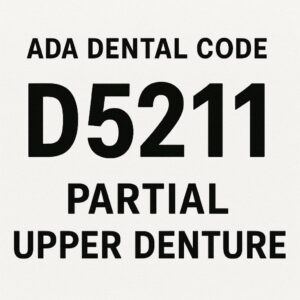
These codes are divided into categories. For removable prosthetics (like dentures and partials), the codes typically start with “D.” When you see D5211 or D5212, you are looking at the specific family of codes for partial upper dentures.
The Specific ADA Dental Code for Partial Upper Denture
When we talk about a partial upper denture, we are usually referring to a removable appliance that replaces one or more missing teeth in the upper jaw, but not all of them. The patient still has some natural teeth remaining.
The main ADA codes for this procedure fall under two specific categories. It is crucial to know the difference because your insurance coverage—and your out-of-pocket cost—depends entirely on which code your dentist uses.
D5211: Maxillary Partial Denture – Resin Base (including any conventional clasps, rests, and teeth)
This code represents a partial upper denture (maxillary means upper) where the base (the pink part that sits on your gums) is made of resin (acrylic).
What this entails:
-
The Base: The foundation of the denture is made of acrylic.
-
The Framework: While the base is acrylic, this code typically includes the “clasps” (metal hooks) that wrap around your natural teeth to hold the denture in place. These clasps are usually made of metal (chrome-cobalt or gold) or a flexible material depending on the design.
-
The Teeth: The replacement teeth are set into the acrylic base.
This is often the most common type of partial denture. It is frequently used for temporary (interim) partials or for patients who need a more flexible, lightweight option. However, modern acrylic partials can be permanent solutions as well.
D5212: Maxillary Partial Denture – Cast Metal Framework (including any conventional clasps, rests, and teeth)
This code represents a partial upper denture where the internal framework is cast metal (usually a chrome-cobalt alloy).
What this entails:
-
The Framework: Instead of the entire denture being solid acrylic, a thin, strong metal framework is cast to fit precisely against your natural teeth and gums.
-
The Base: The pink acrylic and teeth are then attached to this metal framework.
-
Durability: This is considered the “gold standard” for removable partial dentures. The metal framework is much thinner than acrylic, making it less bulky in your mouth. It is also stronger, more durable, and tends to fit more precisely over time.
Table: D5211 vs. D5212 – Key Differences
| Feature | D5211: Resin Base (Acrylic) | D5212: Cast Metal Framework |
|---|---|---|
| Structure | Solid acrylic (pink plastic) base | Thin metal skeleton covered in acrylic |
| Strength | Moderate; prone to fracture if dropped | Very high; durable and resistant to breakage |
| Bulkiness | Thicker; covers more of the palate | Thinner; more comfortable and less intrusive |
| Cost | Generally lower | Generally higher (due to lab fees and materials) |
| Longevity | 3-8 years (depending on care) | 8-15+ years (with proper maintenance) |
| Best For | Temporary solutions, low budget, or patients with few remaining teeth | Long-term permanent solutions, patients with multiple remaining natural teeth |
Important Note on D5213 and D5214
You might also encounter codes D5213 and D5214. These refer to the replacement of teeth or the addition of teeth to an existing partial denture. If you break a tooth off your partial or lose another natural tooth, your dentist will likely use these codes to repair your existing appliance rather than making a whole new one.
Why the Difference in Codes Matters for Insurance
Insurance companies are very particular about which code is used. In many dental insurance plans, the D5212 (Cast Metal) is often considered the standard of care for a permanent partial denture. However, not all plans cover it at the same percentage.
-
If you receive D5211: Insurance might cover it at 50% because it is the “economy” option. However, if you need a cast metal partial for durability, getting billed under D5211 might not reflect the actual work done.
-
If you receive D5212: Insurance usually covers this at the same rate as major services (often 50% after a waiting period). Some plans may require a “pre-authorization” for D5212 to ensure the treatment is medically necessary before they agree to pay.
Reader Tip: Always ask your dentist’s billing coordinator which code they are using and verify with your insurance provider what the coverage is for that specific code. Do not assume that “partial denture” coverage applies to all types.
Components of a Partial Upper Denture
To truly understand what you are paying for, it helps to know what goes into the device. When you look at your treatment plan, you are not just paying for a piece of plastic; you are paying for the expertise and materials that go into creating a functional and aesthetic restoration.
A typical partial upper denture consists of four main components:
-
The Base: This is the part that rests on your gums and the roof of your mouth (palate). In a D5212 (cast metal), the base is actually the metal framework that supports the rest of the structure.
-
The Framework: The skeleton. For D5212, this is the metal alloy that provides the structural integrity.
-
The Clasps (Retainers): These are the little “hooks” that wrap around your existing natural teeth. They are not meant to pull the teeth; they are meant to hold the partial firmly in place so it doesn’t move when you chew or speak.
-
The Artificial Teeth: These replace the missing teeth. They are made of acrylic or porcelain and are matched to the color, shape, and size of your natural teeth.
-
The Rests: Small rests that sit on top of your natural teeth to prevent the partial from sinking too deep into your gums.
The Process: From Consultation to Delivery
Understanding the timeline and steps involved can help you feel more prepared. Getting a partial upper denture is rarely a one-visit procedure. It usually requires several appointments over a few weeks.
Step 1: Diagnosis and Treatment Planning
Your dentist will take X-rays to check the health of your remaining teeth. They need to ensure the teeth that will hold the clasps are strong and free of decay. If they are not, you may need root canals or crowns before you can get a partial.
Step 2: Impressions (First Visit)
The dentist takes a mold (impression) of your upper arch. This mold is sent to a dental laboratory. The lab creates a custom tray for the next step.
Step 3: Framework Try-In (For D5212)
If you are getting a cast metal partial, the lab will create the metal framework. You will come in to have it “tried in” to ensure the fit is perfect. The dentist checks that the metal clasps fit snugly but comfortably around your teeth.
Step 4: Wax Try-In (Bite Registration)
This is a crucial aesthetic step. The lab sets the teeth in wax. You will come in to “try in” the partial while the teeth are still in wax. At this stage, you and your dentist can evaluate:
-
The color: Do the teeth match your remaining natural teeth?
-
The shape: Do they look natural?
-
The bite: Does your bottom jaw close comfortably against the new teeth?
You can make changes here. Once you approve the wax try-in, the lab finalizes it by processing the acrylic.
Step 5: Delivery (Insertion)
The final partial is delivered. The dentist will show you how to insert it and remove it. It will likely feel bulky at first. Your saliva flow may increase. It is normal to feel a bit awkward for the first week or two.
Step 6: Adjustments
You will usually come back for a follow-up appointment a week or two later. As your gums adjust to the pressure, you may develop sore spots. The dentist will adjust the base to relieve these spots.
Factors That Influence the Cost
The ADA code defines the type of denture, but the final price tag can vary significantly based on several factors. While we cannot give a fixed price (as it varies by location and practice), here are the elements that influence the cost of a partial upper denture.
-
Geographic Location: Dental fees in a metropolitan city are typically higher than in rural areas.
-
Laboratory Fees: High-end dental labs that use premium materials (like high-impact acrylic or high-noble metal alloys) cost more.
-
Preliminary Treatment: Before you can get a partial, you might need extractions, fillings, root canals, or gum disease treatment. These are separate procedures with their own ADA codes and costs.
-
Number of Teeth Replaced: While the code covers the partial unit, more teeth on the partial may sometimes increase the lab fee slightly.
-
Material Quality: A D5212 (cast metal) will always cost more than a D5211 (acrylic) due to the complexity of the lab work and the cost of metal.
Estimated Ranges:
-
D5211 (Acrylic): Typically ranges from $600 to $1,500 per arch.
-
D5212 (Cast Metal): Typically ranges from $1,200 to $3,500+ per arch.
Note: These are estimates for the denture itself. They usually do not include the cost of extractions, X-rays, or diagnostic visits.
Flexible Partials: Where Do They Fit?
You may have heard of “flexible partials” made of materials like Valplast or Flexite. These are not made of metal or traditional hard acrylic. They are a nylon-based material that is translucent and flexible.
Where does the ADA code fit here?
Technically, flexible partials are usually billed under D5211 (Resin Base), even though the material is different. Because they do not contain a cast metal framework, they do not qualify for D5212.
Pros of Flexible Partials:
-
Aesthetics: No metal clasps. The clasps are gum-colored and blend in.
-
Comfort: They are lightweight and often feel less bulky.
-
Hypoallergenic: Great for patients with metal allergies.
Cons:
-
Difficult to Adjust: Unlike acrylic, flexible materials cannot be easily adjusted or relined if your gums shrink.
-
Repair Issues: If they break, they often cannot be repaired; they must be replaced.
If your dentist recommends a flexible partial, confirm the billing code. It will likely be D5211, but you should ask if the material upgrade (flexible vs. standard acrylic) carries an additional lab fee.
Common Myths About Partial Upper Dentures
Let’s clear up some misconceptions. There is a lot of misinformation about partials that can cause anxiety.
Myth 1: They look fake.
Reality: Modern dental materials and techniques allow partials to look incredibly natural. The pink acrylic can be custom shaded to match your gums, and the teeth are matched precisely. With a cast metal framework, the metal is often hidden behind the natural teeth, making it virtually invisible.
Myth 2: They are only for old people.
Reality: Tooth loss affects people of all ages due to accidents, genetics, or decay. Partial dentures are a common solution for adults in their 30s, 40s, and 50s. They are a functional tool, not a sign of age.
Myth 3: You wear them 24/7.
Reality: You should not wear a partial denture to sleep. Taking it out at night gives your gums and supporting teeth a chance to rest. It also prevents bacterial growth and plaque buildup under the appliance.
Myth 4: They ruin the teeth they hook onto.
Reality: This is a common fear, but it is usually the result of poor hygiene, not the partial itself. If you do not clean around the clasps and the teeth, you can get cavities. However, a well-designed partial with proper rests actually distributes chewing forces away from the natural teeth, potentially preserving them longer than if you had no partial at all.
Insurance Coverage: What to Look For
Navigating dental insurance for major work like a partial denture requires a bit of detective work. Here are the key terms to look for in your policy:
-
The Waiting Period: Most insurance plans have a waiting period for “major” services (Category 3 services). You may need to have been enrolled for 6 to 12 months before the plan will cover a partial denture.
-
Annual Maximum: This is the cap on what the insurance pays in a year. If your partial costs $2,500 and your annual max is $1,500, you will be responsible for the difference.
-
Missing Tooth Clause: Some plans have a “missing tooth clause.” If you were missing the tooth before the insurance policy started, they may refuse to cover the replacement. This is a tricky clause, so ask your HR department or insurance agent about it.
-
Frequency Limitations: Most plans allow one partial denture per arch every 5 to 10 years. If you need a replacement sooner due to damage, you may have to pay out of pocket.
A Note on Medicare and Medicaid:
-
Original Medicare (Parts A & B) does not cover dental procedures, including partial dentures.
-
Medicare Advantage (Part C) often includes dental benefits, but coverage varies widely by plan.
-
Medicaid coverage for adult dentures varies by state. Some states offer full coverage, while others offer limited or no coverage.
Caring for Your Partial Upper Denture
Investing in a partial denture is an investment in your health. To protect that investment, you need a solid maintenance routine.
Daily Cleaning:
-
Rinse: After meals, remove the partial and rinse it with water to remove food debris.
-
Brush: Use a soft-bristled toothbrush designated for your partial. Do not use regular toothpaste as it is abrasive and can scratch the acrylic, creating places for bacteria to hide. Use a mild dish soap or a specialized denture cleaner.
-
Soak: Soak the partial in water or a denture-cleaning solution when it is not in your mouth. Never let it dry out, as acrylic can warp.
Caring for Your Natural Teeth:
Even with a partial, your oral hygiene must be excellent.
-
Floss around the teeth that have clasps. Plaque tends to accumulate there.
-
Brush your natural teeth with fluoride toothpaste.
-
Use a proxy brush to clean under the metal clasps and rests.
Nighttime Routine:
Remove the partial at night. Brush it, soak it in water, and brush your natural teeth thoroughly before bed. Give your mouth a break.
When to Consider Alternatives
A removable partial denture is a great solution, but it is not the only solution. Depending on your oral health, budget, and goals, you might consider alternatives.
-
Dental Implants: This is often considered the “gold standard.” Instead of a removable appliance, implants are surgically placed into the jawbone to hold a crown (single tooth) or a fixed bridge (multiple teeth).
-
Pros: Most stable, feels like natural teeth, preserves jawbone.
-
Cons: High upfront cost, requires surgery, longer treatment time.
-
-
Fixed Bridge: This involves crowning the teeth adjacent to the gap and creating a “bridge” of false teeth in between. It is cemented in place and not removable.
-
Pros: Fixed in place, feels natural, no removable parts.
-
Cons: Requires shaving down healthy adjacent teeth, difficult to clean underneath, may need replacement after 10-15 years.
-
-
No Treatment: This is always an option, but it comes with risks. Missing teeth cause remaining teeth to shift (drift), leading to bite problems, difficulty chewing, and bone loss in the jaw.
Frequently Asked Questions (FAQ)
Q1: How long does it take to get used to a partial upper denture?
Most patients experience a 2-to-4-week adjustment period. During this time, you may notice increased saliva, a feeling of “fullness” in the mouth, and slight speech impediments (like a lisp). Reading aloud and practicing speaking can speed up the adjustment. If sore spots persist beyond a week, see your dentist for an adjustment.
Q2: Can I eat normally with a partial upper denture?
Yes, but you need to adapt. Start with soft foods cut into small pieces. Chew evenly on both sides of your mouth. Avoid sticky foods (caramel, taffy) that can pull the partial loose, and avoid hard foods (nuts, bones) that could break the teeth or clasps. As you get used to it, you will be able to eat a wide variety of foods.
Q3: What if my partial breaks? Can it be fixed?
In many cases, yes. If a tooth breaks off, the clasp breaks, or the base cracks, do not try to glue it yourself (household glue is toxic and won’t hold). Take the partial to your dentist. They can often repair it using codes like D5213 or D5214. If the damage is extensive, a replacement may be necessary.
Q4: How do I know if I need D5211 or D5212?
Your dentist will determine this based on the number of teeth remaining, the health of those teeth, and your budget. If you have many healthy natural teeth, a cast metal framework (D5212) is usually recommended because it fits more precisely and puts less stress on the remaining teeth. If you only have one or two teeth left, or if you need a temporary solution, an acrylic partial (D5211) may be sufficient.
Q5: Is it normal for a new partial to feel loose after a few years?
Yes. Over time, your jawbone and gums shrink slightly due to the loss of natural teeth. This is called resorption. When this happens, the partial may feel loose or begin to rock. A “reline” (adding material to the inside of the base) can refit the partial to your current gum shape. This is usually billed under a separate code like D5731 (reline, maxillary).
Q6: Can I sleep with my partial in?
Dentists strongly recommend against it. Wearing a partial 24/7 can lead to fungal infections (like candidiasis), gum inflammation, and increased plaque buildup on the natural teeth supporting the partial.
Q7: Will my insurance cover the entire cost?
Typically, no. Most dental insurance plans cover 50% of major services (like partials) after you meet your deductible and waiting period. You will likely be responsible for the remaining 50%, plus any costs that exceed your annual maximum. Always get a pre-treatment estimate from your dentist to know your out-of-pocket costs before starting.
Additional Resource
For further reading on maintaining oral health with removable prosthetics and understanding your rights as a dental patient, the American College of Prosthodontists (ACP) offers excellent patient education resources. They specialize in the restoration and replacement of teeth.
Visit their patient resource center: www.gotoapro.org
This site can help you find a specialist (prosthodontist) if your case is complex or if you are seeking a second opinion on your treatment plan.
Conclusion
Understanding the ADA dental code for a partial upper denture—whether it is D5211 for a resin base or D5212 for a cast metal framework—empowers you to make informed decisions about your dental care. These codes are more than just billing numbers; they represent the structure, durability, and longevity of your new smile.
By knowing what to expect, how to navigate insurance, and how to care for your investment, you can approach this treatment with confidence. Remember, a partial denture is not just about filling a gap in your teeth; it is about restoring your ability to eat comfortably, speak clearly, and smile freely. Always communicate openly with your dentist about your budget and expectations to ensure you receive the best possible solution for your unique needs.
Disclaimer: This article is for informational purposes only and does not constitute medical or dental advice. Dental codes, insurance coverage, and treatment options vary by location and individual patient needs. Always consult with a licensed dental professional for a diagnosis and treatment plan tailored to your specific oral health condition.