Understanding the ADA Dental Code for Enameloplasty (D0301)
If you have ever run your tongue over a freshly filled tooth and felt a sharp edge, or if you have a tooth that looks a little too pointy for your liking, your dentist might have mentioned a simple solution: enameloplasty. It sounds clinical, but it is actually a very common, quick, and painless procedure.
However, if you are looking at your dental treatment plan or trying to understand an insurance Explanation of Benefits (EOB), you might be searching for the specific code. That is where the “ADA dental code enameloplasty” comes into play.
In the world of dentistry, the Current Dental Terminology (CDT) codes, maintained by the American Dental Association (ADA), are the universal language that dentists and insurance companies use to communicate what work was done. For enameloplasty, the code you are looking for is D0301.
This guide will walk you through everything you need to know about this code, the procedure itself, and what it means for your oral health and your wallet.
What is Enameloplasty? A Simple Definition
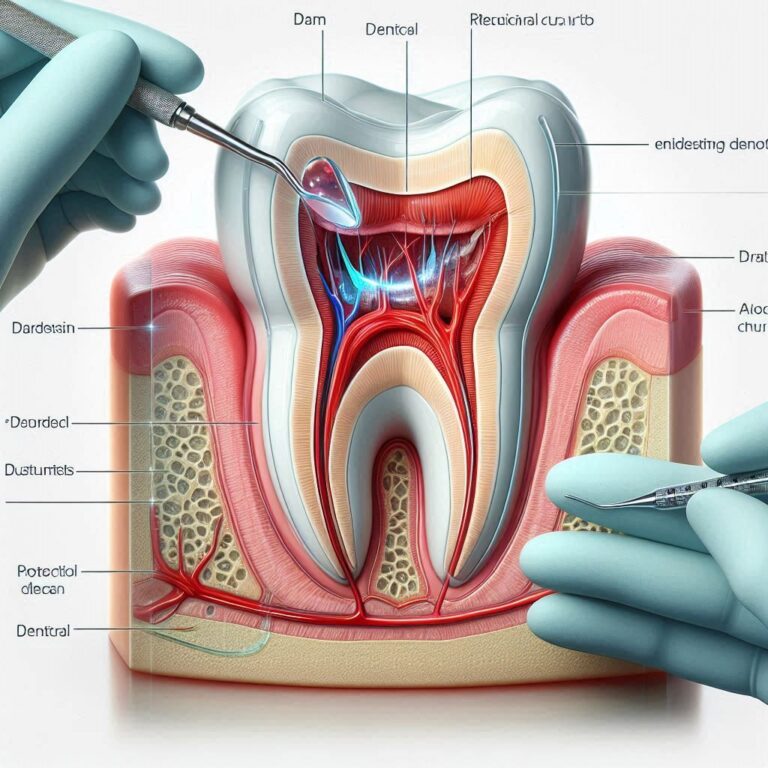
Before we dive deep into the insurance codes, let’s talk about what enameloplasty actually is. Put simply, enameloplasty is the process of reshaping or contouring the enamel—the hard, outer surface of your tooth.
Think of it as the aesthetic and functional sculpting of a tooth. Your dentist uses a fine, high-speed drill or a laser to gently remove minuscule amounts of enamel. We are talking about fractions of a millimeter here. It is not a painful process because the enamel itself does not contain nerves.
Common reasons for enameloplasty include:
-
Smoothing rough edges: Sometimes, after a filling breaks or wears down, it can leave a rough spot. Enameloplasty smooths this out.
-
Fixing pointy teeth: Some people have naturally pointed canine teeth that may rub against the lips or tongue. Slight reshaping can make them more comfortable.
-
Improving appearance: If a tooth is slightly longer than its neighbors or has an irregular shape, contouring can create a more uniform, pleasing smile.
-
Creating space: In minor orthodontic cases, a dentist might perform enameloplasty (sometimes called “stripping” or interproximal reduction) to create a tiny bit of space between teeth so they can move more easily.
The Official ADA Dental Code: D0301
When it comes to billing and record-keeping, the precise terminology is everything. The official ADA dental code for enameloplasty is D0301. The full descriptor for this code is: “Polishing and contouring of existing restoration—amalgam or resin based composite—one surface; and/or enameloplasty on one tooth.”
Let’s break that down because it is a bit of a mouthful. This code essentially covers two separate but often related procedures on a single tooth:
-
Polishing and Contouring of a Restoration: This refers to smoothing down and perfecting the shape of an existing filling (made of amalgam or composite resin).
-
Enameloplasty: This refers to the smoothing and contouring of the natural tooth structure.
The code combines these because they are often performed at the same time. For example, if your dentist places a new filling and it feels a little high when you bite down, they will adjust the filling (contouring the restoration) and maybe the opposing tooth (enameloplasty) to make your bite perfect.
Important Note: Code D0301 is billed per tooth. So, if your dentist performs enameloplasty on three different teeth, the procedure would be listed three times on your treatment plan.
Why Not Just Use a “Polishing” Code?
It is a common point of confusion. A standard “prophylaxis” (cleaning) code (D1110) includes polishing the teeth with a rubber cup and paste to remove plaque and stain. However, that does not cover the use of a drill or bur to physically reshape the enamel. Enameloplasty is a distinct procedure that alters the tooth structure, which is why it has its own specific code.
When is Enameloplasty (D0301) Considered Necessary?
Because enameloplasty involves the irreversible removal of tooth structure (even if it is a microscopic amount), dentists do not take the decision lightly. Insurance companies also want to know why it was done. They categorize procedures based on medical necessity versus purely cosmetic requests.
Here is how D0301 is typically classified depending on the situation:
Functional Enameloplasty (Medically Necessary)
When the procedure corrects a problem that affects your oral health, function, or comfort, it is considered medically necessary.
-
Adjusting a “High” Spot: After a new crown or filling, if your bite is off, it can cause jaw pain, tooth sensitivity, or even cracking. Adjusting it with enameloplasty prevents future damage.
-
Removing a Sharp Edge: A chipped tooth can create a razor-sharp edge that cuts your tongue or cheek. Smoothing it down prevents soft tissue trauma and infection.
-
Alleviating Occlusal Trauma: If a tooth is striking its opponent with too much force due to its shape, reshaping it can distribute bite forces more evenly.
Cosmetic Enameloplasty (Elective)
When the procedure is done purely to improve the look of the smile, it is considered elective.
-
Rounding Pointy Canines: If the teeth are healthy and functional but simply look too “vampire-like” for the patient’s preference.
-
Fixing Minor Irregularities: Smoothing a slightly jagged edge left from an old chip that isn’t causing any functional issues.
-
Reshaping for Smile Design: As part of a larger cosmetic makeover, like with veneers, to ensure all the teeth have a harmonious shape.
Does Insurance Cover Enameloplasty (D0301)?
This is the million-dollar question. Insurance coverage for D0301 is highly variable and depends entirely on the reason for the procedure.
| Scenario | Classification | Typical Insurance Coverage |
|---|---|---|
| Adjusting a new filling/crown | Medically Necessary (part of the restorative procedure) | Often covered as part of the global fee for the crown/filling. The dentist usually won’t bill it separately. |
| Smoothing a traumatic chip from an accident | Medically Necessary | May be covered under your major medical or dental insurance, depending on the specifics of the accident and your plan. |
| Reshaping a pointy tooth for comfort | Medically Necessary (soft tissue trauma) | Likely to be covered, though you may be responsible for your standard co-pay or deductible. |
| Rounding teeth for a “softer” smile | Cosmetic | Usually not covered. You will likely pay 100% out-of-pocket. |
What to expect if you are paying out-of-pocket:
Because enameloplasty is a relatively quick procedure, the fee is usually quite modest. Depending on your geographic area and the dentist’s office, you might expect to pay a fee comparable to a small filling or a specific line item, often ranging from $50 to $150 per tooth.
The Procedure: What Happens During an Enameloplasty?
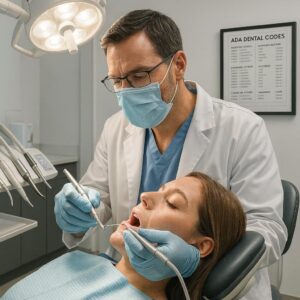
If your dentist has recommended D0301, you might be wondering what to expect. The good news is that it is one of the simplest, fastest, and most comfortable procedures in dentistry.
-
Examination and Marking: First, the dentist will examine the tooth. They might have you bite down on a piece of special articulating paper, which leaves marks on your teeth to show where the contact is too high or heavy.
-
The Reshaping: Using a high-speed handpiece (the drill) with a very fine, smooth bur, or sometimes a laser, the dentist will gently shave off the identified spots of enamel. You will feel vibration but no pain. There is no need for anesthetic (numbing shots) because the drill is only touching the enamel.
-
Smoothing and Polishing: After the desired shape is achieved, the dentist will use polishing discs or cups to smooth the surface back to its natural, glossy feel. This prevents it from feeling rough to your tongue.
-
Final Check: You will be asked to bite down again and let the dentist know if everything feels comfortable. You might also be given a mirror to look at the new shape of your tooth.
Benefits and Considerations of Enameloplasty
Like any dental procedure, enameloplasty has its pros and cons. It is important to have realistic expectations.
The Advantages
-
Immediate Results: The change is instant. You walk out of the office with the problem solved.
-
Non-Invasive: It requires no shots, no drilling into the deeper layers of the tooth, and no recovery time.
-
Cost-Effective: Compared to crowns, veneers, or orthodontics, it is a very affordable way to fix minor shape or bite issues.
-
Strengthens the Bite: By removing interference, it can actually help protect teeth from fracturing under uneven pressure.
The Considerations
-
Irreversible: Once enamel is gone, it does not grow back. However, because the amount removed is so minuscule, this rarely has negative long-term effects.
-
Sensitivity: In very rare cases, if the enamel is thin, a patient might experience temporary sensitivity to hot or cold, but this is uncommon.
-
Not for Major Changes: Enameloplasty can only change the shape of a tooth by about 0.5 to 1 millimeter. It cannot fix large chips, decay, or major alignment issues.
Enameloplasty vs. Other Procedures
It helps to understand how enameloplasty fits into the bigger picture of dental care. Here is how it compares to other common treatments.
| Feature | Enameloplasty (D0301) | Dental Bonding | Porcelain Veneer |
|---|---|---|---|
| Goal | Reshape/smooth existing enamel | Repair chips/cracks or change color | Major cosmetic makeover |
| Invasiveness | Minimal (only enamel) | Minimal (etching of enamel) | Moderate (enamel removal) |
| Anesthetic | Usually not needed | Usually not needed | Sometimes needed |
| Durability | Permanent (on the tooth itself) | 3-10 years | 10-15+ years |
| Cost | $ | $$ | $$$$ |
| Reversibility | Irreversible (tooth is changed) | Reversible (with removal) | Irreversible |
Frequently Asked Questions (FAQ)
Is enameloplasty the same as “tooth reshaping” or “odontoplasty”?
Yes, these terms are often used interchangeably. “Enameloplasty” specifically refers to shaping the enamel, while “odontoplasty” is a broader term for tooth reshaping. In a dental office, if you hear “tooth contouring,” they are almost certainly referring to enameloplasty.
Does enameloplasty weaken my teeth?
When performed by a trained professional, absolutely not. The enamel on the outside of your teeth is the hardest substance in your body. Removing a microscopic layer for shaping does not compromise the structural integrity of the tooth. It is like filing a fingernail—it changes the shape but doesn’t weaken the nail bed.
Will my teeth feel rough after the procedure?
No. The final step of the procedure is always polishing. The dentist will make sure the surface is just as smooth—if not smoother—than the surrounding enamel. It should feel completely natural to your tongue.
Can enameloplasty fix a gap in my teeth?
Not really. Enameloplasty removes enamel; it doesn’t add it. To close a gap (diastema), you would need to add material to the sides of the teeth (via bonding or veneers) or use orthodontics to move the teeth together.
Is the D0301 code used for orthodontic “stripping”?
Yes, sometimes. In orthodontics, a procedure called interproximal reduction (IPR) is used to create space by gently sanding down the sides of teeth. While the intention is different, the technical act of removing enamel from the proximal (side) surfaces is a form of enameloplasty, and may be coded as D0301, though orthodontists often have specific bundled fees that cover this.
Conclusion
Navigating dental codes can feel like learning a foreign language, but understanding the “ADA dental code enameloplasty”—D0301—helps demystify a common and beneficial procedure. Whether you need a high filling adjusted or want to soften a sharp tooth for comfort, enameloplasty is a quick, safe, and effective solution. While insurance coverage depends on whether the procedure is functional or cosmetic, its value in preserving oral health and comfort is undeniable. Always discuss the “why” behind the code with your dentist to ensure you have a clear picture of your treatment and its costs.
Additional Resource
For the most authoritative information on dental codes and terminology, you can always refer to the source. The American Dental Association (ADA) publishes the CDT code set annually. You can find more information on their official website or through your dental provider.
[Link to the American Dental Association (ADA) Shop for CDT Codes] (https://www.ada.org/en/publications/cdt)