ADA Dental Code Section for a Fixed Bridge
- On
- InDENTAL CODE
If you have recently been told you need a dental bridge—or if you already have one that needs repair—you might have glanced at your treatment plan or insurance statement and felt a little lost. Dental billing codes can look like a secret language.
Do not worry. You are not alone.
This guide focuses specifically on the ADA dental code section for a fixed bridge. We will break down what these codes mean, why your dentist uses them, and how they affect what you pay.
By the end of this article, you will feel confident reading your dental paperwork. You will understand the difference between a new bridge, a bridge repair, and a bridge replacement. You will also learn how to spot potential billing errors.
Let us get started.
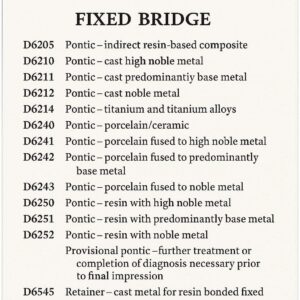
Table of Contents
ToggleWhat Is an ADA Dental Code?
Before we dive into fixed bridges specifically, let us take a quick step back.
The American Dental Association (ADA) publishes a standardized list of codes called the Current Dental Terminology (CDT) code set. Every dental procedure—from a simple cleaning to a complex bridge—has its own unique code.
Why does this matter for you?
These codes help:
-
Your dentist communicate clearly with your insurance company
-
Your insurance company decide what they will pay for
-
You understand exactly what procedures you are receiving
Think of ADA codes as the common language of dentistry. Without them, your dental claim would be confusing and slow to process.
The Structure of Fixed Bridge Codes
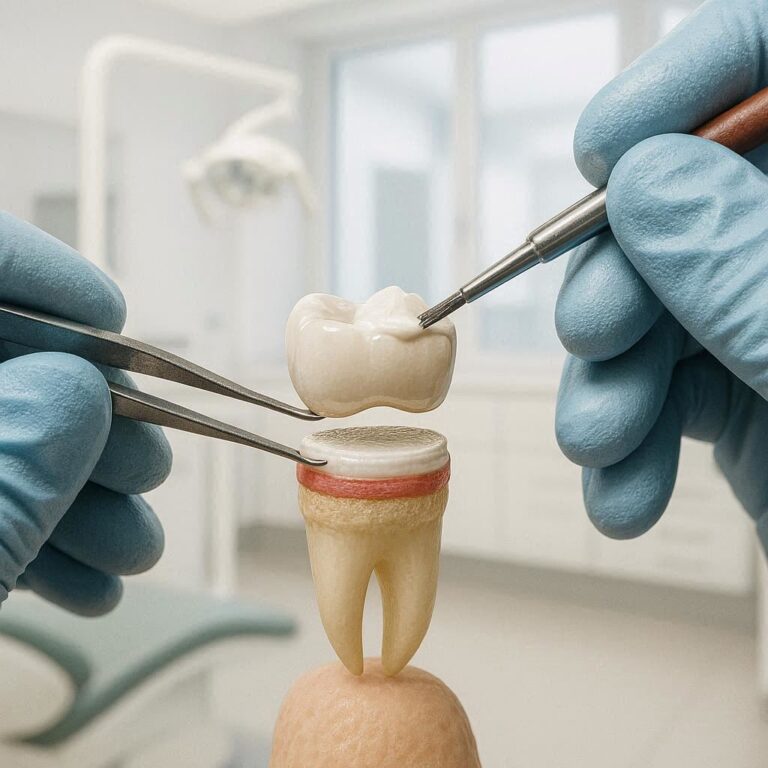
Fixed bridge codes live inside a larger category called Prosthodontics, fixed. This section covers any dental restoration that is permanently attached (not removable).
Within this section, codes are grouped by:
-
Type of restoration (crown, bridge, inlay, onlay)
-
Material used (metal, ceramic, porcelain fused to metal)
-
Number of units (how many teeth are involved)
-
Type of service (new, repair, recement, replace)
For a fixed bridge, the codes usually start with the letter D. For example, D6740, D6750, or D6240. The number following the D tells the story of the procedure.
Important note for readers: Codes change occasionally. The ADA updates the CDT code set every year. Always check that your dentist is using the current year’s codes for your insurance claim.
The Main ADA Codes for Fixed Bridges
Now, let us look at the most common codes you will see on a treatment plan for a fixed bridge.
We will break them into three simple categories:
-
Codes for a new fixed bridge
-
Codes for repairing an existing bridge
-
Codes for recementing a loose bridge
New Fixed Bridge Codes
When your dentist recommends a brand new bridge, they will use one of the following codes depending on the materials.
| ADA Code | Description | What It Means for You |
|---|---|---|
| D6240 | Pontic – porcelain fused to metal (PFM) | The false tooth (pontic) is made of porcelain bonded to a metal substructure. Strong and traditional. |
| D6241 | Pontic – porcelain fused to noble metal | Similar to D6240, but the metal contains a high percentage of noble (precious) metal like gold or platinum. |
| D6245 | Pontic – porcelain/ceramic | The false tooth is made entirely of ceramic. No metal. Very natural looking. |
| D6250 | Pontic – resin with high noble metal | Less common today. The pontic uses resin material over a high-noble metal frame. |
| D6251 | Pontic – resin with noble metal | Similar to D6250, but the metal content is lower in noble metals. |
| D6252 | Pontic – resin with base metal | The most economical option. Uses resin over a non-noble metal base. |
| D6750 | Retainer crown – porcelain fused to high noble metal | The crown that anchors the bridge (retainer) is PFM with high noble metal. |
| D6751 | Retainer crown – porcelain fused to predominantly base metal | The anchor crown uses PFM with mostly base metal (less expensive). |
| D6752 | Retainer crown – porcelain fused to noble metal | The anchor crown uses PFM with noble metal content in the middle range. |
| D6740 | Retainer crown – porcelain/ceramic | The anchor crown is all-ceramic. No metal. Best aesthetics. |
How to Read a Bridge Treatment Plan
A typical three-unit bridge (one false tooth supported by two crowns) might show these codes:
-
D6750 x 2 (two retainer crowns)
-
D6240 x 1 (one pontic)
Some dentists bill the bridge as a single line item using a “bridge code” like D6780 or D6790 (fixed partial denture, including retainers and pontics). However, many insurance companies prefer itemized billing.
Ask your dentist which method they use. Both are acceptable, but itemized billing gives you more transparency.
Repair Codes for an Existing Fixed Bridge
Bridges are durable, but they are not indestructible. Over time, a chip, crack, or loose piece may need attention.
Here are the repair codes you are most likely to see.
| ADA Code | Description | Typical Use |
|---|---|---|
| D6930 | Recement fixed partial denture | The bridge is still intact but has come loose. Your dentist cleans and reattaches it. |
| D6940 | Repair broken fixed partial denture – by report | A part of the bridge framework has broken. Your dentist describes the repair in writing (“by report”). |
| D6980 | Repair broken fixed partial denture – simple | A small, straightforward repair. For example, fixing a minor chip in a pontic. |
| D6985 | Replacement of a missing or broken retainer – fixed partial denture | One of the anchor crowns is damaged beyond repair. Your dentist replaces just that retainer. |
Quotation from a real patient:
“I thought my bridge was ruined when it came loose while eating an apple. But my dentist used code D6930, recemented it in 20 minutes, and charged less than 200 dollars. I was so relieved.”
— Maria, Chicago, IL
Replacement Codes for a Full Bridge
Sometimes a bridge cannot be repaired. It may have recurrent decay under a retainer, a cracked framework, or multiple broken parts. In this case, your dentist will recommend a full replacement.
Replacement uses the same codes as a new bridge (D6240, D6245, D6750, etc.), but your dentist may add a note explaining that this is a replacement of an existing bridge.
Important note: Most dental insurance plans have a “frequency limitation.” For example, they may only pay for a new bridge on the same tooth every 5, 7, or 10 years. If you need replacement sooner, you may have to pay out of pocket unless there is a valid clinical reason (like fracture or decay).
Understanding Bridge Codes vs. Implant Codes
Many patients ask: Why does my bridge code look different from my friend’s implant code?
Great question.
A fixed bridge (also called a fixed partial denture) uses your natural teeth as anchors. An implant uses a titanium post placed in your jawbone.
Here is a quick comparison.
| Service | ADA Code Category | Typical Code Example |
|---|---|---|
| New 3-unit fixed bridge | Fixed prosthodontics | D6240, D6750 |
| New implant crown | Implant services | D6065, D6066, D6067 |
| Recement bridge | Fixed prosthodontics | D6930 |
| Recement implant crown | Implant services | D6092 |
Do not confuse the two. If your treatment plan says “bridge,” look for codes starting with D62xx, D67xx, or D69xx. Implant codes usually start with D60xx.
Step-by-Step: How a Fixed Bridge Is Coded from Start to Finish
Let us walk through a realistic patient case. This will help you see how codes appear on a real treatment plan and insurance claim.
Patient case: John, age 58, is missing tooth #19 (a lower molar). He has healthy teeth on either side (#18 and #20). His dentist recommends a 3-unit fixed bridge.
Step 1: Diagnostic Codes
Before building the bridge, the dentist must examine John and take X-rays.
-
D0150 – Comprehensive oral exam
-
D0210 – Full mouth X-rays (or D0270 for a single X-ray of the area)
-
D0470 – Diagnostic cast (study models of John’s teeth)
These codes are separate from the bridge itself. Your insurance may cover them fully or partially.
Step 2: Preparation Codes
On the day of bridge preparation, the dentist will:
-
Numb the area
-
Shape teeth #18 and #20 to receive crowns
-
Take impressions
-
Place temporary bridge
Relevant codes:
-
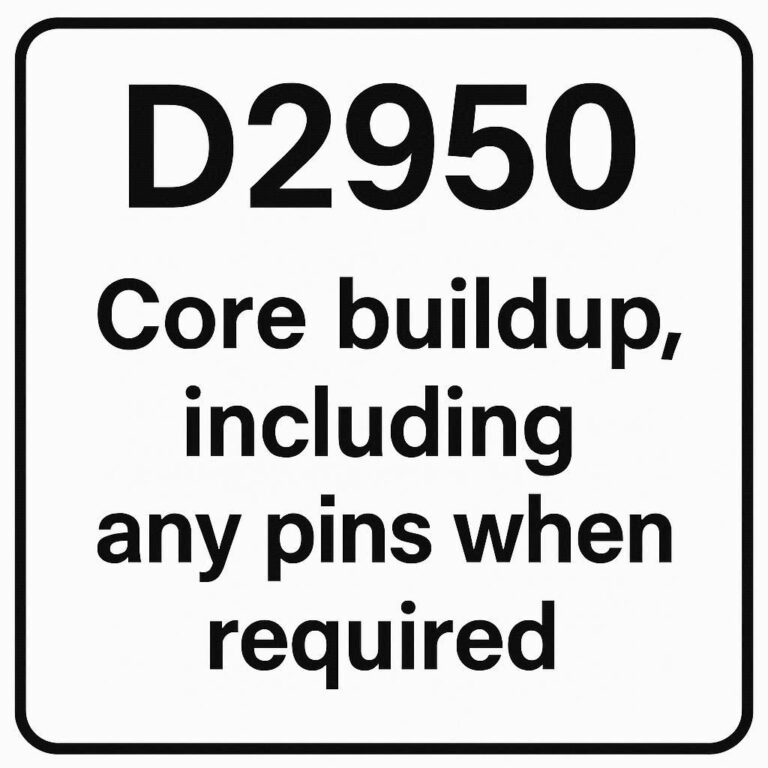
D2950 – Core buildup (if a tooth needs extra support before crowning)
-
D2931 – Pin retention (rare for bridges today, but possible)
-
No specific code for temporaries – they are included in the bridge fee.
Step 3: Bridge Fabrication Codes
This is where the main bridge codes appear.
John’s dentist chooses an all-ceramic bridge for best aesthetics.
-
D6740 x 2 – Retainer crown, porcelain/ceramic (for teeth #18 and #20)
-
D6245 x 1 – Pontic, porcelain/ceramic (for missing tooth #19)
Total procedure codes for the bridge: 3 units.
Step 4: Cementation Code
At the final appointment, the dentist removes the temporary, tries in the permanent bridge, adjusts it, and cements it.
Cementation is not billed separately. It is included in the original bridge codes.
Step 5: Follow-up Code (if needed)
If John returns two weeks later for an adjustment due to discomfort, the dentist may use:
-
D6999 – Unspecified fixed prosthodontic procedure (by report)
Or, if a minor problem occurs within the warranty period, the dentist may not charge at all.
What to Do If You See an Unfamiliar Code
It is common to look at an insurance explanation of benefits (EOB) and see codes you do not recognize.
Here is a simple action plan.
-
Do not panic. Many codes are administrative or internal.
-
Compare with your treatment plan. Did you sign a plan that listed D6240, but the EOB shows D6241? That could be a billing error.
-
Call your dentist’s billing office. Ask: “Can you explain code Dxxxx on my statement?”
-
Call your insurance company. Ask: “Why was code Dxxxx denied or partially paid?”
Most billing mistakes are honest typos. Dentists’ offices process hundreds of claims per week. A simple phone call usually resolves the issue.
Pro tip: Keep a copy of your signed treatment plan. It is your best protection against billing disagreements.
How Insurance Processes Fixed Bridge Codes
Understanding how insurance “thinks” about bridge codes can save you money and frustration.
Insurance companies group codes into categories. For fixed bridges, they look at:
-
Diagnostic codes (D0100-D0999) – Usually covered at 80-100%
-
Prosthodontic codes (D6200-D6999) – Often covered at 50% after deductible
-
Repair codes (D6930, D6940, D6980) – May have a separate, lower coverage percentage
Example of a Typical Insurance Payout
Let us say John’s all-ceramic 3-unit bridge costs $3,600 total.
-
Dentist bills: D6740 x 2 ($1,200 each) + D6245 x 1 ($1,200)
-
Total submitted: $3,600
Insurance plan details:
-
Annual deductible: $50 (already met)
-
Bridge coverage: 50% of allowed amount
-
Plan allowance for this bridge: $3,000 (insurance’s negotiated rate)
Insurance pays: 50% of $3,000 = $1,500
John pays: $3,600 – $1,500 = $2,100
Notice John pays more than half because the dentist’s fee ($3,600) is higher than the insurance allowance ($3,000). This is called “balance billing,” and it is legal unless your dentist is in-network with your plan.
In-Network vs. Out-of-Network
If John’s dentist is in-network, the dentist must accept the insurance allowance. John would pay only his 50% portion of the $3,000 allowance ($1,500 total).
Always ask: *“Are you in-network with my plan for bridge codes D6740 and D6245?”* Some dentists are in-network for cleanings but not for major work like bridges. Confirm before treatment.
Common Billing Errors for Fixed Bridge Codes
Even experienced dental billers make mistakes. Here are the most common errors involving fixed bridge codes.
| Error | What It Looks Like | How to Fix It |
|---|---|---|
| Wrong pontic material | Your bridge is all-ceramic, but the dentist billed D6240 (PFM) | Request a corrected claim using D6245 |
| Missing retainer code | Only the pontic code appears, no retainers | Ask for itemized codes for all units |
| Duplicate billing | Same tooth number appears twice for the same bridge | Contact your insurance to flag duplicate |
| Repair vs. recement | Dentist used D6940 (repair) when only recement was needed | Ask for a description of the actual work done |
| Old code version | Dentist used a code discontinued in 2018 | Request they resubmit with current CDT code |
Do not be afraid to question a code. You are not being difficult. You are being responsible.
Fixed Bridge Codes by Tooth Location
One nuance many patients miss: some insurance plans pay different amounts depending on which tooth receives the bridge.
For example, a bridge replacing a front tooth (incisor) may have better coverage than a bridge replacing a back molar. The codes themselves do not specify location. But the tooth number on the claim does.
When you review your claim, check the tooth number box next to each code.
-
Tooth #6 to #11 – Anterior (front) teeth – often better cosmetic coverage
-
Tooth #12 to #21 – Premolars and molars – standard coverage
-
Tooth #22 to #27 – Lower front teeth – may have special limits
If your insurance denies a front tooth bridge but would approve the same code on a back tooth, that is a plan limitation—not a coding error.
How to Save Money on Fixed Bridge Procedures
Understanding codes is powerful. But knowledge alone does not pay the bill. Here are practical ways to save.
1. Ask About Alternative Codes
Some materials cost less. If your dentist recommends an expensive all-ceramic bridge (D6245), ask: “Would a PFM bridge (D6240) be clinically acceptable? It costs less.”
The dentist may agree, especially for back teeth where appearance matters less.
2. Check Your Frequency Limitations
Before agreeing to a replacement bridge, ask your insurance: “When was my last bridge on tooth #X, and am I eligible for a new benefit?”
If you are one year shy of the 5-year limit, you may choose to wait or pay out of pocket.
3. Bundle Services
Some offices offer a discount if you pay for the entire bridge treatment upfront instead of per appointment. Ask about a “courtesy adjustment” for cash pay or early payment.
4. Use a Dental Savings Plan
Not insurance. A savings plan gives you discounted rates on specific codes. For example, a plan might charge $1,800 for D6240 instead of $2,500. This works well if you have no insurance or poor bridge coverage.
5. Consider a Dental School
Dental schools charge significantly less for fixed bridge codes. A D6245 that costs $1,200 in private practice might cost $500 at a university clinic. The trade-off: longer appointment times and more student supervision.
Frequently Asked Questions (FAQ)
1. What is the most common ADA code for a fixed bridge?
The most common codes are D6240 (PFM pontic) and D6750 (PFM retainer crown). These have been the standard for decades.
2. Does insurance always cover D6930 (recement bridge)?
Most plans cover recementation, but often at a lower percentage (50-80%) after deductible. Some plans consider it a minor procedure and cover 80%.
3. Can a dentist use a crown code instead of a bridge code?
No. Crown codes (D2710-D2799) are for single crowns, not bridges. Using a crown code for a bridge retainer is incorrect and may be considered fraud.
4. How do I know if my bridge code is current?
Ask your dentist for the CDT year they are using. The ADA releases updates every January. As of 2025, codes from the 2024 or 2025 CDT are acceptable.
5. What does “by report” mean after a code like D6940?
“By report” means the dentist must attach a written explanation. For example: “Mesial framework fracture on #20 retainer. Repair requires soldering.” Insurance needs this detail to process the claim.
6. Why was my D6980 claim denied?
Common reasons: the repair is considered “maintenance” (not covered), or the bridge is older than the plan’s replacement frequency. Call your insurer for the specific denial reason.
7. Can I appeal a denied bridge code?
Yes. Write a letter explaining why the procedure was necessary. Ask your dentist to provide a narrative and X-rays. Many appeals succeed.
8. What is the difference between D6930 and D6980?
D6930 is recementing a bridge that is still intact. D6980 is repairing a broken part of the bridge (like a cracked framework).
9. Do I need a separate code for the temporary bridge?
No. Temporary bridge fabrication and placement are included in the permanent bridge code fee. You should not see a separate charge.
10. How long do I have to dispute a code on my bill?
Check your insurance policy. Most allow 6 to 12 months from the date of service. Do not wait. Dispute as soon as you see an error.
Additional Resources
For the most current ADA dental codes, including yearly updates and official code changes, visit the American Dental Association’s CDT code page:
🔗 Official ADA CDT Code Resource
https://www.ada.org/en/publications/cdt
This link provides access to the complete current CDT code set, coding tools, and educational materials for patients and professionals.
Conclusion
Understanding the ADA dental code section for a fixed bridge does not require a degree in billing. It requires curiosity and a few key facts. Remember that D6240 and D6750 are the most common codes for new bridges, while D6930 handles recementations, and D6940 or D6980 cover repairs. Always compare your treatment plan to your insurance statement, ask questions when codes look wrong, and know that you have the right to appeal a denied claim.
Disclaimer: This article is for informational purposes only and does not constitute medical or legal advice. Dental codes, insurance policies, and fees vary by provider and location. Always consult your dentist and insurance company directly for decisions about your specific treatment and coverage.

dentalecostsmile
Newsletter Updates
Enter your email address below and subscribe to our newsletter