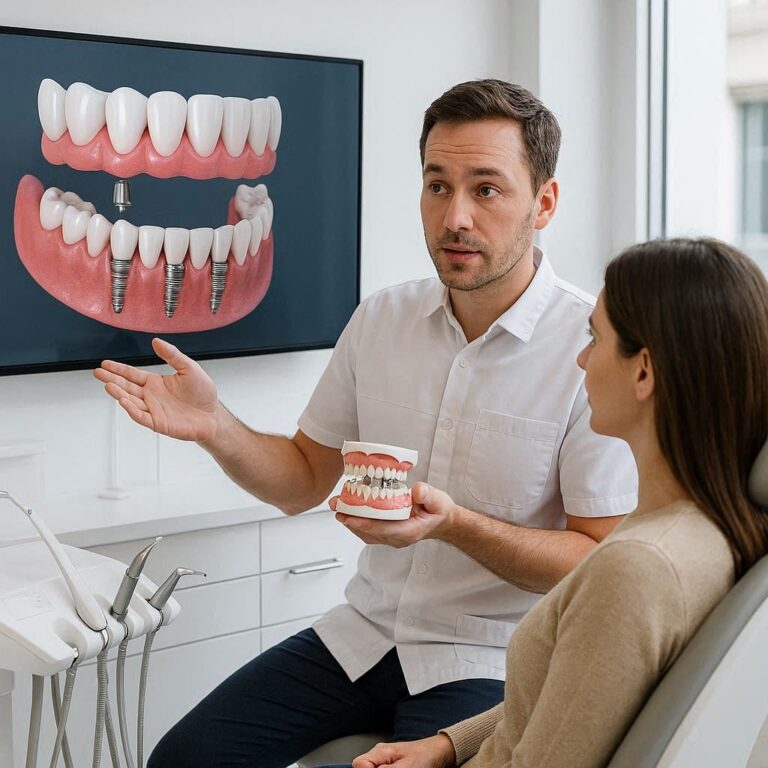
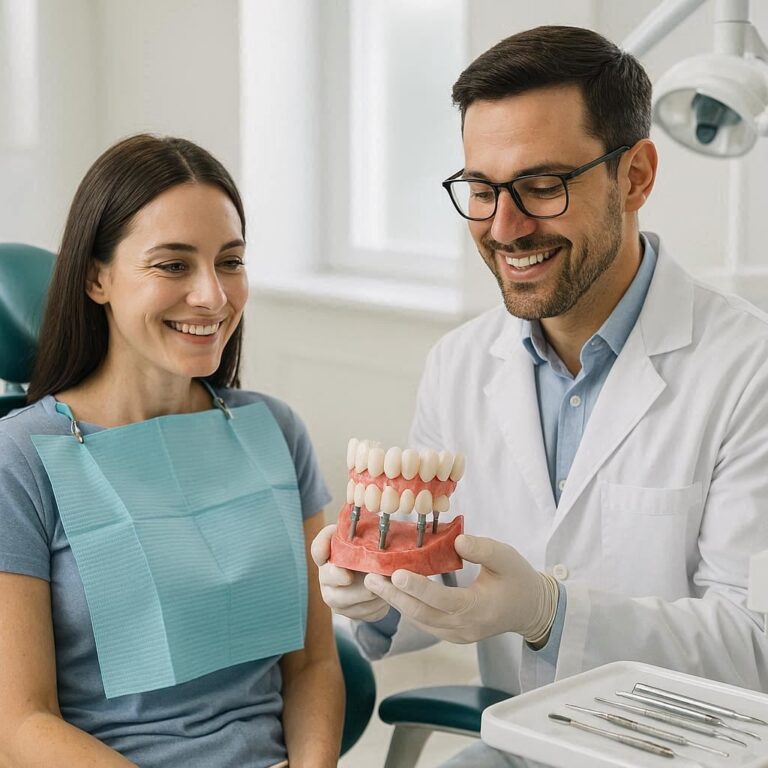
All On 4 Dental Implants Financing: A Realistic Guide to Paying for Your New Smile
Deciding to get All On 4 dental implants is a big step. You are not just fixing your teeth. You are investing in your confidence, your health, and your quality of life. But there is one question that stops almost everyone: How do I actually pay for this?
Let’s be honest. All On 4 treatment is not cheap. It is a sophisticated, life-changing procedure that requires surgical expertise and high-quality materials. Yet, the price tag scares many people away.
It should not.
The truth is that thousands of people afford All On 4 implants every year. They are not all wealthy. They simply know how to navigate their financing options.
This guide walks you through every realistic way to finance your new smile. You will learn about payment plans, medical credit cards, personal loans, insurance tips, and even creative strategies you might not have considered.
No fluff. No fake promises. Just clear, reliable information to help you make a smart decision.
Understanding the Real Cost of All On 4 Implants
Before you can plan your financing, you need a clear picture of the numbers. The cost of All On 4 implants varies widely based on where you live, the dentist’s experience, the materials used, and whether you need extractions or bone grafting.
On average, you can expect to pay between $15,000 and $30,000 per arch (upper or lower jaw). A full mouth (both arches) typically costs between $25,000 and $50,000.
| Treatment Scope | Average Cost Range (USD) |
|---|---|
| Single Arch (Upper or Lower) | $15,000 – $30,000 |
| Full Mouth (Both Arches) | $25,000 – $50,000 |
| With Extractions & Bone Grafting | +$3,000 – $8,000 |
| Premium Materials (Zirconia) | +$5,000 – $10,000 |
Important note: These figures are estimates. Some clinics advertise “All On 4 starting at $9,999.” Always read the fine print. Lower prices often exclude the temporary prosthesis, final teeth, or necessary surgical guides.
Why is the price so high? Because you are paying for:
-
A surgical team (oral surgeon or periodontist).
-
Advanced imaging (CBCT scans).
-
Four to six titanium implants per arch.
-
A temporary fixed bridge.
-
A final high-quality prosthetic (acrylic or zirconia).
-
Follow-up visits and adjustments.
The good news? This is a permanent solution. Unlike dentures, implants can last 20 years or more with proper care. You are not buying teeth. You are buying decades of comfort.
Why Traditional Dental Insurance Falls Short
Many people assume their dental insurance will cover a large portion of the procedure. Unfortunately, that is rarely the case.
Most dental plans have an annual maximum of $1,000 to $2,000 per year. Some premium plans go up to $3,500. Even with a generous plan, your insurance will only cover a small fraction of a $25,000 procedure.
Additionally, many insurers classify implants as “cosmetic” or “major restorative” with long waiting periods. Some do not cover implants at all.
That does not mean insurance is useless. You can still use it to cover parts of the treatment, such as:
-
Extractions
-
Diagnostic X-rays and CT scans
-
Periodontal evaluations
-
Temporary dentures
A realistic strategy: Use your insurance benefits for the preparatory work. Then, save your out-of-pocket funds for the implants and final teeth.
Some patients schedule the procedure over two calendar years. For example, you complete extractions and bone grafting in December, using this year’s benefits. Then, you place the implants in January, using next year’s benefits. This doubles your available insurance coverage.
All On 4 Financing Options: A Complete Overview
Now let us explore the real ways to pay for your implants. These options range from low-interest plans to creative funding methods.
In-House Payment Plans (Dentist Financing)
Many dental clinics offer their own payment plans. This is often the most flexible option because the clinic controls the terms.
You typically pay a down payment (10% to 30% of the total cost). Then, you make monthly payments directly to the dentist over 6 to 24 months.
Advantages:
-
No credit check (sometimes).
-
No third-party approval delays.
-
Negotiable terms.
Disadvantages:
-
Not all clinics offer this.
-
Interest rates can be high (12% to 20% or more).
-
Short repayment windows.
How to find it: Call clinics and ask, “Do you offer no-interest or low-interest in-house financing for All On 4?” Be direct.
Medical Credit Cards (CareCredit, Alphaeon, etc.)
Medical credit cards are the most common financing tool for dental implants. CareCredit is the market leader. These cards work like regular credit cards, but they are designed for healthcare expenses.
You apply online or at the clinic. If approved, you get a credit line you can use for your procedure.
The key feature is promotional financing. You may see offers like:
-
No interest if paid in full within 6, 12, or 18 months.
-
Reduced fixed interest rates for longer terms (24 to 60 months).
| Promotional Term | Typical APR | Risk |
|---|---|---|
| 6 – 18 months | 0% | High if you miss a payment |
| 24 – 60 months | 8.99% – 14.99% | Lower monthly payments |
Critical warning: Medical credit cards often use deferred interest. If you do not pay the full balance by the end of the promotional period, you are charged all the accrued interest from the start. That can add thousands of dollars.
Only use these cards if you are 100% certain you can pay off the balance before the promotional period ends.
Personal Loans (Banks, Credit Unions, Online Lenders)
A personal loan is another strong option. You borrow a fixed amount of money and repay it in fixed monthly installments over 1 to 7 years.
Where to look:
-
Credit unions: Often the lowest interest rates (6% to 12% for qualified borrowers). Credit unions are member-owned and more flexible.
-
Online lenders: SoFi, LightStream, Prosper, Upstart. These offer fast approvals and competitive rates (7% to 25% depending on credit).
-
Traditional banks: Wells Fargo, Chase, Bank of America. Rates are moderate (8% to 20%).
Advantages:
-
Fixed interest rates (no surprises).
-
Longer repayment terms (up to 84 months).
-
No deferred interest traps.
Disadvantages:
-
Requires good to excellent credit for the best rates.
-
Origination fees (1% to 8% of the loan amount).
Example: A $25,000 loan at 10% interest over 60 months gives you a monthly payment of approximately $530.
Home Equity Loans or HELOC
If you own a home, you have access to lower-interest financing. A home equity loan or home equity line of credit (HELOC) uses your home as collateral.
Interest rates are significantly lower — often 4% to 8% — because the loan is secured.
Pros:
-
Low interest rates.
-
Large loan amounts available.
-
Interest may be tax-deductible (consult a tax professional).
Cons:
-
Your home is at risk if you cannot repay.
-
Lengthy application process (appraisal, underwriting).
-
Closing costs (2% to 5% of the loan amount).
This option makes sense for patients with stable income and significant home equity. It is not for everyone.
401(k) Loan or IRA Withdrawal
Borrowing from your retirement account is a controversial but sometimes practical solution.
401(k) loan rules:
-
You can borrow up to $50,000 or 50% of your vested balance.
-
You must repay within 5 years.
-
Interest payments go back into your account.
-
If you leave your job, the loan may become due immediately.
IRA withdrawal rules:
-
You can withdraw money penalty-free for unreimbursed medical expenses exceeding 7.5% of your adjusted gross income.
-
Dental implants qualify as medical expenses.
-
You still owe income tax on the withdrawal.
Honest advice: Only use retirement funds if you are confident in your repayment plan. You are borrowing from your future self. Weigh this carefully.
Health Savings Account (HSA) or Flexible Spending Account (FSA)
If you have an HSA or FSA, you can use pre-tax dollars to pay for All On 4 implants. This is one of the smartest ways to save money because you avoid paying income tax on those funds.
HSA: Funds roll over year to year. You can contribute up to $4,150 for an individual or $8,300 for a family (2025 limits). You can reimburse yourself at any time, even years later.
FSA: Use-it-or-lose-it within the plan year (or grace period). Contribution limits are around $3,200 per year.
Strategy: Max out your HSA or FSA for one or two years before your procedure. Then, use the accumulated funds to pay for your implants tax-free. This effectively reduces your cost by 20% to 40% depending on your tax bracket.
Comparing the Best Financing Options Side by Side
Here is a clear comparison to help you decide which path fits your situation.
| Financing Method | Best For | Interest Rate Range | Credit Needed | Risk Level |
|---|---|---|---|---|
| In-house payment plan | Quick procedure, low down payment | 0% – 20% | Varies | Medium |
| Medical credit card | Short-term 0% offers | 0% – 27% | Fair to good | High (deferred interest) |
| Personal loan | Fixed payments, longer terms | 7% – 25% | Good to excellent | Low |
| Home equity loan | Large amounts, low rates | 4% – 8% | Good to excellent | High (home is collateral) |
| 401(k) loan | Access to your own money | Usually prime + 1% | No credit check | Medium (job risk) |
| HSA/FSA | Tax-free payments | 0% (pre-tax dollars) | N/A | Very low |
Recommendation: Start with HSA/FSA funds if available. Then, compare personal loan rates from credit unions. Use medical credit cards only for short-term 0% offers you can fully pay off.
Creative Strategies to Reduce Your All On 4 Cost
Financing is not just about borrowing money. It is also about spending less. Here are legitimate ways to lower your total cost.
Consider Dental Schools
Teaching hospitals and dental schools offer All On 4 procedures at reduced rates — often 30% to 50% less than private clinics. Residents perform the surgery under the supervision of experienced faculty.
Examples of dental schools with implant programs:
-
Loma Linda University School of Dentistry (California)
-
University of Texas Health Science Center
-
University of Michigan School of Dentistry
-
New York University College of Dentistry
Trade-offs: Longer appointment times. More visits. Less flexibility in scheduling. But the quality is carefully monitored.
Travel for Treatment (Dental Tourism)
Dental tourism is a real option for All On 4 implants. Countries like Mexico, Costa Rica, Colombia, Turkey, and Hungary offer high-quality care at 50% to 70% less than U.S. prices.
| Country | Typical All On 4 Cost (per arch) | Travel Cost Estimate |
|---|---|---|
| Mexico (Los Algodones, Cancun) | $6,000 – $10,000 | $500 – $1,000 |
| Costa Rica | $7,000 – $12,000 | $600 – $1,200 |
| Colombia | $5,000 – $9,000 | $500 – $1,000 |
| Turkey | $4,000 – $7,000 | $1,000 – $1,500 |
| Hungary | $6,000 – $10,000 | $1,000 – $1,500 |
What to watch for:
-
You need to stay for 7 to 14 days for the initial surgery.
-
A second trip (3 to 6 months later) for the final teeth.
-
Language barriers.
-
Different standard of care regulations.
How to do it safely: Research clinics with international accreditation (JCI or ISO). Read recent patient reviews on independent forums. Ask for before-and-after photos. Communicate extensively via video call before booking.
Negotiate with Your Dentist
Many patients do not realize that dental fees are negotiable. You can ask for:
-
A cash discount (5% to 10% off).
-
A bundled discount for both arches.
-
A referral discount if you bring another patient.
-
A payment plan without interest for 12 months.
The worst they can say is no. But many independent dentists will work with you, especially if you are ready to commit.
Use a Combination of Funding Sources
Most patients do not use a single financing method. They combine multiple sources.
Example combination:
-
$5,000 from HSA savings.
-
$10,000 from a 12-month 0% CareCredit offer.
-
$10,000 from a personal loan at 9% over 3 years.
This reduces your reliance on any single high-interest option.
Step-by-Step Guide to Financing Your All On 4 Implants
Let us walk through the practical steps from start to finish.
Step 1: Get a Detailed Treatment Plan
Visit at least two or three implant specialists. Ask for a written treatment plan that includes:
-
Cost of extractions (if needed).
-
Cost of bone grafting (if needed).
-
Cost of temporary prosthesis.
-
Cost of final prosthesis (material specified).
-
Number of follow-up visits.
-
Warranty information.
Compare these plans. Do not just look at the total price. Look at what is included.
Step 2: Check Your Credit Score
Your credit score determines your loan offers. You can get a free credit report from AnnualCreditReport.com. Free scores are available through Credit Karma, Experian, or your bank.
-
720+ (Excellent): You qualify for the best personal loan rates (7% – 10%).
-
680 – 719 (Good): You can still get solid rates (10% – 15%).
-
620 – 679 (Fair): Expect higher rates (15% – 22%).
-
Below 620: You may need a co-signer or focus on in-house financing.
If your credit is low, spend 3 to 6 months improving it. Pay down credit card balances. Dispute errors. Make every payment on time.
Step 3: Apply for Multiple Financing Options
Do not apply for only one loan or card. Apply for two or three within a short period (14 days). Credit bureaus treat multiple inquiries for the same type of loan as a single inquiry.
Suggested application order:
-
Check with your credit union.
-
Apply for a personal loan from an online lender.
-
Apply for CareCredit as a backup.
-
Ask your dentist about in-house plans.
Step 4: Calculate Your Monthly Payment Comfort Zone
A common mistake is focusing only on interest rates. You should focus on monthly cash flow.
Use this simple formula:
(Your monthly take-home pay) – (rent/mortgage + utilities + food + transportation + existing debts) = Available monthly payment
Do not exceed 10% to 15% of your take-home pay for dental financing. If you earn $4,000 per month, your dental payment should be no more than $400 to $600.
Step 5: Read Every Line of the Financing Agreement
Before signing anything, look for:
-
Prepayment penalties (fees for paying early).
-
Late payment fees.
-
Deferred interest clauses.
-
Origination fees.
-
Automatic withdrawal authorizations.
If something is unclear, ask for clarification. If they rush you, walk away.
Red Flags and Warnings: What to Avoid
Not all financing offers are created equal. Some are predatory. Here is what to watch out for.
“No Credit Check” Offers with High Interest
Some dental clinics advertise financing for anyone, regardless of credit. The catch is interest rates of 25% to 36% or more. On a $25,000 loan, that means paying $50,000 or more over time.
Better alternative: Find a co-signer with good credit or save for a larger down payment.
Leasing or Membership Plans That Aren’t Loans
Some companies offer “dental membership plans” that sound like financing but are actually prepaid service agreements. You pay a monthly fee for discounted rates, but you still owe the majority of the implant cost.
Always ask: “Is this a loan or a discount plan?”
Pressure to Start Treatment Immediately
A reputable dentist will never pressure you to sign financing papers on the same day as your consultation. If you feel rushed, that is a red flag. Walk out and find another provider.
Real Patient Scenarios: How Different People Financed Their All On 4
Let us look at three realistic examples.
Scenario A: Sarah, Age 52, Good Credit (740)
Situation: Sarah needs upper arch All On 4. Total cost: $22,000. She has $4,000 in her HSA and $6,000 in savings.
Her plan:
-
Use $4,000 HSA.
-
Use $6,000 savings as down payment.
-
Finance remaining $12,000 with a credit union personal loan at 8.5% over 36 months.
-
Monthly payment: ~$378.
-
Total interest paid: ~$1,600.
Result: Affordable monthly payment. No deferred interest risk.
Scenario B: Mike, Age 45, Fair Credit (640)
Situation: Mike needs full mouth All On 4. Total cost: $38,000. He has no savings but owns a home with equity.
His plan:
-
Take a HELOC at 6.5% for $38,000.
-
Repay over 10 years.
-
Monthly payment: ~$430.
-
Interest is tax-deductible.
Result: Low monthly payment. Higher total interest over time, but manageable.
Scenario C: Linda, Age 68, Fixed Income
Situation: Linda needs lower arch All On 4. Total cost: $18,000. She has Medicare (no dental coverage) and limited savings.
Her plan:
-
Found a dental school offering the procedure for $9,500.
-
Used $3,500 from her FSA (maxed over 2 years).
-
Borrowed $6,000 from a family member interest-free.
-
Paid the family member back $250 per month for 24 months.
Result: No interest. Lower total cost. Social support made it possible.
Frequently Asked Questions (FAQ)
1. Can I get All On 4 implants with no money down?
Yes, some clinics offer no-money-down financing through third-party lenders like CareCredit or Alphaeon. However, you still need to qualify for the credit line. No-money-down usually means higher monthly payments or higher interest rates.
2. Is it better to finance through the dentist or a bank?
It depends. Dentist in-house plans are convenient but often have higher interest rates or shorter terms. Banks and credit unions usually offer lower rates, especially for borrowers with good credit. Compare both before deciding.
3. Does Medicare or Medicaid cover All On 4 implants?
Original Medicare does not cover dental implants. Some Medicare Advantage plans offer limited dental benefits, but they rarely cover the full cost of All On 4. Medicaid coverage varies by state; some states cover implants for medically necessary cases (e.g., trauma or congenital defects), but cosmetic or standard tooth loss is usually not covered.
4. How long does financing approval take?
Medical credit cards: Minutes to hours. Personal loans: 1 to 3 business days. Home equity loans: 2 to 6 weeks. In-house payment plans: Same day.
5. Can I use multiple credit cards to pay for All On 4?
Technically, yes. But this is rarely a good idea. Credit card interest rates are high (18% to 28%). Unless you have a 0% introductory offer on a new card, using credit cards is one of the most expensive financing methods.
6. What happens if I stop making payments?
If you stop paying, the lender can send your account to collections, damage your credit score, and in the case of secured loans (home equity), foreclose on your home. Some dental in-house plans allow the clinic to stop your treatment. Always communicate with your lender if you face financial hardship.
7. Are there grants or non-profits that help pay for dental implants?
Very few. Some organizations offer assistance for specific populations (veterans, low-income seniors, cancer survivors). Examples include the Dental Lifeline Network and state-specific charitable clinics. However, grants for All On 4 are extremely rare. Do not rely on this as your primary plan.