Best Dental Implants in Pensacola Florida
If you are missing one tooth, several teeth, or are tired of dealing with loose dentures, you have likely searched for the phrase best dental implants in Pensacola Florida. It is a smart place to start. But what does “best” actually mean? Is it the cheapest price? The fastest surgery? The nicest waiting room?
In reality, the best dental implant provider for your neighbor might not be the right one for you. This guide is different. We will not just throw a list of names at you. Instead, we will walk you through what actually matters: the technology, the surgeon’s experience, the materials used, the costs, the recovery timeline, and the red flags to avoid.
By the end of this article, you will know exactly how to find a trustworthy implant dentist in Pensacola. You will also understand why a slightly higher upfront investment often saves you thousands of dollars in future headaches.
Let us begin.
Why Dental Implants Have Become the Gold Standard
Before we look at specific clinics in Pensacola, it helps to understand why implants are so highly recommended. A dental implant is not just a tooth replacement. It is a root replacement.
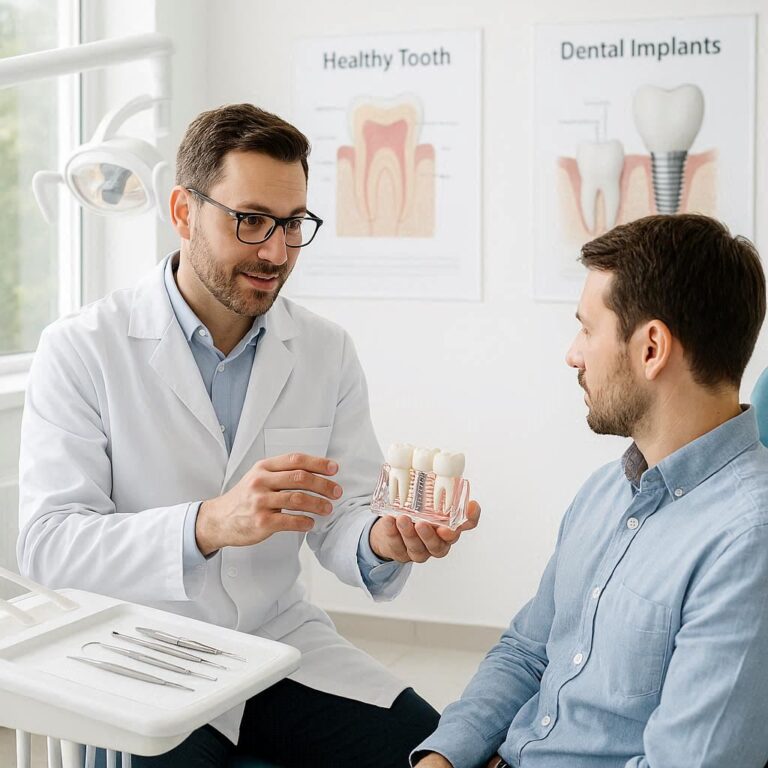
A small titanium post is surgically placed into your jawbone. Over a few months, that post fuses with your bone through a process called osseointegration. Once that bond is solid, a custom-made crown is attached on top.
Three reasons implants outperform older methods:
-
Bone preservation. When you lose a natural tooth, the jawbone in that area starts to shrink. Implants stimulate the bone, keeping it healthy and strong.
-
Natural feel. Unlike a bridge, an implant does not rely on neighboring teeth for support. It stands alone. Chewing feels normal again.
-
Longevity. With proper care, a good implant can last 20, 30, or even 40 years. Bridges and dentures typically need replacement every 5 to 10 years.
“The single most important factor in implant success is not the brand of the implant. It is the skill of the surgeon and the quality of the follow-up care.” – Dr. Alan Morrison, prosthodontist (retired).
Now, let us bring this back to Pensacola. The Gulf Coast has a growing number of skilled implant dentists. But not all of them offer the same level of service.
What to Look for in a Pensacola Implant Dentist
When you start researching the best dental implants in Pensacola Florida, keep a checklist handy. Do not rely on Google reviews alone. Reviews are helpful, but they rarely tell you about hidden fees or rushed procedures.
Key Qualifications to Verify
| Credential | Why It Matters |
|---|---|
| AAID or ABOI certification | The American Academy of Implant Dentistry (AAID) or American Board of Oral Implantology (ABOI) certification means the dentist has passed rigorous written and oral exams. |
| Years of implant-specific experience | A general dentist who places 10 implants per year is very different from a specialist who places 200+ per year. |
| CBCT scanner on-site | Cone Beam CT scans provide 3D images of your bone, nerves, and sinuses. This is non-negotiable for safe planning. |
| In-house vs. external lab | Clinics with their own dental lab can often turn around final crowns faster (sometimes same-day). |
| Clear, written warranty | The best clinics offer at least 3 to 5 years on the crown and 10+ years on the implant post itself. |
Red Flags to Walk Away From
-
Pressure to decide immediately. “This price is only valid if you sign today.” That is a sales tactic, not medical care.
-
No CBCT scan offered. X-rays alone are not enough to plan implant placement safely.
-
Vague about costs. If they cannot give you a detailed breakdown (post, abutment, crown, anesthesia, temporary), run.
-
No follow-up plan. Implants need regular check-ups. Ask: “Who do I see if something feels wrong at 6 months?”
Top Contenders for Best Dental Implants in Pensacola Florida
Based on patient outcomes, technology use, and transparent pricing, here are four clinics that consistently rank highly. Remember: this is not a “one is best” list. Each has different strengths.
1. Pensacola Implant & Family Dentistry
Best for: Patients needing full-mouth restoration (All-on-4 or All-on-6).
Dr. Reynolds and his team focus heavily on same-day teeth. They use a CBCT scanner and 3D surgical guides. Their in-house lab means you walk out with temporary teeth on the same day as surgery.
What patients like:
-
Clear, flat-fee pricing for full arches.
-
Financing options through CareCredit and Alphaeon.
-
Sedation dentistry (oral or IV) for nervous patients.
What to know:
They are often booked 4 to 6 weeks out for initial consultations. Their single-tooth implants are priced slightly above the Pensacola average.
2. Gulf Coast Oral & Maxillofacial Surgery
Best for: Complex bone grafting and sinus lifts.
If you have been told your bone is too thin or too soft for implants, this is where you go. Dr. Chen is one of the few oral surgeons in Escambia County who performs zygomatic implants (anchored in the cheekbone).
What patients like:
-
Surgical precision. Very low rate of post-op infections.
-
Works with most PPO insurances.
-
Offers general anesthesia for complete comfort.
What to know:
They focus on the surgical part only. You will need a separate general dentist for your final crowns. That means coordinating two providers.
3. West Florida Smile Center
Best for: Budget-conscious patients who still want quality.
This multi-specialty practice keeps overhead low by having several dentists share space. Do not mistake that for lower quality. They use Nobel Biocare implants, which are a top-tier brand.
What patients like:
-
Competitive pricing (single implant + crown often $500 to $1,000 less than specialists).
-
Saturday appointments available.
-
No referral needed – they handle surgery and restoration in-house.
What to know:
Because they are a high-volume practice, you may not always see the same dentist at every visit. That bothers some patients.
4. Davis Dental Care
Best for: Single-tooth implants and mini-implants for dentures.
Dr. Davis takes a slower, more personalized approach. Each implant patient gets a 90-minute consultation that includes CBCT scanning, treatment planning, and a printed estimate.
What patients like:
-
Exceptional follow-up care. Dr. Davis answers his own after-hours line.
-
Uses Zimmer Biomet implants (excellent long-term data).
-
Offers a 5-year warranty on all implant crowns.
What to know:
They do not offer IV sedation – only local anesthesia and oral sedatives. For very anxious patients, that can be a limitation.
Realistic Costs for Dental Implants in Pensacola (2025–2026)
Let us be honest about money. Dental implants are an investment. Pensacola prices are generally lower than Miami or Orlando, but higher than rural Alabama (just an hour north).
Here is a realistic breakdown. These are out-of-pocket estimates before insurance.
| Procedure | Low End | Average | High End |
|---|---|---|---|
| Single implant + crown + abutment | $3,200 | $4,200 | $5,500 |
| Implant-supported bridge (3 units) | $6,500 | $8,000 | $10,000 |
| All-on-4 (per arch) | $15,000 | $20,000 | $28,000 |
| Bone grafting (small, site-specific) | $500 | $800 | $1,200 |
| Sinus lift | $1,200 | $1,800 | $2,500 |
Important note: These prices assume no complications. If you smoke, have uncontrolled diabetes, or grind your teeth at night, you may need additional treatments (night guard, gum therapy) before implants are placed.
Does Insurance Cover Implants?
Most traditional dental PPO plans cover 30% to 50% of the crown portion but often exclude the implant post itself. Medical insurance may step in if tooth loss was due to an accident or tumor. Always ask for a pre-determination letter before starting.
The Step-by-Step Process: What to Expect
Knowing the timeline reduces anxiety. Here is a realistic, non-rushed implant journey in Pensacola.
Step 1: Consultation and CBCT Scan (Day 1)
You sit for a 20-second scan that creates a 3D map of your mouth. The dentist measures bone height and width. If there is enough bone, you move forward. If not, you discuss grafting.
Step 2: Preparatory Work (1 to 9 months)
Bone grafts need time to heal. A small graft (socket preservation) takes about 4 months. A large sinus lift can take 6 to 9 months. Do not skip this. Placing an implant in weak bone is a recipe for failure.
Step 3: Implant Placement (Day of surgery)
The dentist numbs the area. A small incision is made. A hole is drilled. The titanium post is inserted. Then the gum is stitched over it. The whole thing takes 30 to 90 minutes, depending on how many implants.
Step 4: Osseointegration (3 to 6 months of healing)
This is the waiting period. The bone grows around the implant. You wear a temporary partial denture or flipper if the missing tooth is visible.
Step 5: Abutment Placement (Day 2 of minor surgery)
A second small procedure uncovers the implant and attaches a metal connector (the abutment). Your gums heal around it for 2 weeks.
Step 6: Final Crown (2 to 3 weeks later)
The dentist takes impressions. A lab fabricates your permanent crown. You return for the final screw-in or cement-on appointment.
Total typical timeline from start to finish: 5 to 10 months. Same-day implants exist, but they are not right for everyone. Do not feel pressured to rush.
Same-Day Implants: Are They Right for You?
You have seen the ads: “Teeth in a Day” or “Smile in an Hour.” In Pensacola, a few clinics offer this. It sounds magical. But it comes with trade-offs.
Same-day implants work best when:
-
You have excellent bone density (no grafting needed).
-
You are replacing a front tooth with low chewing force.
-
You are getting a full-arch fixed bridge (All-on-4) with a temporary load.
Same-day implants are risky when:
-
You have active gum disease or heavy smoking habits.
-
The dentist skips the CBCT scan to save time.
-
You are promised a final, permanent crown that same day (that is almost never true – you receive a temporary).
Be skeptical of any clinic that guarantees same-day final teeth without a healing period. Your bone needs time to bond with the titanium. Rushing that process is the number one cause of early implant failure.
Recovery and Aftercare: A Honest Timeline
Let us talk about what healing actually feels like. The brochures make it look painless. In reality, implant surgery is surgery.
Days 1 to 3: Expect swelling, minor bleeding, and discomfort. Ice packs and over-the-counter ibuprofen help. Stick to cold soft foods: smoothies, yogurt, pudding.
Days 4 to 7: Swelling peaks then fades. You may feel a dull ache. Avoid hot foods and straws (you do not want dry socket, though it is rarer with implants than extractions).
Weeks 2 to 4: Most patients return to normal eating, but you will chew on the opposite side. The implant site may feel “different” – not painful, just present. That is normal.
Months 3 to 6: You forget the implant is there. This is a good sign. The bone is fusing quietly.
Long-term care checklist:
-
Brush and floss normally. Use a water flosser around the abutment.
-
See your hygienist every 6 months. They need to check the gum pocket depth around the implant.
-
Wear a night guard if you grind your teeth. Implants do not flex like natural teeth. Grinding can crack the crown or the post.
“The most common cause of late implant failure is peri-implantitis – basically gum disease around the implant. It is preventable with good hygiene and regular check-ups.” – Dr. Lisa Fernandez, periodontist, Pensacola.
Frequently Asked Questions (FAQ)
1. How long do dental implants last?
With proper care, 20 to 30 years is routine. The crown may need replacement after 10 to 15 years due to normal wear, but the titanium post often lasts a lifetime.
2. Are dental implants painful?
The procedure itself is not painful due to anesthesia. Post-surgery soreness is similar to a tooth extraction – manageable with ice and OTC pain relievers for 2 to 3 days.
3. Can I get implants if I smoke?
Yes, but your failure rate is significantly higher (up to 20% vs. 5% for non-smokers). Most reputable Pensacola dentists will ask you to quit for at least 2 weeks before and 2 months after surgery.
4. What is the cheapest dental implant option in Pensacola?
Mini-implants are smaller in diameter and cost less ($1,500 to $2,500 each). However, they are not as strong as standard implants. They work best for stabilizing lower dentures, not for replacing single molars.
5. How do I choose between a dentist and an oral surgeon for implants?
-
General dentist: Good for single, straightforward implants in healthy bone.
-
Oral surgeon: Best for multiple implants, bone grafts, sinus lifts, or complex anatomy.
-
Periodontist: Best if you have existing gum disease or thin gum tissue.
6. Does Medicare cover dental implants in Florida?
Original Medicare (Parts A and B) does not cover routine dental implants. Some Medicare Advantage plans (Part C) offer limited implant benefits, but they often have long waiting periods.
7. What happens if an implant fails?
The dentist removes the failed post, lets the bone heal for 3 to 6 months, and then attempts a new implant – often at a reduced cost if you had a warranty.
Additional Resources for Pensacola Residents
For unbiased, non-commercial information about dental implants, the American Academy of Implant Dentistry offers a patient education hub. They also have a “Find a Dentist” tool that only includes AAID members.
🔗 Recommended external resource:
AAID Patient Education – Dental Implants 101
Note: Always verify any dentist’s credentials directly with the AAID or state dental board. Do not rely solely on clinic websites.
Common Myths About Dental Implants – Busted
Let us clear up a few things you might have heard around Pensacola.
Myth 1: “Implants are too expensive. I will just stick with dentures.”
Dentures cost less upfront, but they need adhesives, relining, and replacement every 5 to 7 years. Over 20 years, implants are often cheaper and always more comfortable.
Myth 2: “I am too old for implants.”
Age is not a barrier. Patients in their 80s and 90s receive implants successfully. What matters is overall health, not your birthday.
Myth 3: “I can go to any dentist for implant follow-ups.”
Not true. General dentists without implant training may not know how to properly clean or diagnose issues with implant components. Always ask if a new dentist has implant maintenance experience.
Myth 4: “If I get one bad implant, all my implants will fail.”
No. Each implant is independent. One failure does not predict another, provided the cause (like smoking or poor hygiene) is corrected.
Final Thoughts Before You Book a Consultation
You came here searching for the best dental implants in Pensacola Florida. Now you know that “best” depends on your unique mouth, your budget, your healing ability, and your tolerance for multiple appointments.
Do this before you call any clinic:
-
Get a CBCT scan – even if you pay $200 out of pocket for it. Bring that scan to two different consultations.
-
Ask for total case cost in writing – including any possible grafting, temporary teeth, and the final crown.
-
Ask about the brand of implant – Nobel Biocare, Straumann, and Zimmer Biomet have decades of research. Avoid no-name “white label” implants.
-
Trust your gut – If a dentist rushes you, dismisses your questions, or avoids discussing risks, thank them for their time and walk out.
Your smile is worth a thoughtful decision. Pensacola has excellent providers. Take your time, do your homework, and you will find the right one for you.
Conclusion
In three lines: The best dental implants in Pensacola Florida are not about a single clinic name but about matching your specific needs to a qualified provider who uses CBCT planning, high-quality implant brands, and offers transparent pricing. Avoid rushed same-day promises without healing time, and always prioritize bone health and follow-up care. With realistic expectations and proper maintenance, dental implants can restore both your smile and your quality of life for decades.