The Ultimate Guide to best Life Dental Insurance: Securing Lifelong Oral Health and Affordability
- On
- InDENTAL INSURANCE
Imagine a future where a dental emergency doesn’t trigger financial panic. Envision aging with your natural teeth, confident in your smile and your ability to eat comfortably. This is not merely a luxury; it is an achievable reality underpinned by a crucial, yet often overlooked, component of holistic healthcare: a strategic, lifelong approach to dental insurance. The term “best life dental insurance” transcends the simple act of purchasing a policy. It represents a proactive, informed philosophy for managing your oral health financially across every stage of life—from the first baby tooth to the golden years.
Many consumers treat dental insurance as an afterthought, selecting the cheapest monthly premium without understanding the long-term implications. This approach can lead to devastating out-of-pocket costs when serious treatment is needed. Conversely, a “life dental insurance” strategy involves understanding payment structures, anticipating future needs, and weaving dental care into your overall financial and wellness planning. This comprehensive guide will serve as your roadmap, demystifying insurance jargon, comparing payment models, and providing actionable steps to secure not just a policy, but lasting oral health and financial peace of mind. We will also address a critical component of access to care by providing resources for free dental clinics in New Jersey, ensuring this guide is inclusive and practical for all readers.

Table of Contents
Toggle2. Understanding the Dental Insurance Landscape
Dental insurance operates on fundamentally different principles than medical insurance. While medical insurance is designed to cover catastrophic, unpredictable events, dental insurance functions more like a prepaid maintenance plan. Its primary purpose is to encourage preventive care—cleanings, exams, X-rays—to avoid costly and complex procedures down the line. This foundational difference shapes everything from policy structures to payment models.
Most traditional dental insurance plans follow a “100-80-50” coverage structure, which is pivotal to understanding your financial responsibility:
-
100% Coverage: Typically applies to diagnostic and preventive services (e.g., routine cleanings, exams, bitewing X-rays). These are fully covered, often without requiring you to meet a deductible.
-
80% Coverage: Applies to basic restorative procedures (e.g., fillings, simple extractions, periodontal scaling). After your deductible is met, the insurance pays 80%, and you are responsible for the remaining 20%.
-
50% Coverage: Applies to major restorative procedures (e.g., crowns, bridges, dentures, root canals, implants). Here, the cost-sharing shifts, and you pay 50% of the allowed fee.
This tiered system incentivizes regular check-ups but places significant financial burden on patients needing major work, underscoring the need for careful plan selection.
3. Best Life Dental Insurance Payment: Strategies for a Lifetime
The core of a sustainable “life dental insurance” plan lies in mastering its payment ecosystem. It’s not just about the monthly premium; it’s about understanding the total cost of ownership and aligning it with your life stage and health profile.
A. Deconstructing the Cost Components:
-
Monthly Premium: The fixed amount you pay to maintain active coverage, regardless of whether you use services. Lower premiums often correlate with higher out-of-pocket costs elsewhere.
-
Deductible: The amount you must pay out-of-pocket for covered services (usually excluding preventive care) before the insurance begins to share the cost. Common annual deductibles range from $50 to $150 per individual.
-
Copayment/Coinsurance: Your share of the costs for a covered service, calculated as a percentage (coinsurance) or a fixed amount (copay). This is where the 80/20 or 50/50 split comes into play.
-
Annual Maximum: The absolute maximum amount the insurer will pay for covered services in a benefit year. Once you exceed this limit, you are responsible for 100% of additional costs. This is arguably the most critical and limiting factor in dental insurance.
B. Strategic Payment Planning for Different Life Stages:
* Life-Stage Dental Insurance Strategy*
| Life Stage | Common Needs | Payment & Plan Focus | Key Consideration |
|---|---|---|---|
| Young Adult (18-26) | Wisdom teeth removal, preventive care, first fillings. | Low-premium plans with good preventive coverage. Consider staying on a parent’s plan if possible (coverage until 26 under ACA). | Prioritize in-network providers to maximize value. Establish a dental home. |
| Building a Family (27-45) | Pediatric dentistry, orthodontics for children, potential for restorative work. | Family plans with strong orthodontic benefits (lifetime maximums for braces). Higher annual maximums. | Check for waiting periods on major services; plan ahead for braces. |
| Mid-Life (46-64) | Crowns, bridges, periodontal treatment, implant consultations. | Plans with higher annual maximums ($2,000+) and favorable coinsurance for major work. | Consider supplemental plans or dental savings plans for procedures exceeding limits. |
| Retirement (65+) | Dentures, implants, ongoing periodontal care, xerostomia (dry mouth) treatment. | Medicare Advantage plans with dental benefits, standalone Senior dental plans. Focus on plans with no waiting periods for dentures. | Be wary of low maximums. Understand what Medicare does NOT cover (routine dental). |
C. Maximizing Your Insurance Investment:
-
Use Preventive Benefits Fully: Schedule two cleanings and exams per year without fail. This is 100% covered and is your first line of defense.
-
Understand Your Annual Maximum: If you need major work, strategize with your dentist. It may be financially prudent to split treatment across two benefit years (e.g., a root canal in December and the crown in January) to utilize two annual maximums.
-
Pre-Treatment Estimates: Always request a pre-treatment estimate from your insurer for procedures over a few hundred dollars. This outlines what they will pay and what you will owe, preventing surprise bills.
4. Key Features to Look for in a Lifelong Dental Plan
When evaluating plans for the long haul, look beyond the premium. Scrutinize these features:
-
High or No Annual Maximum: The best plans offer annual maximums of $1,500 to $3,000 or, in rare cases, no maximum at all. This is crucial for handling unexpected major work.
-
Rollover Benefits: Some innovative plans allow a portion of unused maximum to roll over to the next year, rewarding those who maintain good health.
-
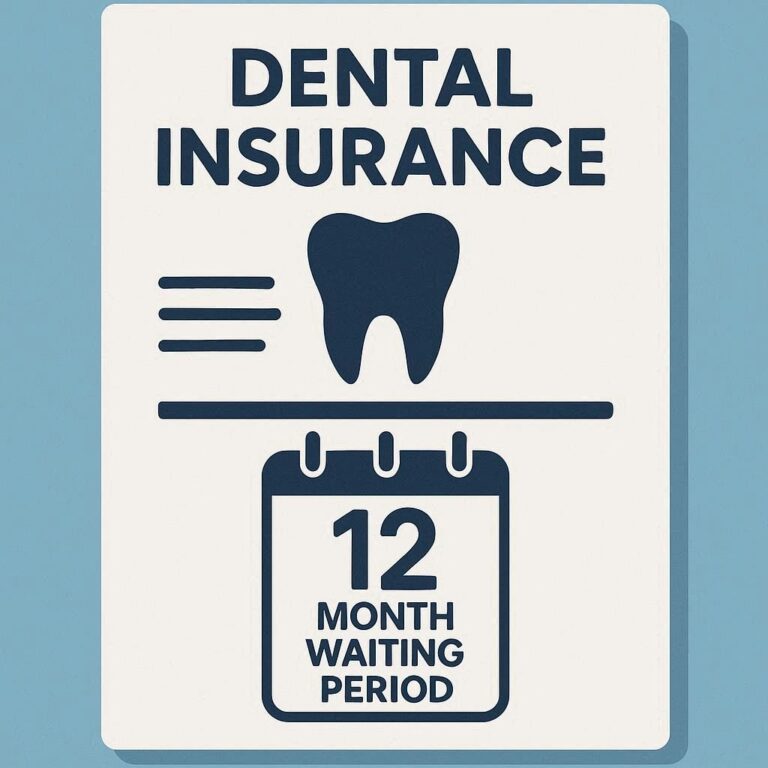
Short or No Waiting Periods: Standard plans often have 6-12 month waiting periods for basic work and 12-24 months for major procedures. The “best life” plans reduce or eliminate these, providing immediate value.
-
Strong Network with Quality Providers: A large PPO network gives you flexibility and choice. Research if your preferred dentists are in-network.
-
Lifetime Orthodontic Maximum: If orthodontics is a current or future need, look for a plan with a separate, lifetime orthodontic maximum (e.g., $1,500-$2,000 per person).
5. The Crucial Role of Annual Maximums and Waiting Periods
These two factors are the primary barriers to care in traditional dental insurance. The average annual maximum has stagnated around $1,000-$1,500 for decades, while dental costs have risen significantly. A single crown can easily consume an entire year’s maximum. Waiting periods lock you out of necessary care, making it imperative to secure insurance before you have a dental problem. For true “life” planning, seeking out plans that address these limitations—even if the premium is slightly higher—is a financially astute move.
6. Types of Dental Insurance Plans: PPO, DHMO, Indemnity, and Discount Plans
-
Dental PPO (Preferred Provider Organization): The most common type. Offers a network of dentists who agree to discounted rates. You can see out-of-network dentists but at a higher cost. Balances flexibility with cost.
-
Dental HMO (DHMO – Dental Health Maintenance Organization): Requires you to choose a primary care dentist from a network and get referrals for specialists. Typically has very low premiums and no annual maximums or deductibles, but offers little to no coverage for out-of-network care and less flexibility.
-
Indemnity (or Traditional) Plans: The most flexible type. You can see any dentist, and the insurer pays a set percentage of the “usual, customary, and reasonable (UCR)” fee. These often have higher premiums and deductibles.
-
Dental Savings Plans (Discount Plans): Not insurance. You pay an annual fee to access a network of dentists who provide services at a pre-negotiated discount (15-50% off). There are no claim forms, maximums, or waiting periods. An excellent supplement or alternative for those needing immediate, major work.
7. Dental Insurance vs. Dental Savings Plans: A Financial Analysis
For an individual facing a $2,500 crown procedure:
-
Typical Dental Insurance: $40/month premium ($480/year), $100 deductible, 50% coinsurance, $1,500 annual maximum. Your cost: $480 (premium) + $100 (deductible) + $500 (50% of the crown up to max) = $1,080. Insurance pays $1,500 (but hits max).
-
Dental Savings Plan: $150 annual membership fee, 40% discount on major work. Your cost: $150 (fee) + $1,500 (60% of $2,500) = $1,650. You pay more in this single instance, but have no maximum for additional work that year.
The “best” choice depends on your anticipated needs and desire for predictable costs.
8. The Importance of Provider Networks and Your Freedom of Choice
Your relationship with your dentist is key to consistent care. Before enrolling, verify your dentist’s participation. PPO networks offer the best balance. For specialist work (periodontist, endodontist), ensure the plan’s network includes a robust specialist roster. Narrow networks can limit access and delay treatment.
9. Planning for Major Dental Work: Orthodontics, Implants, and Dentures
These high-cost areas require special planning:
-
Orthodontics: Often covered under a separate lifetime maximum (e.g., $1,500-$2,000). This typically only covers a portion of full braces or Invisalign costs ($3,000-$8,000). Ask about age limits (often for children under 18).
-
Implants: Increasingly considered the standard of care for missing teeth but are often poorly covered by insurance. Many plans classify them as “cosmetic” or cover only the less-expensive alternative (a bridge). Expect to pay 50% or more of the $3,000-$6,000 per implant cost.
-
Dentures: Usually covered under the “major” category at 50%. Pre-treatment estimates are essential, as fees for fittings and adjustments can add up.
10. Choose from the links below to find a Free Dental Clinics in New Jersey
Access to care is a fundamental part of oral health. For New Jersey residents in need of immediate, low-cost, or charitable care, the following vetted resources can help locate free and sliding-scale dental clinics. These are invaluable for the uninsured, underinsured, or those in crisis.
-
New Jersey Department of Health – Oral Health Services: The state health department provides a directory of federally qualified health centers (FQHCs) that offer dental services on a sliding fee scale based on income.
-
Link:
nj.gov/health/fhs/oral/documents/clinicdirectory.pdf
-
-
NJ 2-1-1: A comprehensive, statewide helpline and database for health and human services. Operators and the website can connect you to free and low-cost dental clinics in your specific county.
-
Phone: Dial 2-1-1
-
Link:
nj211.org
-
-
Dental Lifeline Network – New Jersey: Part of a national nonprofit that provides comprehensive dental treatment for elderly, disabled, or medically fragile individuals who cannot afford care and do not have public aid.
-
Link:
dentallifeline.org/new-jersey
-
-
Rutgers School of Dental Medicine – University Hospital: As a dental school, they provide care at significantly reduced costs through student clinics, supervised by licensed faculty. They also often have outreach programs.
-
Link:
sdm.rutgers.edu/patient-care
-
-
Mission of Mercy Events & Remote Area Medical (RAM) Clinics: While not permanent, these large-scale charitable events pop up periodically in New Jersey, offering free dental, medical, and vision care to thousands over a weekend. Monitor their schedules.
-
Mission of Mercy:
americasdentistscarefoundation.org -
RAM:
ramusa.org
-
Always call ahead to confirm hours, eligibility requirements, and the types of services offered, as availability can change.
11. Integrating Dental Health with Overall Wellness
Modern science unequivocally links oral health to systemic health. Chronic periodontal disease is associated with increased risk of cardiovascular disease, stroke, poorly controlled diabetes, respiratory infections, and adverse pregnancy outcomes. Therefore, investing in dental insurance is not just about teeth; it’s a proactive investment in your total health profile, potentially reducing future medical costs and improving quality of life.
12. Case Studies: Real-Life Scenarios and Financial Outcomes
-
Case Study A (The Reactive Approach): Maria, 35, chose the cheapest plan ($20/month, $1,000 max). She needed a root canal and crown ($2,800 total). Her cost: $240 (premium) + $50 (deductible) + $1,000 (her share up to max) = $1,290. Insurance paid $1,000. She was left with significant out-of-pocket expenses.
-
Case Study B (The Proactive “Life” Approach): David, 35, chose a robust plan ($50/month, $2,500 max, no waiting periods). He used preventive care fully. At 40, he needed the same procedure. His cost: $600 (premium over 2 years for context) + $100 (deductible) + $900 (50% of $1,800 after deductible) = $1,600. Insurance paid $1,800. He had a higher premium but far better protection and lower stress.
13. Conclusion: Your Blueprint for a Healthy Smile for Life
Securing the best life dental insurance is a deliberate act of self-care and financial wisdom. It requires looking beyond the monthly premium to understand payment structures, annual limits, and lifetime needs. By choosing a plan that aligns with your life stage, maximizing preventive benefits, and knowing your options—from robust PPOs to discount plans and community resources like free clinics—you build a sustainable foundation for lifelong oral health. Start your strategy today; your future smile and wallet will thank you.
14. Frequently Asked Questions (FAQs)
Q1: Is dental insurance even worth it if I have healthy teeth?
A: Absolutely. Its primary value is in maintaining health through 100% covered preventive care, which catches small issues before they become expensive, painful problems. It is insurance against the risk of costly procedures.
Q2: Can I get dental insurance that covers pre-existing conditions?
A: Unlike ACA-regulated medical insurance, dental insurers can impose waiting periods for conditions existing prior to coverage. However, once you satisfy the waiting period, treatment for those conditions is typically covered. Some plans have no waiting periods—look for these if you have immediate needs.
Q3: What happens if I exceed my annual maximum?
A: You are responsible for 100% of the costs above the maximum. You can use a Health Savings Account (HSA) or Flexible Spending Account (FSA) to pay with pre-tax dollars, negotiate a payment plan with your dentist, or look into a dental savings plan for an additional discount on the remainder.
Q4: Does Medicare cover dental procedures?
A: Traditional Medicare (Parts A & B) does not cover routine dental care (cleanings, fillings, extractions, dentures). Some Medicare Advantage (Part C) plans include dental benefits. It is critical to plan for dental coverage separately in retirement.
Q5: How do free dental clinics work? Are they safe?
A: Free clinics are staffed by licensed volunteer dentists, hygienists, and dental students under supervision. They are safe and provide essential care, but they are often designed for urgent needs (pain, infection) and may have long wait times and limited appointment availability.
15. Additional Resources
-
National Association of Dental Plans (NADP):
nadp.org– Consumer resources to understand dental benefits. -
American Dental Association (ADA):
ada.org– Find an ADA-member dentist and access oral health information. -
Healthcare.gov: For information on dental coverage through the ACA Marketplace (available for those under 18 or as a bundled add-on with health plans).
-
Consumer Reports Guide to Dental Health: Independent advice on choosing plans and understanding costs.
-
Your State’s Department of Insurance: Regulates insurers and can provide complaint data and guidance (e.g., New Jersey Department of Banking and Insurance).
Date: December 17, 2025
Author: The Healthcare Policy Institute
Disclaimer: This article is for informational purposes only and does not constitute financial, medical, or insurance advice. Please consult with licensed professionals for advice tailored to your specific situation. All information is believed to be accurate as of the publication date but is subject to change.

dentalecostsmile
Newsletter Updates
Enter your email address below and subscribe to our newsletter