The True Cost of a 3D Printed Dental Crown: Technology, Savings, and Access to Care in 2025
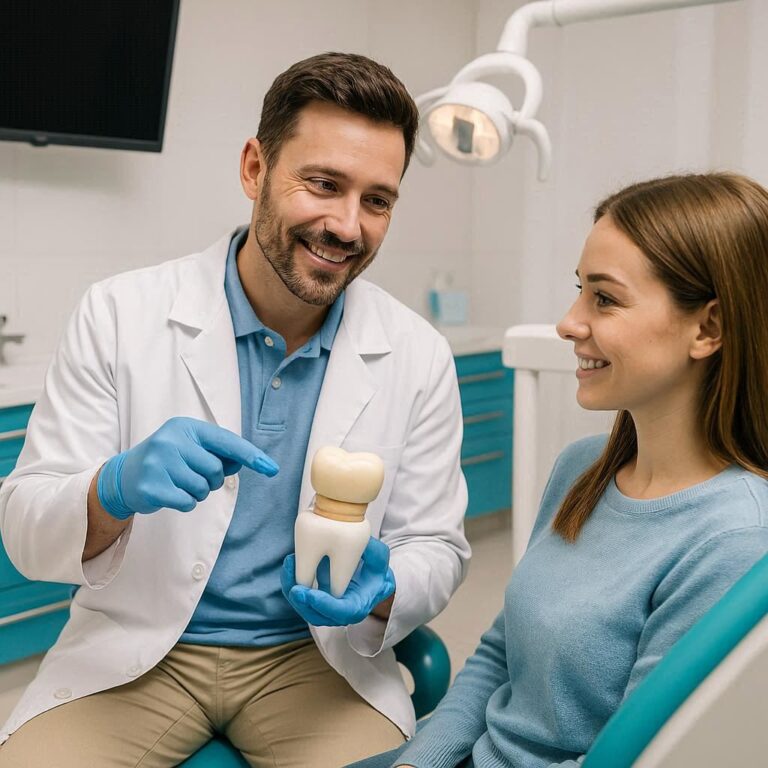
Imagine sitting in a dental chair, and instead of the unsettling grind of a drill and the messy, gag-inducing impression trays, a small, silent scanner glides over your tooth. Within hours, a perfect, custom-made ceramic crown is crafted by a robotic arm, ready to be placed. This is not science fiction; it is the reality of 3D printed dental crowns in 2025. For anyone facing the prospect of a dental crown, the immediate questions are often tinged with anxiety: “How much will it hurt?” and “How much will it cost?” This article addresses the latter with groundbreaking clarity, focusing on the transformative economic and clinical implications of 3D printing technology. The cost of a 3D printed dental crown is more than just a number—it represents a shift towards precision, efficiency, and surprising accessibility. We will dissect every dollar, explore the technological marvel behind it, and provide tangible resources, including pathways to affordable care in New Jersey, empowering you to make an informed decision for your oral health.
Chapter 1: Understanding the 3D Printed Crown – It’s Not Your Grandfather’s Dentistry
A dental crown is a cap placed over a damaged tooth to restore its shape, size, strength, and appearance. Traditionally, this has been a multi-visit, analog process. The 3D printed crown revolutionizes this workflow through additive manufacturing.
The Technology Core:
-
Intraoral Scanning: A digital impression replaces messy putty. A wand-like device takes thousands of images per second to create a precise 3D model of your prepared tooth and surrounding bite.
-
Digital Design (CAD): Using Computer-Aided Design software, a dental technician designs the crown with micron-level precision. The software can suggest optimal anatomy for function and aesthetics.
-
3D Printing (CAM): The design file is sent to a 3D printer. For permanent crowns, printers typically use Digital Light Processing (DLP) or Stereolithography (SLA). A vat of liquid resin—often a high-strength, ceramic-filled composite or a specialized polymer for temporary crowns—is selectively cured by a light source, layer by layer (often as thin as 25 microns), to build the physical crown.
-
Post-Processing: The printed crown is cleaned, cured further in a UV light chamber for maximum strength, and then often polished or glazed.
Materials Used:
While traditional crowns use milled porcelain-fused-to-metal, zirconia, or lithium disilicate (e.max), 3D printed permanent crowns primarily use advanced composite resins and polymer-infiltrated ceramic networks (PICN). These materials, like 3M’s Tetrician CAD or Crowntec, offer exceptional strength (over 200 MPa flexural strength), durability, and aesthetics that rival traditional options for many clinical situations. For final, long-term restorations in the posterior regions, the trend is moving towards 3D printed zirconia crowns, which are printed in a “green state” and then sintered in a furnace to achieve full density and strength.
Chapter 2: The Cost Breakdown – What You’re Really Paying For
The price of a 3D printed crown is not arbitrary. It reflects a confluence of technological and professional value.
Cost Components of a 3D Printed Dental Crown
| Cost Component | Description | Approx. % of Total Fee |
|---|---|---|
| Professional Fee (Dentist’s Expertise) | Diagnosis, treatment planning, tooth preparation, digital scan, final bonding/cementation, and follow-up care. This is the largest and most variable component. | 50-65% |
| Technology & Laboratory Fee | Cost of the printed crown itself from the lab or the in-house practice’s amortized equipment cost (printer, scanner, software, curing oven). Includes material cost. | 25-40% |
| Facility & Operational Overhead | Clinic rent, utilities, staff salaries, sterilization protocols, and other practice management costs. | 10-15% (bundled into fee) |
| Geographic Location | A practice in metropolitan North Jersey (e.g., Jersey City) will have higher overhead than one in rural South Jersey, impacting the final price. | (Major Price Variable) |
| Case Complexity | Difficult-to-access teeth, need for buildups, gum contouring, or exceptional aesthetic demands increase time and skill required. | (Variable Adjuster) |
The In-House vs. Lab Debate:
-
In-House (“Same-Day Crowns”): Practices with chairside systems (e.g., CEREC Primemill, SprintRay) can deliver crowns in a single visit. The cost may be higher due to the massive equipment investment, but it saves you a second visit and a temporary crown.
-
Outsourced to a Digital Lab: Many dentists send digital scans to specialized labs. This can sometimes be more cost-effective for the dentist, potentially leading to slightly lower patient fees, but adds a 1-2 week turnaround time.
Chapter 3: The National and New Jersey-Specific Cost Landscape
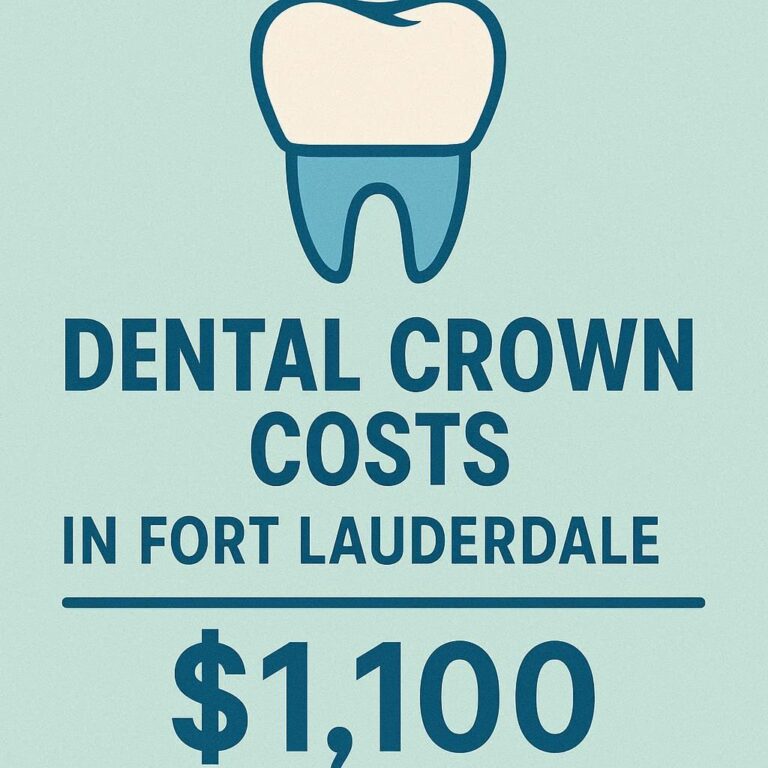
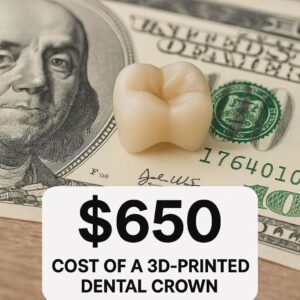
Nationally, the average cost for a single 3D printed crown in 2025 ranges from $800 to $1,800. Traditional crowns range from $1,000 to $2,500+.
In New Jersey, costs are slightly above the national average due to the state’s higher cost of living and density of specialized dental practices.
-
New Jersey Average Range (3D Printed Crown): $900 – $2,000.
-
Economy Tier ($900 – $1,300): Often found at larger dental group practices or clinics in more affordable areas using efficient in-house systems for composite-based crowns.
-
Mid-Tier ($1,300 – $1,700): The most common range for a PICN or high-strength composite crown from a quality general dentist.
-
Premium Tier ($1,700 – $2,000+): For highly aesthetic anterior (front tooth) crowns, 3D printed zirconia, or work from specialist prosthodontists in affluent areas like Bergen County or Princeton.
Chapter 4: The Comparative Analysis: 3D Printing vs. Traditional Crown Methods
| Feature | 3D Printed Crown (Digital Workflow) | Traditional Milled Crown (Analog Workflow) |
|---|---|---|
| Visits Required | Often 1 visit (in-house) or 2 visits (lab). | Minimum 2 visits (prep/impression & placement). |
| Patient Comfort | High. Digital scans are fast and comfortable. No gagging on impression material. | Low. Traditional impressions are uncomfortable for many. |
| Speed | Very Fast. Same-day possible. Lab turnaround is 1-2 weeks. | Slow. Requires physical impression shipping, lab model pouring, and milling/firing. 2-3 weeks standard. |
| Material Waste | Low. Additive process uses only the material needed for the crown. | Higher. Subtractive milling starts with a solid block, up to 90% of which is carved away and discarded. |
| Precision & Fit | Excellent. Digital accuracy minimizes human error. Marginal fit is consistently tight. | Very Good, but subject to distortion from impression material, model shipping, etc. |
| Aesthetic Range | Rapidly improving. Great for posterior teeth; anterior aesthetics are catching up with new materials. | Established and excellent. A wide range of highly aesthetic ceramics (e.max, layered zirconia) is available. |
| Cost | Generally 10-25% less than traditional crowns due to efficiency and lower lab costs. | Higher base cost due to more labor, materials, and visits. |
Chapter 5: The Hidden Economics: Long-Term Value, Durability, and Insurance
Durability: Early 3D printed crown materials faced scrutiny. Today’s PICN materials carry 5+ year clinical data showing success rates comparable to traditional crowns for standard applications. They are less brittle than some ceramics, showing resistance to chipping. Long-term (10+ year) data is still being gathered.
Insurance: Dental insurance treats 3D printed crowns the same as traditional crowns if they use a covered material (e.g., composite or ceramic). They typically cover 50% of the cost after your deductible, up to your plan’s annual maximum. Crucially, confirm with your insurer that the dental code used (e.g., D2740 for all-ceramic) is covered, regardless of the fabrication method.
Long-Term Value: The value is profound: fewer appointments mean less time off work. A precise digital fit reduces the risk of future decay at the margin. The digital file is also permanently stored, allowing for easy reproduction if needed.
Chapter 6: The Patient’s Journey: From Scan to Smile
-
Consultation & Preparation: The dentist numbs the area, removes decay, and shapes the tooth.
-
The Digital Moment: An intraoral scanner captures the preparation. You might see a 3D model on a screen instantly.
-
The Design & Print: The dentist or technician designs the crown. If in-house, the printer begins its work. You may wait 1-2 hours.
-
Try-in & Cementation: The crown is tried in, checked for bite and color, and then permanently cemented with a strong dental adhesive.
(Image: A photo series showing the actual stages: a prepared tooth, the intraoral scanner in use, a 3D printer in action, and a dentist placing the final crown.)
Chapter 7: Finding Quality and Affordability: Navigating Dentists, Labs, and Clinics
-
Ask Direct Questions: “Do you offer 3D printed crown options?” “What material do you recommend for my tooth and why?” “Is this an in-house same-day procedure or sent to a lab?”
-
Seek Consultations: Get a second opinion and a detailed written estimate.
-
Dental Savings Plans: An alternative to insurance, these plans offer discounted member fees at participating dentists, often including new technologies.
-
Dental School Clinics: An excellent, lower-cost option where supervised students perform work with advanced technology.
Chapter 8: Free and Low-Cost Dental Clinics in New Jersey – A Resource Guide
For those without insurance or with limited means, New Jersey has resources. These clinics may offer sliding-scale fees or occasional free care events, and increasingly, they are adopting digital technology.
Choose from the links below to find Free and Low-Cost Dental Clinics in New Jersey:
-
New Jersey Department of Health – Community Health Centers: Search for Federally Qualified Health Centers (FQHCs) that provide dental care on a sliding fee scale. NJ DOH Website.
-
New Jersey Dental School Clinics:
-
Rutgers School of Dental Medicine (Newark): Provides comprehensive, low-cost care. RSDM Patient Care.
-
University of Medicine and Dentistry (Various Locations): Associated clinic networks.
-
-
Mission of Mercy Events & Donated Dental Services (DDS): Organizations like the New Jersey Dental Association occasionally host large-scale free dental clinics. The DDS program matches volunteer dentists with vulnerable patients.
-
Local County Health Departments: Contact your county’s health department for lists of free/sliding-scale clinics (e.g., Camden County Health Services, Bergen County Health Department).
Chapter 9: The Future Horizon: Bioprinting, AI, and Personalized Dentistry
The horizon holds even more promise: AI-driven design algorithms that automatically create the perfect crown anatomy; 3D printed permanent crowns using porous structures that mimic natural enamel; and research into bioactive materials that release calcium and phosphate to protect surrounding tooth structure. The cost trajectory suggests that as adoption grows, prices will stabilize or even decrease for the technology component, making precision dentistry more accessible than ever.
Conclusion
The cost of a 3D printed dental crown is a compelling fusion of advanced technology and clinical efficiency, typically offering significant savings over traditional methods. Its value extends beyond price to encompass patient comfort, precision, and time savings. By understanding the cost components, asking informed questions, and exploring all avenues of care—from private practices to New Jersey’s community health resources—you can secure a restoration that is not only kind to your smile but also to your wallet.
Frequently Asked Questions (FAQs)
Q1: Are 3D printed crowns as strong as traditional crowns?
A: For most common applications, yes. Modern 3D printed crown materials (PICNs, high-strength composites) have flexural strengths exceeding 200 MPa, making them suitable for posterior teeth. For the highest biting forces or extreme aesthetic demands, your dentist may still recommend a milled zirconia or e.max crown.
Q2: How long does a 3D printed crown last?
A: With proper care and oral hygiene, clinical studies show they have a lifespan of 5-10 years and potentially longer, which is beginning to align with the 10-15 year expectancy of traditional crowns. Longevity always depends on the specific material, the dentist’s skill, and your oral habits.
Q3: Can I get a 3D printed crown on a front tooth?
A: Absolutely. The aesthetics of 3D printed materials have dramatically improved. For the most critical aesthetic zones, dentists can use multi-layered, highly translucent resins or opt for a 3D printed zirconia substructure with hand-layered porcelain, offering a beautiful and strong result.
Q4: Does dental insurance cover 3D printed crowns?
A: In the vast majority of cases, yes. Insurance companies pay for the procedure (crown placement) and material type, not the fabrication method. As long as the code submitted is for a covered crown (e.g., all-ceramic/porcelain), it should be covered at your plan’s percentage (usually 50%).
Q5: What is the main disadvantage of a 3D printed crown?
A: The primary relative disadvantage is the track record of time. While data is excellent for 5+ years, traditional porcelain and zirconia crowns have decades of long-term data supporting their durability. For some complex restorative cases, the material options for 3D printing are still evolving compared to the vast library of traditional ceramics.
Additional Resources
-
American Dental Association (ADA) – Patient Resources on Crowns: ADA.org
-
SprintRay – State of 3D Printing in Dentistry (2025 Report): SprintRay.com/Resources
-
National Institute of Dental and Craniofacial Research (NIDCR) – Information on Dental Materials.
Date: December 25, 2025
Author: The Digital Dentistry Review Team
Disclaimer: This article is for informational purposes only and does not constitute professional medical advice, diagnosis, or treatment. Always seek the advice of your dentist or other qualified health provider with any questions you may have regarding a dental procedure or medical condition. Costs cited are estimates and can vary widely based on individual circumstances and geographic location.