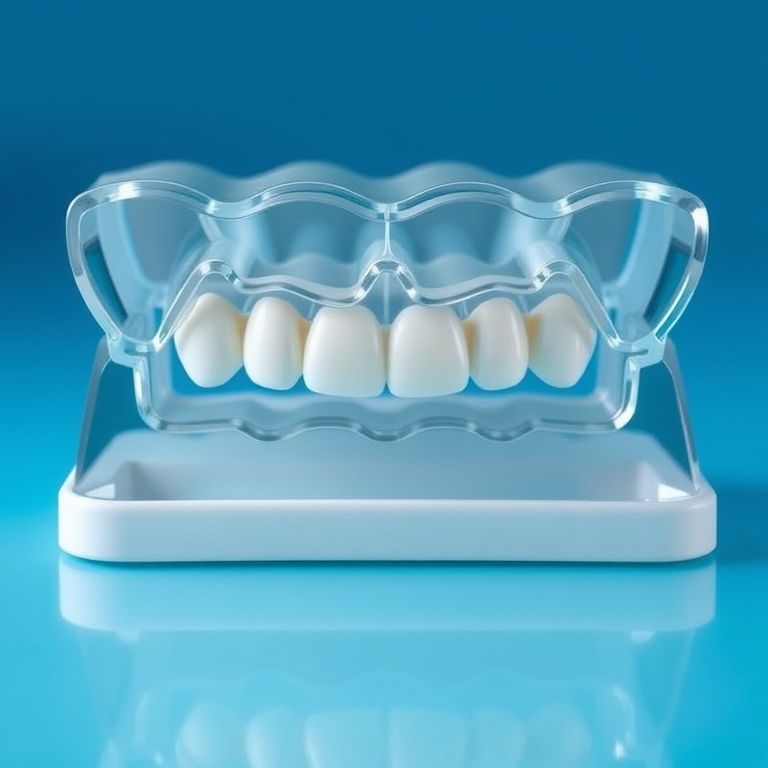
A Comprehensive Guide to the True Cost of a 5-Tooth Dental Bridge and Your Path to Affordable Care
Losing a single tooth is a crisis. Losing five teeth in a row—whether due to trauma, profound decay, or advanced periodontal disease—feels like a catastrophic collapse of a fundamental part of your identity. The consequences extend far beyond aesthetics. This multi-tooth gap is a silent saboteur, initiating a cascade of dental and systemic health issues. Neighbaining teeth begin a slow, inevitable drift into the empty space, compromising your bite and creating food traps that accelerate decay. The opposing jaw’s teeth, with nothing to meet, start to supra-erupt, lengthening out of the bone. Jawbone beneath the gap, deprived of the stimulating pressure of tooth roots, begins to resorb and atrophy, changing the very architecture of your face, leading to a sunken, aged appearance. Chewing efficiency plummets, often forcing you to avoid nutritious, crunchy foods, which can impact your overall nutrition.
Yet, when individuals in this situation begin seeking solutions, they are often met with a different kind of shock: the staggering financial quote for a 5-tooth dental bridge. The figure presented—frequently ranging from the price of a used car to a significant home repair—can feel like a second trauma, forcing many into an impossible choice between their health and their financial stability. This article exists to demystify that cost. We will dissect, in exhaustive detail, every factor that contributes to the price of a 5-tooth bridge. More importantly, we will provide you with a strategic roadmap to navigate this financial challenge, including a dedicated guide to accessing free and low-cost dental clinic resources in New Jersey. Knowledge is not just power; in this scenario, it is the essential tool for reclaiming your smile and your well-being.

2. Understanding the 5-Tooth Bridge: More Than Just a “Filler”
A dental bridge for five consecutive teeth is a sophisticated, custom-made prosthetic device. Its name is aptly descriptive: it literally “bridges” the gap created by missing teeth. The structure consists of two primary components:
-
Abutments: These are the crowned teeth on either side of the gap. For a 5-tooth span, these are typically strong, healthy teeth (or strategically placed implants) that are prepared (reshaped) to serve as the foundational pillars for the entire bridge. They bear the full functional load of chewing.
-
Pontics: These are the artificial teeth that suspend between the abutments, filling the space of the three missing middle teeth. In a 5-tooth bridge, there are three pontics suspended between two abutment crowns, creating a single, five-unit fixed piece.
This is not an off-the-shelf product. It is a feat of bio-mechanical engineering and artistry. It must precisely replicate the anatomy, color, translucency, and bite alignment of your natural dentition while withstanding immense masticatory forces (up to 200 pounds per square inch on molars). The fabrication involves a collaborative dance between your dentist and a skilled dental laboratory technician, using digital scans or physical impressions, precise models, and advanced materials. Understanding that you are paying for this level of custom medical craftsmanship is the first step in comprehending the cost.
3. The Core Cost Determinants: Materials, Labor, and Complexity
The final invoice for your bridge is a sum of multiple variables. Ignoring any one of them leads to an incomplete financial picture.
-
Material Science: This is the most significant driver of cost.
-
Premium Esthetics (PFM & All-Ceramic): Porcelain-Fused-to-Metal (PFM) has been the gold standard for decades. A metal substructure provides strength, layered with porcelain for aesthetics. Costs vary with the metal (nickel-chromium vs. noble/high-noble gold alloys). All-ceramic or zirconia bridges represent the pinnacle of modern dentistry. Materials like lithium disilicate (e.g., IPS e.max) and monolithic zirconia offer breathtaking, lifelike translucency and exceptional strength without a metal core, making them ideal for visible areas but at a premium price.
-
Durability vs. Esthetics (Full Cast Metal): Made entirely of metal alloy (often gold-based), these bridges are incredibly strong, durable, and gentle on opposing teeth. However, their metallic appearance limits them to the far back of the mouth (molar regions).
-
-
Laboratory Fees: The dental lab is where your bridge is born. A high-end lab employing master technicians using CAD/CAM (Computer-Aided Design/Manufacturing) technology, premium branded materials (3M, Ivoclar, Dentsply Sirona), and offering extensive customization (characterized stains, individualized morphology) will charge your dentist several hundred to over a thousand dollars for the bridge unit alone. This cost is directly passed on.
-
Clinical Expertise and Geographic Location: A prosthodontist (a specialist in crowns, bridges, and implants) will command higher fees than a general dentist due to their advanced training. Geographic location dramatically impacts overhead. Practice rents, staff salaries, and insurance costs in metropolitan areas like Bergen County or Jersey City are vastly higher than in rural South Jersey, and these overheads are factored into treatment fees.
-
Diagnostic and Preparatory Procedures: The cost of the bridge itself is often just part of the story. A 5-tooth span likely doesn’t exist in isolation. Necessary preparatory work can include:
-
Comprehensive exams and 3D cone beam CT scans ($200-$500) to assess bone health.
-
Periodontal (gum) therapy ($1,000-$4,000) to ensure a healthy foundation.
-
Root canal therapy on one or both abutment teeth ($1,000-$1,600 per tooth).
-
Surgical extractions of any compromised remaining teeth ($150-$400 per tooth).
-
Bone grafting ($300-$800 per site) to preserve bone for future options.
-
4. A Deep Dive into Bridge Types for a 5-Tooth Span
Not all bridges are engineered the same way. The type recommended for you significantly affects cost and long-term prognosis.
-
Traditional Fixed Bridge: This is the standard described above. For a 5-tooth gap, it requires preparing the two healthy teeth at the ends of the span. It is a robust solution but involves significant alteration of otherwise healthy tooth structure.
-
Cantilever Bridge: A less common and often risky choice for a long span. In this design, the bridge is supported by an abutment on only one side of the gap, like a diving board. For a 5-tooth gap, this is generally contraindicated due to the excessive lever forces that can fail the abutment tooth.
-
Implant-Supported Bridge: The modern gold standard for a 5-tooth gap. Instead of grinding down natural teeth, two (or sometimes three) dental implants are surgically placed in the jawbone to act as abutments. A 5-unit bridge is then affixed to them. While the upfront cost is higher (implants can be $2,000-$5,000 each), it preserves natural tooth structure, prevents bone loss, and offers unparalleled longevity and stability. This is often the most cost-effective solution over a 20+ year timeline.
5. The National Price Breakdown: A Detailed Table
The following table provides a transparent breakdown of the all-in costs for a 5-tooth dental bridge in 2025. Remember, these are national averages; your specific quote will depend on the factors previously discussed.
2025 Cost Breakdown for a 5-Unit Dental Bridge (Abutment to Pontic)
| Cost Component | Low-End Estimate | Mid-Range Estimate | High-End / Premium Estimate | Notes |
|---|---|---|---|---|
| Bridge Fabrication (per unit) | $600 – $900 | $900 – $1,300 | $1,300 – $2,000+ | Based on material. Low-end may be basic PFM or composite; High-end is layered zirconia/emax from top-tier lab. |
| Total for 5-Unit Bridge | $3,000 – $4,500 | $4,500 – $6,500 | $6,500 – $10,000+ | Just for the prosthesis itself. |
| Abutment Preparation (per tooth) | $200 – $500 | $500 – $800 | $800 – $1,200 | Covers anesthesia, temporaries, and chair time for preparing the two supporting teeth. |
| Diagnostic & Prep Work | $500 – $1,000 | $1,000 – $3,000 | $3,000 – $7,000+ | Highly variable. Includes X-rays, CT scan, deep cleanings, root canals, extractions. Can exceed bridge cost. |
| Final Placement & Adjustment | $300 – $600 | $600 – $1,000 | $1,000 – $1,500 | Cementing the final bridge and ensuring perfect bite alignment. |
| TOTAL ESTIMATED PATIENT COST | $4,000 – $6,600 | $6,600 – $11,300 | $11,300 – $19,500+ | Before insurance. A 5-unit implant-supported bridge can range from $10,000 to $25,000+. |
6. The “Hidden” Costs You Must Budget For
Beyond the initial treatment, consider the long-term financial commitment:
-
Replacement: Even a well-made bridge lasts 10-15 years on average. Budgeting for future replacement is crucial.
-
Specialized Maintenance: You cannot floss between the pontics and the gumline normally. You will require special tools like floss threaders, superfloss, or a water flosser (like a Waterpik) to clean under the bridge daily, adding to your routine cost.
-
Repair Risk: While strong, the porcelain on a PFM bridge can fracture or chip. Repair costs range from $300 for a polish to $1,000+ for a lab repair.
-
Abutment Tooth Failure: The greatest risk. If an abutment tooth develops decay under the crown or needs a root canal, the entire bridge (a $5,000+ device) may need to be cut off and replaced—a catastrophic financial and clinical setback.
7. Insurance: Decoding Coverage, Limitations, and Maximums
Dental insurance is structured for maintenance, not major rehabilitation. Understanding its limitations is key to avoiding surprise bills.
-
Annual Maximums: Most plans have a yearly maximum benefit of $1,000 to $1,500. A single 5-tooth bridge can exhaust this for two or three years.
-
Benefit Tiers and Waiting Periods: Bridges are typically a “Major Service” (Tier 3), often covered at 50% after a 6-12 month waiting period. On a $7,000 bridge, insurance might cover $3,500 (50%), but only up to your annual max. If your max is $1,500, that’s all you get the first year. The remaining $5,500 is your responsibility.
-
“Usual, Customary, and Reasonable” (UCR): Insurers pay based on their “UCR” fee schedule, which is often below actual market rates in your area. If your dentist charges $1,300/unit but insurance UCR is $900/unit, they pay 50% of $900 ($450), not $650. You pay the difference ($850/unit) plus the full cost above the UCR.
8. Beyond Insurance: Creative Financing and Payment Strategies
-
In-House Payment Plans: Many offices offer interest-free monthly payment plans over 6-12 months.
-
Medical Credit Cards: CareCredit or Alphaeon Credit offer promotional periods (e.g., 0% interest for 12-24 months). CRITICAL: If not paid in full by the end of the term, retroactive interest at high rates (often 26.99%) is applied to the original balance.
-
Flexible Spending Accounts (FSA) / Health Savings Accounts (HSA): Use pre-tax dollars to pay for eligible expenses. Plan ahead, as FSA funds are “use-it-or-lose-it” annually.
-
Dental School Clinics: An excellent option for major savings. Treatment is provided by supervised, advanced students at dental schools like Rutgers School of Dental Medicine in Newark. Fees can be 30-50% less than private practice. The trade-off is longer appointment times.
-
Charitable Care and Clinical Trials: Organizations like Donated Dental Services (DDS) help qualifying disabled, elderly, or medically compromised patients. The National Institute of Dental and Craniofacial Research (NIDCR) lists clinical trials that may provide treatment at no cost.
9. The Quality vs. Cost Conundrum
Choosing the lowest-cost provider can be the most expensive long-term decision. A poorly designed bridge with marginal gaps, an improper bite, or subpar materials will lead to recurrent decay, periodontal disease, abutment failure, and premature replacement—costing you multiples of the original “savings” in both money and dental health. Invest in a detailed consultation, ask to see before-and-after photos of similar cases, and understand the materials and lab being used.
10. The Dental Tourism Question
Countries like Mexico, Costa Rica, and Hungary offer prices 40-70% lower than the U.S. For a 5-tooth bridge, the savings can seem irresistible ($12,000 vs. $4,000 abroad). However, risks are profound: lack of legal recourse for malpractice, potential for substandard materials, inconsistent infection control, and catastrophic difficulty in managing complications once you return home. If you pursue this, do exhaustive research, choose an accredited facility (e.g., Joint Commission International), and plan for a follow-up with a stateside dentist.
11. Finding Free and Low-Cost Dental Care: A Spotlight on New Jersey
For those for whom even discounted care is out of reach, New Jersey has a network of resources. Securing an appointment can be competitive and may involve waiting lists.
Choose from the links below to find a Free Dental Clinics in New Jersey:
-
Federally Qualified Health Centers (FQHCs): These community-based centers provide care on a sliding fee scale based on income. They are a primary resource for uninsured and underinsured individuals.
-
Zufall Health Center (Multiple locations: Dover, Morristown, Hackettstown, Flemington)
-
Henry J. Austin Health Center (Trenton)
-
Ocean Health Initiatives (Multiple locations at the Jersey Shore)
-
Visit the NJ Department of Health’s FQHC Locator.
-
-
Dental School Clinics: As mentioned, Rutgers School of Dental Medicine (Newark) offers comprehensive care at reduced fees through its student clinic and faculty practice.
-
Non-Profit and Charitable Clinics: These rely on volunteer dentists and grants.
-
The JFK Smile Center (Edison): Part of JFK Medical Center, offering affordable care.
-
NJ Mission of Mercy: A massive, annual 2-day free dental clinic held in different locations (dates and places announced yearly). Expect long lines but comprehensive extractions, fillings, and some limited restorative work.
-
Donated Dental Services (DDS) – NJ Chapter: For disabled, elderly, or medically fragile individuals.
-
-
Local Health Department Programs: Some county health departments offer limited dental services or vouchers. Contact your county’s Department of Health and Human Services.
-
How to Navigate: When contacting these resources, be patient and persistent. Have proof of income, residency, and any medical/dental records ready. Explain your situation clearly—a missing 5-tooth bridge is a significant functional and health issue that may prioritize you.
12. The Alternative Solutions
-
Removable Partial Denture (RPD): A plastic and metal appliance with artificial teeth. It is the least expensive upfront option ($1,000-$2,500) but also the least stable and least comfortable. It can accelerate bone loss and requires nightly removal.
-
Individual Dental Implants: The ideal biological solution is placing 3-5 individual implants (one per tooth), but this is often cost-prohibitive and may not be anatomically feasible due to bone loss.
-
“Doing Nothing”: As outlined in the introduction, this is the most costly choice for your long-term oral and systemic health, leading to complex, expensive problems that are far more difficult to treat later.
13. The Step-by-Step Journey
-
Initial Consultation: Comprehensive exam, imaging, diagnosis, and treatment planning discussion. Get a written, itemized estimate.
-
Preparatory Phase: Completing all gum therapy, extractions, root canals, and healing.
-
Abutment Preparation: Reshaping the support teeth under local anesthetic. Impressions/scans are taken.
-
Temporary Bridge: A provisional bridge is placed to protect the teeth for 2-4 weeks while the lab fabricates the final bridge.
-
Try-in and Fit: The metal framework or final bridge is tried in for fit and bite.
-
Final Cementation: The custom bridge is permanently cemented or bonded in place.
14. Conclusion
The cost of a 5-tooth dental bridge is a significant investment, reflecting complex biology, advanced materials, and skilled labor. By understanding every component of the fee—from material choices to hidden long-term costs—and proactively exploring all avenues of assistance, from insurance nuances to New Jersey’s free clinic networks, you can transform an overwhelming financial burden into a manageable plan. Your health and your smile are worth the strategic effort.
15. Frequently Asked Questions (FAQs)
Q1: What is the absolute cheapest way to get a 5-tooth bridge?
A: The lowest upfront cost would likely be a basic PFM bridge from a dental school clinic or an FQHC using a sliding fee scale. However, ensure you understand the long-term durability and maintenance requirements.
Q2: Will Medicaid cover a 5-tooth bridge in New Jersey?
A: NJ FamilyCare (Medicaid) for adults has very limited dental benefits and typically does not cover crowns and bridges for individuals over 21. It primarily covers emergencies, extractions, and fillings. Coverage for children is more comprehensive. Always verify current benefits directly.
Q3: How long does the entire process take?
A: From consultation to final placement, expect 6 weeks to 3 months, longer if extensive preparatory work (like bone grafting) is required.
Q4: Is a bridge for 5 teeth strong enough to eat normally?
A: Yes, a well-made and properly fitted bridge is designed to restore full chewing function. You should be able to eat most foods, though extreme caution is advised with very hard items like ice, nuts in shells, or hard candy.
Q5: Why is an implant-supported bridge better than a traditional one for such a long span?
A: It preserves your natural abutment teeth from being cut down, prevents bone loss in the jaw, distributes forces more naturally, and often has a longer lifespan. It is generally considered a more hygienic and sustainable solution.
16. Additional Resources
-
American College of Prosthodontists (ACP): Patient education materials on tooth replacement options. https://www.gotoapro.org/
-
National Institute of Dental and Craniofacial Research (NIDCR): Information on dental bridges and implants. https://www.nidcr.nih.gov/
-
New Jersey Department of Health – Oral Health Services: Information on state-based programs and resources. https://www.nj.gov/health/fhs/oral/
-
CareCredit (Provider Locator): To find dentists who accept medical credit cards. https://www.carecredit.com/
-
Rutgers School of Dental Medicine – Patient Care: Information on clinic services and fees. https://sdm.rutgers.edu/patient-care/
Date: December 10, 2025
Author: The Dental Affordability Research Team
Disclaimer: This article is for informational purposes only and does not constitute medical or financial advice. Treatment costs are estimates and vary widely. Always consult with a licensed dental professional for diagnosis and a personalized treatment plan and quote.
Meta Description: Stunned by the cost of a 5-tooth dental bridge? Our exclusive 2025 guide breaks down the $4,000-$16,000+ price range, explores all types, details hidden costs, and reveals legitimate strategies for affordable care, including free clinics in New Jersey.