The True Cost of a Dental Implant Post: Materials, Manufacturing, and Market Forces Unveiled
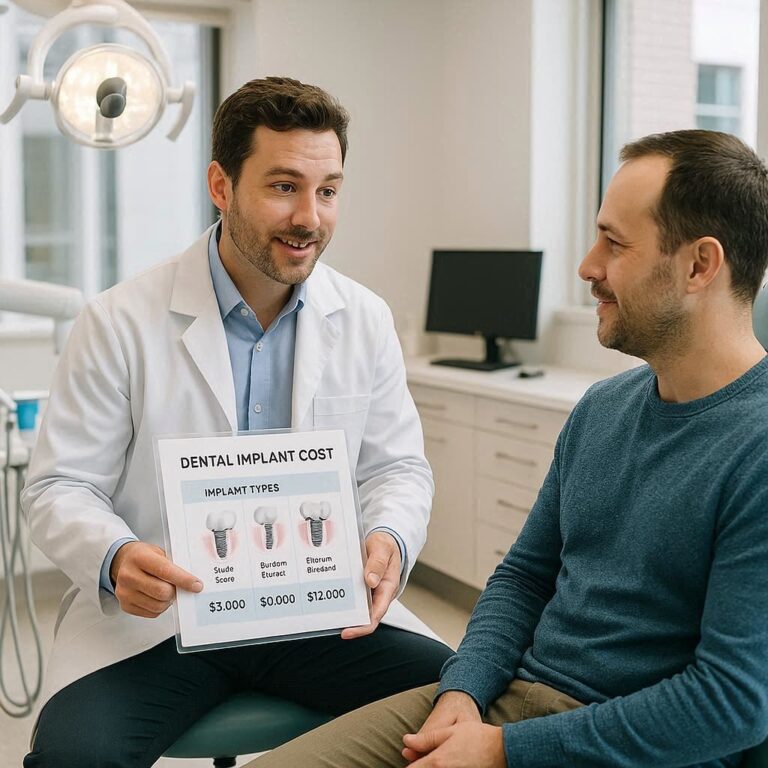
When you hear the phrase “dental implant cost,” your mind likely jumps to a final, often daunting, figure—anywhere from $3,000 to $6,000 per tooth in the United States. But what are you actually paying for? The common perception is that you’re buying a small, fancy titanium screw. In reality, you are investing in a marvel of modern biomedical engineering, a multi-step surgical procedure performed by a highly trained specialist, a custom-made crown crafted by an artisan lab technician, and a decades-long promise of restored function and confidence. The implant post itself is merely the keystone in this complex arch.
This article will perform a forensic economic breakdown of the dental implant post, tracing its journey from a raw metallic ore buried deep in the earth to a biocompatible, bone-fusing anchor placed precisely in your jaw. We will strip away the layers of marketing, supply chain logistics, and clinical fees to answer the core question: What does it really cost to make a dental implant post, and why does the price to the patient seem so disconnected from that figure? Prepare for an exclusive, detailed exploration that goes far beyond simple search results, delving into material science, industrial processes, and global market economics.

Deconstructing the Implant: What Exactly Is the “Post”?
To understand the cost, we must first define the component. In dental implantology, the term “implant” often refers to the entire system. However, the implant post (or fixture) is specifically the screw-like component that is surgically embedded into the jawbone. It is the foundational piece upon which everything else—the abutment and the crown—is built. Its primary functions are to osseointegrate (fuse biologically with living bone) and to provide a stable, load-bearing platform. Its design, material, and surface characteristics are the direct result of over half a century of scientific research and clinical refinement.
Chapter 1: The Raw Material – The Foundation of Cost
The story of cost begins with the raw materials. Not all metals or ceramics are suitable for long-term implantation in the human body.
Titanium Grade 4 vs. Grade 5: A Microscopic Difference, A Macro Price Gap
Over 95% of implant posts are made from commercially pure titanium (CP Ti) or titanium alloys.
-
Grade 4 CP Titanium: This is 99.5% pure titanium. It is the benchmark for biocompatibility, offering excellent corrosion resistance and direct bone apposition. In its raw ingot form, the material cost for a single implant post is surprisingly low—often less than $10. Its strength is sufficient for most clinical applications.
-
Grade 5 Titanium (Ti-6Al-4V): This alloy contains 6% Aluminum and 4% Vanadium. It provides significantly higher tensile strength and fatigue resistance, making it ideal for challenging cases like narrow-diameter implants or immediate loading protocols. The alloying process increases the raw material cost, potentially adding 20-50% to the base material price.
The choice between Grade 4 and Grade 5 is a clinical one, but it creates the first major fork in the cost roadmap.
The Zirconia Revolution: Beauty at a Premium
Zirconia (zirconium dioxide) is a high-performance ceramic gaining popularity for its tooth-like color and hypoallergenic properties (zero metal). The raw material for a zirconia implant—a specialized, medical-grade, yttria-stabilized zirconia powder—is more expensive than titanium. The powder itself is a product of complex chemical processing. This higher base cost is the first reason zirconia implants often command a 15-30% price premium over premium titanium implants.
Raw Ingredient to Medical-Grade Ingot: The First Cost Multiplier
The journey from mined rutile ore (for Ti) or zircon sand (for Zr) to a sterile, medical-grade rod or blank suitable for machining is extensive. It involves multiple stages of refinement, purification, and melting in vacuum or argon-controlled environments to eliminate impurities that could compromise biocompatibility. This industrial-scale metallurgy and ceramics processing represents the first significant value addition, transforming a commodity material into a specialized biomedical feedstock.
Chapter 2: The Art & Science of Manufacturing – Where Precision is Priceless
If the material sets the baseline, the manufacturing process defines the product. The tolerances involved are measured in microns (thousandths of a millimeter).
CNC Machining: The Titanium Standard
Titanium implant posts are typically made through Computer Numerical Control (CNC) machining. A solid rod of titanium is clamped into a sophisticated, multi-axis machine. Diamond-coated cutting tools, guided by digital blueprints, meticulously carve out the complex geometry of the implant: the thread pitch, the apical holes, the internal hex or conical connection. A single high-end implant may require dozens of tool changes and machining steps. The cost here is in the multi-million-dollar machines, the skilled engineers programming them, the tool wear (titanium is notoriously hard to machine), and the rigorous in-process quality control. The direct manufacturing cost for a machined titanium implant from a quality facility can range from $20 to $80 per unit, heavily dependent on volume and complexity.
Zirconia Milling and Sintering: A Delicate Dance with Heat
Zirconia implants are often milled from a “green state” block—a partially solidified blank. After milling the precise shape, the implant undergoes sintering in a high-temperature furnace. This process causes the zirconia to shrink by a precise, predictable percentage (often ~20%) as it densifies into its final, ultra-strong crystalline structure. Any flaw in the milling program or sintering cycle results in a worthless part. This energy-intensive and technically demanding process adds cost.
Surface Treatment Technologies: The Secret Sauce of Osseointegration
A machined, smooth implant would not integrate well with bone. The surface must be modified at a microscopic and nanoscopic level to accelerate and enhance osseointegration. This is a major area of proprietary innovation and a huge driver of cost differentiation.
-
Sandblasting & Acid-Etching (SLA): A common, effective process that creates a complex, rough surface.
-
Anodization: Creates a porous, oxidized layer that can also incorporate calcium ions.
-
Hydroxyapatite Coating: A plasma-sprayed coating of a calcium-phosphate material nearly identical to bone mineral.
Each of these processes requires specialized equipment, cleanroom environments, and validation testing. A sophisticated surface treatment can double or triple the base manufacturing cost of the plain machined fixture. It is this surface that often forms the core intellectual property of major implant companies.
Chapter 3: The Brand Name Premium – Navigating the Implant Ecosystem
Now we enter the realm of branding, research, and clinical validation. The cost to manufacture an implant is one thing; the price a dentist pays for it is another.
The “Mercedes” Tier: Straumann, Nobel Biocare
These companies invest hundreds of millions in long-term clinical research (decades of follow-up data), surgeon education, global logistical networks, and iconic branding. When a dentist buys a Straumann implant for $200-$400, they are paying for unparalleled evidence-based confidence, a seamless prosthetic system, and immense marketing. The actual manufacturing cost is a fraction of this.
The Premium Mainstream: Zimmer Biomet, Dentsply Sirona
These offer similarly high-quality, well-researched systems, often at a 10-25% lower price point than the top tier. They compete on robust product portfolios, integration with other dental products, and strong relationships with dental schools and clinicians.
The Value & Generic Segment: A Growing Market Force
This is where the landscape is shifting. Companies, often based in the U.S., Europe, Israel, or South Korea, produce FDA-cleared implants that meet all international standards (ISO 13485). They may use similar materials and manufacturing techniques but invest far less in large-scale clinical studies and lavish marketing. A dentist may purchase a high-quality “generic” implant for $50-$150. These companies prove that a reliable implant post can be produced and sold profitably at this price point, highlighting the significant markup of the legacy brands.
Chapter 4: From Factory Floor to Operatory – The Supply Chain Markup
The implant doesn’t go directly from the factory to your dentist’s chair.
-
Distributors and Middlemen: Major brands often sell through exclusive distributors who add their margin for sales support, inventory holding, and local logistics.
-
Dental Labs and Prosthetic Components: The post is useless without the abutment (connector) and crown. These are custom-made by dental laboratories, adding $200-$800+ to the total cost of components. The implant company often sells the compatible abutment, creating a “razor and blades” business model.
-
The Dental Practice: The dentist purchases the implant, abutment, and crown components and marks them up. This is standard in healthcare (from hospitals to pharmacies) and covers practice overhead: staff, equipment, utilities, and the cost of holding an inventory of various implant sizes and parts.
Chapter 5: The Surgical Cost – The Majority of Your Bill
This is the most critical cost to understand. Typically, 60-70% of your total dental implant fee is for the surgical procedure and expertise, not the physical components.
-
The Surgeon’s Skill and Training: You are paying for a professional with 8+ years of post-secondary education, followed by years of specialized surgical training. Their skill dictates the long-term success and safety of the procedure.
-
The Surgical Kit and Guided Technology: Each implant system requires specific drills and delivery devices. A full surgical kit costs thousands. Advanced CBCT scans and computer-guided surgery add hundreds to the cost but dramatically improve precision.
-
Facility Fees: A surgical procedure in a well-equipped office with trained assistants and proper sterilization protocols has significant operational costs.
Chapter 6: Global Perspectives – Cost Variations by Region
The final patient price varies wildly.
-
USA & Western Europe: High labor costs, stringent regulatory compliance, high malpractice insurance, and a dominant brand-name market lead to the world’s highest prices: $3,000 – $6,000+ per implant.
-
Asia (as a treatment destination): In countries like India, Thailand, or South Korea, the same premium-brand implant procedure might cost $1,500 – $2,500. Lower operating costs and a competitive market drive down prices, though consistency can vary.
-
Dental Tourism: While tempting, it introduces risks of fragmented care, travel costs, and legal recourse challenges. Due diligence is paramount.
A Comparative Cost Breakdown Table
| Cost Component | Low-End / Generic Implant Pathway | Mid-Range / Premium Implant Pathway | High-End / Top-Tier Brand Pathway |
|---|---|---|---|
| 1. Implant Post (Cost to Dentist) | $50 – $100 | $100 – $250 | $250 – $450 |
| Material & Manufacturing | Grade 4 Ti, standard surface | Grade 4/5 Ti, good surface treatment | Grade 5 Ti/ Zirconia, proprietary surface |
| 2. Abutment & Crown (Cost to Dentist) | $200 – $400 (stock abutment, basic crown) | $400 – $700 (custom abutment, good crown) | $600 – $1,000+ (custom ceramic abutment, premium crown) |
| 3. Total Component Cost to Dentist | $250 – $500 | $500 – $950 | $850 – $1,450+ |
| 4. Typical Markup & Surgical Fee | $1,750 – $2,500 | $2,500 – $3,550 | $3,150 – $4,550+ |
| 5. ESTIMATED TOTAL PATIENT FEE | $2,000 – $3,000 | $3,000 – $4,500 | $4,000 – $6,000+ |
Navigating Your Options: How to Assess Value Beyond Price
Choosing an implant shouldn’t be about finding the cheapest post. Consider:
-
The Diagnostician & Surgeon: Their experience and treatment plan are more valuable than the brand they use.
-
The Warranty: What does it cover (parts, labor, re-treatment) and for how long?
-
The System’s Track Record: Ask for published, long-term success rates for the specific implant system proposed.
-
Total Treatment Clarity: Get a detailed, written estimate that separates the surgical fee, implant component costs, restoration costs, and any graft or scan fees.
The Future: 3D Printing, AI, and Cost Disruption
The future promises cost restructuring. Additive Manufacturing (3D printing) of titanium implants allows for porous, bone-mimicking structures impossible to machine, potentially consolidating steps and reducing waste. AI-driven design optimization could create patient-specific implants that minimize bone removal. As these technologies mature and patents from the 1980s expire, we may see a continued democratization of quality and a shift in cost from the physical object to the digital design and surgical execution.
Conclusion
The cost to manufacture a dental implant post is a story of advanced materials and precision engineering, typically ranging from tens to low hundreds of dollars. The price a patient pays, however, is the sum of decades of R&D, a global supply chain, the surgeon’s expertise, and the custom prosthetic art that sits atop it. By understanding this breakdown, you can move beyond price shock and engage in an informed dialogue with your dental professional, focusing not on the cost of the component, but on the true value of the procedure: a functional, healthy, and confident smile for years to come.
Frequently Asked Questions (FAQs)
Q1: Can I just buy my own implant online to save money?
A: Absolutely not. This is extremely dangerous. Implants must be part of a sterile, integrated system with compatible prosthetic parts. A dentist cannot guarantee the quality, sterility, or compatibility of patient-supplied components, and most reputable clinicians will refuse to place them due to massive liability and ethical concerns.
Q2: Why is there such a huge price difference between dentists for the “same” implant?
A: The difference is rarely in the implant brand cost. It’s in the surgeon’s experience and training (a specialist periodontist or oral surgeon typically charges more than a general dentist), the complexity of your case, the technology used (CBCT, guided surgery), and the practice’s location and overhead.
Q3: Are cheaper “generic” implants safe and effective?
A: Many are. The key is to ensure they are FDA-cleared or CE-marked, indicating they meet strict safety and performance standards. The success rate ultimately depends more on surgical skill and proper treatment planning than on the brand name alone, provided the implant meets basic quality thresholds.
Q4: Is the expensive surface treatment really worth it?
A: For most standard cases, a modern, well-researched surface treatment (like SLA) can promote faster healing and initial stability, which is beneficial. In optimal bone, even a basic machined surface can integrate. In challenging bone (low density, compromised healing), advanced surfaces may offer a significant clinical advantage.
Q5: How long should a dental implant last?
A: With proper placement, restoration, and oral hygiene, dental implants can last 25 years to a lifetime. The crown atop it may need replacement due to wear every 10-15 years. Long-term success is about maintenance and the health of the supporting bone.
Additional Resources
-
American Academy of Implant Dentistry (AAID): Patient education and credentialed dentist finder. https://www.aaid.com/
-
International Congress of Oral Implantologists (ICOI): A global resource for implant education. https://www.icoi.org/
-
U.S. Food & Drug Administration (FDA) – Dental Implants: Official information on safety and regulation. https://www.fda.gov/medical-devices/dental-devices/dental-implants
-
National Institute of Dental and Craniofacial Research (NIDCR): NIH resource on dental implants. https://www.nidcr.nih.gov/health-info/dental-implants
Date: December 08, 2025
Author: Dental Materials Research Institute
Disclaimer: The information contained in this article is for educational and informational purposes only and does not constitute professional medical or financial advice. The actual cost of dental implant components and procedures can vary widely based on individual circumstances, geographic location, and specific clinical needs. Always consult with a licensed dental professional for treatment advice.