the true cost of dental implant plates
The search for the “cost of a dental implant plate” often begins with a number—a hopeful, sometimes shocking, figure gleaned from a quick online search. It’s a journey that mixes hope for a restored smile with the anxiety of a significant financial decision. You are not just shopping for a medical device; you are investing in your ability to eat comfortably, speak clearly, and smile without reservation. You are investing in the long-term health of your jawbone and the preservation of your facial structure. This article aims to replace that singular, elusive number with profound understanding. We will dissect every component, expose every variable, and provide you with the comprehensive knowledge needed to navigate the financial landscape of dental implants with confidence. By the end, you will see that the true cost extends beyond dollars to encompass quality of life, health, and the priceless value of expert care. For those in New Jersey seeking pathways to affordability, we will also explore actionable resources, including how to find low-cost and free dental clinics.
2. Deconstructing the “Plate”: What Exactly Is a Dental Implant?
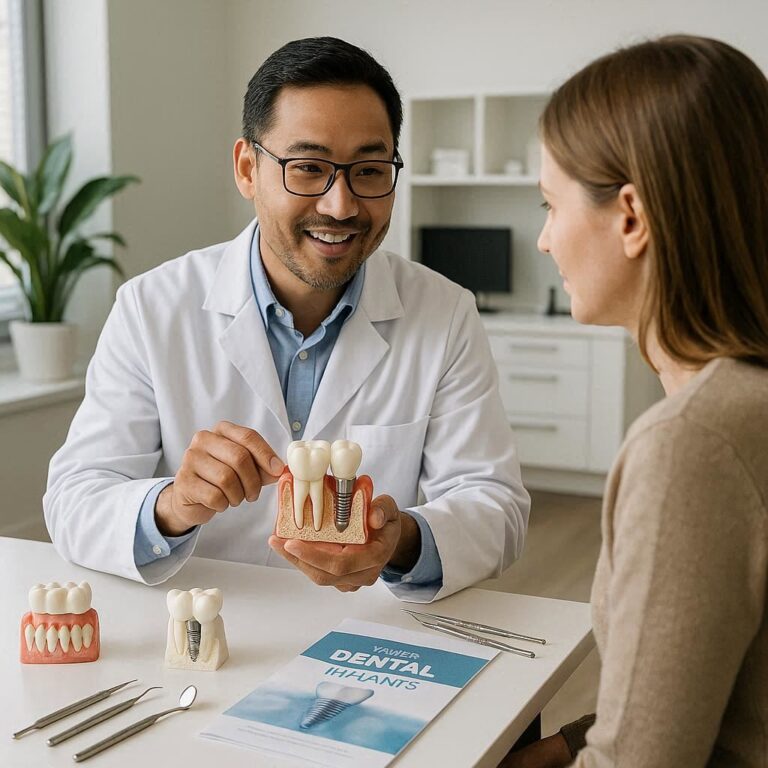
The term “plate” is a common but misleading colloquialism. A dental implant is not a plate but a sophisticated, multi-component system designed to mimic a natural tooth root. Understanding its parts is crucial to understanding its cost.
-
The Implant Fixture (The “Root”): This is the actual titanium or zirconia screw that is surgically placed into your jawbone. Through a process called osseointegration, it fuses with the bone, creating a stable, permanent foundation. This is the core of the investment.
-
The Abutment (The “Connector”): Once the implant has fused with the jaw, this piece is attached to the top of the implant fixture. It protrudes slightly above the gum line and serves as the secure anchor for the final crown. Abutments can be standard or custom-milled for optimal aesthetics and fit.
-
The Prosthetic Crown (The “Tooth”): This is the visible, functional part—the tooth you see. It is typically made from high-strength, tooth-colored materials like porcelain fused to metal or monolithic zirconia, crafted to match the shape, color, and translucency of your natural teeth.
This triumvirate—fixture, abutment, crown—forms the complete implant restoration. Each part carries its own cost, influenced by materials, brand, and manufacturing technology.
3. The True Cost Breakdown: Why a Single “Price” is a Myth
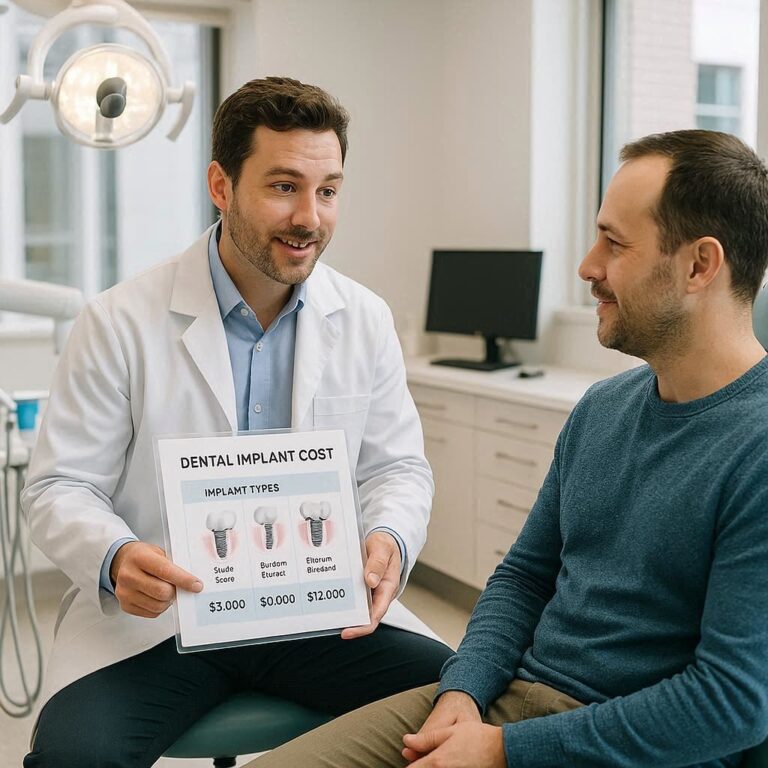
A quoted price of “$3,000 per implant” is virtually meaningless without context. It could be for the surgical placement of the fixture only, or it could be an “all-inclusive” fee. The total financial outlay is a sum of several professional services and components.
The Core Cost Components:
-
Initial Consultations & Diagnostic Imaging: This includes comprehensive exams, 3D Cone Beam CT scans (essential for precise surgical planning), and digital impressions. This phase ensures you are a candidate and maps the procedure.
-
Preparatory Procedures: Many patients require additional work before an implant can be placed. This is a major cost variable.
-
Tooth Extraction: If the damaged tooth is still present.
-
Bone Grafting/Sinus Lift: If jawbone density has deteriorated due to long-term tooth loss, a graft may be necessary to create a solid foundation. This adds significant time and cost.
-
Treatment for Gum Disease: Healthy gums are non-negotiable for implant success.
-
-
The Implant Surgery: The fee for the oral surgeon or periodontist to surgically place the implant fixture(s) into your jawbone. This covers their expertise, surgical time, and use of the facility.
-
The Implant Components: The cost of the physical implant fixture, abutment, and the materials for the final crown.
-
The Final Restoration: The fee for the restorative dentist (often a prosthodontist or general dentist) who takes the impressions, designs the crown, and attaches it to the abutment.
-
Anesthesia/Sedation: The cost for local anesthesia is usually included, but intravenous (IV) sedation or general anesthesia incurs an additional fee.
-
Follow-up & Maintenance: Post-operative visits and long-term professional cleanings specific to implants.
4. Average Cost Range for a Single Dental Implant in New Jersey (2025)
The following table provides a realistic snapshot. Remember, the “Low” end often assumes no complications and a basic restorative crown, while the “High” end includes advanced materials, specialists, and preparatory surgeries.
| Cost Component | Low-End Estimate | High-End Estimate | Notes |
|---|---|---|---|
| Consultation & 3D Imaging | $150 – $350 | $350 – $600 | CBCT scans are more expensive but are the gold standard. |
| Preparatory Procedures | Varies Extremely Widely | ||
| • Simple Extraction | $150 – $350 | Per tooth. | |
| • Bone Graft (Site Preservation) | $300 – $800 | $800 – $1,500+ | Per site. More complex grafts cost significantly more. |
| • Sinus Lift | $1,500 – $3,500+ | Per side. | |
| Implant Surgery (Surgeon’s Fee) | $1,500 – $2,500 | $2,500 – $4,000 | Depends on surgeon’s expertise and complexity. |
| Implant Fixture & Abutment | $500 – $1,000 | $1,000 – $2,500 | Brand (Nobel Biocare, Straumann vs. budget), material (titanium vs. zirconia). |
| Final Crown (Prosthodontist’s Fee) | $1,000 – $1,800 | $1,800 – $3,500+ | Material is key: PFM vs. high-end zirconia/esthetic porcelain. |
| Anesthesia (IV Sedation) | $500 – $1,000 | Per hour. Optional but common for anxiety or complex cases. | |
| TOTAL (Basic, No Complications) | ~$3,500 – $5,500 | ||
| TOTAL (With Bone Graft, Specialist, High-End Crown) | $7,000 – $12,000+ |
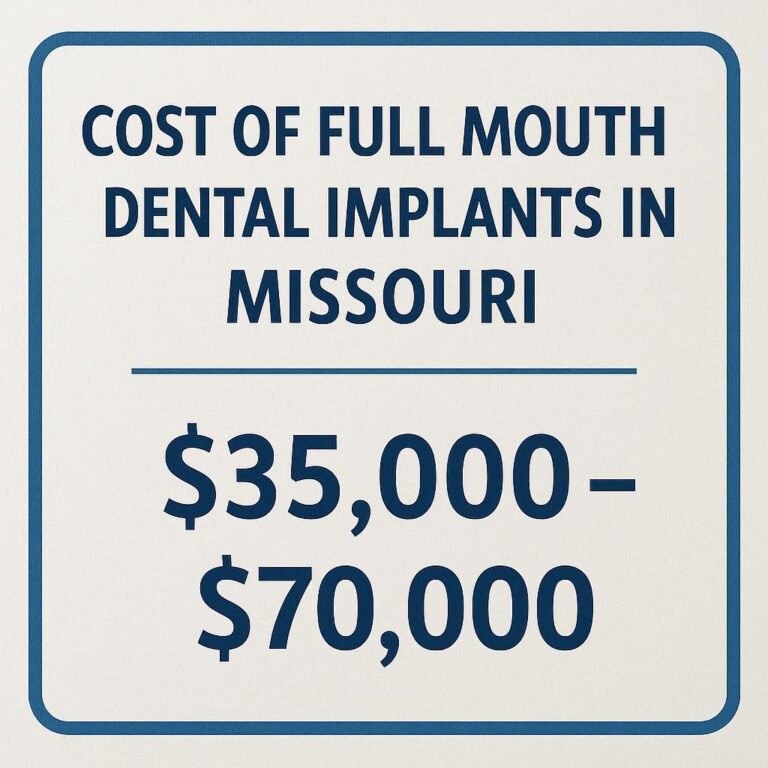
*Note: These are estimated ranges for a SINGLE tooth implant in New Jersey. Full arch replacements (like All-on-4®) are a different financial proposition, often ranging from $20,000 to $40,000+ per arch.*
5. The Major Factors That Dictate Your Final Bill
-
Case Complexity: A straightforward implant in the front of a healthy jaw is far less expensive than a molar implant requiring a sinus lift and bone graft.
-
Material Science: The implant fixture itself comes in different grades of titanium and brands with varying research and longevity behind them. The crown material is the biggest aesthetic and functional variable—high-end zirconia offers superior strength and beauty at a higher cost than porcelain-fused-to-metal.
-
Provider Expertise and Credentials: A board-certified oral surgeon or periodontist with decades of experience commands higher fees than a general dentist who places implants occasionally. This expertise directly impacts success rates and aesthetic outcomes.
-
Geographic Location: Overhead costs (rent, staff salaries) are higher in metropolitan areas like Bergen County or Hoboken compared to more rural parts of South Jersey.
-
Technology Investment: Practices using guided implant surgery with 3D-printed surgical guides, digital smile design, and in-office crown milling (CEREC) have higher overhead, which may be reflected in their fees. This technology often translates to greater precision, less invasive surgery, and faster results.
6. The Hidden and Not-So-Hidden Additional Costs
-
Failed Integration: While rare with a skilled surgeon (success rates are typically 95-98%), an implant that fails to fuse with the bone may need to be removed and replaced, incurring most costs again.
-
Future Repairs: The crown or abutment may need replacement after 10-15 years due to normal wear. The implant fixture itself is designed to last a lifetime.
-
Travel and Time Off Work: Multiple appointments over several months may require taking time off from work, a real but often overlooked cost.
7. The Critical Role of the Dental Implant Specialist
Choosing your provider is the most important decision you will make, more so than choosing a brand of implant. A skilled specialist minimizes risks, maximizes longevity, and delivers a natural-looking result. The surgical placement must consider bone density, nerve location, and future gum aesthetics. The restorative phase must ensure proper bite alignment and seamless integration with your smile. Paying for this expertise is an investment in avoiding costly complications down the road.
8. Geographic Variation: Why Costs Differ Within New Jersey
New Jersey’s diverse landscape creates a cost continuum. Practices in affluent suburbs near New York City (e.g., Englewood Cliffs, Summit) generally have higher fees than those in communities in Cumberland or Salem counties. However, higher cost does not automatically guarantee higher quality, and lower cost does not necessarily mean poor care. Research is paramount.
9. Insurance, Financing, and Making Implants Affordable
Most dental insurance plans classify implants as a “major” or “cosmetic” procedure and provide limited coverage, often capping benefits at $1,500-$2,000 per year. Medical insurance may cover the implant if tooth loss was due to a traumatic accident or specific medical condition. Key strategies include:
-
Dental Savings Plans: Not insurance, but a membership that provides a discount (typically 15-25%) at participating dentists.
-
Patient Financing: Practices often work with third-party lenders like CareCredit, Sunbit, or LendingClub, offering promotional no-interest or low-interest payment plans.
-
In-House Payment Plans: Some larger practices offer direct monthly payment options.
-
Health Savings Accounts (HSA) / Flexible Spending Accounts (FSA): Use pre-tax dollars to pay for qualified medical expenses, including implants.
10. A Deep Dive: Finding Quality, Affordable Care & Free Dental Clinics in New Jersey
For those for whom traditional financing is not an option, New Jersey has a network of resources designed to provide care based on income eligibility.
How to Find a Free or Low-Cost Dental Clinic:
-
Federally Qualified Health Centers (FQHCs): These community-based centers provide comprehensive health services on a sliding fee scale based on your income and family size. They have dental clinics on-site or can refer you.
-
Example: Zufall Health Center (multiple locations), Metropolitan Family Health Network (Jersey City).
-
-
Dental Schools: The Rutgers School of Dental Medicine in Newark offers significantly reduced rates for treatment provided by dental students under the close supervision of licensed faculty. The wait may be longer, but the cost savings are substantial.
-
Non-Profit and Charitable Clinics: Organizations like the Jewish Federation of Northern New Jersey or Mission of Mercy host periodic free dental care events.
-
State and County Health Departments: Contact your local county health department. They often maintain lists of low-cost dental providers and community resources.
-
United Way 2-1-1: Dial 2-1-1 or visit NJ 211 to speak with a community resource specialist who can connect you with dental assistance programs in your area.
Important Note: While these clinics provide essential care, complex procedures like dental implants are rarely offered on a completely free basis due to the high cost of materials and surgical expertise. They are excellent for emergency care, extractions, and basic dentistry. For implants, they may be a starting point for a referral to a sliding-scale specialist or a dental school program that offers implants at a deeply reduced cost for teaching purposes.
11. The High Cost of Not Getting an Implant: Long-Term Oral Health Economics
Choosing a cheaper alternative like a bridge or denture has long-term financial and health consequences.
-
Tooth-Supported Bridge: Requires grinding down adjacent healthy teeth, weakening them. The bone under the missing tooth continues to deteriorate. Bridges typically last 7-15 years before needing replacement.
-
Removable Partial Denture: Can accelerate bone loss, affect speech and taste, and requires adhesives. They need frequent adjustments and replacement.
-
Bone Loss: When a tooth root is missing, the jawbone resorbs (shrinks). This can alter facial structure, leading to a sunken appearance and making future implant placement more difficult and expensive (requiring extensive grafting).
An implant preserves bone, protects adjacent teeth, and is designed to last decades, making it the most cost-effective solution over a lifetime.
12. Red Flags and Green Lights: Choosing Your Provider
Red Flags:
-
A quote that seems too good to be true.
-
Pressure to sign a contract immediately.
-
Unwillingness to provide a detailed, written treatment plan and cost estimate.
-
Lack of before-and-after photos of actual patients.
-
No discussion of potential complications or alternatives.
Green Lights:
-
The provider welcomes questions and explains procedures clearly.
-
They provide a written, step-by-step treatment plan with a clear, line-item fee schedule.
-
They have advanced credentials (e.g., Diplomate of the American Board of Oral Implantology).
-
The practice uses modern technology (CBCT, surgical guides).
-
You feel comfortable, respected, and unrushed.
13. The Procedure Timeline: From Consultation to Crown
Understanding the timeline helps manage expectations:
-
Months 1-2: Initial consultation, diagnostics, treatment planning, and any preparatory procedures (extractions, grafting). Bone grafts require 4-6 months of healing.
-
Month 3 (or later): Implant fixture surgery. The jawbone then requires 3-6 months to osseointegrate with the implant.
-
Month 6-9: Abutment placement and gum healing (2-4 weeks).
-
Month 7-10: Impressions for and placement of the final crown.
Total time: 6 to 12+ months, depending on individual healing and need for bone grafts.
14. Conclusion: Investing in Yourself
The journey to understand the cost of a dental implant reveals it is not a simple purchase but an investment in a foundational component of your health and identity. By prioritizing expertise over the lowest price, understanding the full scope of treatment, and utilizing available financial resources, you can make an empowered decision. The value of a secure, functional, and beautiful smile—one that can last a lifetime—is an investment that pays dividends in confidence, health, and well-being every single day.
15. Frequently Asked Questions (FAQs)
Q: What is the cheapest price for a single dental implant I can find?
A: You may find advertisements for implants as low as $1,500-$2,000. Be extremely cautious. This price almost always covers only the implant fixture surgery itself, excluding the abutment, crown, diagnostics, and any necessary preparatory work. The “all-in” cost in these scenarios often ends up matching or exceeding standard fees.
Q: Does medical insurance ever cover dental implants?
A: Yes, but under specific circumstances. If tooth loss was caused by a documented accident, injury, or a qualifying medical condition (like oral cancer), your medical insurance may cover part of the implant as a reconstructive procedure. Prior authorization is always required.
Q: Are “all-on-4” implants cheaper per tooth?
A: While the total cost for a full arch (all teeth on one jaw) is high ($20,000-$40,000+), the cost per replaced tooth is significantly lower than placing 14 individual implants. It is a cost-effective solution for full arch restoration.
Q: How long do dental implants last?
A: With proper care and maintenance, the implant fixture (the screw in your jaw) can last a lifetime. The crown (the visible tooth) may need replacement due to wear after 15-20 years, similar to a natural tooth needing a crown.
Q: What is the single most important factor for implant success?
A: The skill and experience of the surgeon placing the implant. Proper diagnosis, precise surgical placement, and appropriate case selection are paramount.
16. Additional Resources
-
American Academy of Implant Dentistry (AAID): www.aaid.com – Find credentialed implant dentists and patient education materials.
-
American College of Prosthodontists (ACP): www.gotoapro.org – Find a specialist in restoring and replacing teeth (prosthodontist).
-
New Jersey Department of Health – Oral Health Services: Provides information on public health dental programs.
-
Rutgers School of Dental Medicine – Patient Care: sdm.rutgers.edu/patient_care – Information on seeking treatment at their clinic.
-
CareCredit: www.carecredit.com – A popular healthcare credit card for financing procedures.
Date: December 08, 2025
Author: The Dental Health & Restoration Institute
Disclaimer: The information provided in this article is for educational and informational purposes only and is not a substitute for professional medical advice, diagnosis, or treatment. Always seek the advice of your dentist or other qualified health provider with any questions you may have regarding a dental procedure. Costs and programs mentioned are subject to change.