D2792 dental code: Your Complete Guide to the Porcelain-Fused-to-High-Noble-Metal Crown
Navigating the world of dental insurance codes can sometimes feel like trying to read a foreign language. If you’ve recently been told you need a crown, or if you’re just reviewing a treatment plan and saw “D2792,” you might be scratching your head wondering what it means.
Don’t worry, you are not alone. This code is one of the most common—and most misunderstood—in restorative dentistry. Whether you are a patient trying to understand your out-of-pocket costs or a professional looking for a clear explanation for your clients, this guide is here to help.
We’re going to break down everything you need to know about the D2792 dental code in plain, simple English. We’ll cover what it is, why your dentist might recommend it, how it stacks up against other options, and most importantly, what it means for your wallet.
Let’s dive in and make sense of it all.
What Exactly is the D2792 Dental Code?
In the simplest terms, the D2792 dental code describes a very specific type of dental crown.
The Current Dental Terminology (CDT) code set, maintained by the American Dental Association (ADA), is the standardized language used by dentists and insurance companies to communicate about procedures. Every procedure, from a simple x-ray to a complex root canal, has a specific code.
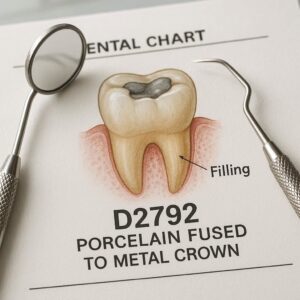
The official description for D2792 is: Crown – porcelain fused to high noble metal.
Let’s break that down into two distinct parts:
-
Porcelain Fused to Metal: This refers to the construction of the crown. It has a metal interior (or substructure) that provides strength and durability. On top of that metal base, layers of tooth-colored porcelain are baked to create a natural, aesthetic appearance. These are often called “PFM” crowns for short.
-
High Noble Metal: This is the most critical part of this specific code. It tells us exactly what kind of metal is used inside the crown. To be classified as “high noble,” the alloy must contain at least 60% noble metals. These noble metals are primarily gold, platinum, and palladium. So, a D2792 crown is essentially a high-quality, gold-based crown covered with tooth-colored porcelain.
D2792 vs. Other Crown Codes: Why the Specificity Matters
You might wonder why there isn’t just one code for “crown.” The distinction is crucial for both clinical reasons and insurance billing. Here’s how D2792 compares to its close relatives:
-
D2740 (Crown – porcelain/ceramic substrate): This is a completely metal-free crown, often made of materials like lithium disilicate or zirconia. It offers the best aesthetics but may not always be recommended for teeth that endure heavy chewing forces, like molars.
-
D2752 (Crown – porcelain fused to noble metal): This is the D2792’s “cousin.” It is also a PFM crown, but the metal inside is classified as “noble” rather than “high noble.” Noble metal alloys contain at least 25% noble metals, but less than 60%. They are excellent crowns, but contain less gold and more base metals like silver or copper.
-
D2790 (Crown – full cast high noble metal): This is a crown made entirely of a high noble metal alloy (like gold). It offers incredible durability and a perfect fit, with zero risk of chipping, but it is not tooth-colored. It’s a metallic gold or silver color.
| Code | Description | Material Composition | Primary Use Case |
|---|---|---|---|
| D2792 | Crown – porcelain fused to high noble metal | Metal substructure (≥60% noble) with porcelain exterior | Strong, aesthetic crowns for any tooth, especially where gum compatibility is key. |
| D2752 | Crown – porcelain fused to noble metal | Metal substructure (≥25% but <60% noble) with porcelain exterior | Strong, aesthetic crowns; a slightly more cost-effective option than D2792. |
| D2740 | Crown – porcelain/ceramic substrate | All-ceramic (e.g., zirconia, e.max) | Maximum aesthetics, metal-free option, often preferred for front teeth. |
| D2790 | Crown – full cast high noble metal | Solid high noble metal alloy (e.g., gold) | Maximum durability, minimal tooth removal, ideal for back teeth where appearance is not a factor. |
When and Why is a D2792 Crown Used?
So, in what specific situations would a dentist recommend a D2792 crown? Because of its unique blend of strength and aesthetics, it is a versatile workhorse in restorative dentistry.
1. Restoring a Heavily Damaged or Decayed Tooth
This is the most common reason. When a tooth has a cavity so large that a simple filling isn’t possible, or when a tooth is cracked or fractured, a crown acts like a protective helmet. It covers the entire visible portion of the tooth, holding it together and restoring its shape and function. The strong high-noble-metal core of the D2792 makes it an excellent choice for this, providing a secure foundation.
2. After a Root Canal (Endodontic Treatment)
Teeth that have undergone root canal therapy become more brittle over time because they lose their blood supply and internal moisture. To prevent them from fracturing under the pressure of chewing, dentists almost always recommend placing a crown. The D2792 is a fantastic option here because the metal base provides the necessary reinforcement to protect the now-fragile tooth structure.
3. For Patients with Metal Allergies
This is a significant, and often overlooked, advantage of the high noble aspect of this code. Base metals like nickel and chromium, which are found in some cheaper alloys, can cause allergic reactions in some people.
-
Important Note: Because D2792 uses a high noble metal alloy (containing gold, platinum, and palladium), it is incredibly biocompatible. These metals are inert and rarely cause allergic reactions. If you have sensitive gums or known sensitivities to cheaper jewelry metals, this is a feature worth discussing with your dentist.
4. As a Bridge Retainer
A dental bridge is used to replace one or more missing teeth. It consists of artificial teeth (pontics) anchored in place by crowns on the teeth adjacent to the gap. These anchoring crowns are called retainers. A D2792 crown is an excellent choice for a bridge retainer because it provides the strength needed to support the entire bridge structure while matching the color of your natural teeth.
The Unique Benefits of Choosing a High Noble Metal (D2792)
While the porcelain part of the crown gives it a natural look, the “high noble metal” interior is the real hero of the story. Why do many dentists still consider gold-alloy crowns the “gold standard” for certain cases?
1. Superior Biocompatibility
As mentioned, high noble metals are chemically inert. They resist corrosion and tarnishing in the oral environment. This means they are exceptionally gentle on the opposing teeth and the surrounding gum tissue. You are far less likely to experience gum irritation or a metallic taste compared to crowns made with base metal alloys.
2. Unmatched Precision and Fit
Gold and other noble metals have physical properties that are ideal for dentistry. They can be cast with incredible accuracy, creating a crown that fits the prepared tooth like a glove. This precision fit is vital for:
-
Preventing Leakage: A tight seal at the margin (where the crown meets the tooth) prevents bacteria from seeping in and causing new decay underneath the crown.
-
Preserving Tooth Structure: Because the fit is so precise, the dentist doesn’t have to remove as much healthy tooth structure during preparation, especially when compared to the requirements for some all-ceramic crowns.
3. Gentle on Opposing Teeth
This is a point that is often missed. When you chew, your teeth flex and wear slightly. Porcelain is extremely hard. If you have a porcelain crown, it can actually wear down the natural tooth it bites against. High noble metal, on the other hand, has a slight “cushion” effect. It is softer than porcelain but hard enough to withstand chewing, and it wears in harmony with your natural teeth, causing less wear and tear on your other teeth over the long term.
4. Proven Long-Term Success
Dentists have been using gold-based PFM crowns for decades. We have long-term clinical data showing their success. While newer ceramic materials are constantly improving, the track record of high-noble-metal PFM crowns is hard to beat. They are a reliable, predictable choice.
The Procedure: What to Expect When Getting a D2792 Crown
Getting a crown usually requires two visits to the dentist. Here is a step-by-step walkthrough of what that process looks like.
First Visit: Preparation and Temporary Crown
-
Numbing and Preparation: The dentist will start by numbing the tooth and the surrounding gum area with a local anesthetic. Once you are comfortable, they will use a drill to reshape the tooth. This involves removing a thin layer of enamel from all sides to create space for the crown to fit over.
-
Taking Impressions: After shaping the tooth, the dentist will take an impression (mold). This can be done with traditional soft putty material or with a digital scanner that creates a 3D model on a computer. This impression captures the exact shape of your prepared tooth and the surrounding teeth.
-
Shade Selection: To ensure your new crown blends in seamlessly, the dentist will use a shade guide to match the color of your other teeth. This is done right then and there, often with your input.
-
Placing a Temporary Crown: Since the permanent crown takes a couple of weeks to be fabricated in a dental lab, the dentist will place a temporary crown over your prepared tooth. This protects the tooth and maintains your smile while you wait. It is usually made of acrylic and held in place with temporary cement.
Second Visit: Placement of the Permanent Crown
-
Removing the Temporary: During your second appointment, the dentist will gently remove the temporary crown.
-
Checking the Fit: The new D2792 crown will be placed on your tooth to check the fit. The dentist will check the contact points with neighboring teeth (to make sure floss slides through properly) and your bite (to ensure it doesn’t hit too hard or too soon).
-
Evaluating the Color: They will also confirm that the color matches the shade selected at the first appointment.
-
Cementing the Crown: Once everything is perfect, the tooth will be cleaned and dried, and the new crown will be permanently cemented into place using strong dental cement.
-
Final Adjustments: After cementation, the dentist may make minor adjustments to your bite to ensure it feels completely natural and comfortable.
A Friendly Note: It is completely normal to feel some minor sensitivity in the gum area for a few days after the permanent crown is placed. This usually subsides quickly. If you have any concerns, a quick call to your dentist is always the best course of action.
The Cost Factor: Breaking Down the Price of D2792
Let’s talk money. Dental procedures can be a significant investment, and it’s important to understand where the costs come from. The price for a D2792 crown can vary widely, typically ranging from $1,200 to $2,500 or more per crown.
What accounts for this range? Several factors come into play.
-
Geographic Location: Dental fees are higher in major metropolitan areas compared to rural towns, simply due to the higher cost of running a practice.
-
Dentist’s Expertise: A specialist, like a prosthodontist, may charge more than a general dentist.
-
Lab Fees: The cost of the dental lab that fabricates the crown is included in your total bill. A high-quality lab with expert ceramists will charge more for their work, and this is reflected in your final cost.
Why is D2792 More Expensive than Other Crowns?
You will likely notice that a D2792 crown is more expensive than a D2752 (porcelain fused to noble metal) or a D2790 (full cast high noble metal) crown. The reason lies in the materials.
-
The Price of Gold: The “high noble” classification means the alloy contains a high percentage of gold, platinum, and palladium. These are precious metals, and their market value directly impacts the cost of the crown. The lab charges the dentist for the weight of the metal used, and the dentist passes that cost along to you.
Here’s a hypothetical cost breakdown for a $1,800 D2792 crown:
| Expense Component | Estimated Percentage of Fee | What It Covers |
|---|---|---|
| Dentist’s Fee (Overhead & Skill) | ~40-50% | Staff salaries, rent, equipment, utilities, and the dentist’s expertise. |
| Dental Lab Fee | ~25-35% | The cost of the high-noble-metal alloy, porcelain materials, and the lab technician’s artistry and time. |
| Clinical Supplies | ~10-15% | Anesthetic, impression materials, temporary crown materials, cement. |
| Practice Profit | ~10% | The portion that allows the business to grow and invest in new technology. |
Insurance Coverage for D2792
Most dental insurance plans categorize crowns as “major restorative” procedures. Here is how coverage typically works:
-
Annual Maximum: Your plan has a cap on how much it will pay out in a year (often $1,500 – $2,000). If you have other major work planned, this can be used up quickly.
-
Percentage Coverage: Instead of covering a fixed dollar amount, most plans cover a percentage of the “allowed amount.” A common breakdown is that they pay 50% of the cost, and you are responsible for the other 50% (your coinsurance).
-
The “Usual, Customary, and Reasonable” (UCR) Fee: This is the tricky part. Your insurance company has a pre-determined fee they consider “reasonable” for a D2792 crown in your area. If your dentist charges $1,800, but the insurance company’s UCR fee is only $1,400, they will base their 50% payment on $1,400 (paying $700). You would then be responsible for the remaining $1,100 (the difference between the dentist’s fee and the insurance payment).
Always ask your dentist’s office for a “predetermination of benefits.” They will send the treatment plan to your insurance company, who will send you a written estimate of what they will pay. This prevents any surprises when the final bill arrives.
Caring for Your D2792 Crown: Tips for Longevity
A well-made crown can last for 10, 15, or even 20+ years with proper care. While the crown itself cannot get a cavity, the tooth underneath it still can. Your hygiene routine is key to preventing problems at the margins.
Your Daily Routine:
-
Brush Twice Daily: Use a soft-bristled toothbrush and fluoride toothpaste. Pay special attention to the gumline where the crown meets your tooth.
-
Floss is Non-Negotiable: You must clean the interface between the crown and the adjacent teeth. When you floss, gently pull the floss out through the side of the tooth rather than snapping it back up, which could potentially pull at the crown’s margin over time.
-
Consider a Water Flosser: A water flosser (like Waterpik) is an excellent addition. It can help flush out food particles and massage the gums around your crowned tooth.
Habits to Avoid:
-
Beware of Hard Foods: While the metal core is strong, the porcelain layer can chip. Avoid chewing on ice, hard candies, pen caps, or your fingernails.
-
Teeth are Not Tools: Don’t use your teeth to open packages or rip tags off clothing.
-
Protect Against Grinding: If you grind or clench your teeth at night (bruxism), you are at a much higher risk of chipping the porcelain or damaging the crown. Ask your dentist about getting a custom night guard. This simple appliance can save you thousands in dental repairs down the road.
Conclusion
The D2792 dental code represents a time-tested, high-quality solution for restoring damaged teeth. It combines the natural beauty of porcelain with the incredible strength, precision, and biocompatibility of a high-noble-metal (gold-based) core. While it often comes with a higher price tag due to the precious metals involved, its proven longevity and gentle nature on your natural teeth make it a valuable investment in your long-term oral health. Understanding this code empowers you to make informed decisions about your dental care and navigate conversations with your dentist and insurance provider with confidence.
Frequently Asked Questions (FAQ)
1. Is a D2792 crown noticeable? Will it look like a metal tooth?
No, not at all. While the core is made of metal, the entire outside of the crown is covered in layers of tooth-colored porcelain. A skilled dental ceramist can create a crown that is virtually indistinguishable from your natural teeth.
2. What happens if the porcelain on my D2792 crown chips?
Small chips in porcelain can sometimes be polished and repaired right in the dentist’s office. Larger chips or fractures might require the crown to be replaced entirely. This is why it’s important to avoid chewing hard objects and to wear a night guard if you grind your teeth.
3. Can I be allergic to the metal in a D2792 crown?
It is highly unlikely. The “high noble” classification means the alloy is primarily composed of biocompatible metals like gold and platinum. This makes D2792 an excellent choice for patients with sensitivities to base metals like nickel.
4. My insurance covers “crowns,” but will they cover D2792 specifically?
Most dental insurance plans cover D2792 as a standard crown procedure. However, they may have a “least expensive alternative treatment” (LEAT) clause. This means if a less expensive crown (like a D2752) would be clinically acceptable, they may only base their coverage on the cost of that less expensive option. Check your policy details or ask your dentist’s office for a predetermination of benefits.
5. How long does it take to get used to a new D2792 crown?
You may notice the new crown for a day or two, especially with its feel and texture. The gum tissue might be slightly tender. However, within a week or so, it should feel like a normal part of your mouth.