Understanding the D3220 Dental Code: A Complete Guide to Therapeutic Pulpotomy
If you’ve recently been told by your dentist that you or your child needs a “pulpotomy,” you might have seen the code D3220 on your treatment plan. Dental codes can look intimidating—a jumble of letters and numbers that seem to hold the key to your treatment and your wallet.
Don’t worry. You are in the right place. This guide is designed to demystify the D3220 dental code completely. We’ll walk through what it means, why it’s necessary, how the procedure works, and what it will likely cost. Think of this as your friendly, expert conversation about a very common dental procedure.
Whether you are a patient trying to understand a diagnosis or simply doing research, our goal is to provide you with a realistic, honest, and comprehensive overview. Let’s dive in and turn that confusing code into clear knowledge.
What is the D3220 Dental Code?
In the simplest terms, the D3220 dental code is the specific identifier used by dentists and insurance companies for a procedure called a therapeutic pulpotomy on a permanent tooth.
Let’s break that down. In the world of dentistry, every single treatment has a unique code. These codes, known as Current Dental Terminology (CDT) codes, are maintained by the American Dental Association (ADA). They ensure that whether you are in a dental office in California, Florida, or New York, the language—and the billing—is consistent.
The Official Definition
According to the CDT manual, D3220 is defined as:
“Therapeutic pulpotomy (excluding final restoration)—removal of pulp coronal to the dentino-cemental junction and application of a medicament.”
This is the technical description, but what does it actually mean for you?
D3220 Explained in Plain English
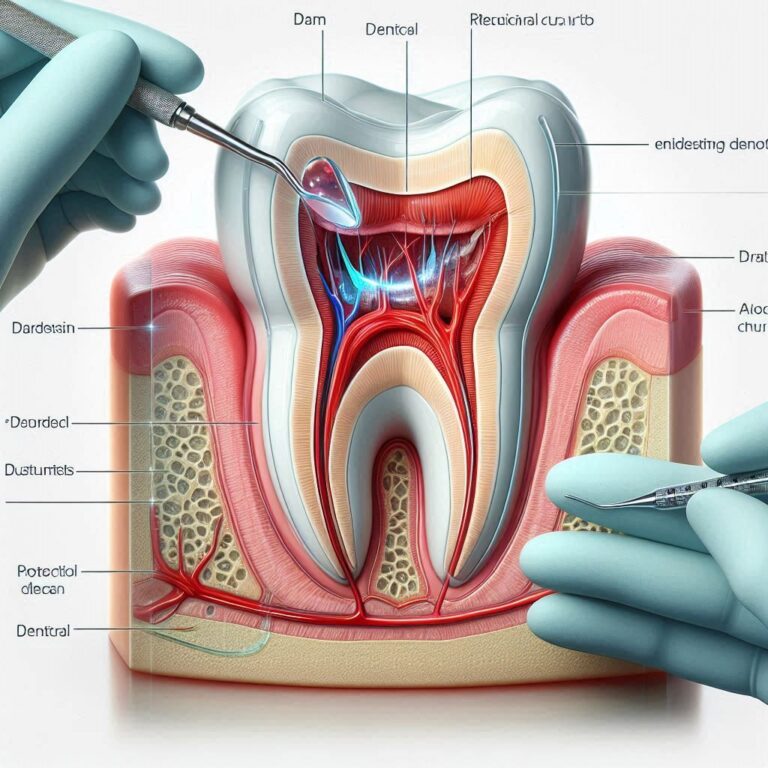
Imagine a tooth is like a tiny, hollow cylinder. Inside that hollow space is the “pulp”—the living tissue containing nerves and blood vessels. When deep decay or a crack allows bacteria to get near or into this pulp, it becomes inflamed, just like a splinter in your finger might cause swelling and pain.
-
The Goal: The goal of D3220 is not to remove the entire pulp. Instead, it is to remove only the part of the pulp that is in the “crown” (the top part of the tooth you can see). This is the portion that is inflamed and infected.
-
The “Therapeutic” Part: Once the damaged portion is removed, the dentist places a special soothing medicament on the remaining healthy pulp tissue in the root. This medication is designed to calm the inflammation, stop any bleeding, and encourage the healthy pulp to heal.
-
The “Excluding Final Restoration” Part: This is a crucial detail in the code itself. It means that the D3220 code covers the pulpotomy procedure only. It does not include the cost of the final filling or crown that must be placed on top of the tooth afterward. That is billed under separate codes.
Think of it as a life-saving measure for a tooth. It’s a targeted intervention to save a tooth that is in trouble but not yet a lost cause.
D3220 vs. Other Common Pulp Procedures: A Crucial Distinction
One of the biggest sources of confusion for patients is the difference between a pulpotomy, a pulpectomy, and a root canal. They all deal with the tooth’s pulp, but they are very different procedures. Understanding the difference will help you make sense of your dentist’s recommendations.
Here is a simple comparison table to clarify:
| Procedure | Dental Code | What It Is | When It’s Used | Tooth Type |
|---|---|---|---|---|
| Therapeutic Pulpotomy | D3220 | Partial removal of the pulp (only the part in the crown). The healthy pulp in the roots is left intact. | When inflammation/infection is limited to the crown portion of the pulp. A last-ditch effort to save a tooth without a full root canal. | Primarily Permanent Teeth (also used in primary/baby teeth with a different code). |
| Pulpectomy | D3221 | Complete removal of all pulp tissue from both the crown and the roots. | When the entire pulp is irreversibly damaged or necrotic (dead). This is the first step of a root canal. | Permanent & Primary Teeth |
| Root Canal (Endodontic Therapy) | D3310, D3320, D3330 | A complete, multi-step process that includes a pulpectomy, followed by cleaning, shaping, and sealing the root canals. | To save a tooth with irreversible pulpitis or a dead pulp. It is the definitive treatment. | Permanent Teeth |
| Direct Pulp Cap | D3110 | A medicament is placed directly on a small, exposed area of pulp to promote healing and form new dentin. | For small, pinpoint exposures during drilling, usually from trauma or shallow decay, where the pulp is otherwise healthy. | Permanent & Primary Teeth |
The Key Takeaway: D3220 is a less invasive procedure than a root canal. It’s an attempt to solve the problem by only removing the top part of the nerve. If a D3220 pulpotomy is unsuccessful, the next step is almost always a full pulpectomy and root canal therapy.
Why Would You Need a D3220 Pulpotomy?
Dentists don’t recommend procedures for fun. A therapeutic pulpotomy is a specific solution to a specific problem. It’s a procedure done with a clear purpose: to save your tooth. Here are the most common reasons a dentist would suggest a D3220.
1. Deep Decay (Cavities)
This is the most frequent reason. When a cavity is left untreated, it burrows deeper and deeper into the tooth. It first goes through the enamel, then the dentin. Once it reaches the pulp chamber, the bacteria cause inflammation. If the decay is deep but hasn’t yet infected the pulp tissue down in the roots, a pulpotomy can remove the infected portion of the pulp and save the rest.
2. Symptomatic Irreversible Pulpitis
This sounds scary, but it’s just the clinical term for a specific kind of toothache. It means the pulp is inflamed and can’t heal on its own. The classic signs include:
-
Spontaneous pain: The tooth hurts without any trigger.
-
Prolonged sensitivity: Pain lingers for minutes after consuming something hot or cold.
-
Pain upon lying down: Increased blood pressure to the head when lying flat can make the throbbing worse.
In these cases, the inflammation has taken hold. A simple filling won’t fix it, but a full root canal might be overkill if the infection hasn’t spread to the roots. A pulpotomy offers a middle path.
3. Trauma to the Tooth
If you fall and chip or crack a tooth, the fracture line can sometimes expose the pulp. If you get to the dentist quickly, a pulpotomy can remove the exposed and potentially contaminated portion of the pulp, seal it with a medicament, and prevent the need for more extensive treatment down the road.
4. As Part of a Larger Restorative Plan
Sometimes, a tooth needs a crown for structural reasons (like after a large filling breaks). If the tooth is very sensitive or shows signs that the pulp is stressed, a dentist might perform a therapeutic pulpotomy before placing the crown. This ensures the tooth is calm and comfortable, and the crown procedure can be performed without the risk of post-operative pain or infection.
The D3220 Procedure: A Step-by-Step Walkthrough
Knowing what to expect can alleviate a lot of dental anxiety. Here is a realistic, step-by-step breakdown of what happens during a D3220 therapeutic pulpotomy. The appointment is typically straightforward and often takes less time than a full root canal.
Step 1: Diagnosis and X-Rays
Before any work begins, your dentist will review your X-rays. They are checking the depth of the decay, the shape of the pulp chamber, and the health of the bone around the root tips. They may also perform a few tests, like tapping on the tooth or applying cold, to confirm the diagnosis.
Step 2: Anesthesia (Numbing)
Your comfort is the priority. The dentist will apply a topical gel to your gum to numb the surface, then inject a local anesthetic. You will feel a small pinch or burn, but once it takes effect, the entire area will be completely numb. You shouldn’t feel any pain during the procedure, just pressure and vibration.
Step 3: Isolation with a Dental Dam
To keep the tooth clean and dry, the dentist will place a small, rubbery sheet called a dental dam over the tooth. This isolates it from the rest of your mouth, preventing saliva (which is full of bacteria) from contaminating the sterile field.
Step 4: Removing Decay and Accessing the Pulp
Using a high-speed dental handpiece (a drill), the dentist removes all decay and old filling material. They then create a small opening through the top of the tooth to access the pulp chamber inside.
Step 5: The Pulpotomy (Removal)
This is the core of the D3220 code. The dentist uses a different, slower-speed bur or a hand instrument to carefully remove the pulp tissue from the crown of the tooth. You can’t feel this, as the tissue is already numb. The goal is to cleanly remove the inflamed portion, leaving the healthy pulp tissue in the root canals untouched.
Step 6: Hemostasis (Stopping the Bleeding)
After the pulp is removed, the area may bleed slightly. The dentist will place a small, moist cotton pellet or sponge in the chamber and apply pressure for a few minutes to stop the bleeding. For a therapeutic pulpotomy to be successful, the bleeding must be可控 and stop relatively quickly.
Step 7: Applying the Medicament
Once the bleeding has stopped, the dentist places a special medicated material directly onto the remaining healthy pulp tissue. Common materials include:
-
Calcium Hydroxide: A classic material that stimulates the formation of reparative dentin (a protective layer).
-
Mineral Trioxide Aggregate (MTA): A more modern, biocompatible material that provides an excellent seal and is very effective at promoting healing. It is often preferred for its superior results.
Step 8: The Temporary Seal
A layer of temporary filling material is placed over the medicament to seal the tooth until the final restoration can be placed.
Step 9: The Next Appointment
The procedure is now complete, but remember, the D3220 code is “excluding final restoration.” You will need to return for a subsequent visit to have a permanent filling or a crown placed. Your dentist will advise you on the best option to protect the now-restored tooth.
Important Note: You might experience some mild soreness in the gums for a day or two after the anesthetic wears off. This is normal. However, if you experience severe pain, swelling, or a return of hot/cold sensitivity, you should contact your dentist immediately, as it could be a sign that the procedure was not successful.
How Much Does the D3220 Dental Code Cost?
The cost of dentistry can be a major concern, and it’s often the first question patients ask. Because dental pricing varies so much based on location and provider, it’s impossible to give a single fixed price. However, we can provide a realistic range and explain the factors that influence the final cost.
On average, you can expect the out-of-pocket cost for a D3220 pulpotomy to range from $150 to $400.
This fee is for the pulpotomy procedure itself and does not include the exam, X-rays, or the final crown/filling. Here is a breakdown of what influences that price:
| Cost Factor | How It Affects the Price |
|---|---|
| Geographic Location | Dental fees are generally higher in major metropolitan areas (like New York or Los Angeles) compared to rural towns. Cost of living plays a big role. |
| Dentist vs. Endodontist | A general dentist can perform a pulpotomy. However, if the case is complex, they may refer you to an endodontist (a root canal specialist). Specialists typically charge 20-50% more for their expertise. |
| Tooth Location | Front teeth are generally easier to access and have simpler root anatomy. Molars, especially lower molars, are harder to reach and may require more time and skill, potentially increasing the fee. |
| The Medicament Used | Using advanced materials like MTA (Mineral Trioxide Aggregate) is more expensive for the dentist than using traditional calcium hydroxide. This cost may be passed on to the patient. |
The Total Cost of Treatment
It’s essential to look at the big picture. The total cost of saving your tooth with this approach is the D3220 fee PLUS the fee for the final restoration.
-
Final Filling (e.g., Code D2391-D2394): $150 – $400
-
Crown (e.g., Code D2740): $1,000 – $1,500+
So, while the pulpotomy itself might be a few hundred dollars, the full investment in the tooth’s long-term health could be significantly higher. This is why your dentist will always discuss the long-term plan for the tooth.
Dental Insurance Coverage for D3220
Navigating dental insurance can feel like learning another language. Here is what you need to know about how most plans handle the D3220 code.
Is it covered?
Generally, yes. A therapeutic pulpotomy is considered a basic restorative procedure by most insurance companies. It is not typically classified as “major” care like a crown or a bridge.
How does the coverage work?
Most dental insurance plans operate on a 100-80-50 structure.
-
Preventive care (cleanings, exams, X-rays) is often covered at 100%.
-
Basic procedures (fillings, simple extractions, pulpotomies) are often covered at 70-80% after you meet your annual deductible.
-
Major procedures (crowns, bridges, dentures) are often covered at 50%.
Example of Costs with Insurance:
Let’s say your procedure costs $300.
-
Your Annual Deductible: You might have to pay the first $50 of the procedure yourself (this is common).
-
Insurance Co-payment: If your plan covers basic care at 80%, they would then pay 80% of the remaining $250, which is $200.
-
Your Responsibility: You would pay the $50 deductible + the $50 co-pay (the 20% not covered by insurance) = $100 out-of-pocket.
Important Insurance Caveats:
-
Waiting Periods: Some plans have a waiting period for basic procedures, meaning you must be enrolled for 6-12 months before coverage kicks in.
-
Annual Maximums: Your plan has a yearly cap on how much it will pay (often $1,000 – $1,500). The payment for the D3220 will count toward that limit.
-
Frequency Limitations: Most insurance plans will only pay for a pulpotomy on the same tooth once in a certain period (e.g., once every 3-5 years), as it should be a definitive treatment.
Crucial Advice for Patients: Always call your insurance company before the procedure. Ask them, “What is my coverage for CDT code D3220, a therapeutic pulpotomy, on a permanent tooth?” This gives you the most accurate estimate of your financial responsibility.
Success Rates and Potential Risks
Like any medical procedure, a D3220 pulpotomy is not a guarantee. Its success depends heavily on the initial condition of the tooth and the precision of the procedure.
How Successful Is It?
The success rate for modern therapeutic pulpotomies, especially when using advanced materials like MTA, is quite high. Studies show success rates ranging from 75% to 95% in the short to medium term.
The best candidates for a successful pulpotomy are teeth where:
-
The inflammation was caught early.
-
The bleeding during the procedure stopped easily.
-
The remaining pulp was healthy.
-
A high-quality final restoration (like a crown) is placed to seal the tooth from future bacteria.
What Are the Signs of Failure?
Sometimes, despite the best efforts, the inflammation in the root pulp is too advanced or bacteria find their way in. Signs that the D3220 procedure has failed include:
-
A return of spontaneous pain or lingering sensitivity to hot/cold.
-
Pain when biting or chewing.
-
Swelling or a pimple-like bump (fistula) on the gum near the tooth root.
-
Darkening of the tooth.
What Happens If It Fails?
If a therapeutic pulpotomy fails, it doesn’t mean the tooth is automatically lost. It simply means the initial, less-invasive approach wasn’t enough. The next step is to proceed with a complete root canal (pulpectomy and obturation). In this case, the dentist will need to re-enter the tooth, remove the failed medicament and the remaining pulp tissue from the roots, and complete the endodontic therapy. The tooth can still be saved.
Final Restoration: Why It’s Not Optional
We’ve mentioned this a few times, but it is the most critical follow-up point to understand about the D3220 code. The code itself specifies that the final restoration is not included. This isn’t a billing technicality; it’s a clinical necessity.
Think of the pulpotomy as repairing the foundation of a house. The final restoration is the roof. Without a strong roof, the repaired foundation will just get damaged again.
Why a Temporary Filling Isn’t Enough
After a pulpotomy, the tooth is structurally weaker. It has a large hole in it. A temporary filling is soft and not designed to last. It can:
-
Leak: Saliva and bacteria can seep around the edges, re-infecting the tooth.
-
Break: A temporary filling can crack or fall out, leaving the medicated pulp exposed to the harsh environment of your mouth.
-
Wear Down: It won’t hold up to the forces of chewing for very long.
Your Restoration Options
Your dentist will recommend the best option based on how much tooth structure is left.
-
Permanent Filling: If the hole in your tooth is small to medium-sized and the remaining tooth structure is strong, a permanent composite (tooth-colored) filling may be sufficient.
-
Onlay or Crown: If a large portion of the tooth was lost to decay or the access hole is very large, the tooth becomes weak and prone to fracture. In these cases, a crown is almost always necessary. A crown encases the entire tooth, holding it together and protecting it from the forces of biting and chewing.
Skipping the final restoration is the number one reason why pulpotomies fail. Protecting the tooth with a strong, permanent seal is an investment in making sure the initial procedure was worth it.
D3220 for Primary (Baby) Teeth vs. Permanent Teeth
While this article focuses on the D3220 code for permanent teeth, it’s worth a brief note on its use in children.
The code D3220 is technically for permanent teeth. However, the procedure of a pulpotomy is extremely common on primary (baby) teeth. For baby teeth, a different, specific code is usually used (often D3222 for a pulpotomy on a primary tooth).
The goal on a baby tooth is different:
-
Permanent Tooth Goal: To calm the nerve and delay or avoid a root canal.
-
Baby Tooth Goal: To remove infected pulp tissue to prevent pain and abscess, allowing the tooth to be retained until it is time for it to fall out naturally. This preserves the space for the incoming permanent tooth, preventing orthodontic problems later.
If your child’s treatment plan mentions a pulpotomy, it’s a good idea to ask the dental office to clarify whether they will be using the D3220 code or a pediatric-specific code, as this can affect insurance coverage.
Frequently Asked Questions (FAQ)
Here are answers to some of the most common questions we hear about the D3220 dental code.
Q: Is a D3220 pulpotomy painful?
A: No. The procedure is performed under local anesthesia, so the tooth and surrounding area are completely numb. You may feel some pressure or vibration, but you should not feel sharp pain. Any post-procedure discomfort is usually mild and manageable with over-the-counter pain relievers.
Q: How long does a D3220 procedure take?
A: The pulpotomy itself is relatively quick. From the time you are numb to the time the temporary filling is placed, it typically takes about 30 to 45 minutes.
Q: Can I eat after a pulpotomy?
A: Yes, but you must wait until the numbness has completely worn off to avoid biting your cheek or tongue. Once the feeling returns, try to chew on the opposite side of your mouth until you get your permanent restoration. Stick to softer foods for the first day or so.
Q: Why does my dentist say I need a crown after the D3220?
A: Your dentist is looking out for the long-term health of your tooth. After a pulpotomy, the tooth is weakened. A crown is like a helmet that protects the tooth from fracturing and seals it from bacteria, giving it the best chance of lasting for many years.
Q: Will my insurance cover the D3220 code 100%?
A: It is very unlikely. Most plans classify it as a “basic” restorative procedure and cover it at 70-80% after your deductible is met. Check your specific plan’s Summary of Benefits.
Q: What happens if I don’t get the D3220 procedure?
A: If your dentist has recommended it, it means the pulp is inflamed. Without treatment, the inflammation will likely progress. The pain will worsen, the pulp will eventually die, and the infection can spread to the bone, leading to an abscess. You would then need a root canal or, in severe cases, an extraction.
Conclusion
Navigating dental terminology can be challenging, but understanding the D3220 dental code empowers you to take control of your oral health. To summarize, a therapeutic pulpotomy is a targeted, minimally invasive procedure designed to save a permanent tooth by removing only the infected portion of the nerve in the crown, calming the remaining healthy tissue with medication. It is a common and effective middle ground between a simple filling and a full root canal, though it requires a final crown or filling for long-term success. By understanding the procedure, its costs, and its purpose, you can have a more confident and informed conversation with your dentist.
Additional Resource
For the most authoritative and detailed information on dental procedures and coding, you can always refer to the source. The American Dental Association (ADA) publishes the Current Dental Terminology (CDT) code set.