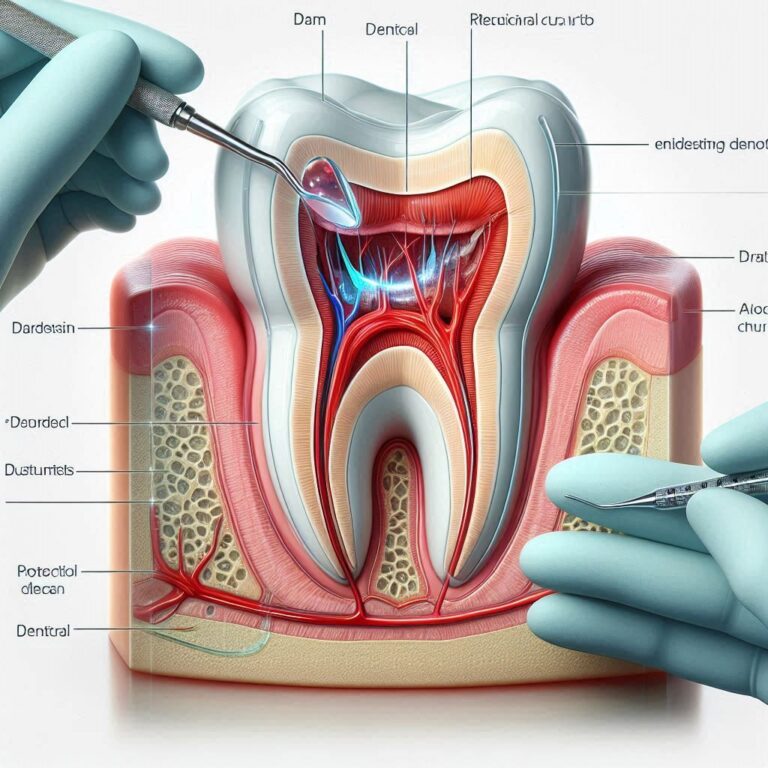
Understanding the D3346 Dental Code: A Complete Guide to Retreatment
- On
- InDENTAL CODE
Navigating the world of dental insurance codes and treatment plans can often feel like learning a foreign language. You sit in the dentist’s chair, hear a recommendation, and then later stare at a confusing explanation of benefits (EOB) filled with alphanumeric codes. If you have been told you need further work on a tooth that has already had a root canal, you have likely encountered the code D3346.
This guide is designed to be your friendly, reliable companion through this process. We will break down everything you need to know about the D3346 dental code in plain, simple English. Whether you are a patient wanting to understand your treatment, a student learning the ropes, or a caregiver helping a loved one, you are in the right place.
We will explore what this procedure entails, why it might be necessary, how much it costs, and what your insurance is likely to cover. Let’s turn that confusion into clarity.
Table of Contents
ToggleWhat is the D3346 Dental Code? A Simple Definition
In the simplest terms, the D3346 dental code is the specific identifier used by dentists and insurance companies for a procedure called a retreatment of a previous root canal. Specifically, it refers to a root canal retreatment on a tooth that has only one root.
To understand this, let’s break down the code itself:
-
The “D” Prefix: This simply tells you it’s a dental procedure code, part of the Current Dental Terminology (CDT) set maintained by the American Dental Association (ADA).
-
The “3” Series: The number ‘3’ at the beginning places this code in the “Endodontics” category. Endodontics is the branch of dentistry concerned with the soft tissue inside your tooth—the pulp. Root canals are the most common endodontic procedure.
-
The “346” Specifics: This sequence hones in on the exact procedure. It specifies a retreatment on an anterior tooth (the front teeth), which typically have a single root and root canal.
So, when you see D3346 on a treatment plan, you can translate it as: “The dentist needs to go back into a front tooth that has already had a root canal, remove the old filling material, clean the inside of the tooth again, and then re-fill and seal it.”
Why Would You Need a D3346 Retreatment?
A common question patients ask is, “I already had a root canal on this tooth. Why isn’t it fixed for good?” It’s a fair question. A successfully done root canal can last a lifetime, but sometimes, teeth don’t heal as expected or can become re-infected years later.
Think of a root canal like caulking a seam on a boat. Initially, it creates a perfect seal. But over time, the caulking can shrink, crack, or get damaged, allowing water to seep back in. A retreatment (D3346) is like removing the old caulking and applying a fresh, new seal.
Here are the most common reasons a dentist might recommend a procedure using the D3346 code:
1. Persistent or New Infection
This is the most frequent culprit. Even after a root canal, bacteria can find their way back into the inner chamber of the tooth. This can happen if:
-
The tooth wasn’t properly sealed during the first procedure.
-
The crown or filling placed after the first root canal is leaky, damaged, or decayed, allowing new bacteria to enter.
-
Complex canal anatomy was missed during the first treatment. Some teeth have tiny, extra canals that are very difficult to find and treat. If left untreated, they can harbor bacteria and become a source of infection later.
2. Delayed or Improper Healing
Sometimes, the initial root canal was performed perfectly, but the tissue around the root tip (the periapical area) doesn’t heal as expected. This can be due to individual healing factors or a persistent low-grade infection that wasn’t initially detected.
3. New Decay or Damage
If a tooth that has had a root canal is not protected with a dental crown, it can become brittle and prone to cracking. A crack can expose the inner parts of the tooth to new bacteria. Similarly, new decay on the tooth surface can penetrate down to the root canal filling material, contaminating it.
4. Asymptomatic Findings
Often, a retreatment is recommended not because you feel pain, but because your dentist sees something on a routine x-ray. They might notice a dark spot at the tip of the root (a lesion indicating bone loss due to infection) or an imperfection in the original root canal filling that could become a problem in the future.
Important Note for Readers: The decision to proceed with a D3346 retreatment is not taken lightly. Dentists and endodontists (root canal specialists) will carefully review your x-rays, symptoms, and dental history to ensure this is the best course of action to save your natural tooth.
The Difference Between D3346 and Other Retreatment Codes
One of the most common points of confusion is the difference between the various retreatment codes. The numbering is very specific and depends entirely on which tooth is being treated. This is crucial for both billing accuracy and understanding your treatment plan.
Here is a simple breakdown:
-
D3346: Retreatment of a previous root canal on an anterior tooth (incisor or canine). These teeth have one root.
-
D3347: Retreatment of a previous root canal on a premolar tooth (bicuspid). These teeth usually have one or two roots.
-
D3348: Retreatment of a previous root canal on a molar tooth. These are your back teeth and typically have two or three roots (or more).
Quick Reference Table: Retreatment Codes
| CDT Code | Tooth Type | Common Name | Typical # of Roots |
|---|---|---|---|
| D3346 | Anterior | Front Teeth (Incisors, Canines) | 1 |
| D3347 | Premolar | Bicuspids | 1-2 |
| D3348 | Molar | Back Teeth | 2-4 |
This distinction is important for you because the complexity of the procedure increases with the number of roots. A molar retreatment (D3348) is significantly more complex and time-consuming than an anterior retreatment (D3346). This complexity directly impacts the cost of the procedure.
The Step-by-Step Journey of a D3346 Procedure
Knowing what to expect during the procedure can ease a lot of anxiety. While every dentist or specialist has their own techniques, the general process for a D3346 retreatment follows a predictable path.
Here is a realistic, step-by-step look at what happens during a root canal retreatment on a front tooth:
Step 1: Consultation and Diagnosis
Before any work begins, your dentist will perform a thorough examination. This includes:
-
Reviewing your symptoms and medical history.
-
Taking new x-rays (often 3D Cone Beam CT scans for complex cases) to see the shape of the canals and the condition of the previous root canal.
-
Testing the tooth and surrounding gums.
-
Discussing the procedure, alternatives (like extraction), risks, and benefits with you.
Step 2: Anesthesia and Access
On the day of the procedure, the dentist will start by numbing the area with a local anesthetic. You should be completely comfortable and feel no pain. Once you are numb, they will place a rubber dam around the tooth. This small sheet of latex or non-latex material isolates the tooth, keeping it clean and dry and protecting you from any irrigation solutions used during the cleaning.
Step 3: Gaining Access to the Root Canal
To reach the old root canal filling material, the dentist must first remove any existing crown or filling. Then, they will drill a small opening through the biting surface of the tooth to access the pulp chamber.
Step 4: Removing the Old Filling Material
This is the most delicate part of the D3346 procedure. Using tiny specialized instruments, the dentist carefully removes the old gutta-percha (the rubber-like material used to fill the root canal) and any sealer cement. This requires patience and skill, as the goal is to clean out the old material without damaging the tooth structure.
Step 5: Cleaning and Disinfecting
With the old material removed, the canal is now an empty space. The dentist will use disinfecting solutions to thoroughly clean the entire length of the root canal. They will also use small instruments to scrub the canal walls, removing any remaining bacteria, debris, or infected tissue. This step is critical for eliminating the source of the infection.
Step 6: Re-filling the Canal
Once the canal is perfectly clean and dry, it’s time to seal it again. The dentist will fill the empty canal with a new gutta-percha filling material and a sealing cement. The goal is to create a complete, fluid-tight seal to prevent bacteria from re-entering in the future.
Step 7: Temporary or Permanent Restoration
After the canals are re-filled, the access hole drilled at the beginning must be closed.
-
Temporary Filling: Often, a temporary filling is placed to allow time for the tooth to settle before a permanent restoration is made.
-
Permanent Restoration: In some cases, the final filling or a new core buildup might be placed immediately. Your dentist will discuss whether you need a new crown to protect the tooth after healing is complete.
Step 8: Follow-up and Final Restoration
You will likely have a follow-up appointment to check on healing. If a temporary filling was placed, you will return to have it replaced with a permanent filling or to have a new dental crown fabricated and cemented. Protecting the tooth with a crown is highly recommended after a retreatment to prevent it from fracturing.
D3346 Cost: What is a Realistic Price?
Cost is a major concern for most patients, and root canal retreatments are generally more expensive than the initial procedure. Why? Because it is a more complex and time-consuming process. Removing the old materials is technically challenging and takes longer than the first time around.
Please remember: The following figures are realistic estimates based on national averages in the United States. Prices vary significantly depending on your geographic location, the specific dentist or endodontist you see, and the complexity of your case.
-
General Dentist: For a D3346 retreatment performed by a general dentist, you might expect to pay anywhere from $800 to $1,500.
-
Endodontist (Specialist): Because of their advanced training and specialized equipment (like dental operating microscopes), endodontists typically charge more. A D3346 performed by an endodontist could range from $1,200 to $2,000 or more.
These costs usually cover the professional fees for the retreatment procedure itself. They often do not include the cost of the initial consultation, x-rays, or the final restoration (like a new crown), which can add several hundred to a few thousand dollars to the total bill.
Why the Price Range?
-
Complexity: Is the old filling material easy to remove, or is it something exotic that is harder to dissolve? This affects time and difficulty.
-
Technology: Use of a dental microscope, which greatly increases the success rate of retreatments, may add to the cost.
-
Location: Dental fees in major metropolitan areas are typically higher than in rural towns.
Navigating Insurance for the D3346 Code
Understanding how your dental insurance plan handles the D3346 code can save you from unexpected bills. Here is a general guide to how most plans approach this procedure.
Classification of the Procedure
Most dental insurance plans classify a root canal retreatment (D3346) as a “major” restorative procedure. This is the same category as crowns, bridges, and dentures. It is rarely, if ever, classified as a “basic” procedure.
What This Means for Your Coverage
Because it’s a major service, your insurance will likely follow these rules:
-
Annual Maximum: This is the total dollar amount your plan will pay for your care in a single calendar year (often $1,000 – $2,000). The cost of a D3346 will likely take up a significant portion, or even all, of your annual maximum.
-
Deductible: You will first need to meet your annual deductible (e.g., $50 or $100) before your insurance starts to pay.
-
Coinsurance: Instead of covering 100% of the cost, plans usually pay a percentage for major services. A common split is 50/50. This means the insurance company pays 50% of the allowed amount, and you are responsible for the other 50%.
A Real-World Insurance Example
Let’s say your D3346 procedure costs $1,400.
-
Your insurance plan has a $100 deductible that you haven’t met yet.
-
Your plan pays 50% for major services.
-
Your plan has an annual maximum of $1,500.
Here is how the math might work:
-
You pay the first $100 (deductible). The remaining eligible amount is $1,300.
-
Insurance pays 50% of the $1,300 = $650.
-
You are responsible for the other 50% = $650.
-
Your total out-of-pocket cost: $100 (deductible) + $650 (your share) = $750.
-
Insurance pays: $650 (which counts toward your annual maximum).
Tips for Talking to Your Insurance Company
-
Don’t rely on the dentist’s office estimate alone. While they can help, it’s always best to call the customer service number on the back of your insurance card yourself.
-
Ask specific questions: “What is my remaining annual maximum? Has my deductible been met? What is my coverage percentage for code D3346, a root canal retreatment on an anterior tooth?”
-
Get pre-determination of benefits. Your dentist can send a treatment plan to your insurance company before the work is done. The insurance company will send you an estimate of what they will pay. This isn’t a guarantee of payment, but it’s a very reliable guide.
D3346 vs. The Alternatives
When a tooth is failing after a root canal, you have a decision to make. The D3346 retreatment is one option, but it’s not the only one. Understanding the alternatives helps you make an informed choice with your dentist.
Option 1: D3346 Retreatment
-
Goal: Save your natural tooth.
-
Pros:
-
Preserves your own tooth structure and bite function.
-
Prevents the need for more extensive and costly replacement options like bridges or implants.
-
Maintains the natural look and feel.
-
-
Cons:
-
More expensive and time-consuming than the first root canal.
-
Slightly lower success rate than a first-time root canal, though still very high (generally over 80%).
-
Requires a crown afterward for protection, adding to the total cost.
-
Option 2: Apicoectomy (D3410)
An apicoectomy, or root-end resection, is a minor surgical procedure. Instead of going back in through the top of the tooth (like D3346), the dentist accesses the root tip from the side, through the gum.
-
When is it used? Often when a conventional retreatment is impossible or has already failed. It’s useful if there is a blockage in the canal (like a post) that can’t be removed.
-
Pros: Can save the tooth when retreatment isn’t feasible.
-
Cons: It’s a surgical procedure with associated recovery time.
Option 3: Extraction
This involves simply removing the problematic tooth.
-
Pros: Stops the immediate problem and pain. Often the least expensive short-term option.
-
Cons: Removing a tooth, especially a front tooth, has major aesthetic and functional consequences. It will need to be replaced.
Option 4: Tooth Replacement (After Extraction)
If you choose extraction, you will likely need to replace the tooth to prevent your other teeth from shifting and to restore your smile.
| Replacement Option | Description | Pros | Cons |
|---|---|---|---|
| Dental Implant | A surgical post placed in the jawbone, topped with a crown. | The gold standard. Looks, feels, and functions like a natural tooth. Preserves bone. | Most expensive option. Requires surgery and a long healing time. |
| Fixed Bridge | A false tooth (pontic) held in place by crowns on the adjacent teeth. | Faster than an implant. Less invasive. | Requires grinding down healthy adjacent teeth. Can be harder to clean. |
| Removable Partial Denture | A plastic tooth on a gum-colored base that clips onto nearby teeth. | Least expensive replacement option. | Can feel bulky and less stable. Doesn’t preserve bone. |
The Takeaway: While extraction might seem like a quick fix, a D3346 retreatment is almost always the preferred first-line defense to save your natural tooth. It’s an investment in your long-term oral health.
Frequently Asked Questions (FAQ)
Here are answers to some of the most common questions patients have about the D3346 code and the retreatment process.
Q: Is a D3346 retreatment painful?
A: Most patients report that the procedure itself is no more uncomfortable than getting a regular filling. You will be under local anesthesia, so the area will be completely numb. Some soreness or tenderness in the gum and jaw for a few days after the procedure is normal, but this can usually be managed with over-the-counter pain relievers.
Q: How long does a D3346 procedure take?
A: Because removing the old filling material is delicate work, a D3346 retreatment on a front tooth typically takes one to two hours. In many cases, it can be completed in a single appointment, though some complex cases might require two visits.
Q: Will my dental insurance cover a D3346?
A: Most dental insurance plans provide coverage for retreatments, but they classify it as a “major” procedure. This usually means you will be responsible for a higher percentage of the cost (often 50%) after you meet your deductible. Check with your provider for your specific benefits.
Q: What is the success rate of a D3346 retreatment?
A: Success rates for root canal retreatments are generally high, often cited between 75% and 85%. The success depends on various factors, including the reason for the initial failure and the skill of the practitioner. Using a microscope can significantly improve these odds.
Q: Can any dentist perform a D3346, or do I need a specialist?
A: General dentists are licensed to perform root canal retreatments. However, many general dentists prefer to refer complex cases to an endodontist. Endodontists are specialists who have two or more years of advanced training in diagnosing and treating tooth pain and performing root canal procedures and retreatments. They also have specialized tools like microscopes.
Q: What happens if the D3346 retreatment doesn’t work?
A: If a retreatment fails, the next step might be an apicoectomy (root-end surgery) to remove the tip of the root and seal it from the other end. If surgery is not an option or is unsuccessful, the final alternative would be to extract the tooth and consider replacement options like an implant or bridge.
Additional Resources
For the most authoritative and up-to-date information, it’s always best to consult official sources. Here are a couple of links you might find helpful:
-
American Association of Endodontists (AAE): The AAE is the go-to resource for everything related to root canals and retreatments. Their patient section is excellent.
-
Link: www.aae.org/patients
-
-
American Dental Association (ADA): The ADA provides the official CDT codes and general information on oral health.
-
Link: www.ada.org
-
(Note: As an AI, I cannot create functional hyperlinks, but you can easily copy and paste these addresses into your browser.)
Conclusion
Facing the need for another procedure on a tooth you thought was fixed can be frustrating, but understanding the path forward makes all the difference. The D3346 dental code represents a highly skilled, common, and effective procedure designed to save your natural front tooth by carefully retreating a failed root canal. While it requires an investment of time and money, choosing this option is a commitment to preserving your smile, bite, and long-term oral health for years to come.

dentalecostsmile
Newsletter Updates
Enter your email address below and subscribe to our newsletter