The Complete Guide to the D4240 Dental Code: What It Means for Your Gum Health
If you have recently visited a periodontist or your general dentist for a gum-related issue, you might have glanced at a treatment plan and seen a confusing string of characters: “D4240.” It looks clinical, impersonal, and frankly, a little intimidating. But behind that code lies a very common, and often very necessary, procedure designed to save your teeth.
The world of dental coding (CDT codes) is the secret language of insurance companies and dental offices. For patients, it often feels like a barrier to understanding what is actually happening in their mouths. The D4240 dental code is one of those codes that sounds far scarier than it actually is.
In this guide, we are going to demystify D4240 completely. We will walk through what the procedure entails, why you might need it, what recovery looks like, and—perhaps most importantly—how to handle the financial side of things. Think of this as your friendly, reliable roadmap to better gum health.
What is the D4240 Dental Code? A Simple Breakdown
Let’s start with the basics. In the world of dentistry, every procedure has a specific “Current Dental Terminology” (CDT) code. These codes are maintained by the American Dental Association (ADA) and are used universally to standardize communication between dental offices and insurance providers.
So, what exactly is D4240?
In simple terms, D4240 is the code for a clinical procedure known as a “gingival flap procedure.” More specifically, it refers to a flap procedure on a single tooth or a small group of teeth (three contiguous teeth or less), including root planing and a minor assessment of the bone.
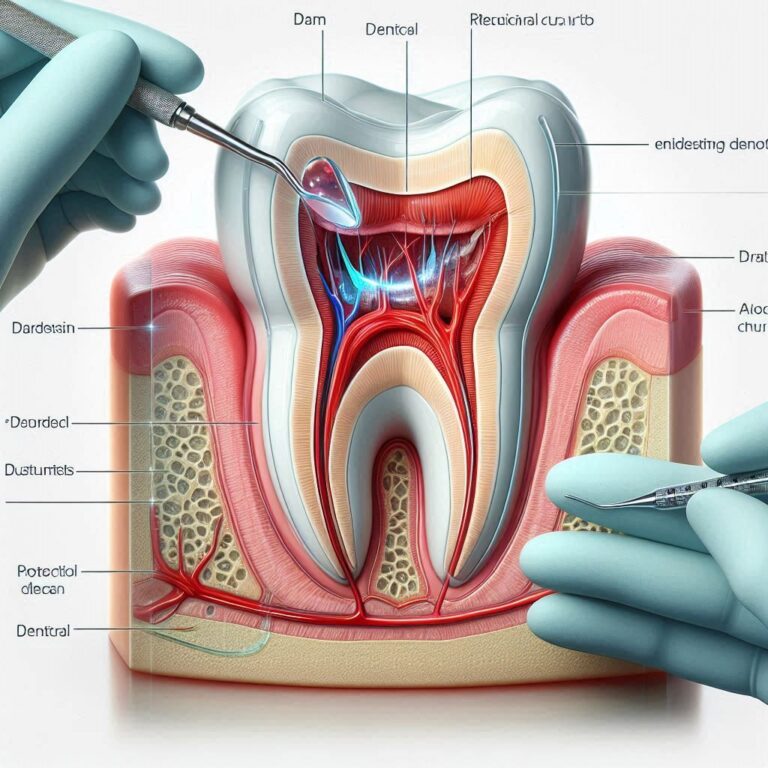
Think of it this way: Imagine your tooth is a house, and your gums are the soil around the foundation. If the soil pulls away from the house, dirt and debris get into the basement. To clean it out properly and check the foundation for damage, you need to gently lift a flap of that soil to get underneath. That’s exactly what a periodontist does during a D4240 procedure. They gently lift a section of the gum tissue away from the tooth to access the root and the bone underneath.
The Official D4240 Description:
“Gingival flap procedure, including root planing, per tooth; one to three contiguous teeth or tooth bounded spaces.”
It’s crucial to note that this code specifically covers the surgical entry and the cleaning of the root surfaces. It often serves as a diagnostic step to see the extent of the damage below the gum line.
Why Would You Need a D4240 Procedure?
You won’t wake up one morning and decide you want a gingival flap procedure. This is typically a treatment recommended after other, less invasive methods have failed, or when the situation is too advanced for simple cleanings.
The primary reason for a D4240 is periodontal disease, commonly known as gum disease.
The Progression to Surgery
-
Gingivitis: The earliest stage. Gums are red, swollen, and may bleed easily. At this point, a standard cleaning and improved home care usually solve the problem.
-
Periodontitis: If gingivitis is left untreated, it progresses to periodontitis. The inner layer of the gum and bone pull away from the teeth, forming “pockets.” These pockets trap debris and become infected.
-
Advanced Periodontitis: The infection deepens. The bone and fibers that hold your teeth in place are destroyed. This is when a D4240 becomes a likely recommendation.
Why can’t a regular cleaning fix this?
During a standard “scale and root planing” (often coded as D4341 or D4342), your dentist cleans deep below the gum line using specialized instruments. However, they are working “blind” to a certain extent. They are relying on touch and feeling for rough spots on the root.
If the gum pockets are too deep (usually 5mm or more), or if the root has complex anatomy (curves and grooves), it is physically impossible to clean it thoroughly without actually seeing it. The D4240 procedure allows the dentist to open the flap, literally see the root and bone, and clean it under direct vision.
Common Scenarios Leading to D4240:
-
Deep Periodontal Pockets: Pockets measuring 6mm or more that bleed upon probing.
-
Bone Loss: Evidence on x-rays that the bone supporting the teeth is deteriorating.
-
Furcation Involvement: In multi-rooted teeth (like molars), where the bone has receded where the roots split. This area is impossible to clean without a flap.
-
Persistent Inflammation: Gums that remain red, swollen, and bleed despite non-surgical treatment.
The D4240 Procedure: A Step-by-Step Walkthrough
Knowing what to expect on the day of surgery can significantly reduce anxiety. While every dentist has their own specific techniques, a standard D4240 procedure follows a predictable pattern.
Before the Procedure: Consultation
Your journey doesn’t start in the surgical chair. It starts with a comprehensive periodontal evaluation. Your dentist will:
-
Review your medical history.
-
Take full-mouth x-rays to assess bone levels.
-
Perform a “probing” of your gums to measure pocket depths.
-
Chart the existing recession and mobility of your teeth.
-
Take photos, if necessary.
This is the time to ask questions. Don’t be shy. A good dentist wants you to be informed.
The Day of Surgery
-
Anesthesia: The area will be nummed using a local anesthetic (like lidocaine). You will be awake but feel no pain. For anxious patients, many offices offer sedation options like nitrous oxide (laughing gas) or oral sedatives.
-
The Incision: Once you are completely numb, the dentist will use a tiny scalpel to make a precise incision along your gum line. They will then gently lift the gum tissue (the “flap”) away from the tooth and bone. This exposes the tooth root and the underlying bone.
-
Root Planing and Debridement: Now that the area is exposed, the dentist can see the tartar (calculus) deposits. They will use ultrasonic and hand instruments to thoroughly clean the root surfaces. This is far more effective than a blind cleaning.
-
Osseous Contouring (Often Included): Frequently, this code is paired with a procedure to smooth the underlying bone. If the bone has rough edges or “craters” from the infection, the dentist will smooth them down. This makes it harder for bacteria to hide and allows the gum to heal more predictably against a smooth surface. (Note: This bone smoothing is a related but sometimes separately coded procedure, D4261, though they are often performed together).
-
Irrigation: The surgical site is flushed with sterile water or an antimicrobial solution to wash away any remaining debris.
-
Suturing (Stitches): The gum flap is placed back into its original position (or slightly lower, depending on the case) and secured with sutures. These are usually dissolvable, so you won’t need to have them removed.
-
Periodontal Dressing (Optional): Sometimes, a soft, putty-like dressing (a “periodontal pack”) is placed over the surgical site to protect it during the initial healing phase.
The entire process for a small area (1-3 teeth) usually takes about an hour.
D4240 vs. Other Gum Procedures: A Comparative Guide
One of the most confusing aspects for patients is understanding why they are getting a specific code instead of another. Here’s a quick comparison to help you differentiate D4240 from other common codes.
| Procedure | CDT Code | Description | Invasiveness | Goal |
|---|---|---|---|---|
| Scaling & Root Planing | D4341 (full mouth) / D4342 (quadrant) | Non-surgical deep cleaning below the gum line. | Non-Surgical | Reduce bacteria and inflammation. |
| Gingival Flap Procedure | D4240 | Surgical lifting of the gum to access and clean the root. | Surgical | Access, visualize, and thoroughly clean deep pockets. |
| Osseous Surgery | D4261 (per quadrant) | Reshaping and smoothing the underlying bone. | Surgical | Eliminate bone craters for better healing. |
| Gingivectomy | D4210 | Surgical removal of excess gum tissue (not involving bone). | Surgical | Remove pocket walls or overgrown gums. |
| Gingival Curettage | D4230 / D4231 | Scraping the soft tissue wall of a pocket (rarely done alone now). | Surgical/Minor | Remove diseased lining of the pocket. |
Important Note: It is very common for a D4240 procedure to be performed in conjunction with osseous surgery (D4261). If your dentist is going to smooth the bone, you may see both codes on your treatment plan.
What to Expect During Recovery: A Timeline
Recovery from a D4240 is a process, but for most people, it is manageable with over-the-counter pain relief and a little patience.
The First 24 Hours
-
Bleeding: Some minor oozing of blood mixed with saliva is normal for the first few hours. Biting gently on a gauze pad placed by your dentist helps control this.
-
Swelling: Some swelling is normal. Applying an ice pack to the outside of your face for 20 minutes on, 20 minutes off during the first 12 hours can help minimize it.
-
Pain: As the local anesthetic wears off (usually after 2-4 hours), you will likely feel discomfort. Your dentist will advise you on pain relief, typically ibuprofen (Advil) or acetaminophen (Tylenol).
-
Diet: Stick to soft foods. Think yogurt, smoothies, scrambled eggs, soup (not too hot!), and mashed potatoes. Avoid anything hard, crunchy, spicy, or chewy.
Days 2 to 7
-
Discomfort: The peak discomfort is usually in the first 48 hours. By day three or four, most people feel significantly better.
-
Oral Hygiene: You will need to be gentle. Do not brush or floss the surgical site. Your dentist will give you a prescription for a special antimicrobial mouth rinse (like chlorhexidine) to use twice a day to keep the area clean.
-
Activity: Avoid strenuous exercise for a few days, as it can increase bleeding.
One to Two Weeks
-
Suture Check: If your sutures are not dissolvable, you will have a follow-up appointment to have them removed. This is quick and painless.
-
Return to Routine: You can usually start gently brushing the area with a very soft toothbrush. You will likely feel more comfortable eating a wider variety of foods.
Long-Term Healing (Months)
-
The gum tissue will continue to tighten around the teeth. The “pockets” that were deep before should now be significantly shallower, allowing you to clean them effectively at home.
-
Crucial Point: The surgery is not the cure; it’s the reset button. Your long-term success depends on your home care. Your dentist will schedule regular follow-up appointments (periodontal maintenance, D4910) to monitor your progress and keep the area clean.
A Note on Sensations: It is common to experience increased tooth sensitivity to cold or air for a few weeks after the procedure. This happens because the roots, which were covered by infected tissue, are now clean and exposed. Using a sensitivity toothpaste (like Sensodyne) can help, and the sensitivity usually fades as the gum tissue heals.
The Financial Side: Cost and Insurance for D4240
Let’s talk about money. Dental surgery can be expensive, and understanding the costs upfront is vital.
How Much Does D4240 Cost?
The cost of a D4240 procedure varies wildly based on your geographic location, the complexity of your case, and the dentist’s experience.
-
General Range: For a single tooth or a small section (1-3 teeth), you can expect to pay anywhere from $600 to $1,500.
-
Why the variance? In major metropolitan areas, costs are higher. In rural areas, they are lower. If the case is exceptionally complex, the fee may be higher.
Dealing with Dental Insurance
This is where it gets tricky. Dental insurance is designed to help with prevention and basic repair, not necessarily to cover the full cost of managing a chronic disease like periodontitis.
-
Classification: The D4240 is a surgical procedure. It falls under the “Major Restorative” or “Surgical” category in most insurance plans.
-
Coverage Percentage: Most plans use a “100-80-50” structure. They cover 100% of preventive, 80% of basic, and 50% of major procedures.
-
Example: If your procedure costs $1,000 and your plan covers major work at 50%, your insurance would pay $500. You would be responsible for the remaining $500 (your co-pay), plus your annual deductible (usually $50-$100).
-
-
Annual Maximums: This is the biggest hurdle. Most dental insurance plans have a low annual maximum, often around $1,500. If your D4240 costs $1,200 and you have already used some of your insurance for fillings or cleanings that year, you may max out your benefits quickly.
Questions to Ask Your Insurance and Dentist:
-
“Is my plan’s coverage for D4240 based on a percentage of the fee, or a fixed allowance?”
-
“How much of my annual maximum have I already used?”
-
“Does my dentist offer an in-house savings plan or financing options like CareCredit?”
Important Advice: Do not let the cost scare you away from treatment. Untreated periodontal disease leads to tooth loss, which is far more expensive (and emotionally difficult) to fix with implants or bridges. Investing in saving your natural teeth is one of the best investments you can make.
D4240 and Periodontal Maintenance: The Lifelong Partnership
It would be wonderful if one surgery could fix gum disease forever. Unfortunately, that’s not how it works. Periodontal disease is a chronic condition, much like diabetes. It can be managed and controlled, but it cannot be “cured.”
After your gums have healed from the D4240 procedure, you will enter a new phase of dental care: Periodontal Maintenance (CDT Code: D4910) .
This is not a standard cleaning.
-
A standard cleaning (prophylaxis) is for people with healthy gums.
-
Periodontal maintenance is specifically for people who have a history of periodontal disease and have undergone surgical or non-surgical treatment.
What Periodontal Maintenance Involves:
-
It is typically performed every 3 to 4 months (instead of every 6 months).
-
It includes a periodontal probing to check for any returning pockets.
-
It involves a “debridement” to remove bacteria and calculus from above and below the gum line.
-
It focuses on “spot treating” areas that may be flaring up.
Think of your D4240 surgery as a major landscaping project to clear out an overgrown garden. The periodontal maintenance visits are the weekly weeding that keeps the garden beautiful and prevents it from being overtaken again.
Frequently Asked Questions (FAQ)
Q: Is the D4240 procedure painful?
A: During the procedure, you will be completely numb and should feel no pain. After the anesthesia wears off, you will experience some discomfort, which is usually well-managed with over-the-counter pain relievers. Most patients report that the anxiety leading up to the procedure is worse than the recovery itself.
Q: How long does a D4240 procedure take?
A: For a single tooth or a small area (1-3 teeth), you should expect to be in the dental chair for about 60 to 90 minutes. This includes the time for numbing, the surgery itself, and post-operative instructions.
Q: What is the difference between D4240 and D4241?
A: This is an excellent question. D4240 is for one to three contiguous (touching) teeth. D4241 is the code for a gingival flap procedure involving four or more contiguous teeth in the same quadrant. Think of D4240 as a “localized” flap and D4241 as a “fuller arch” flap.
Q: Will my teeth look different after the surgery?
A: There is a chance you might notice a slight change. When the swelling goes down, and the tissue tightens, the teeth may look slightly longer. This is a sign that the procedure was successful in reducing pocket depth. Your dentist will discuss any aesthetic changes with you beforehand.
Q: How successful is the D4240 procedure?
A: When combined with excellent post-operative home care and regular periodontal maintenance, the success rate is very high. The goal is to stop the progression of the disease and preserve the teeth. Long-term success depends largely on the patient’s commitment to oral hygiene.
Conclusion
The D4240 dental code represents a significant, yet highly effective, step in the fight against periodontal disease. While the idea of gum surgery can be daunting, understanding the “why” and “how” behind the code removes the mystery and empowers you to make informed decisions about your health. It is a precise, targeted procedure designed to save your teeth by cleaning areas that are impossible to reach otherwise. If this procedure has been recommended for you, view it not as a punishment, but as a proactive, positive step toward preserving your smile for years to come.
Additional Resources
For more information on periodontal disease and treatment options, the American Academy of Periodontology offers excellent patient resources. You can visit their website at perio.org for further reading.