D4341 Dental Code: What It Means for Your Gum Health
If you have ever sat in a dentist’s chair and heard the hygienist call out a series of numbers to the assistant, you know that dentistry has a language of its own. It is a world of charts, measurements, and codes. And while these terms help professionals communicate clearly, they can feel like a secret code to the rest of us.
When you receive a treatment plan or an Explanation of Benefits (EOB) from your insurance company, you might see a jumble of letters and numbers. One of the most common—and most misunderstood—is D4341.
If you have been told you need “deep cleaning,” or if your hygienist mentioned “periodontal scaling and root planing,” chances are you are looking at the D4341 code. But what does it actually mean? Is it just a standard cleaning? Why does it cost more than your regular check-up?
Let’s pull back the curtain. This guide will walk you through everything you need to know about the D4341 dental code. We’ll cover what the procedure entails, why it is necessary for your health, how much you might expect to pay, and how to navigate your insurance benefits. By the end, you will be empowered to have an informed conversation with your dentist and take control of your oral health.
What is the D4341 Dental Code? Defining Periodontal Scaling and Root Planing
In the simplest terms, the D4341 dental code is the specific identifier used by dentists and insurance companies for a procedure known as Periodontal Scaling and Root Planing. This is often referred to by patients as a “deep cleaning.”
However, it is crucial to understand that this is fundamentally different from the routine “prophylaxis” (cleaning) you get during a standard check-up. The D4341 code is a therapeutic procedure, not just a preventive one. It is performed to treat gum disease, specifically periodontitis.
Let’s break down the name:
-
Periodontal: This refers to the structures around your tooth—your gums and the bone that holds the tooth in place.
-
Scaling: This is the process of removing the hard deposits (calculus or tartar), plaque, and bacteria from your teeth, both above and below the gum line.
-
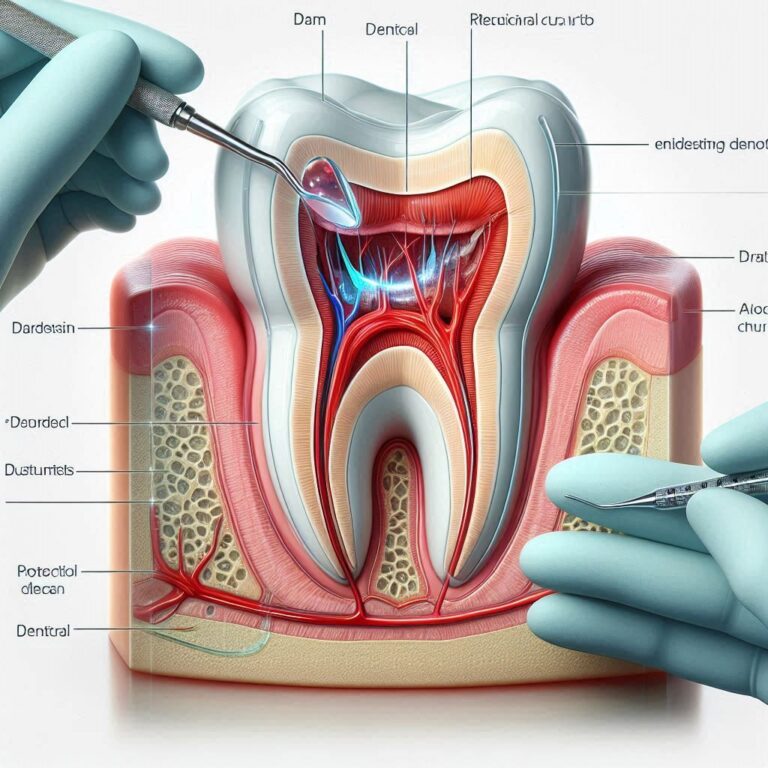
Root Planing: This involves smoothing out the root surfaces of your teeth. By making the root smoother, it helps your gums re-attach to the tooth and makes it harder for bacteria to accumulate in the future.
Think of it this way: a standard cleaning is like pressure-washing the exterior of your house. A D4341 procedure is like clearing out the basement, treating mold behind the walls, and reinforcing the foundation. It goes much deeper and targets the source of the problem.
D4341 vs. D4342: What’s the Difference?
You might also come across the code D4342. This is a common point of confusion. While both codes are for periodontal scaling and root planing, the difference lies in the extent of the treatment.
-
D4341: This code is used for “four or more teeth per quadrant.” A quadrant is one of four sections of your mouth: upper right, upper left, lower right, or lower left. If a dentist is treating a whole section of your mouth where most teeth require deep cleaning, they will likely use D4341.
-
D4342: This is a newer code, introduced to provide a more accurate billing option. It is used for “one to three teeth per quadrant.” If the gum disease is localized to a smaller area—for example, just around two teeth in the back—the dentist will use D4342 for that specific quadrant.
Why does this distinction matter? It impacts your insurance coverage. Since D4341 covers more teeth, it is a higher-cost procedure than D4342. Your insurance plan will have a set allowance for each, so knowing which one is being billed is important for understanding your financial responsibility.
Why Would I Need a D4341 Deep Cleaning? Recognizing the Signs of Gum Disease
Nobody wakes up one morning and suddenly needs a deep cleaning. Gum disease is a progressive condition. It develops over time, and the D4341 procedure becomes necessary when the disease has advanced past the point where a simple cleaning can fix it.
The journey usually starts with gingivitis. This is the early stage of gum disease. At this point, the gums are inflamed due to plaque buildup. They might bleed when you floss or brush, and they may look red or feel tender. The good news? Gingivitis is reversible with good home care and a standard professional cleaning.
However, if gingivitis is left untreated, it can progress to periodontitis. This is where the D4341 code comes into play. Here’s what happens:
-
Plaque Hardens: The plaque that wasn’t removed hardens into tartar (calculus), which cannot be removed with a toothbrush.
-
Gums Pull Away: The toxins produced by the bacteria in the tartar cause the gums to start pulling away from the teeth, forming “pockets.”
-
Pockets Deepen: These pockets become traps for even more bacteria and tartar. A healthy gum pocket depth is usually between 1 and 3 millimeters. Once pockets reach 4 millimeters or deeper, they are a sign of active disease.
-
Bone Loss Occurs: As the infection spreads below the gum line, it begins to destroy the supporting bone. This is the critical stage where teeth can become loose and may eventually be lost.
Your dentist or hygienist diagnoses this by using a small probe to measure the depth of those pockets around each tooth. They are looking for bleeding, inflammation, and deep pocket readings.
Important Signs to Watch For
If you are experiencing any of the following, you should schedule a comprehensive periodontal evaluation to see if a D4341 procedure might be necessary:
-
Persistent Bad Breath (Halitosis): That bad taste or smell that won’t go away, even after brushing.
-
Red, Swollen, or Tender Gums: Healthy gums are firm and pale pink. Redness and swelling are signs of infection.
-
Bleeding Gums: While many people think it’s normal, gums should not bleed when you brush or floss. It is a primary sign of inflammation.
-
Receding Gums: Do your teeth look longer than they used to? This is a sign that your gum tissue is pulling away.
-
Loose Teeth: As the supporting bone deteriorates, teeth can become loose or shift, changing your bite.
-
Pus Between Teeth and Gums: This is a clear sign of an active infection.
Important Note: Gum disease is often “silent” in its early stages. You might not feel any pain. That’s why regular dental check-ups are vital. They allow the dentist to catch these issues before they require more extensive (and expensive) treatment.
The Procedure: What to Expect During Your D4341 Appointment
Hearing that you need a “deep cleaning” can sound intimidating. However, knowing what to expect can help ease any anxiety. The D4341 procedure is usually broken down into steps and often scheduled over multiple appointments to ensure you are comfortable and the treatment is effective.
Step 1: Numbing the Area
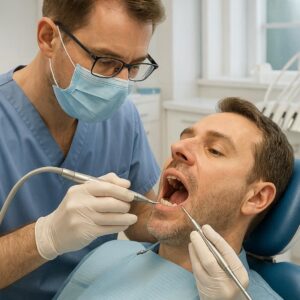
Unlike a standard cleaning, scaling and root planing goes below the gum line. Because of this, your dentist or hygienist will administer a local anesthetic to numb the specific quadrant being worked on. This ensures you feel no pain or discomfort during the procedure. You will be awake and aware, but the area will be completely numb.
Step 2: Scaling (The Deep Clean)
Once you are numb, the hygienist will begin the scaling process. Using specialized instruments—both manual metal scalers and ultrasonic tools that use vibrations and water—they will meticulously remove plaque, tartar, and bacterial toxins from the tooth surfaces and the roots. The ultrasonic tool sprays a cooling mist of water, which helps wash away debris. You might hear some buzzing or scratching sounds, but you shouldn’t feel any sharp pain.
Step 3: Root Planing (Smoothing the Surface)
After the heavy buildup is removed, the hygienist focuses on root planing. This is a precise process of smoothing the root surfaces. Imagine a splinter under your skin; it’s hard for the skin to heal with the splinter there. Similarly, it’s hard for gums to reattach to a rough, tartar-covered root. By creating a smooth, clean surface, the gums have a chance to heal and tighten back up around the tooth.
Step 4: Medication (Optional but Common)
In many cases, the dentist may place a localized antibiotic directly into the deep pockets. This can come in the form of a gel, a microsphere, or a chip. This medication helps control the bacterial infection and aids in the healing process. This might be a separate code (like D4381), so your dentist will discuss this with you beforehand.
Step 5: Scheduling and Healing
Because the procedure requires precision and can be tiring for both you and the clinician, it is rarely done on the entire mouth at once. A common approach is to treat one or two quadrants per visit. You might have your upper right quadrant done at one appointment and return a week or two later for another area.
In the days following the procedure, it is normal to experience:
-
Some sensitivity to hot and cold.
-
Slight soreness in the gums.
-
Minor bleeding while brushing.
Your dentist will provide specific aftercare instructions, which usually include rinsing with warm salt water, eating soft foods, and avoiding the area when brushing for the first 24 hours.
The Cost of D4341: Why Deep Cleaning is More Expensive
One of the biggest shocks for patients is the price difference between a routine cleaning and a D4341 procedure. It is common to wonder, “Why does it cost so much more? It’s just a cleaning!”
Understanding the complexity and the time involved explains the difference in cost. The price for a D4341 procedure can vary widely based on your location, the dentist’s experience, and the severity of your case. On average, you might expect to pay between $200 and $400 per quadrant. For a full-mouth treatment (four quadrants), that puts the total between $800 and $1,600 before insurance.
Here is a comparison to illustrate why the cost is higher:
| Feature | Standard Cleaning (Prophylaxis – D1110) | Deep Cleaning (SRP – D4341) |
|---|---|---|
| Goal | Preventive; maintenance of healthy gums. | Therapeutic; treatment of active disease. |
| Area Treated | Above the gum line. | Above and below the gum line, down to the root. |
| Anesthetic | Rarely needed. | Almost always required for patient comfort. |
| Time | Typically 45-60 minutes for the whole mouth. | 45-90 minutes per quadrant (section of the mouth). |
| Skill Level | Removal of soft plaque and light calculus. | Meticulous removal of hard, embedded calculus and bacterial toxins from root surfaces. |
| Outcome | Polished teeth and refreshed gums. | Reduction of periodontal pockets and halting of bone loss. |
Is the Investment Worth It?
When you look at the upfront cost, it can seem high. However, consider it an investment in preventing much more expensive and invasive procedures down the road. Untreated gum disease is the leading cause of tooth loss in adults. Replacing a single missing tooth with an implant can cost thousands of dollars—far more than treating the disease that could have saved the natural tooth.
Furthermore, a mounting body of research links periodontal health to overall health, connecting it to conditions like heart disease, diabetes, and complications during pregnancy. Treating gum disease isn’t just about saving your teeth; it’s about protecting your whole body.
Insurance Coverage for D4341: How to Navigate Your Benefits
Navigating dental insurance can feel like solving a puzzle. Here is a general guide to how most insurance plans handle the D4341 code. Remember, every plan is different, so it is always best to call your provider to confirm your specific benefits.
Classification: Basic Restorative Service
In the world of dental insurance, procedures are usually grouped into three categories:
-
Preventive: (Cleanings, exams, x-rays) – Usually covered at 80-100%.
-
Basic Restorative: (Fillings, extractions, periodontal therapy) – Usually covered at 50-80%.
-
Major Restorative: (Crowns, bridges, dentures) – Usually covered at 50% or less.
D4341 falls into the Basic Restorative category. This means your insurance will likely pay a percentage of the cost, and you will be responsible for the rest (your co-pay or coinsurance).
The “Frequency” Limitation
Insurance companies are very specific about how often they will pay for a procedure. You cannot have a D4341 deep cleaning every six months like a regular cleaning. It is considered a therapeutic treatment for an active condition. Most plans will cover this procedure once every 24 to 36 months for the same area of the mouth.
The Deductible
Most dental plans have an annual deductible (often $50 to $100). This is the amount you must pay out-of-pocket before your insurance starts to pay its share. Since D4341 is not a preventive service, you will likely have to meet your deductible first.
The Annual Maximum
Your plan has a cap on how much it will pay in a given year—this is your annual maximum (often $1,000 to $2,000). Because a full-mouth D4341 treatment can cost between $800 and $1,600, it can use a significant portion of your annual maximum. If you need other work later in the year, like a crown, you might reach your limit faster.
A Real-World Example
Let’s say your D4341 procedure for one quadrant costs $300. Your insurance plan covers Basic services at 80% after you meet a $50 deductible.
-
Total Bill: $300
-
Your Deductible: $50 (you pay this first)
-
Remaining: $250
-
Insurance Pays (80%): $200
-
Your Co-pay (20%): $50
-
Total You Pay: $100 ($50 deductible + $50 copay)
Pro-Tip: Always ask your dentist’s office for a “predetermination of benefits” or a “pre-auth.” They will send the treatment plan to your insurance company, who will then send you an official statement of what they will pay and what you will owe. This prevents surprise bills.
Life After D4341: The Importance of Periodontal Maintenance
Receiving a D4341 deep cleaning is not the end of the story; it is the beginning of a new phase in your oral health journey. Once you have been treated for periodontal disease, you enter a state of remission, but the condition must be managed. This is where a new code comes into play: D4910 (Periodontal Maintenance) .
After your deep cleaning, your gums need time to heal. Your dentist will schedule a follow-up appointment, usually 4 to 6 weeks later, to re-evaluate the pocket depths. If the treatment was successful, the pockets will have shrunk, and the gums will be tighter and healthier.
However, because you have proven to be susceptible to gum disease, you are at a higher risk for it recurring. You cannot go back to a simple “prophy” cleaning.
What is Periodontal Maintenance (D4910)?
Periodontal maintenance is a specialized cleaning tailored for patients who have a history of periodontitis. It is different from a standard cleaning in several ways:
-
Frequency: It is typically recommended every 3 to 4 months. This frequent interval is crucial to disrupt the bacterial growth cycle and keep the deep pockets clean.
-
Focus: The hygienist will continue to monitor your pocket depths. The cleaning will still involve some scaling below the gum line, but it is generally less intensive than the initial D4341.
-
Goal: The goal is maintenance—keeping the disease from coming back and preventing further bone loss.
It is vital to adhere to this schedule. If you skip these maintenance visits, the bacteria and tartar will quickly build back up in those deep pockets, and the disease will likely return, potentially requiring another round of D4341 treatment.
A Note on Insurance for D4910: Just like the deep cleaning, periodontal maintenance is considered a therapeutic procedure. Your insurance will likely cover it under the “Basic” category, but you will probably have a co-pay. They may limit it to a certain number of times per year (often 3 or 4) to align with the prescribed frequency.
Frequently Asked Questions (FAQ)
Q: Is a D4341 deep cleaning painful?
A: Your dentist will use a local anesthetic to numb the area being treated. You may feel pressure or vibrations, but you should not feel sharp pain. Some soreness and sensitivity are common for a few days after the numbness wears off, but this can be managed with over-the-counter pain relievers and a soft-food diet.
Q: Can I just get a regular cleaning instead? My insurance doesn’t cover the deep cleaning well.
A: While it might be tempting to ask for a standard cleaning to save money, it is not a safe or effective alternative. A standard cleaning does not go below the gum line. If you have active gum disease, a regular cleaning is like mopping the floor while ignoring the flood in the basement. It won’t fix the problem, and the disease will continue to destroy the bone supporting your teeth, leading to tooth loss.
Q: How long does a D4341 procedure take?
A: It depends on how many teeth are being treated in that quadrant and the severity of the buildup. Generally, you can expect the appointment to last between 45 and 90 minutes for a single quadrant.
Q: Will my gums grow back after a deep cleaning?
A: Gum tissue does not “grow back” in the way skin does. However, the goal of root planing is to reduce inflammation and swelling. As the gums heal, they will become firm and healthy and will tighten up around the teeth, which reduces the depth of the pockets. The primary goal is to stop the disease and prevent further recession and bone loss.
Q: My dentist said I need this in all four quadrants. Can I do them all at once?
A: While it is physically possible, it is not common practice. Most dentists prefer to numb and treat one or two quadrants per visit. This allows you to have one side of your mouth to chew on while the other side heals, and it minimizes the overall discomfort and fatigue of a long dental procedure.
Additional Resource
For further reading on the connection between oral health and whole-body wellness, the American Dental Association (ADA) provides excellent resources. You can visit their public section on MouthHealthy.org for articles on gum disease, prevention, and the latest research.
[Link to MouthHealthy.org – American Dental Association]
Conclusion
The D4341 dental code represents more than just a billing line item; it is a targeted, therapeutic procedure designed to halt the progression of gum disease and save your teeth. While the cost and time commitment are greater than a standard cleaning, the value it provides in preserving your oral and overall health is immense. By understanding the “why” behind the procedure, what it entails, and how to manage your ongoing gum health afterward, you are taking the most important step: becoming an active, informed partner in your own care.