Understanding the D5130 Dental Code: Your Guide to a 4-Unit Provisional Bridge
Navigating the world of dental insurance codes and treatment plans can sometimes feel like learning a new language. If your dentist has recently mentioned the need for a bridge, you might have seen the code “D5130” on your treatment estimate and wondered what it means.
Don’t worry, you’re not alone. This code is a specific part of restorative dentistry, and understanding it can help you feel more informed and confident about your dental health decisions.
In this guide, we’ll break down everything you need to know about the D5130 dental code in plain, simple English. We’ll cover what it is, when it’s used, the procedure step-by-step, and how it fits into your overall dental care.
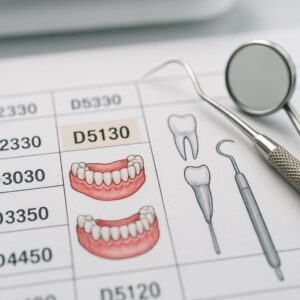
What Exactly is the D5130 Dental Code?
In the dental world, every procedure has a specific code, formally known as Current Dental Terminology (CDT) codes. These codes are essential for insurance billing, record-keeping, and ensuring clear communication between dental professionals.
The D5130 dental code specifically refers to a provisional bridge. Let’s break that down:
-
D5130: This is the specific alphanumeric code used on dental claims.
-
Provisional: This means “temporary” or “interim.” It’s not the final restoration.
-
Bridge: A dental appliance used to replace a missing tooth (or teeth) by anchoring to the teeth on either side of the gap.
So, in the simplest terms, D5130 is the dental code for a temporary, four-unit (or more) bridge.
Key Features of a D5130 Provisional Bridge
-
Temporary Nature: It is designed to be worn for a short period, typically a few weeks to a couple of months, while your permanent bridge is being custom-made in a dental laboratory.
-
Four or More Units: A “unit” refers to a single tooth or a single pontic (the artificial tooth that fills the gap). A four-unit bridge usually means it replaces one missing tooth (the pontic) and is supported by three crowned teeth, or it replaces two missing teeth supported by two crowned teeth. The code applies to any provisional bridge of four units or more.
-
Material: These bridges are usually made from materials that are strong enough for temporary use but easy for the dentist to adjust. Common materials include:
-
Acrylic: A type of plastic that is relatively easy to shape and polish.
-
Bis-acryl composite: A more modern, stronger, and more durable resin material that offers a better fit and appearance than traditional acrylic.
-
Think of the D5130 bridge as the “blueprint” or the “placeholder” for your final, permanent bridge. It plays a crucial role in ensuring the success of your long-term dental work.
When is a D5130 Provisional Bridge Necessary?
You might be wondering why you need a temporary bridge at all. Can’t you just wait for the permanent one? The answer is no, and the provisional bridge serves several critical functions.
1. Protection for Prepared Teeth
To place a traditional bridge, the teeth adjacent to the gap (called abutment teeth) need to be reshaped or “prepared.” This involves filing down the enamel to create room for the crowns that will hold the bridge in place. These prepared teeth are now more sensitive and vulnerable to temperature changes, bacteria, and damage. The provisional bridge acts as a protective shield, covering them completely.
2. Maintaining Proper Spacing
Teeth have a natural tendency to shift. If there’s an empty space, the teeth behind the gap may start to lean forward, and the opposing teeth may “super-erupt” or grow out of their sockets to try to fill the space. This movement can compromise the fit of your permanent bridge. The provisional bridge holds the space open, ensuring that when your permanent bridge is ready, it will fit perfectly without any shifting issues.
3. Preserving Gum Health
The way your teeth meet your gums creates a specific “emergence profile,” which is the contour of the tooth as it emerges from the gum tissue. The provisional bridge is carefully shaped to guide your gums as they heal around the new restoration. This helps create a healthy and aesthetic gum line for the final bridge.
4. Restoring Function and Aesthetics
While you’re waiting for your permanent bridge, you still need to eat and smile! The provisional bridge allows you to chew (though with care) and speak normally. It also prevents the embarrassment of having a visible gap in your smile, maintaining your confidence during the treatment process.
Important Note: A D5130 bridge is not designed for long-term wear. It is made from less durable materials than a permanent bridge and is more prone to breakage or staining. It is a temporary measure to ensure the success of the permanent one.
The D5130 Procedure: A Step-by-Step Walkthrough
Knowing what to expect during your dental visit can help ease any anxiety. Here is a typical breakdown of how a dentist approaches the placement of a D5130 provisional bridge.
Step 1: Initial Consultation and Preparation
Your journey begins with a thorough examination. Your dentist will assess the missing tooth, the health of the surrounding teeth and gums, and take X-rays to check the bone structure. If a bridge is the right solution, they will discuss the treatment plan, which includes both the temporary (D5130) and the permanent bridge.
Step 2: Tooth Preparation and Impression
On the day of the procedure, your dentist will numb the area with a local anesthetic. They will then carefully reshape the abutment teeth (the ones next to the gap) to accommodate the crowns. Once the teeth are prepared, the dentist takes a highly detailed impression of your mouth. This impression is sent to a dental laboratory where technicians will custom-craft your permanent bridge. This process usually takes two to three weeks.
Step 3: Fabrication of the Provisional Bridge
While you wait, or sometimes before the preparation even begins, the provisional bridge is made. There are two common ways this is done:
-
Direct Method: The dentist uses a mold filled with a tooth-colored resin or acrylic material and places it over your prepared teeth. The material hardens, forming a temporary bridge directly in your mouth. The dentist then removes it, trims and polishes it, and cements it temporarily.
-
Indirect Method: An impression is taken before the teeth are prepared. This “pre-operative” model is used by a lab or an in-house assistant to create a more precise and durable provisional bridge, which is then cemented on the day of the preparation.
Step 4: Cementation and Adjustment
The newly made provisional bridge is placed over your prepared teeth with a soft, temporary cement. This type of cement allows the dentist to easily remove the bridge at your next appointment without damaging your prepared teeth. Your dentist will check your bite, make any necessary adjustments for comfort, and ensure the bridge looks natural. You’ll leave the office with a fully functional, temporary smile.
Step 5: The Follow-Up
You will wear the D5130 provisional bridge for several weeks. During this time, it’s important to be gentle with it. Avoid sticky or hard foods like caramel, gum, or nuts, as these can dislodge or break the temporary bridge. You should still brush and floss, but carefully. Your dentist or hygienist will show you how to clean around the bridge, often using a floss threader to get underneath the pontic.
At your next appointment, the dentist will gently remove the provisional bridge. Your teeth and gums will be checked, and then your new, permanent bridge will be cemented into place.
D5130 vs. Other Dental Codes: Understanding the Difference
It’s easy to get confused by similar-sounding codes. Here’s a quick comparison table to help you see how D5130 fits in with other common bridge codes.
| Code | Description | Key Characteristics | Is it Permanent? |
|---|---|---|---|
| D5130 | Provisional Bridge (4+ units) | Temporary, made of acrylic/resin, protects prepared teeth and maintains space. | No |
| D6240 | Pontic – Porcelain/Ceramic | The artificial tooth in a permanent bridge. This is a single unit. | Yes |
| D6740 | Crown – Porcelain/Ceramic | The cap placed on an abutment tooth for a permanent bridge. This is a single unit. | Yes |
| D6245 | Pontic – Cast Metal with Porcelain | A pontic with a metal substructure for extra strength, fused with porcelain. | Yes |
| D5282 | Removable Unilateral Partial Denture | A single-tooth replacement that clips onto adjacent teeth. It is removable by the patient. | No (it is removable) |
As you can see, D5130 is unique because it is a multi-unit, temporary solution. The permanent bridge codes (D6740, D6240, etc.) are billed per unit (each crown and each pontic) once the final restoration is placed.
Frequently Asked Questions About the D5130 Dental Code
We’ve gathered some of the most common questions patients have about their provisional bridge.
Is the D5130 code covered by dental insurance?
Coverage varies greatly depending on your specific insurance plan. Generally, insurance companies recognize the D5130 code as an integral part of the bridge procedure. However, the cost of the provisional bridge is often bundled into the overall cost of the permanent bridge. Some plans may cover a percentage of the entire treatment, while others may have a separate, smaller allowance for the temporary. Always check with your insurance provider and your dentist’s billing coordinator to understand your financial responsibility.
How long do I have to wear a D5130 provisional bridge?
The typical timeframe is between two and three weeks. This is the standard amount of time needed for a dental laboratory to fabricate your custom permanent bridge. In some complex cases, or if there are issues with gum healing, your dentist may recommend wearing it for a little longer.
What happens if my provisional bridge breaks or falls off?
Don’t panic! This can happen. Because the materials are temporary, they are not as strong as permanent ones. If it breaks or comes loose, call your dentist immediately. Save the bridge if you can. Do not try to re-cement it yourself with over-the-counter glue, as this can damage your prepared teeth or cause you to swallow or inhale the bridge. Your dentist can usually recement or repair it easily.
Can I eat normally with a temporary bridge?
You can eat, but you need to be cautious. It’s best to avoid:
-
Sticky foods: Caramel, taffy, gummy candies, and chewing gum.
-
Hard foods: Nuts, hard candy, ice, and crusty bread.
-
Chewing on that side: Try to favor the opposite side of your mouth when eating harder foods.
Cutting your food into smaller pieces can also help.
Does getting a provisional bridge hurt?
The procedure itself is done under local anesthesia, so you shouldn’t feel any pain during the tooth preparation or cementation. After the anesthetic wears off, you may experience some mild sensitivity in the prepared teeth or tenderness in your gums. This is normal and usually subsides within a few days. Over-the-counter pain relievers can help manage any discomfort.
Conclusion: The Vital Role of Your Temporary Bridge
The D5130 dental code represents a crucial, non-negotiable step in the process of getting a permanent dental bridge. It’s far more than just a simple placeholder. This temporary restoration protects your sensitive prepared teeth, maintains critical spacing to prevent shifting, and guides your gums toward optimal health, all while restoring your smile and ability to chew during the waiting period. Understanding its purpose helps you appreciate the meticulous care involved in modern restorative dentistry.
Additional Resources
For the most up-to-date and official information on dental codes, you can visit the American Dental Association’s website, which manages and publishes the CDT codes annually.
[Link to American Dental Association (ADA) CDT Code Book page]
(Note: Replace the bracketed link with the actual ADA URL for their CDT code information, such as https://www.ada.org/en/publications/cdt)
FAQ
1. What does the dental code D5130 mean?
D5130 is the CDT code for a “provisional bridge.” It refers to a temporary, four-unit (or more) bridge that is placed to protect teeth and maintain space while a permanent bridge is being made.
2. Is a D5130 bridge the same as a permanent bridge?
No, absolutely not. A D5130 bridge is a temporary device made from less durable materials like acrylic. It is designed to be worn for a short time (a few weeks) and is not a substitute for a permanent restoration.
3. Will my insurance pay for code D5130?
Many dental insurance plans consider the provisional bridge an essential part of the overall bridge procedure and may provide coverage, often as part of the major benefits package. However, coverage levels differ. It’s best to verify your specific benefits with your insurance provider.
4. What should I do if my temporary bridge falls out?
Contact your dentist’s office immediately for an appointment. Keep the bridge safe. Avoid trying to glue it back in yourself, as you could damage your teeth or swallow the appliance.
5. How do I clean under my D5130 provisional bridge?
Cleaning is important to prevent decay in your prepared teeth. Your dentist will likely recommend using a floss threader. You thread the floss through the eye of the threader, pass the threader under the pontic (the false tooth), and then floss the sides of the abutment teeth as usual.