Understanding the D5865 Dental Code: A Complete Patient Guide
Navigating the world of dental insurance and treatment plans can often feel like learning a new language. Between the clinical terminology and the confusing grids of numbers and codes, it is easy to feel overwhelmed. If you have recently been told you need a dental prosthesis, or if you are simply researching tooth replacement options, you have likely come across a string of procedural codes. One such code that often raises questions is D5865.
This article serves as your comprehensive, friendly guide to understanding the D5865 dental code. We will break down exactly what this procedure entails, why your dentist might recommend it, how it compares to other options, and most importantly, what it means for your wallet and your smile. Our goal is to arm you with the knowledge you need to have confident, informed conversations with your dental provider.
What Exactly is the D5865 Dental Code?
Let’s start with the basics. In the dental world, the Current Dental Terminology (CDT) code set is the standardized language used to communicate accurately about dental procedures and treatments. Every common procedure, from a simple cleaning to a complex surgery, has a specific code. Insurance companies use these codes to process claims and determine coverage.
The code D5865 is officially defined as: “Uniform Report, Multiple Missing Teeth.”
At first glance, that definition might seem a little vague. It doesn’t describe a physical object like a crown or a bridge. Instead, it describes a service. Specifically, it refers to the comprehensive diagnostic and treatment planning service performed by a dentist for a patient who is missing multiple teeth.
Think of it as the “blueprint” phase of a major construction project. Before you can build a house, an architect must survey the land, understand your needs, and draw up detailed plans. The D5865 procedure is that architectural phase for your mouth. It is the intellectual work that happens before any actual prosthetic (like a denture or bridge) is fabricated or placed.
The Purpose of the D5865 Code
Why is there a specific code for planning? Because restoring multiple missing teeth is complex. It requires the dentist to synthesize a vast amount of information to create a functional, aesthetic, and healthy outcome. The D5865 code covers the time, expertise, and analysis involved in creating a cohesive treatment plan.
This service goes far beyond a simple visual exam. It involves:
-
Diagnostic Assessment: Evaluating the current state of your oral health, including the health of remaining teeth, gums, and bone structure.
-
Treatment Planning: Designing a custom strategy to replace the missing teeth, which might involve a combination of fixed bridges, partial dentures, full dentures, or implants.
-
Prosthetic Design: Outlining the specific design of the prosthesis to ensure proper fit, bite (occlusion), and appearance.
In short, D5865 is the critical first step toward rebuilding a complete and functional smile.
When is the D5865 Code Used? (The Indications)
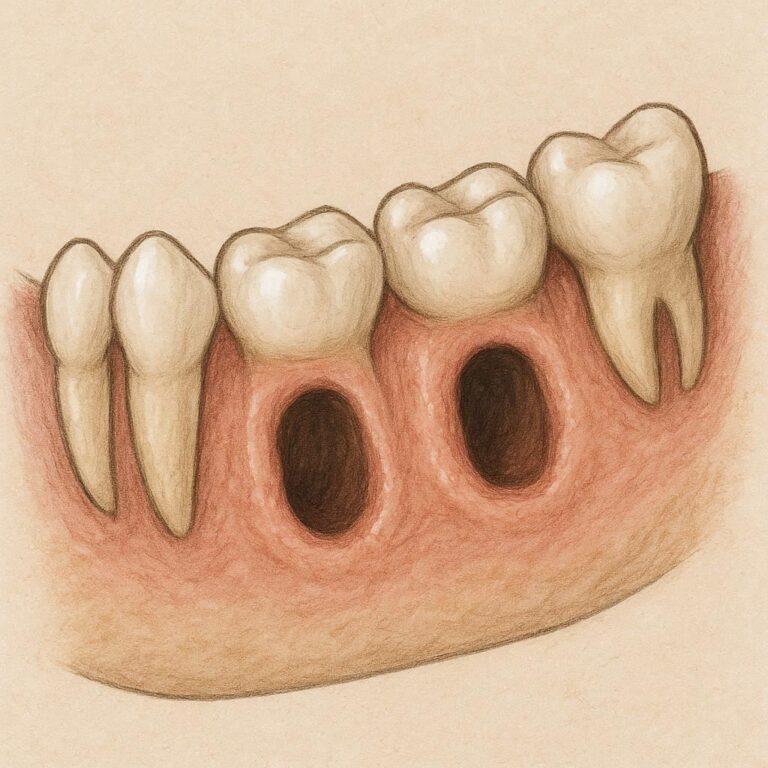
A dentist will typically use the D5865 code when a patient presents with a situation complex enough to require a formal, documented treatment plan. This is not for a single missing tooth, but for cases involving multiple edentulous spaces (areas with no teeth).
Here are common scenarios where you might see this code on your treatment plan:
-
You are missing several teeth in one arch: For example, you are missing three or more teeth in your upper or lower jaw, and the dentist needs to plan how to replace them in a way that is stable and functions well with your remaining teeth.
-
You need a full or partial denture: The creation of any removable appliance, whether it replaces a few teeth (partial denture) or all teeth (complete denture), requires meticulous planning. The D5865 code covers the design and mapping for this appliance.
-
You are considering implant-supported prosthetics: If your treatment plan involves dental implants to support a bridge or denture, the planning phase becomes even more critical. The dentist must plan the ideal number and position of the implants to ensure they can support the new teeth. This often involves using advanced imaging and surgical guides, all part of the complex planning covered under D5865.
-
Your case involves complex bite issues: If your teeth don’t come together properly (malocclusion), or if you have issues with jaw pain (TMD/TMJ), replacing missing teeth becomes a complex biomechanical puzzle. The D5865 service allows the dentist to plan a prosthesis that corrects, or at least does not exacerbate, these issues.
The Step-by-Step Breakdown of the D5865 Procedure
So, what actually happens during this planning phase? It is rarely a single appointment but rather a process that unfolds over time. Here is a look at the steps typically involved when a dentist performs the D5865 service.
1. The Comprehensive Evaluation and Data Gathering
This is the foundation. Your dentist won’t just look at your mouth; they will study it.
-
Review of Medical and Dental History: Understanding your overall health is crucial, as conditions like diabetes or medications like bisphosphonates can significantly impact treatment choices and healing.
-
Full Clinical Examination: The dentist will examine your gums for periodontal disease, check the health and stability of any remaining teeth, and assess your jaw joints and muscles.
-
Cancer Screening: A routine but vital part of any comprehensive exam.
2. Diagnostic Imaging
To plan effectively, the dentist needs to see what’s happening beneath the gums.
-
Panoramic X-ray: This is a standard 2D image that shows all your teeth, upper and lower jaws, sinuses, and temporomandibular joints in a single view. It’s an excellent screening tool.
-
Cone Beam Computed Tomography (CBCT): For more complex cases, especially those involving implants, a CBCT scan is invaluable. It provides a 3D image, allowing the dentist to measure bone density and volume with pinpoint accuracy, identify vital structures like nerves, and plan implant placement virtually.
3. Creating Diagnostic Models
This is where the planning becomes tactile. The dentist will take impressions (molds) of your upper and lower teeth. These impressions are used to create precise stone models of your mouth.
-
Mounting on an Articulator: These models are then mounted on a device called an articulator, which simulates your jaw movements. This allows the dentist to study your bite in a laboratory setting, away from the constraints of your mouth. They can see how your teeth come together and identify any interferences that could compromise a new prosthesis.
4. The “Wax-Up” or Digital Smile Design
This is perhaps the most exciting part of the planning phase for you as a patient. Based on all the gathered data, the dentist or a dental laboratory creates a diagnostic wax-up.
-
What it is: On your stone models, the technician will sculpt the ideal replacement teeth out of wax. This creates a physical, three-dimensional representation of your proposed new smile.
-
Digital Version: Today, this is often done digitally. Using specialized software, the dentist can design your new teeth on a computer, showing you a “Digital Smile Design” that you can preview on a screen. This allows you to see exactly what the final result could look like before any irreversible work is done.
5. Developing the Written Treatment Plan
With the clinical data, images, and diagnostic wax-up in hand, the dentist now synthesizes everything into a formal, written treatment plan. This document will outline:
-
The diagnosis.
-
The recommended treatment (e.g., “Maxillary removable partial denture”).
-
The sequence of treatment steps (e.g., extractions, healing, delivery of the denture).
-
The prognosis (the expected outcome and longevity).
-
The fees associated with each step.
This comprehensive, documented plan is the tangible result of the D5865 service.
Why is the D5865 Code So Important?
You might wonder, “Why can’t we just skip the planning and get straight to the teeth?” The answer lies in the difference between a prosthesis that merely fills a gap and one that restores full function and health.
-
It Prevents Costly Mistakes: Imagine building a custom suit without taking your measurements. It would almost certainly turn out poorly. Dental work is no different. The D5865 plan ensures that the final prosthesis is designed specifically for your mouth’s unique anatomy, bite, and aesthetic needs. This dramatically reduces the risk of a prosthesis that doesn’t fit, is uncomfortable, or fails prematurely.
-
It Facilitates Clear Communication: The written plan and diagnostic wax-up serve as a communication tool between you and your dentist. You can see the goal and agree on the path to get there. It also allows the dentist to communicate precise instructions to the dental laboratory technician who will fabricate your prosthesis.
-
It is Essential for Insurance Approval: For major restorative work, most dental insurance companies require a detailed treatment plan and often the diagnostic models or images to justify the proposed treatment before they will agree to pay their portion. The D5865 code and its associated documentation provide the necessary justification.
D5865 vs. Other Common Dental Codes
To better understand D5865, it helps to compare it to other codes you might see on a treatment plan. It is important to remember that D5865 is a planning code, not a procedure code.
| Code | Description | What It Represents | How it Relates to D5865 |
|---|---|---|---|
| D5865 | Uniform Report, Multiple Missing Teeth | The planning and design service for a case involving multiple missing teeth. | This is the preparatory step. It happens before any fabrication. |
| D5211 | Maxillary Partial Denture – Resin Base | The fabrication and delivery of an upper partial denture. | This is a common result of the D5865 plan. The plan dictates the design of this denture. |
| D6010 | Surgical Placement of Implant Body | The surgical procedure to place a dental implant into the bone. | This is another potential result of the D5865 plan. The plan specifies where the implant should go. |
| D6240 | Pontic – Porcelain/Ceramic | The artificial tooth (pontic) that goes in a fixed bridge. | This is a component that may be specified in the D5865 plan for a fixed bridge. |
| D0350 | Oral/Facial Photographic Images | Taking clinical photographs for diagnosis or treatment planning. | This is often a supporting element used during the D5865 process to document the case. |
| D9310 | Consultation | A diagnostic service provided by a practitioner other than the treating dentist. | This is a separate service. A D5865 plan might recommend a consultation (e.g., with an oral surgeon), but it is not the same thing. |
As the table shows, D5865 is the “thinking” part, while the other codes are the “doing” part. You cannot have a well-executed D6240 (a crown) without a well-thought-out plan behind it, which is where D5865 comes in.
Cost and Insurance Considerations for D5865
This is the part that matters most to most patients. Because D5865 is a professional service involving significant expertise and time, it does come with a fee separate from the restorative procedures themselves.
What Influences the Cost?
The fee for the D5865 service is not a fixed, one-price-fits-all number. It varies based on several factors:
-
Geographic Location: Dental fees vary significantly from one city or region to another.
-
Complexity of the Case: A simple partial denture case will require less planning time than a complex, full-mouth implant rehabilitation. The more complex the case, the higher the fee is likely to be.
-
Technology Used: If your dentist uses advanced technology like a CBCT scan or digital smile design software as part of the D5865 process, this will add to the overall cost of the planning phase. These tools, however, provide immense value in terms of precision.
Does Insurance Cover D5865?
Coverage for D5865 can be tricky. Because it is a diagnostic and planning service, some insurance plans bundle it into the major procedure. In other words, the cost of planning is built into the fee they allow for the final denture or bridge.
However, for complex cases, many insurance plans do recognize D5865 as a separate, billable service.
-
Check Your Plan: The most important step is to contact your insurance provider directly. Ask them: “Is the code D5865, ‘Uniform Report, Multiple Missing Teeth,’ a covered benefit under my plan?”
-
Major vs. Diagnostic: Find out under which category it falls (diagnostic, basic, or major). This will determine your co-insurance percentage. Diagnostic services are often covered at a higher percentage (80-100%) than major services (50%).
-
Frequency Limitations: Most insurance plans will only cover this comprehensive planning service once every few years, or perhaps only once in a lifetime for a specific condition. This makes sense, as you don’t need a new blueprint for a house you’ve already built, unless you’re doing a major renovation.
Important Note for Readers: Always get a pre-determination (or pre-authorization) from your insurance company before starting any major dental work. Your dentist’s office will typically handle this for you. The pre-determination will tell you exactly how much your plan will pay for the D5865 service and the subsequent restorative procedures, leaving you with no surprises when the bill arrives.
Frequently Asked Questions About D5865
To help solidify your understanding, let’s tackle some of the most common questions patients have about this dental code.
Q: Is the D5865 procedure painful?
A: No, not at all. Since it is a diagnostic and planning service, it involves no surgical or invasive procedures. It consists of exams, x-rays, and taking impressions, which are all painless.
Q: How long does the D5865 process take?
A: It depends on the complexity. For a relatively straightforward partial denture case, it might be completed in a single, longer appointment. For complex cases involving lab work, wax-ups, and CBCT scans, the planning phase could span multiple appointments over a few weeks.
Q: Will I see the results of the D5865 plan?
A: Absolutely! A good dentist will walk you through the findings. If a diagnostic wax-up or digital design was created, they will show it to you. This is your opportunity to provide feedback on the appearance and proposed outcome before any work begins.
Q: Is D5865 only for dentures?
A: No. While it is very commonly used for removable prosthetics like partial and full dentures, it is also the standard of care for planning complex fixed prosthetics, especially those involving multiple crowns, bridges, or dental implants. Anytime multiple teeth are being replaced, this level of planning is the gold standard.
Q: My dentist recommended this, but my insurance says they won’t pay for it. What now?
A: First, don’t panic. Ask your dentist’s office manager or treatment coordinator to help you understand why. It may be that your insurance considers this part of the global fee for the final prosthesis. Or, perhaps you have a yearly maximum that is already low. Ask for a clear breakdown of the costs and the value of the service being provided. The plan is your roadmap to a successful outcome—it may be worth paying for it out-of-pocket to ensure the thousands you spend on the final restoration are not wasted.
Conclusion
The D5865 dental code represents one of the most important, yet often overlooked, aspects of modern dentistry: comprehensive treatment planning for patients with multiple missing teeth. It is the strategic blueprint that turns a hope for a new smile into a predictable, achievable reality. By covering the in-depth diagnostic work, clinical assessment, and prosthetic design, this service sets the stage for successful, long-lasting restorations, whether they are removable dentures or complex implant-supported bridges. Understanding this code empowers you to appreciate the skill and thought your dentist invests in your care, ensuring that the final result is not just a set of teeth, but a healthy, functional, and beautiful smile designed just for you.
Additional Resource
For a complete list of all current dental codes and their official descriptions, you can visit the American Dental Association’s website. Their CDT Code Search tool is the authoritative resource for dental terminology.
Frequently Asked Questions
1. Can I refuse the D5865 planning service and just get the denture?
Technically, a dentist could fabricate a simple denture with minimal planning. However, it is highly inadvisable. Skipping this step is like building a house without a plan; you greatly increase the risk of a poor fit, discomfort, and future problems. A reputable dentist will insist on proper planning to ensure a quality outcome.
2. If I already have a denture that I’m happy with, will I need a new D5865 if I need a replacement?
In most cases, yes. Your mouth changes over time. Bone and gum tissues shrink, and your remaining teeth may shift. A new denture must be designed for your mouth as it is today, not as it was ten years ago. A new D5865 plan ensures the new denture is compatible with your current oral anatomy.
3. Does D5865 cover the cost of a CBCT scan?
Not always. The D5865 code covers the interpretation and planning based on the scan. The scan itself is a separate radiology procedure with its own code (e.g., D0367 for a CBCT scan). You may see both codes on your treatment plan. Your dentist or insurance coordinator can clarify how they are billed in your specific case.
4. My dentist used a digital intraoral scanner instead of putty impressions. Is this still D5865?
Yes, absolutely. The method of capturing the data (traditional putty impressions vs. digital scans) doesn’t change the nature of the service. Whether physical models or digital 3D models are created, the dentist is still performing the diagnostic work and prosthetic design encompassed by the D5865 code. In fact, digital workflows often enhance the planning process.
5. How often can a dentist bill for D5865?
There are no rules limiting how often a dentist can perform the service, as clinical necessity dictates. However, insurance plans will typically only pay for it once every few years (often 3-5 years) for the same arch or condition, as a comprehensive treatment plan is not something that needs to be redone frequently. If your clinical situation changes dramatically (e.g., you lose more teeth), it may be considered a new condition and be eligible for coverage again.